
Known as the Great Lake State, Michigan is a beautiful state comprised of two peninsulas surrounded by four of the five Great Lakes. The dense forests and rugged mountains of the Upper Peninsula provide an ideal habitat for a wide range of wildlife, including black bears (Ursus americanus). Every year, hunters venture into the state’s wilderness to hunt these apex predators. Continue reading to learn about the largest bear ever caught in Michigan.
What do Black Bears Look Like?
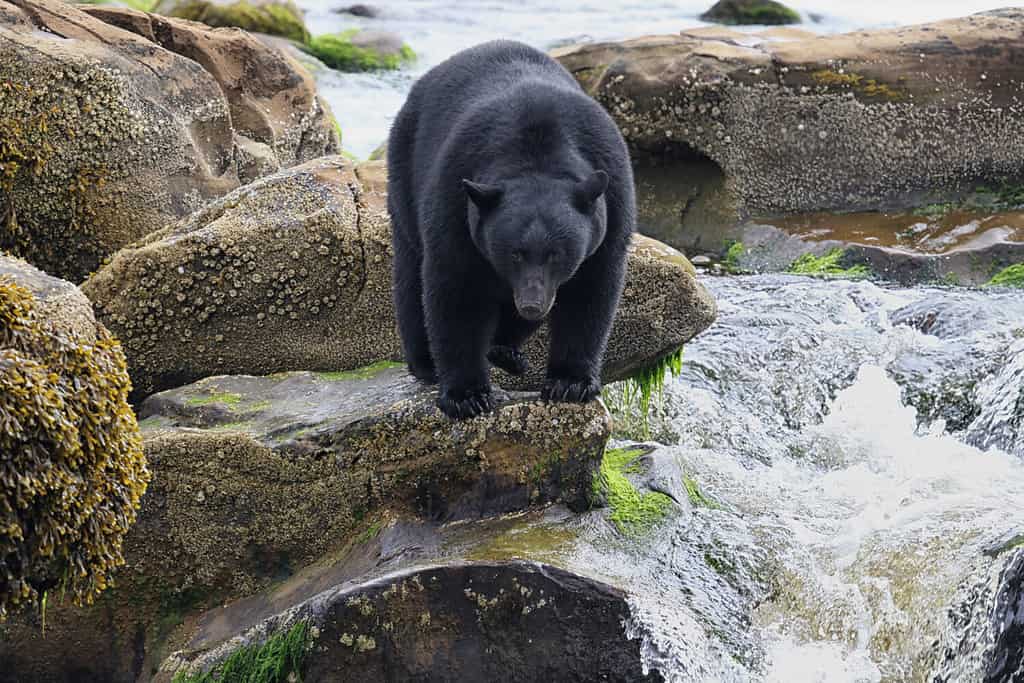
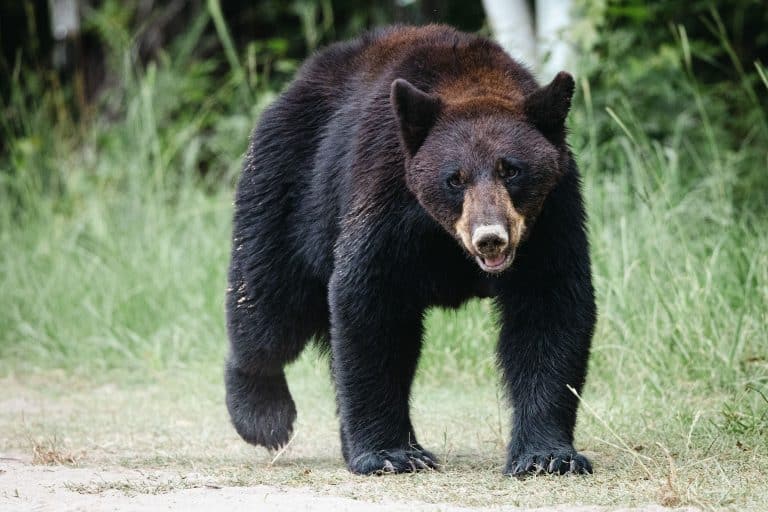
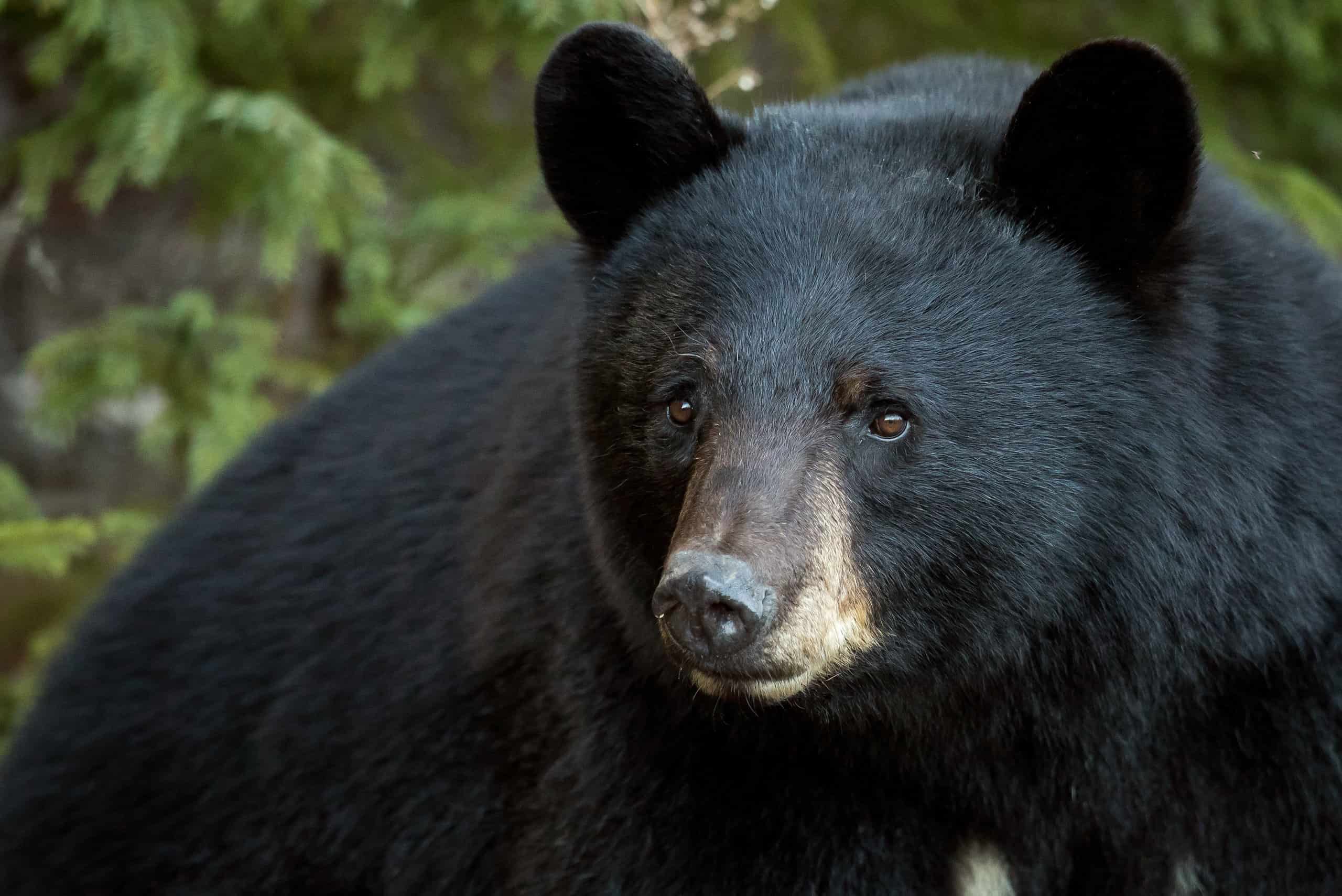
Most black bears have a thick, black coat, but it can look dark brown, grayish-blue, blond, or cinnamon.
©Mark Caunt/Shutterstock.com
Today, the only bears found in Michigan are American black bears. The other two bear species in North America, the grizzly bear (Ursus arctos) and polar bear (Ursus maritimus), are not found in Michigan. As their name implies, most black bears have a thick, black coat of fur. Their fur can also appear dark brown, grayish-blue, blond, or cinnamon. However, these other color varieties appear more often in Western North America and are rarely observed in Michigan.
On average, adult black bears stand 3 feet tall at the shoulder and measure 3 to 5 feet in length from nose to tail. Males are typically larger than females, and weights vary depending on the time of year. In Michigan, a typical female black bear can weigh 90 to 300 pounds, while males weigh 130 to 500 pounds.
Michigan’s Black Bear Population
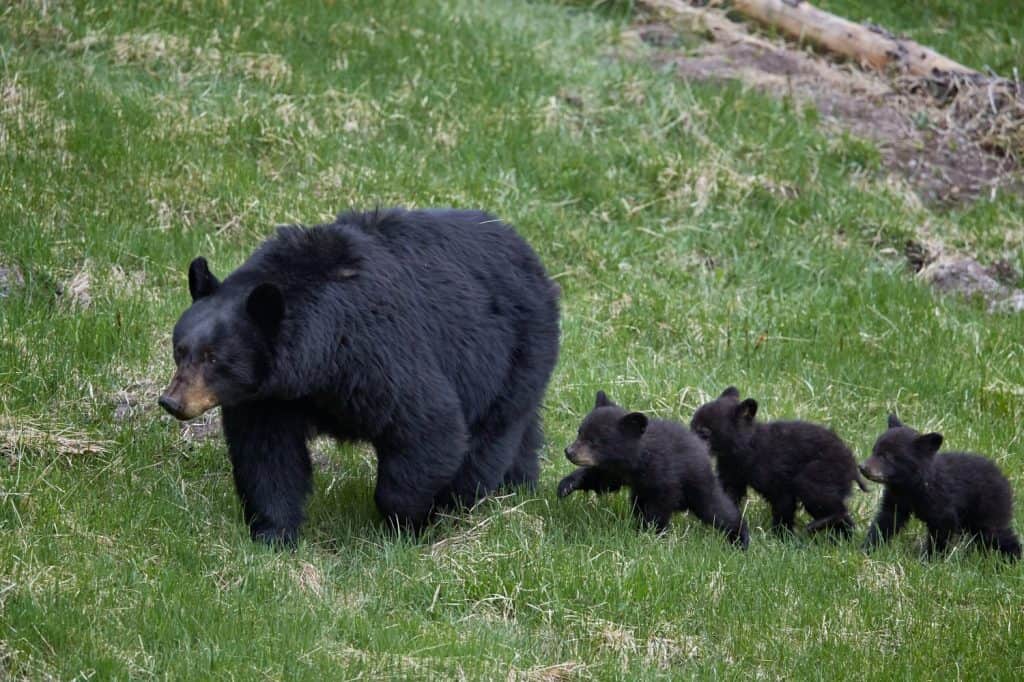
A mother and her cubs.
©Robert Harding Video/Shutterstock.com
Approximately 13,000 black bears currently live in Michigan, with about 10,200 in the Upper Peninsula and 1,700 to 2,000 in the Lower Peninsula as of 2025. The bear population fell to a low of approximately 1,300 in 2011 because of overhunting and accidental deaths. However, stricter regulations and reduced hunting licenses allowed the black bear population to begin recovering. The total North American black bear population is estimated to be between 600,000 and 900,000. Given its widespread distribution, the IUCN lists the American black bear as Least Concern.
What is the Largest Bear Ever Caught in Michigan?
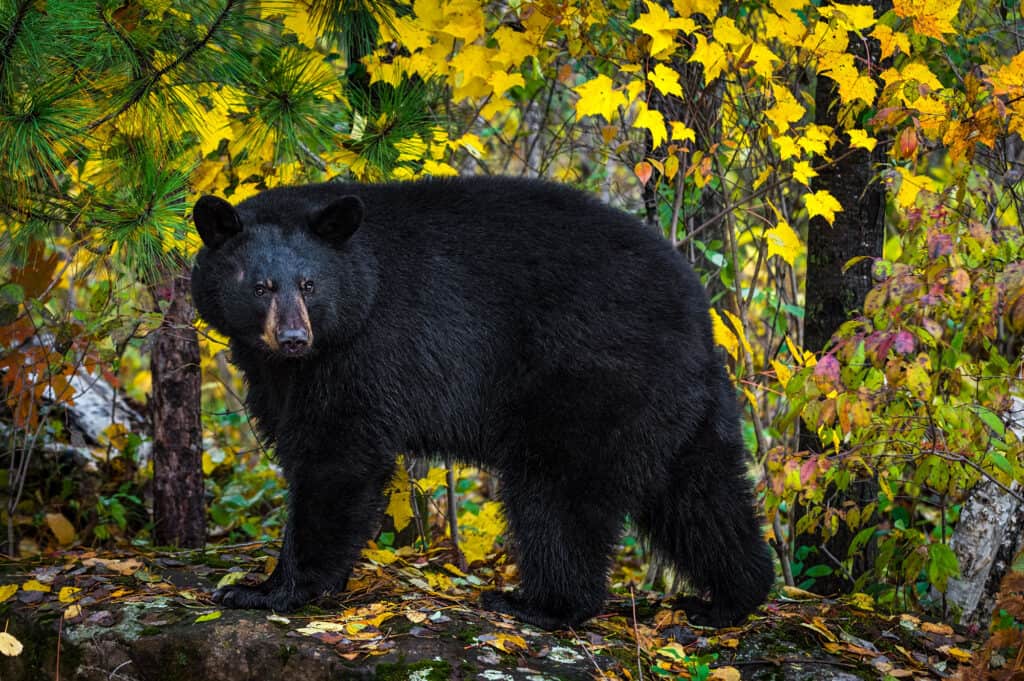
The largest American black bear in Michigan is estimated to have had a live weight of 730 pounds.
©Holly Kuchera/Shutterstock.com
The largest bear ever caught in Michigan was an American black bear killed by Michigan resident Mark Hanna. On the evening of September 25, 2019, Hanna killed a gigantic American black bear while hunting in Menominee County of the Upper Peninsula. From nose to tail, the bear measured 7 feet, 9 inches long, and 8.5 feet tall when mounted. Its front paw measured 8 inches across, while its chest measured 60 inches in circumference. With a live weight of 730 pounds and a dressed weight of 640 to 650 pounds, this black bear holds the record for the largest bear in the state of Michigan.
Before Hanna’s kill, the heaviest Michigan bear on record was killed by Herb Mitchell from South Haven, Michigan. Mitchell shot a bear in November 1950 in Iron County in the Upper Peninsula. That bear had a dressed weight of 650 pounds, making it close in size to Hanna’s bear, although its live weight is unknown. The bear Hanna shot may have grown even larger if it had continued to put on weight for winter. If Hanna had waited a few more weeks, the bear likely would have weighed more.
How the Largest Bear in Michigan was Killed
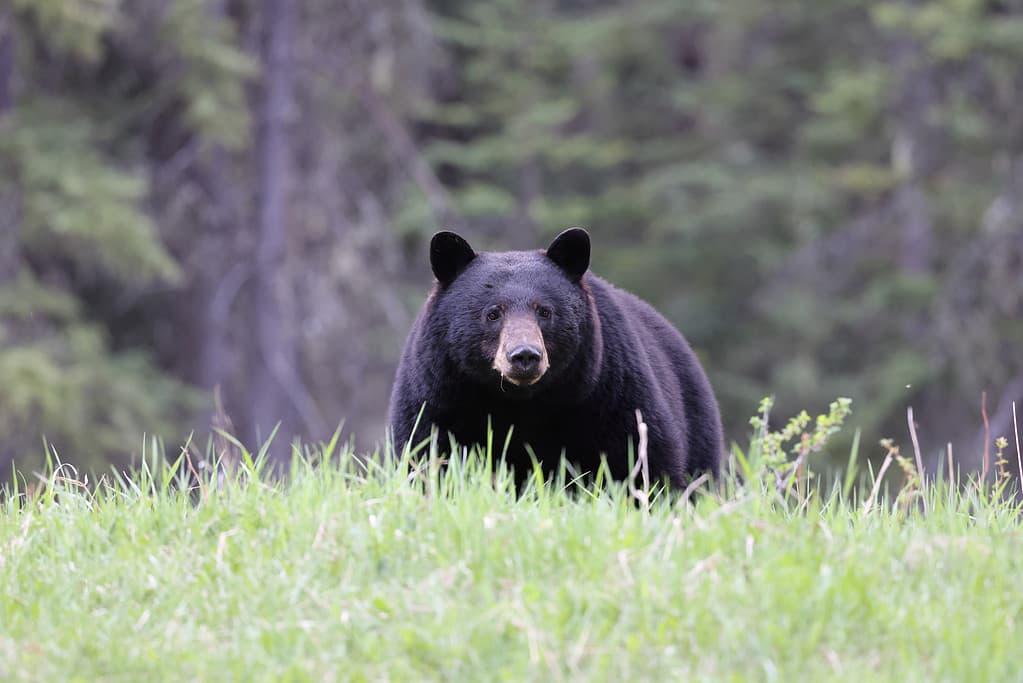
The largest American black bear in Michigan was killed on September 25, 2019.
©Frank Fichtmüller/iStock via Getty Images
Mark Hanna first spotted the bear on a camera near one of his bear baits on August 20th, 2019. The bear remained in its vicinity for the following month, allowing Hanna to track its movements. He baited a spot on private land that the bear frequented daily with cereals and nuts. Michigan law permits the use of bait barrels for bear hunting on private land. It also allows their use on state land if the barrels are within 100 yards of a forest road and anchored to the ground. Hanna waited in a ladder stand south of the spot for several days until he could take the perfect shot. Southerly winds interfered with his efforts for several days because the bear kept catching his scent. Several other, smaller bears visited the bait barrel, but Hanna remained patient, refilling the barrel each day.
On the morning of September 25th, the wind finally came in from the west, and Hanna went to his ladder stand. At around 6:30 in the morning, he heard the bear coming toward the bait barrel. Once the bear was in Hanna’s sights, he shot it from 25 yards away with a 225-grain Nosler bullet from a .340 Weatherby rifle. The bullet hit the bear behind the shoulder, in the middle of its body. Despite being shot, the bear managed to run 150 yards before it collapsed and died.
Is It Legal to Hunt Bears in Michigan?
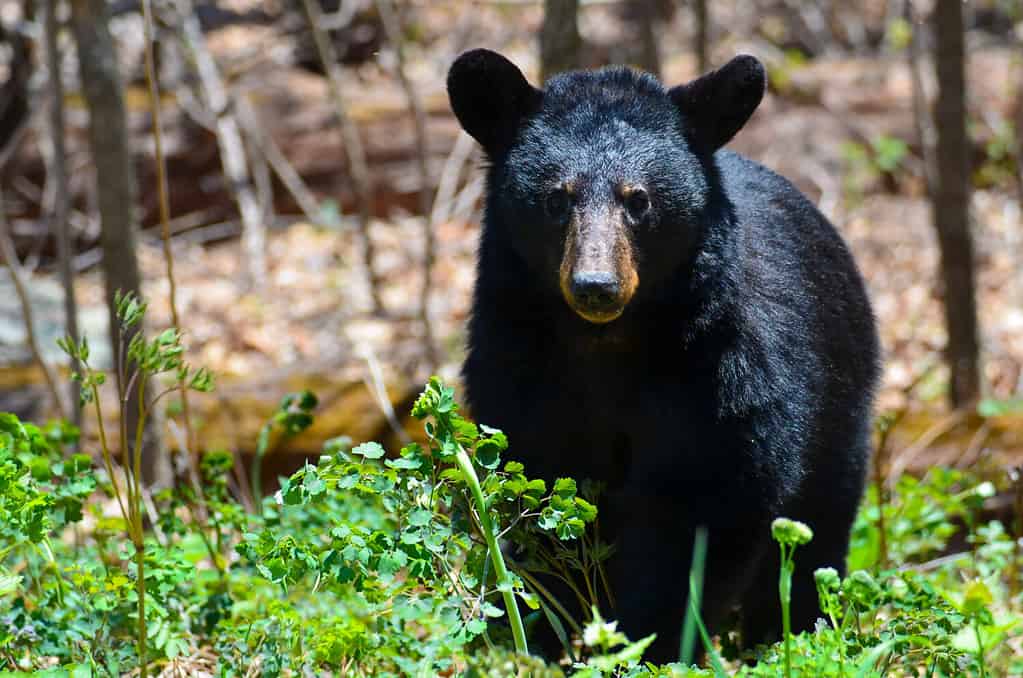
It is legal to hunt the American black bear in Michigan depending on the season and location.
©Orhan Cam/Shutterstock.com
Early settlers in Michigan treated bears as pests, which led to the widespread killing of bears. Black bears remained unprotected in the state until 1925, when the Michigan legislature officially declared black bears game animals. Until then, a license was not required to hunt bears in Michigan. Hunting bears with bait has always been legal in the state, and in 1939, the government also made it legal to hunt bears with dogs. It has been illegal to hunt bear cubs in Michigan since 1948. Since 1995, it has been illegal to kill a female bear with cubs. Additionally, bears cannot be trapped in Michigan without a permit.
Today, the Michigan Department of Natural Resources controls the hunting of black bears in the state. The Natural Resources Commission has the power to open and close bear hunting season and determine what hunting methods may be used. The time and length of the season depend on the number of available adult bears. In the Upper Peninsula, bear hunting season usually starts in early September and ends in late October. For 2025, the hunting season in the Lower Peninsula was split into two periods: September 13–23 and October 3–9. In 2021, there were approximately 5,318 hunters who killed around 1,914 black bears in Michigan, primarily in the Upper Peninsula. Licenses may be purchased in the Upper Peninsula, while licenses in the Lower Peninsula are usually obtained through a raffle.