
Baby beluga whales are some of the most unique whales in the entire ocean. They have special adaptations that set them apart from other whale species. They also make incredible sounds that have inspired the nickname “the canaries of the ocean.” Read on to learn five amazing facts about baby belugas and see five adorable pictures.
#1: Baby Beluga Whales Can Swim Backwards
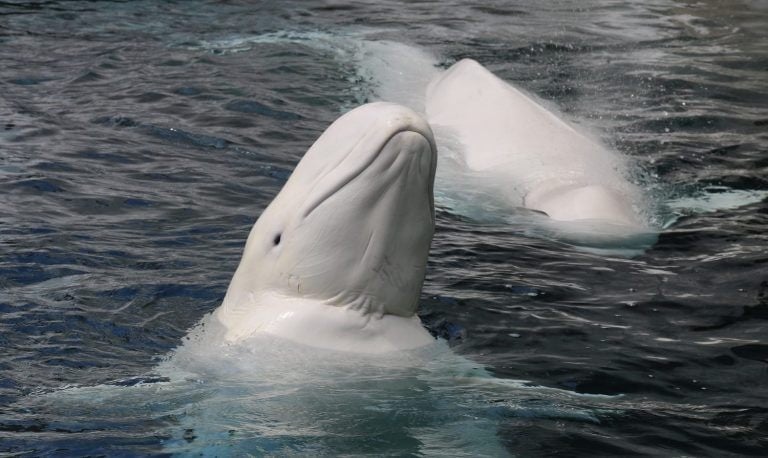
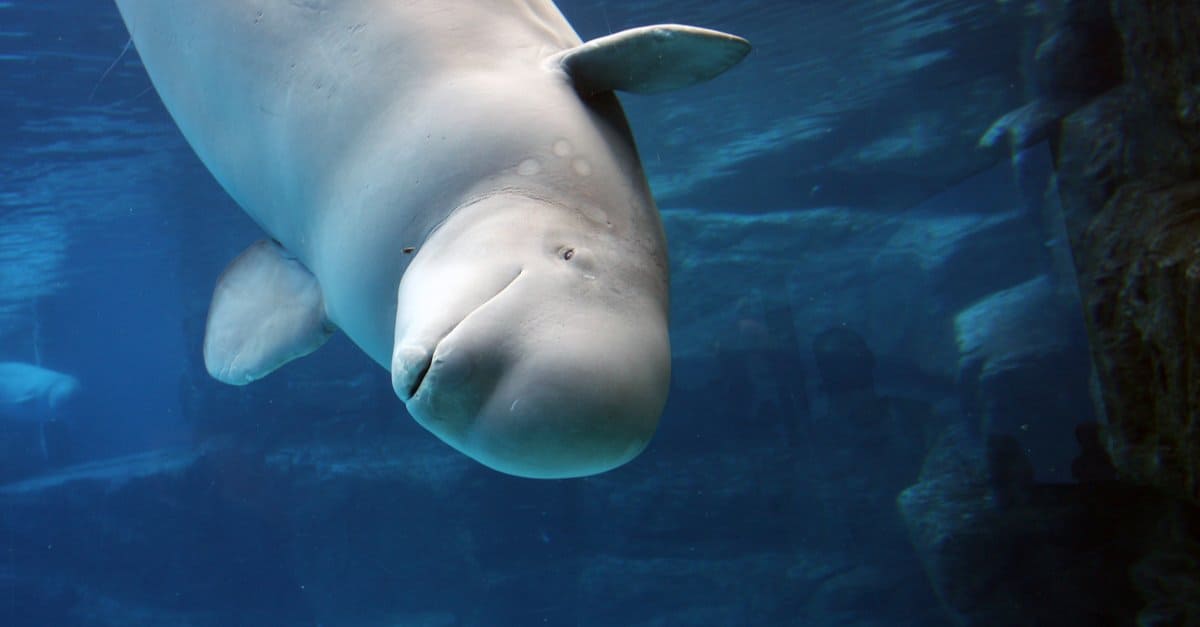
Belugas are one of a few whale species with the ability to swim backwards.
©Miles Away Photography/Shutterstock.com
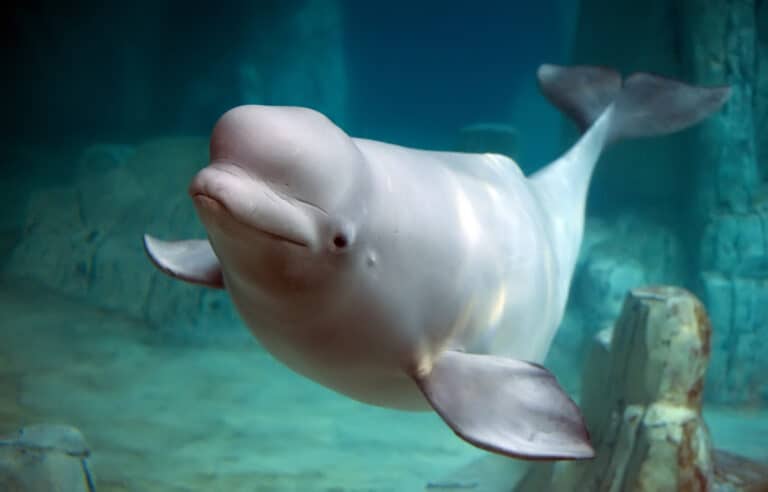
Beluga whales are one of just a few whale species that can swim backwards. They have several adaptations that make this possible. Beluga whales have flexible necks because their neck vertebrae are not fused. This allows them to turn their heads and navigate more easily. They also have wide flippers, which help them propel themselves backwards.
Additionally, beluga whales lack a dorsal fin on their backs. Instead, they have a dorsal ridge so that they can maneuver under sheets of ice without obstruction. Beluga whales can also swim upside down, which helps them get a better view of the water’s surface in areas with low visibility.
#2: Beluga Whale Babies Are Born with Dark Skin
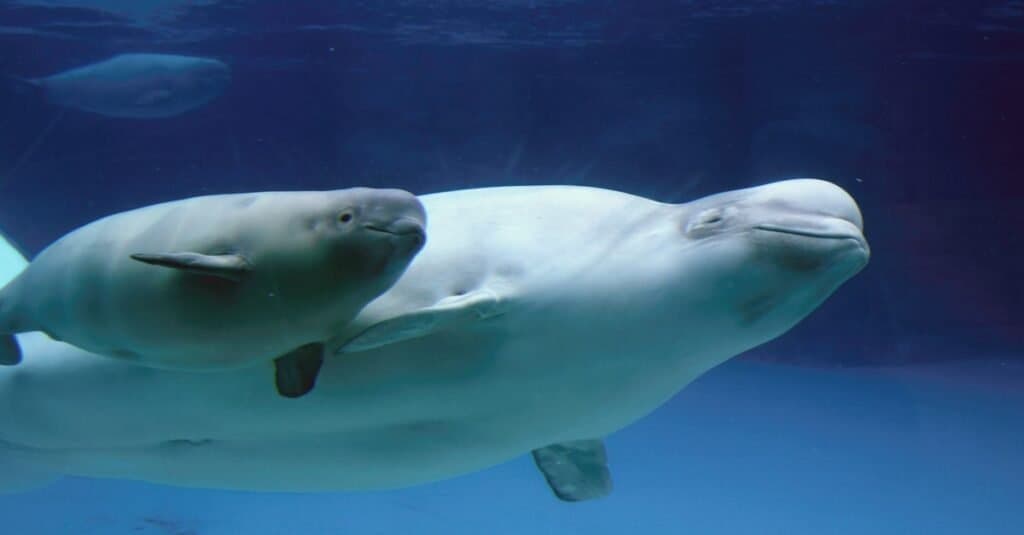
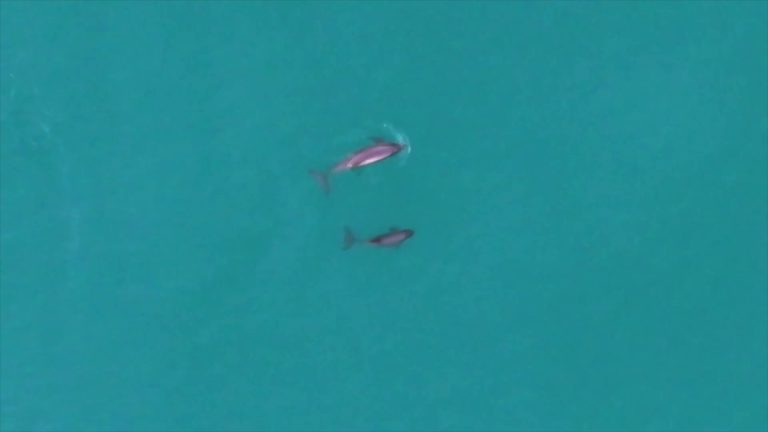
Beluga calves are born with gray to brown skin to help camouflage them from predators.
©CampCrazy Photography/Shutterstock.com
One of the most recognizable features of beluga whales is their stark, white skin. However, when baby belugas are born, they have dark skin that ranges from gray to brown. Scientists believe that a baby beluga’s darker skin may be an evolutionary trait to protect it from predators. Darker skin offers more camouflage and makes the calves more challenging to spot in the river mouths and estuaries that serve as beluga breeding grounds.
As the calves get older, their skin slowly fades. The whales are fully white by the time they reach maturity at around five years of age. Adult belugas have white skin to help them blend into the icy waters of the Arctic and sub-Arctic regions.
#3: Beluga Babies Can’t Breathe Underwater
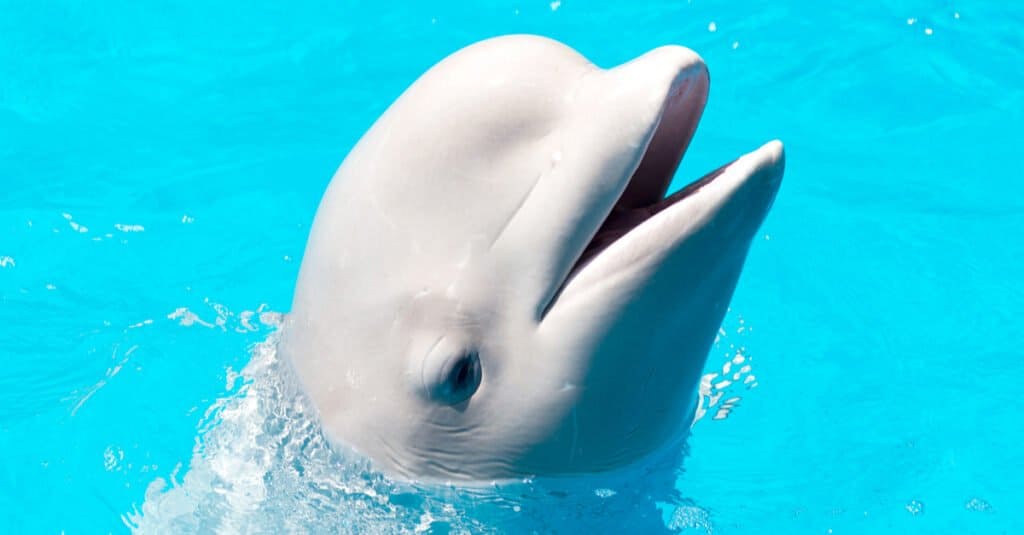
Beluga babies breathe air from the surface because they have lungs like all mammals.
©Elena Larina/Shutterstock.com
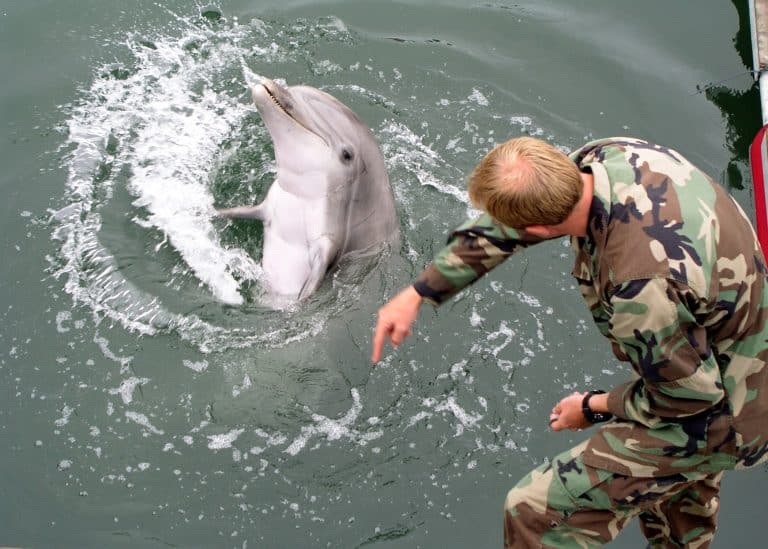
Since beluga whales are mammals, not fish, they don’t have gills. So, they’re not able to extract oxygen from water. They must come to the surface to breathe air through their blowholes like other marine mammals such as dolphins.
While beneath the surface, newborn baby beluga whales can hold their breath for about 3.6 minutes. By the time they reach one year, they can hold their breath for around 8.5 minutes. Yet, what if the surface of the water is frozen? Beluga whales can detect pockets of air and holes in the ice, a skill which has been attributed to their echolocation abilities.
#4: Beluga Calves Use Echolocation to Navigate Their Surroundings
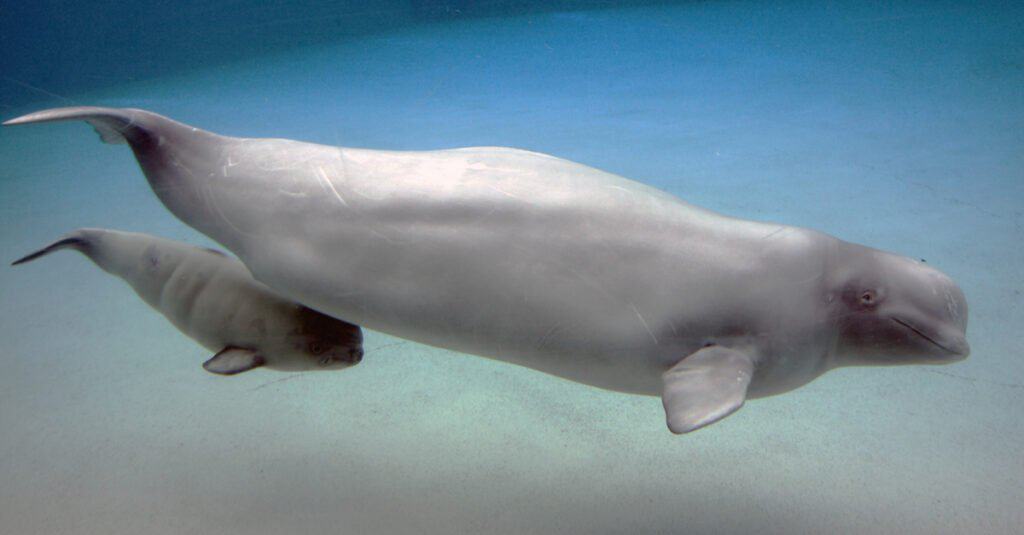
Beluga calves use echolocation to communicate and to navigate their environment.
©Christopher Meder/Shutterstock.com
Baby beluga whales have excellent eyesight both underwater and above the surface. However, they also have echolocation. Beluga newborns begin using echolocation almost immediately. They make clicking sounds that bounce off objects in their environment, allowing them to create an audible map of their surroundings.
Beluga calves don’t just use echolocation to navigate. Echolocation also makes it easier for them to hunt. Their clicks bounce off of prey and allow the whales to determine where their targets are. Echolocation can also be used to communicate with other whales around them. Researchers believe the whales may also be able to change the shape of their melons to better direct and receive sound.
#5: Baby Beluga Whales Are Called Canaries of the Sea
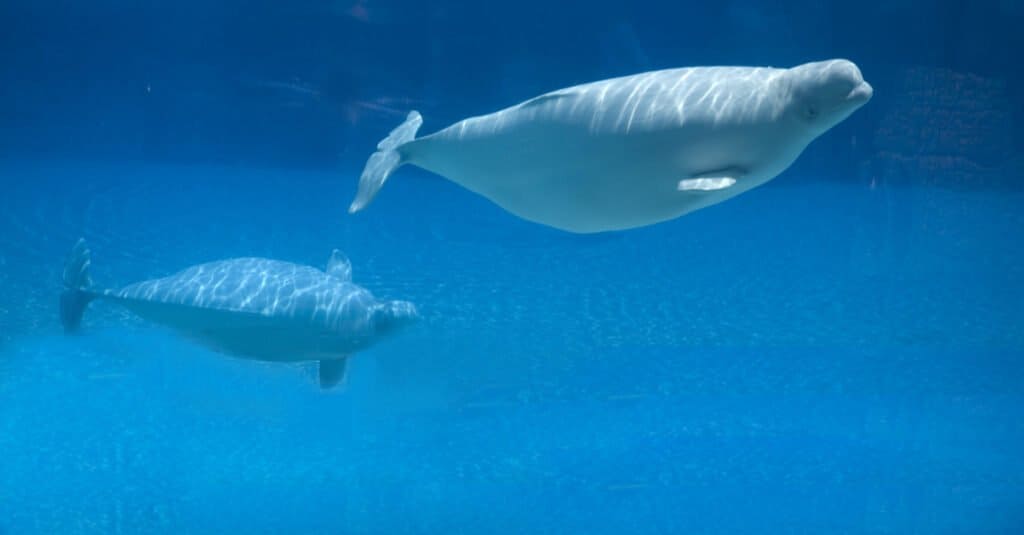
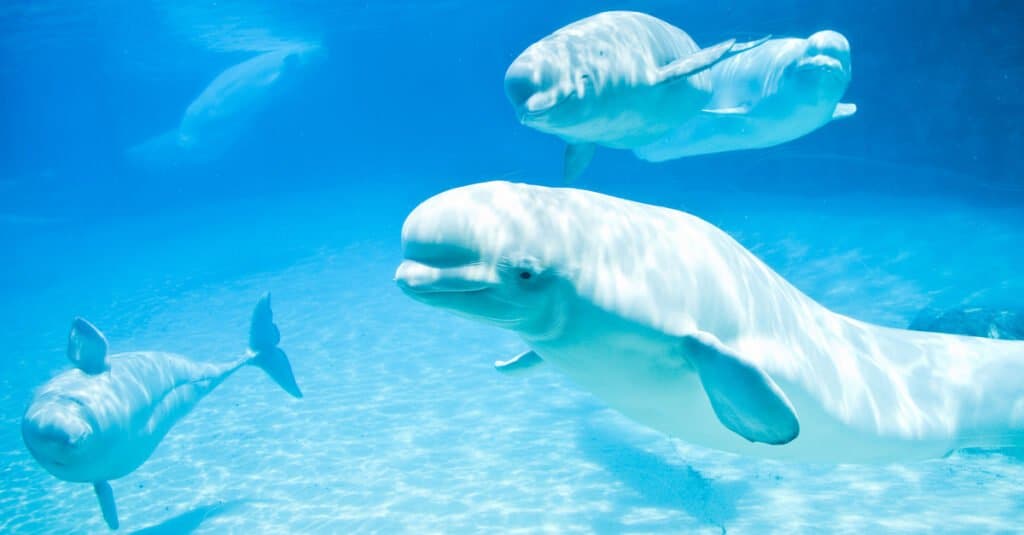
The beluga whale is one of the most vocal marine animals.
©glen gaffney/Shutterstock.com
Beluga whales are often called “the canaries of the sea.” This is because they are some of the most talkative animals in the ocean. Beluga whale babies can begin vocalizing within an hour of birth. However, they cannot make the more complex calls until they are between 1-2 years old. Young whales learn to mimic the sounds of their mothers and other adults. Their sounds have been described as a mix of clicks, chirps, moos, squeals, screeches, grunts, and whistles.