
Quick Take
- Rainbow lorikeets have a hidden structure inside their mouths that completely changes how we think about the way birds eat. Discover the brush tongue →
- An all-sugar diet sounds like a dream, yet for lorikeets it creates a relentless survival problem they've had to solve on the move. See the sugar survival challenge →
- Every time a lorikeet feeds, it is accidentally doing something that keeps entire forests alive, yet it has no idea. Explore their pollination role →
- Despite thriving in cities better than most wildlife, lorikeets are still losing ground, and the reason for this is hiding in plain sight. See the hidden threats →
The rainbow lorikeet looks less like a bird and more like a living, breathing color palette. It has an electric blue head, a fiery orange chest, neon green wings, and a bright red beak to tie it all together. And at around 11 to 13 inches long, these colorful birds are impossible to miss, especially when they travel in loud, fast-moving flocks. Originally native to northern and eastern Australia, lorikeets thrive in woodlands, rainforests, and even suburban neighborhoods as long as there are plenty of flowering trees to feast on. However, their most fascinating trait isn’t their neon plumage — it’s their unusual tongue and the unique way they eat.
The “Paintbrush” Hidden Inside Its Mouth
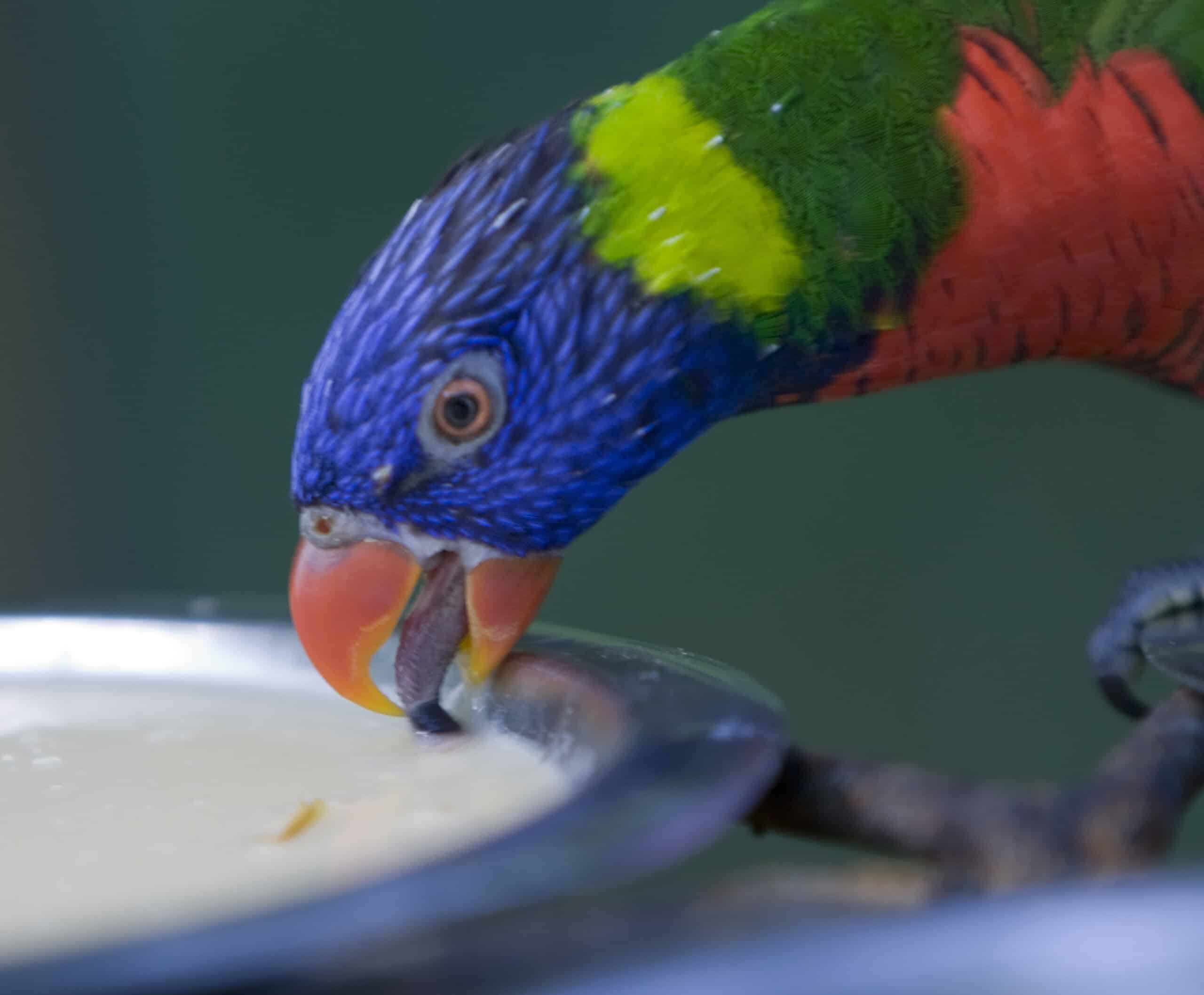
Rainbow lorikeets are nectar specialists, and they come equipped with a specialized tool that sets them apart from other birds. At the tip of a lorikeet’s tongue is a cluster of tiny, hair-like structures called papillae. While these are nearly invisible at rest, they spring into action the moment the bird begins to feed. As the lorikeet dips its tongue into a flower, the papillae flare outward, transforming its seemingly smooth tongue into a soft, flexible brush. With every flick of the tongue, the papillae act collectively as a sponge, soaking up liquid nectar and trapping pollen with surprising efficiency.
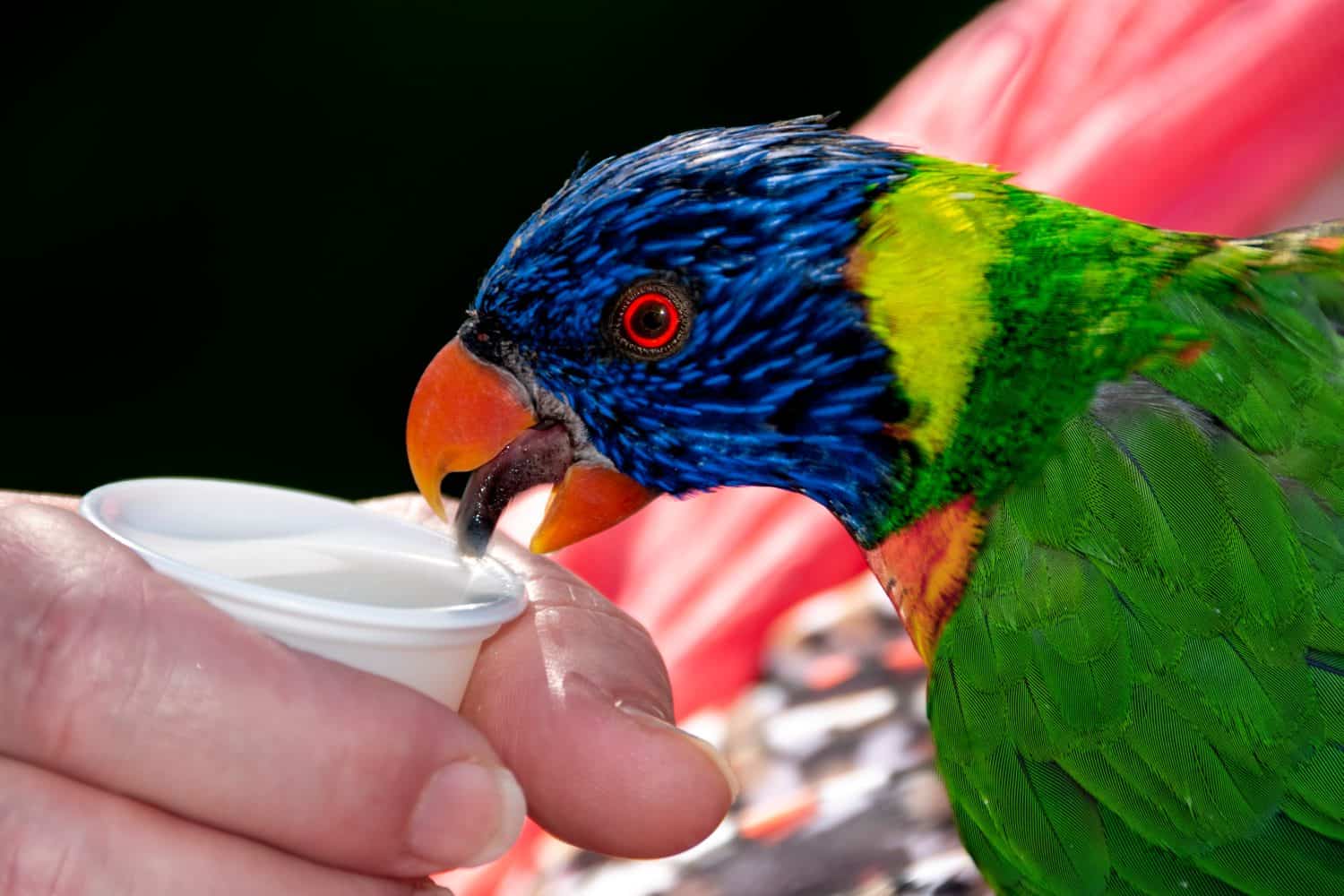
Lorikeets are very social birds and develop strong pair bonds.
©Barbara Ash/Shutterstock.com
While this brush-like tip collects nectar and pollen, the rest of the tongue has its own specialized features. The length of a lorikeet’s tongue is lined with fine grooves that act like tiny gutters, channeling nectar toward the bird’s throat. At the base of the tongue, specialized glands release mucus to keep the sticky nectar and pollen mixture moving smoothly down these grooves, helping transport the food quickly to the bird’s throat. The unique design ensures that the lorikeet never wastes energy — or loses a single drop of sugar.
A Sugar-Fueled Lifestyle
As tasty as an all-sugar diet may sound, living on nectar comes with a catch: it provides quick energy, but it burns off fast. Rainbow lorikeets have high metabolisms and need a constant supply of fuel to keep going. To stay energized, they spend most of their day flying and moving between trees gathering food. Their favorite sources include flowering species like banksia and eucalyptus, but they will also snack on seeds, fruit, and even insects.
Rainbow lorikeets are not strict migrants that follow a seasonal calendar. Instead, they move to where the flowers are blooming. This constant movement ensures they are always right where the sugar is highest.
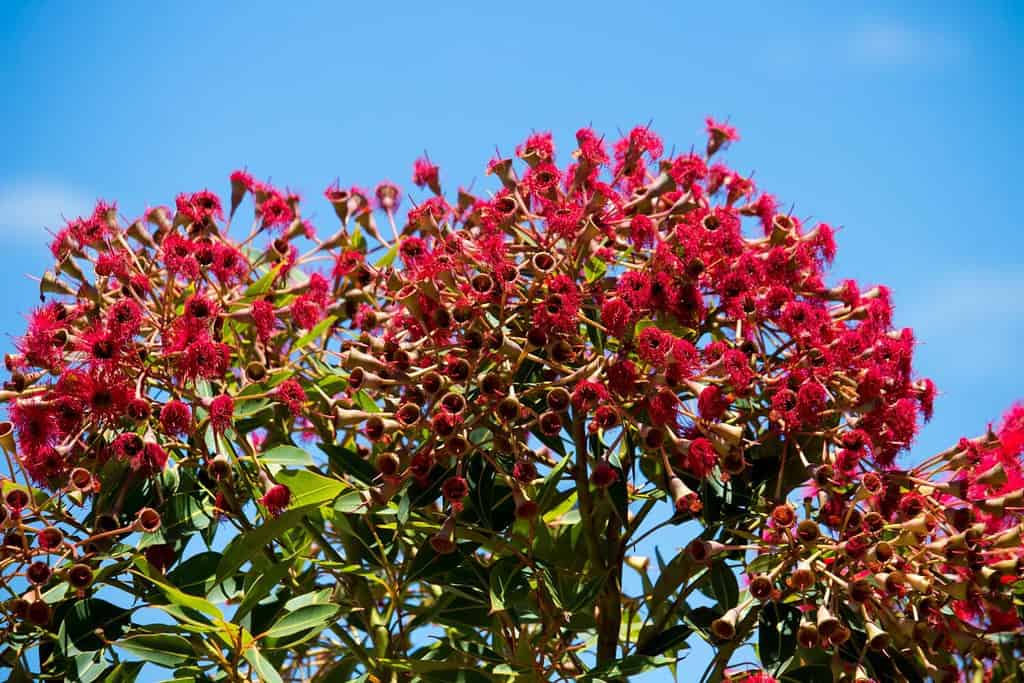
Lorikeets primarily eat nectar from flowering trees.
©alybaba/Shutterstock.com
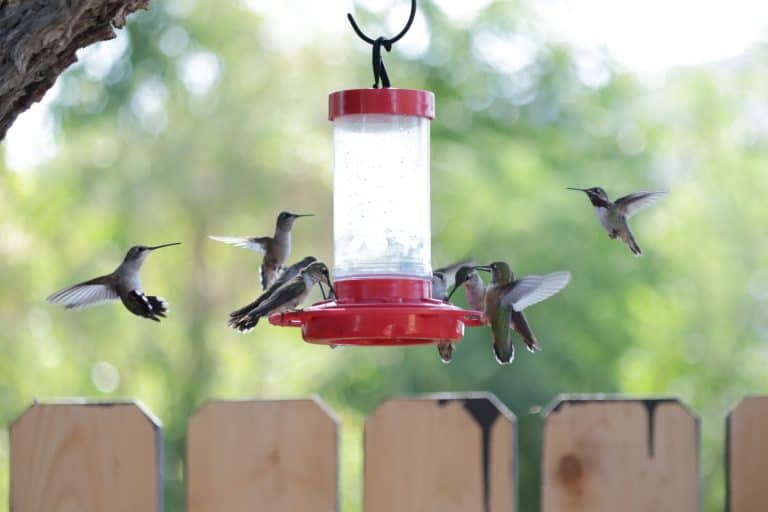
These colorful birds have adapted brilliantly to city life, taking full advantage of suburban gardens and backyard bird feeders. If rainbow lorikeets are nearby, you’ll hear them. They are incredibly social and rarely travel alone, often traveling in flocks that are filled with constant chatter.
Essential Pollinators
While rainbow lorikeets spend much of their time and energy focused on their own meals, they simultaneously help entire ecosystems function. As the lorikeet feeds, pollen sticks to its face and feathers. When it moves to the next flower, some of that pollen is transferred, essentially fertilizing the plant. Because lorikeets travel great distances to find fresh blooms, they can spread pollen across larger distances than many insects. This movement helps link different plant groups, ensuring genetic diversity and supporting the growth of flowering trees.
In short, lorikeets aren’t just looking for their next meal — they are constantly working to sustain the environment.
Colorful, Adaptable, and Under Pressure
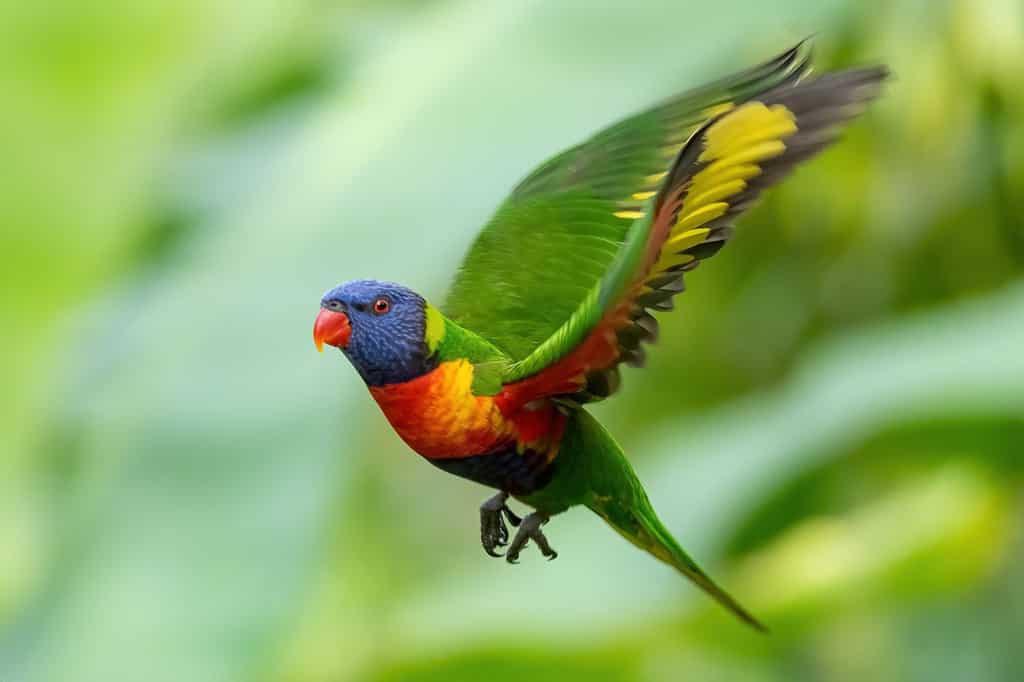
Lorikeets are very vocal birds.
©whitejellybeans/Shutterstock.com
Rainbow lorikeets are doing well overall, especially compared to many other specialized species. Their ability to adapt to urban environments has helped them remain strong even as environments change.
Despite their resilience, however, they still face many challenges. As cities grow, lorikeets lose their natural habitat, reducing their access to the native flowering trees they rely on for food. In certain regions, the illegal pet trade also remains a persistent threat. Their long-term future depends, in part, on protecting the natural ecosystems that shaped them.