
Quick Take
- Female Eastern bluebirds are missing something most birds have, and that absence actually helps them survive. Discover the missing ovary →
- Eastern bluebirds look like devoted partners, but genetic testing has exposed a secret hiding inside their nests. See the genetic secret →
- Some Eastern bluebirds trick rival pairs into raising their offspring, and scientists have a name for this behavior. Meet the floater bluebirds →
- A female bluebird won't leave her nest until her mate gives her something first, and the reason reveals a hidden danger. See the escort behavior →
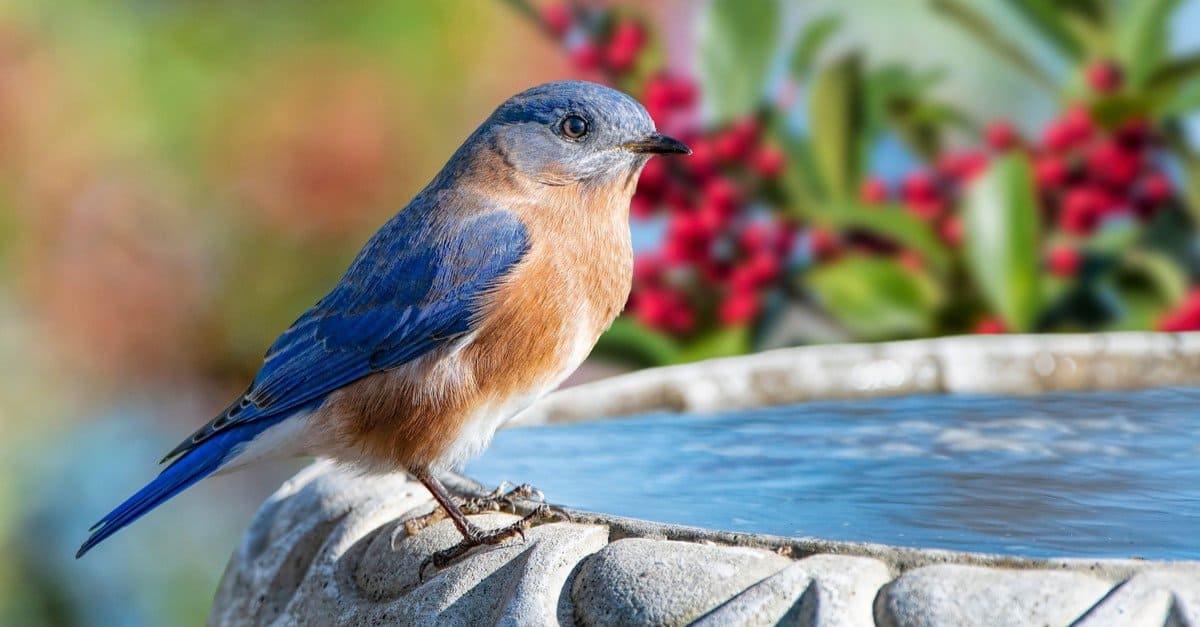
Eastern bluebirds (Sialia sialis) live east of the Rocky Mountains. During the summer, they’ll venture as far north as southern Quebec, Ontario, and Manitoba to nest. Eastern bluebirds are medium-sized songbirds within the passerine (perching bird) order. They range from 6.3 to 8.3 inches in length, with a wingspan of 9.8 to 12.6 inches. They typically weigh around one ounce. These songbirds overwinter in the Southeastern and South Central United States. Eastern bluebirds are also found in Guatemala, northern Honduras, and the pinelands of Nicaragua, where their southernmost populations reside. Eastern bluebirds have stunning cobalt blue plumage on their head, back, wings, and tail. Continue reading to learn 10 incredible facts about Eastern bluebirds.
Female Eastern Bluebirds Only Have One Ovary
While many birds have two ovaries, the female eastern bluebird has only one. Female bluebirds only have a left ovary. This helps reduce their weight so that they can fly better. Even though they only have one ovary, yearling eastern bluebirds can produce three to four eggs. Once they’re older, females can lay an average of five eggs in the first nest of the season.
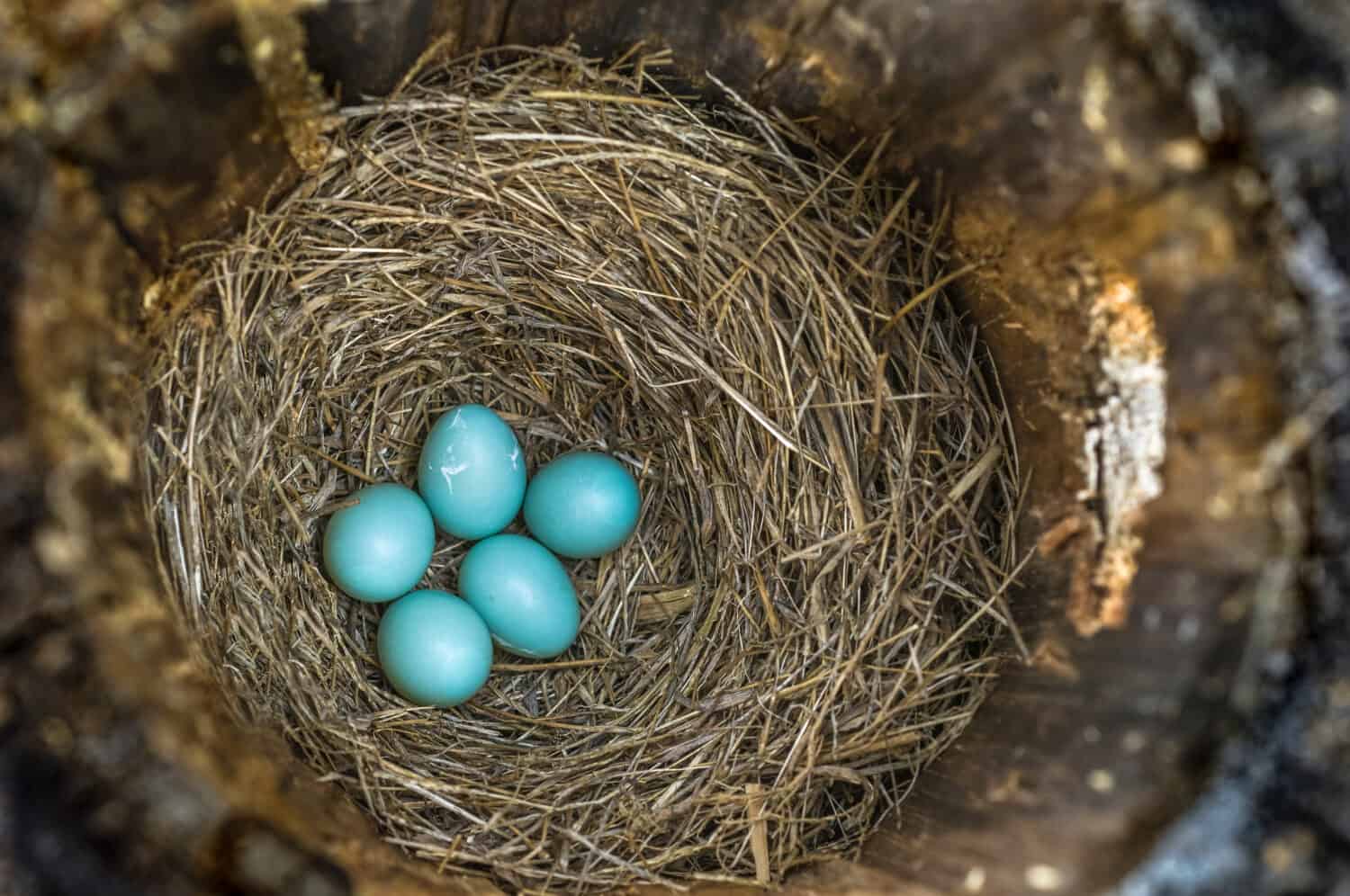
Even though female eastern bluebirds have only one ovary, they can still produce three to five eggs.
©Alan B. Schroeder/Shutterstock.com
Baby Eastern Bluebirds Have an Egg Tooth
How do baby bluebirds break free from their shells? When a baby Eastern bluebird is ready to enter the world, it will begin pecking at the middle of its shell with its egg tooth.
Baby bluebirds have a sharp egg tooth at the end of their beaks.
©Isaiah N Lilly/Shutterstock.com
The egg tooth is a hard tip at the end of the hatchling’s beak. Once they break free from their shell, the egg tooth falls off. It can take several hours of effort for a hatchling to break free. Once they emerge, hatchlings are wet and exhausted. Immediately, their mother will feed them pieces of the shell to provide calcium.
They’re a Perching Bird
Eastern bluebirds belong to the order of perching birds, Passeriformes. Perching birds are a large group and make up over half of the world’s bird species.

Perching birds like the eastern bluebird are perfectly balanced on their feet.
©Bonnie Taylor Barry/Shutterstock.com
One of their distinct features is that perching birds have a well-developed voice box. This is one of the reasons Eastern bluebirds are such great singers. Their compact form is also perfectly balanced, with their center of gravity over their legs and feet when they perch.
Baby Eastern Bluebirds Are Smaller Than Your Thumb
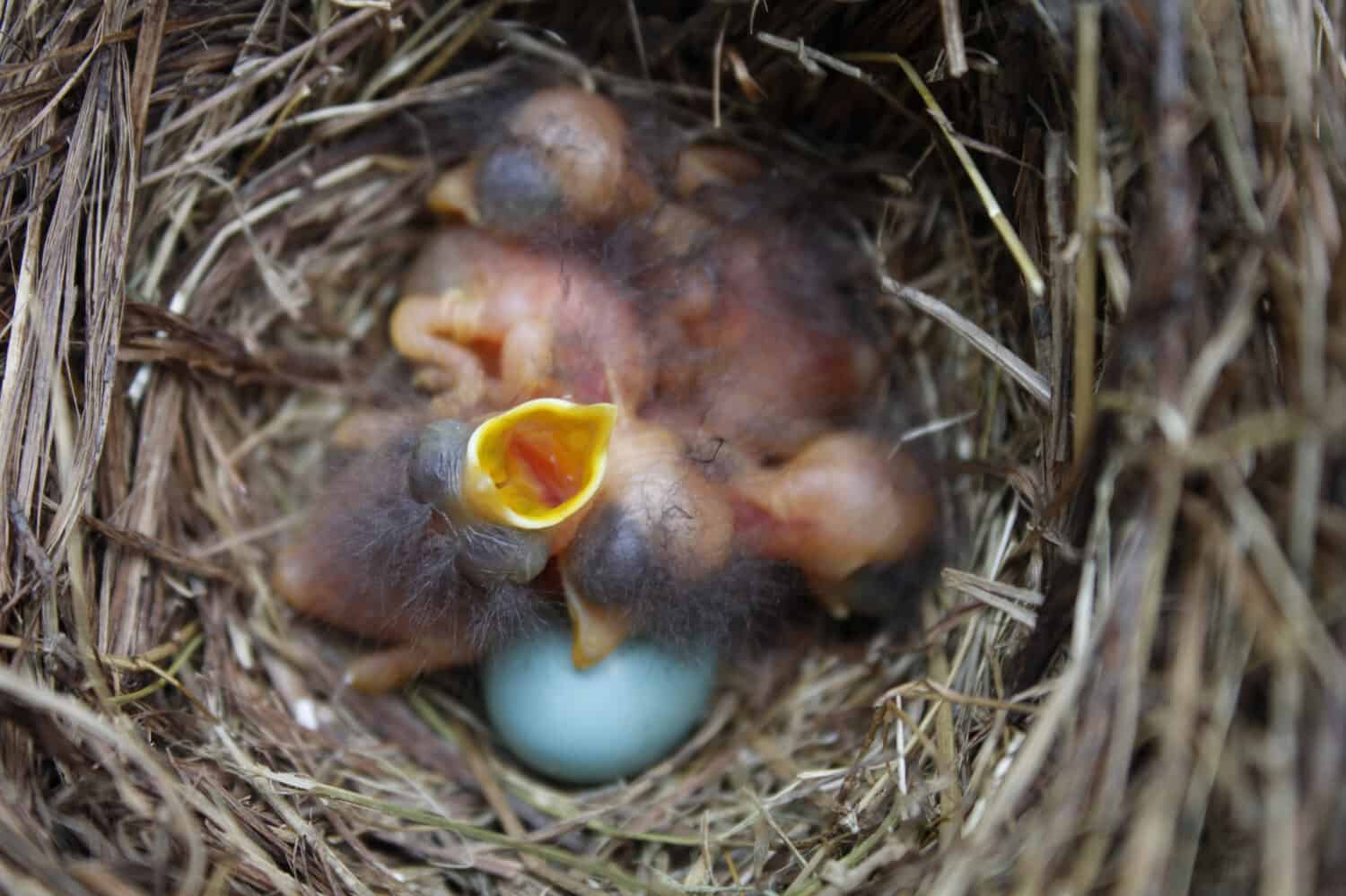
When they hatch, baby Eastern bluebirds weigh only 0.08 ounces. They are so small that they are about the size of the tip of a human thumb. Their heads are usually the largest part of their body, and their eyes are not fully developed. Hatchlings have bare, undeveloped wings and weak legs.
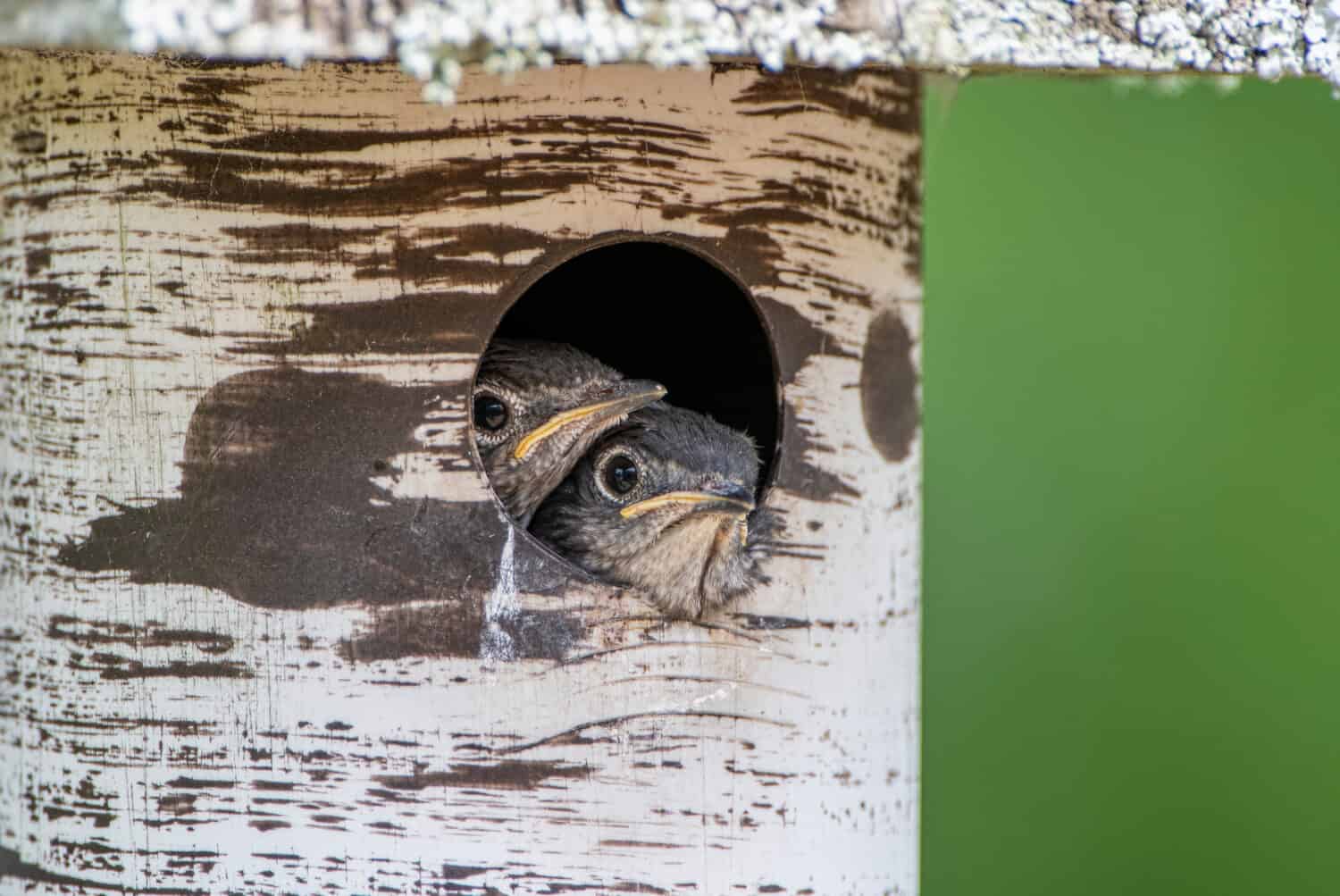
Baby bluebirds are completely dependent on their mothers.
Eastern Bluebirds generally take 16 to 21 days from the time they hatch to fledge (leave the nest), with most chicks fledging at around 17 to 18 days.
©Bonnie Taylor Barry/Shutterstock.com
Bluebird Trails Can Be Tracked for Decades
A bluebird trail is a spaced-out line of human-made wooden nesting boxes specifically designed to give these cavity-nesting birds a safe place to breed. Because nesting boxes are permanently mounted on posts in open fields, generations of bluebirds return to the same spots year after year.
Dedicated volunteers inspect these boxes every week during the spring and summer.
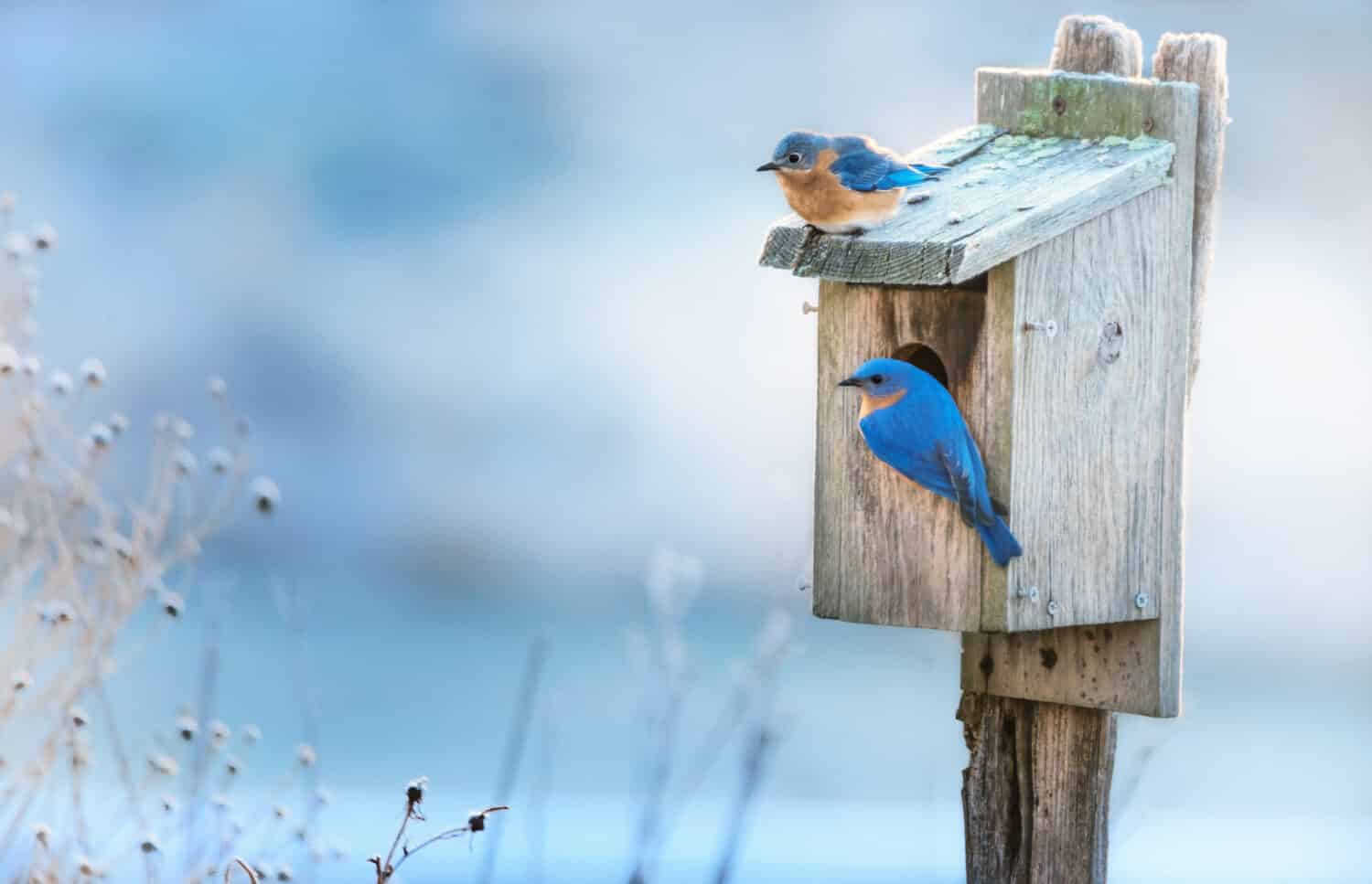
Bluebird enthusiasts learn how to make ideal homes for eastern bluebirds and where to place them.
©Heather L. Hubbard/Shutterstock.com
By recording information on eggs, hatchlings, and fledglings over 20, 30, or even 50 or more years, scientists can gain a valuable and accurate long-term timeline of population trends, climate shifts, and local ecosystem health.
Bluebird Couples Are Secretive
Before pairing, Eastern bluebirds love singing and flying around all day. After pairing, Eastern bluebirds become more secretive. They select their nesting cavity and gather grasses, delicate plant stems, and pine needles. The male sings less, while the female hides within the nest cavity. Once the nest is finished, the bluebird pair remains close for about five days or until the female lays her first egg.
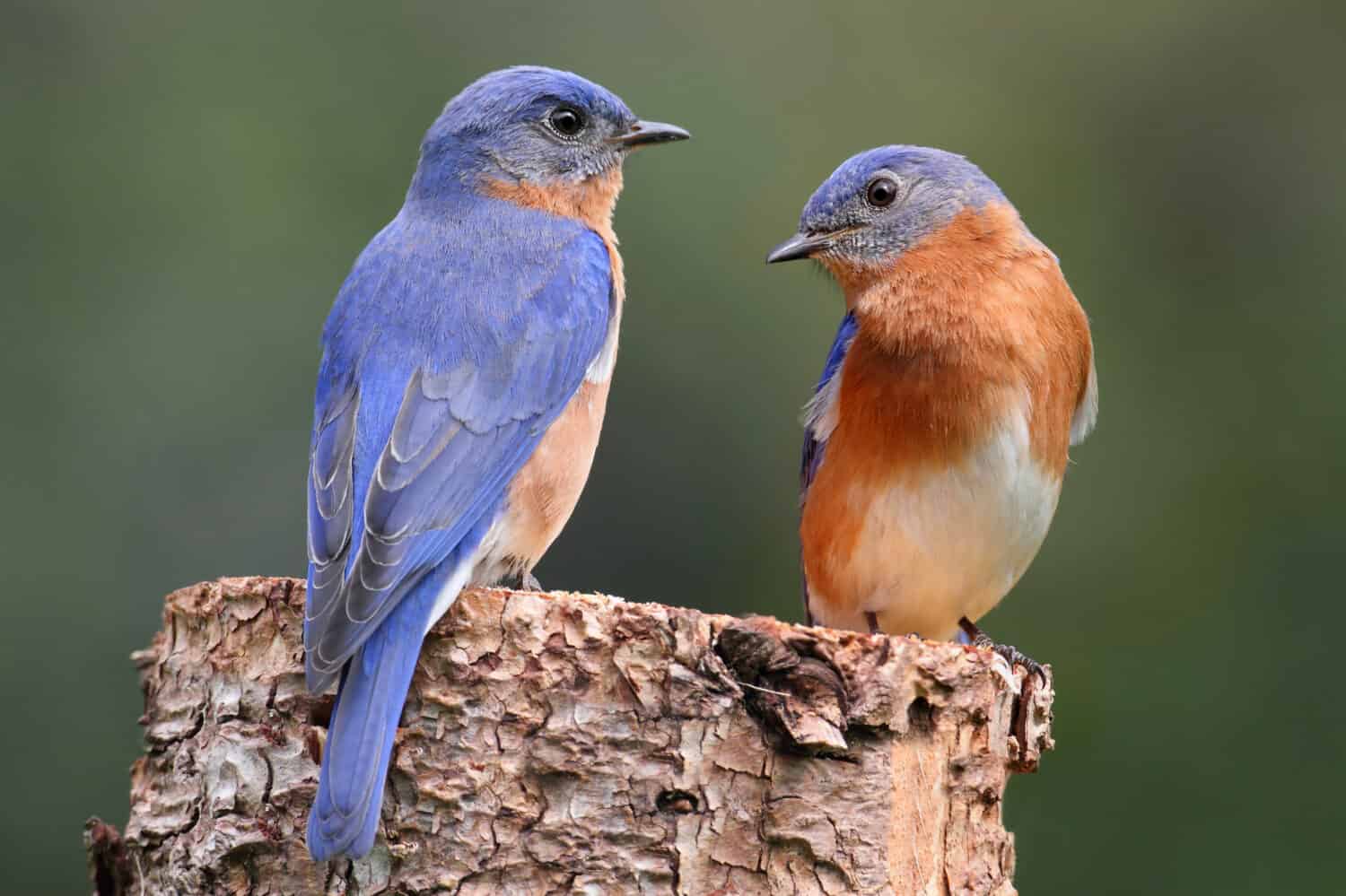
Eastern bluebirds love singing and flying around together before nesting.
©Steve Byland/Shutterstock.com
Male Eastern Bluebirds Act as Escorts
During the nesting phase, male Eastern bluebirds act as bodyguards for the female. Male Eastern bluebirds pay attention each time the female departs or arrives at the nest.
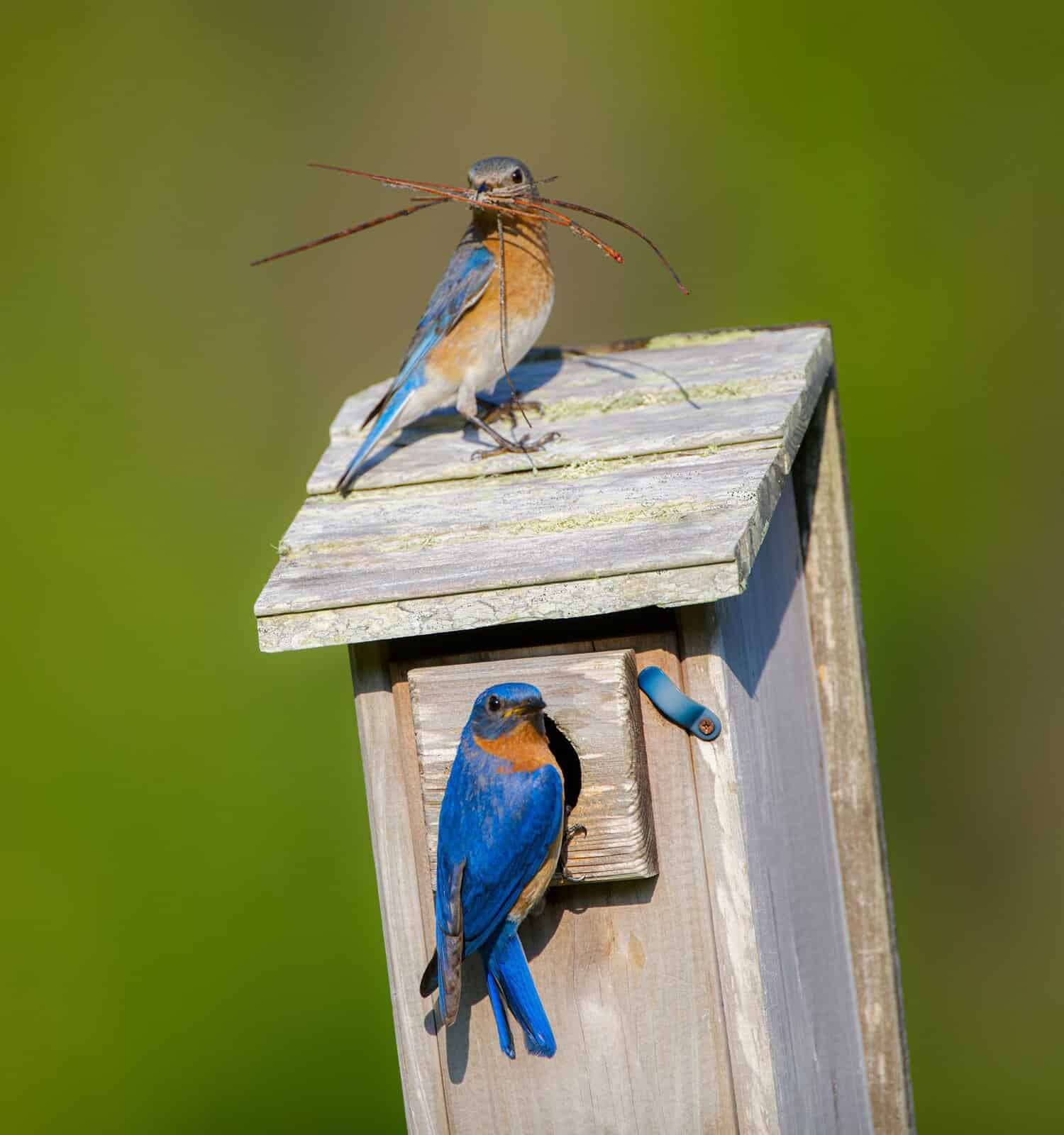
Male Eastern bluebirds guard the nest during the nesting phase.
©Chase D'animulls/Shutterstock.com
If a female wants to leave the nest, she will peek her head out of the box and wait for the male’s all-clear signal. Once she flies away, he’ll sing to stay in contact with her. Escorting helps protect the female Eastern bluebird from predators. Attentive males can warn females of hawks circling overhead or snakes sneaking toward the nest.
Eastern Bluebirds Sometimes Mate With Different Partners
Researchers once thought 90% of birds were monogamous, but now we know many species are not. For instance, bluebirds are flexible when choosing mates. Bluebirds exhibit apparent monogamy, which provides a genetic advantage to the species.
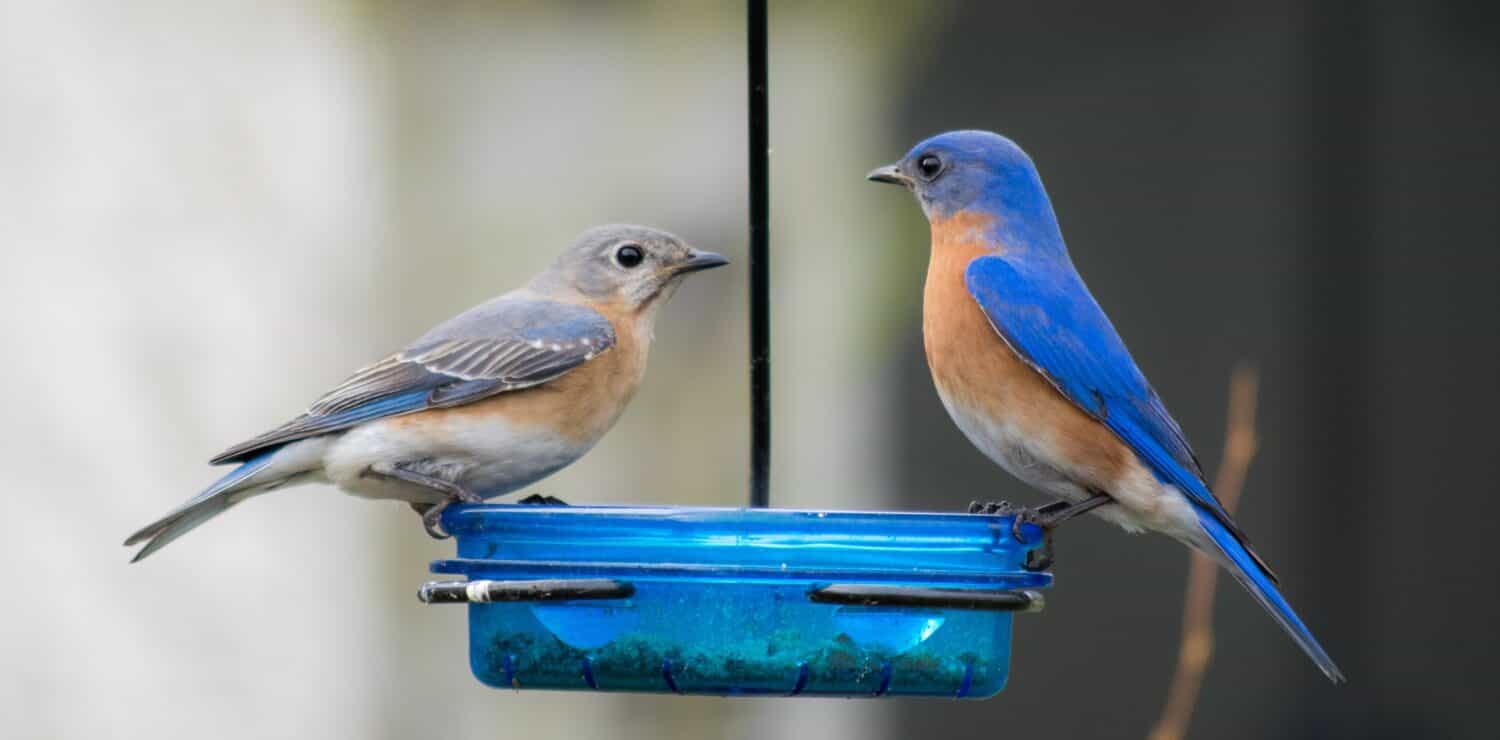
Eastern bluebirds are monogamous with flexibility.
©J Zdunczyk/Shutterstock.com
Although Eastern bluebirds appear monogamous, they frequently mate outside their partnership. This dual behavior helps keep the bluebird population healthier and more resilient. Genetic testing of bluebird nests has revealed a secret. Genetic studies indicate that about 20% to 30% of Eastern Bluebird chicks in a given nest are actually fathered by a male other than the resident partner.
Raising baby bluebirds is demanding. It takes both parents to gather enough insects to keep a brood alive. By maintaining a socially monogamous partnership, the birds ensure that every chick in the nest, whether it belongs to the resident father or not, receives all the care, protection, and food needed to fledge.
If a female mates with only one male, all her chicks share the same genetic strengths and weaknesses. By secretly mating with a neighboring male, the female introduces new genes into her brood. High genetic diversity makes the species more resilient against disease, climate shifts, and genetic defects caused by inbreeding.
There Are Floater Bluebirds
Sometimes adult Eastern bluebirds are floaters. A floater is an Eastern bluebird who doesn’t have a mate or a nest site. When a floater female mates with a resident or floater male, she will search for a place to lay her egg, such as an unguarded nest.
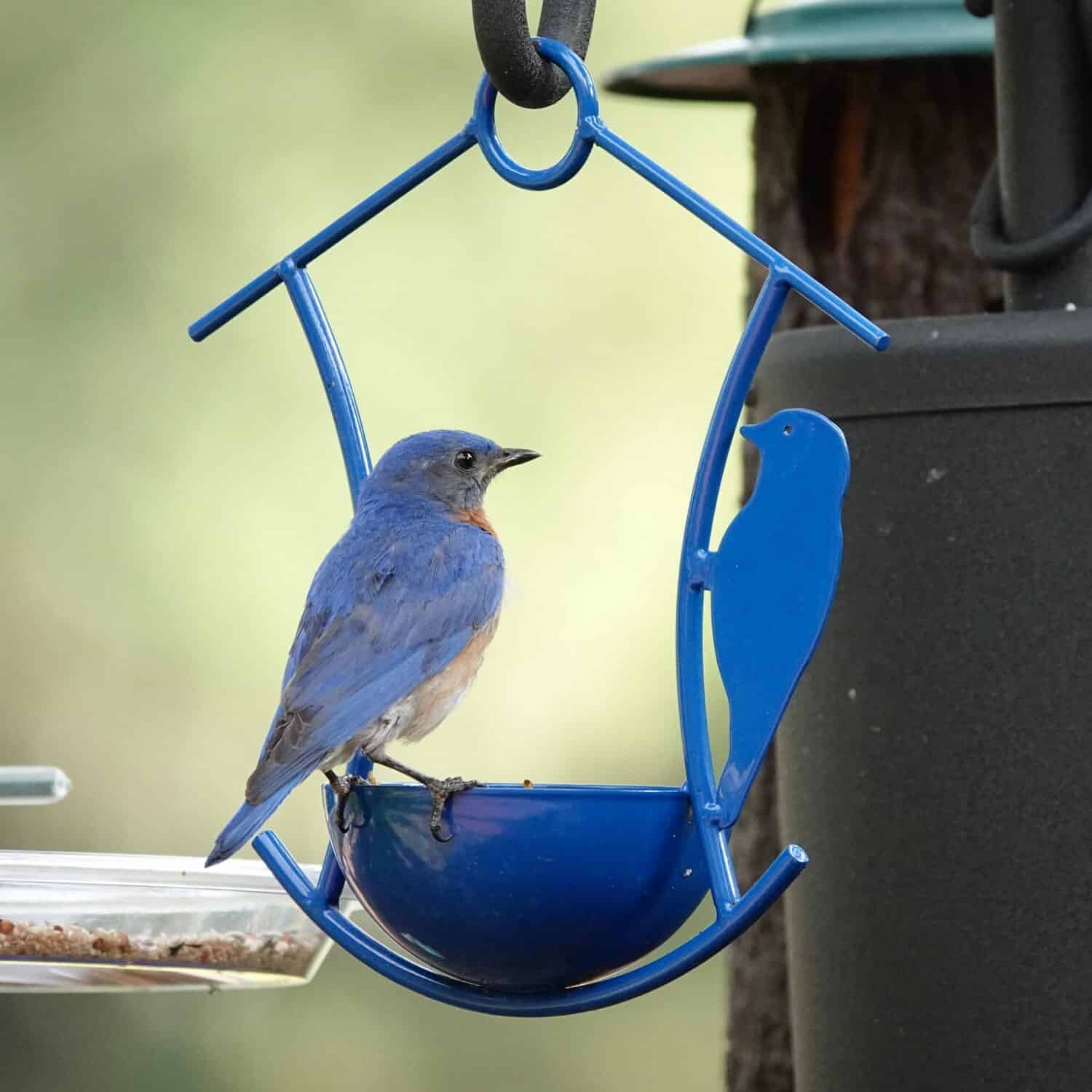
Sometimes Eastern bluebirds are floaters without mates.
©Chris Klonowski/Shutterstock.com
When a floater bird tricks a resident bird into raising its young, this behavior is called kleptogamy.
Bluebirds Like Mealworms
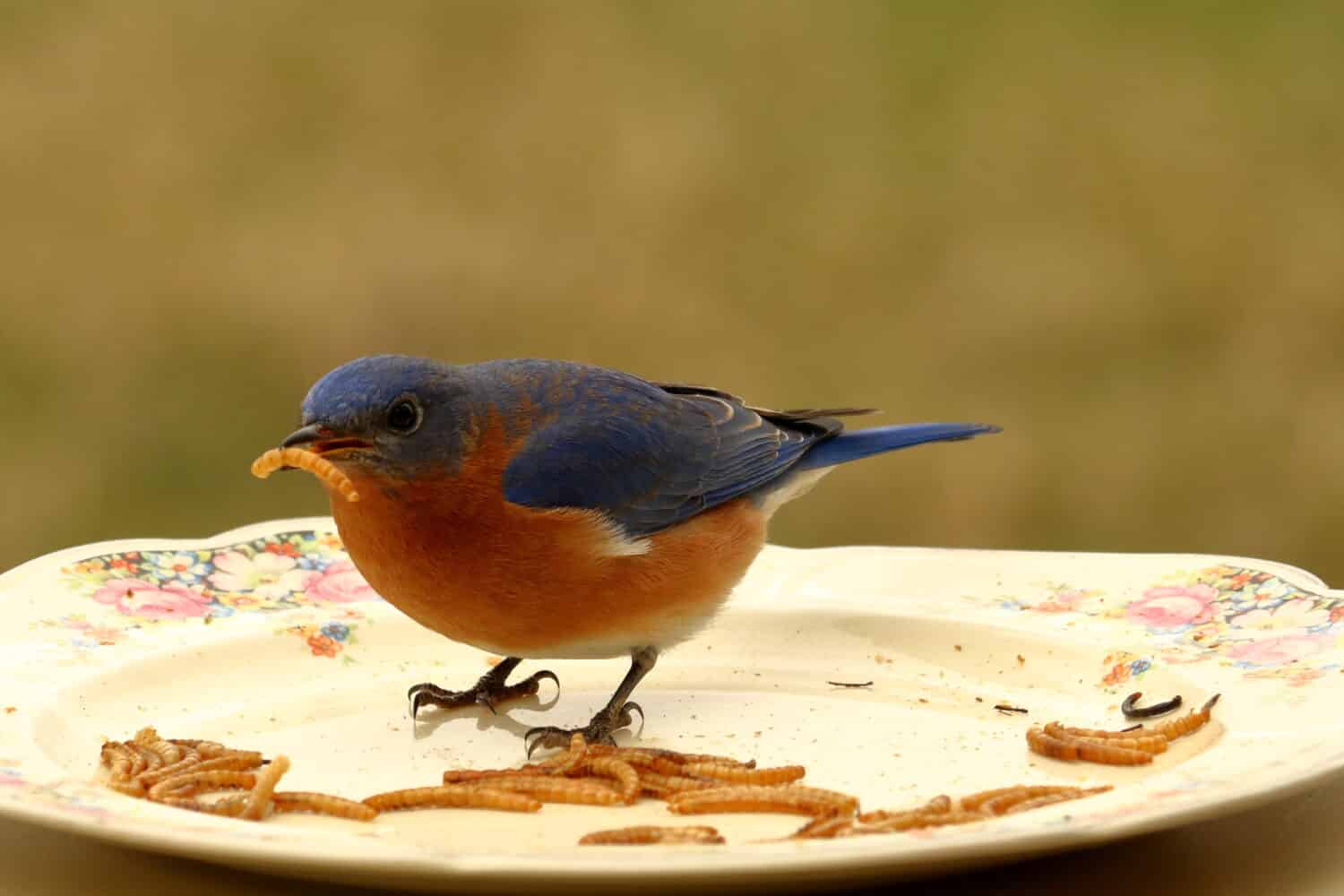
Eastern bluebirds always appreciate a mealworm treat!
©Melody Mellinger/Shutterstock.com
Mealworms are the Eastern bluebird’s favorite food. They love gobbling up these cream-colored creatures. Bluebird enthusiasts put mealworms in the nest boxes during late winter, when Eastern bluebirds have difficulty finding insects. While mealworms are a good source of protein and fat, they do not provide all the nutrients Eastern Bluebirds need, so they should be offered as a supplement rather than the sole food source. They will gobble up the offering and feed as many of the little worms to their hungry babies as they can.
Instead of dropping the mealworms directly into the nest box, it’s best to leave them for the bluebirds to find. Leave the mealworms in the bird box, and the parents will decide when and how to feed them to their offspring.