
Quick Take
- A male finch's color is not fixed. What he eats during one specific window of the year can shift his appearance entirely. See how diet shapes color →
- When young finches get stressed, they stop following their parents' lead, and the alternative strategy they turn to is surprisingly unexpected. Explore how young finches forage →
- The secret ingredient in winter bird feeders that keeps squirrels away doesn't bother finches at all, and there is a fascinating biological reason why. See winter feeder tips →
Finches are some of the smallest and most common songbirds. They are found in nearly every part of the world, with the exception of Australia and the polar regions. Finches belong to the family Fringillidae, which includes more than 200 species worldwide. There are 17–18 true finch species that inhabit the U.S. Backyard bird watchers are sure to find finches congregating around bird feeders, but what do finches eat? Read on to find out.
The Finch Diet
Finches are such a diverse group of birds that any single list of foods would be incomplete. They live in many different environments throughout the world, from coastal areas to deserts, mountains, and everywhere in between. As a result, each finch species has a specialized diet that correlates to its ecological niche. However, there are some generalities among the species.
Finches are generally considered to be opportunistic granivores. In the wild, most of their diet comes from seeds. However, they are also adaptable and take advantage of any food source in their habitat. This is why their diet changes with the seasons. During certain times of the year, finches incorporate new foods into their diet as those foods become available. For example, they focus more on tree buds in the early spring and berries and other fruit in late summer.
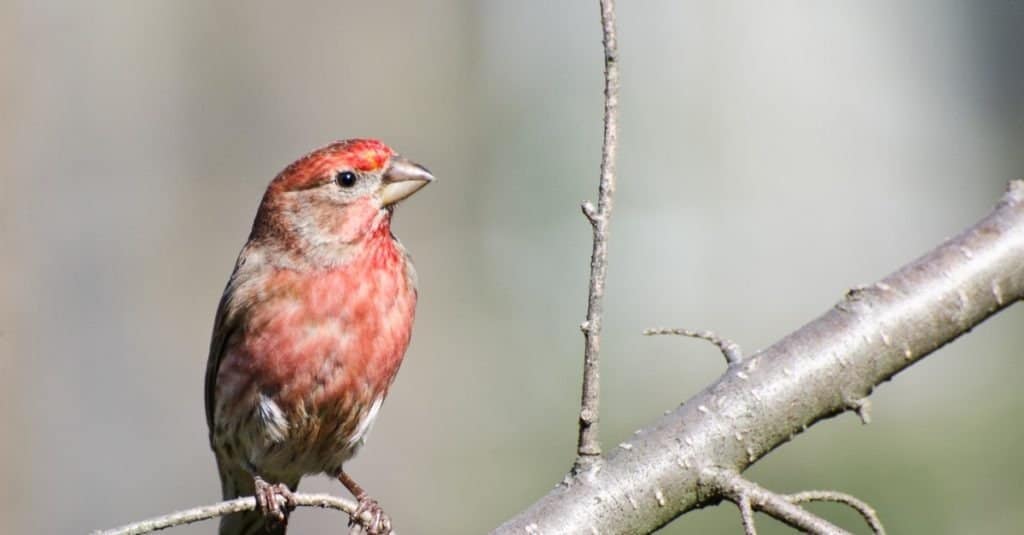
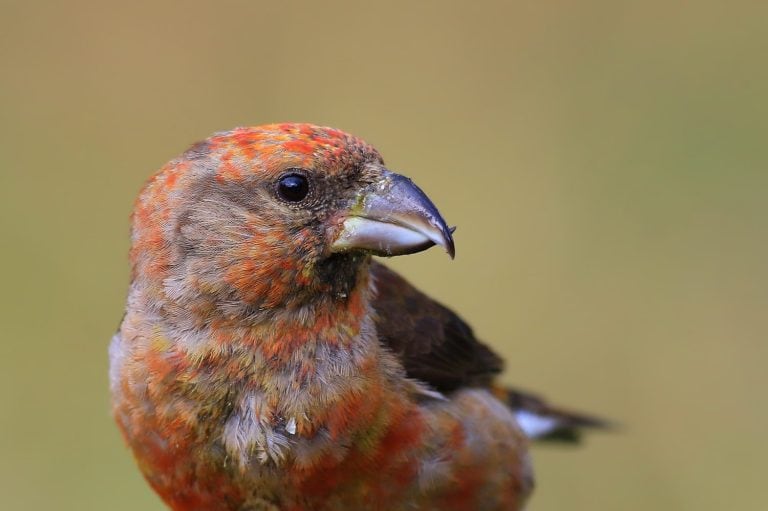
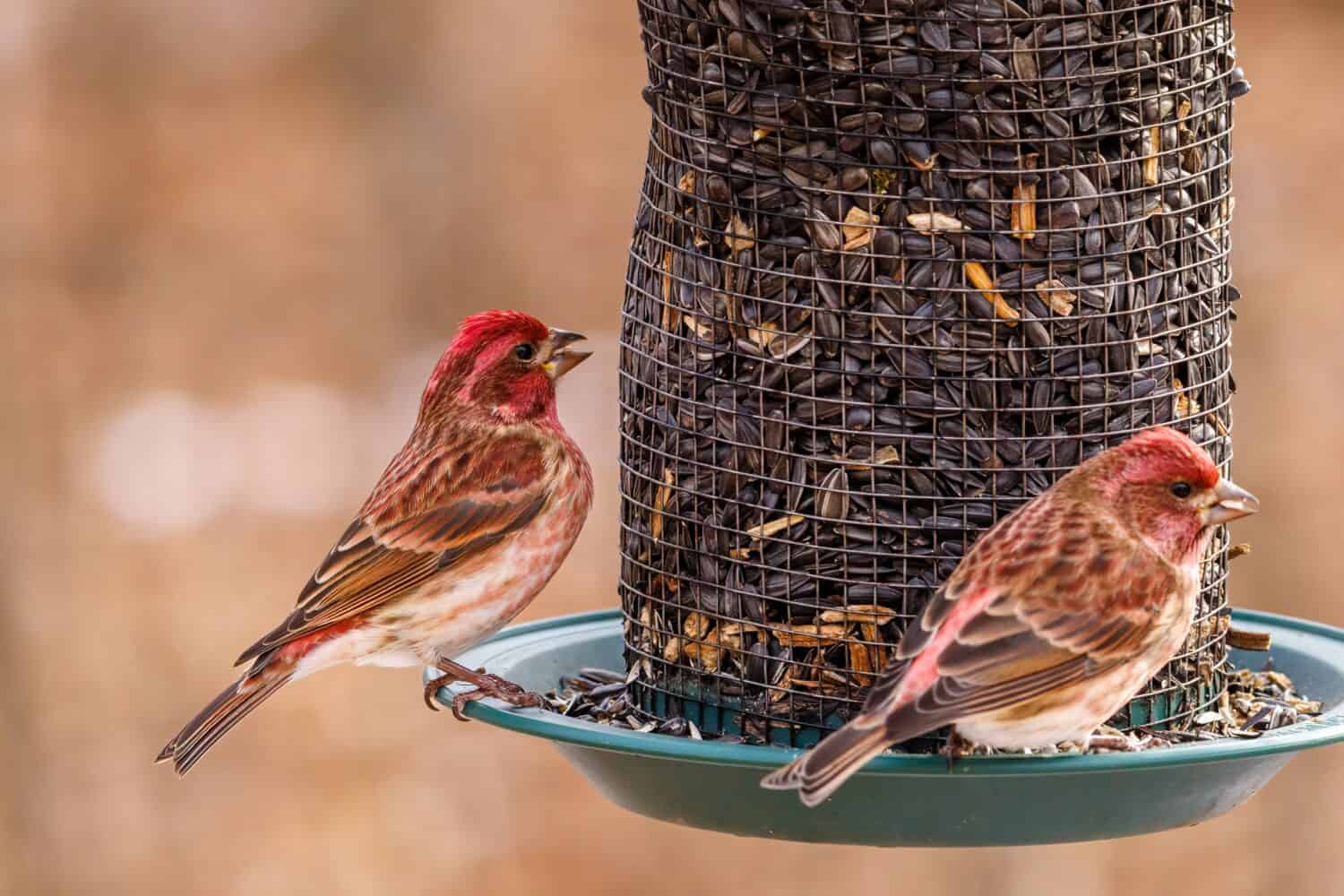
The red coloration of a male house finch is due to consuming carotenoid-rich fruits and seeds when it molts.
©rck_953/Shutterstock.com
The red coloration in male house finches is also determined by their diet. Carotenoid pigments found in berries, seeds, vegetables, and other foods consumed during their molt make them appear a brighter red, which females often prefer for mating. Males that do not consume enough foods with this pigment may appear more orange or yellow.
For some finches, breeding season brings a carnivorous addition to their diet. As they lay eggs and their chicks hatch, finches may consume insects to give themselves and their chicks the protein needed for growth. As the chicks age, however, both the juveniles and their parents go back to their seed and grain diet. House finches feed their chicks exclusively plant matter, which is uncommon among birds.
Finch Food
Although there is some variation by species and habitat, finches generally eat the following foods:
- Sunflower seeds and hearts
- Thistle seeds
- Grass seeds
- Dandelion seeds
- Nettle seeds
- Mustard seeds
- Ragweed seeds
- Millet seeds
- Flax seeds
- Oats
- Barley
- Cracked corn
- Cactus
- Tender buds of trees, including birch, elm, and alder
- Berries such as mulberries, strawberries, blueberries, blackberries, and raspberries
- Orchard fruits including apricots, peaches, nectarines, plums, and cherries
- Insects such as aphids and small beetles
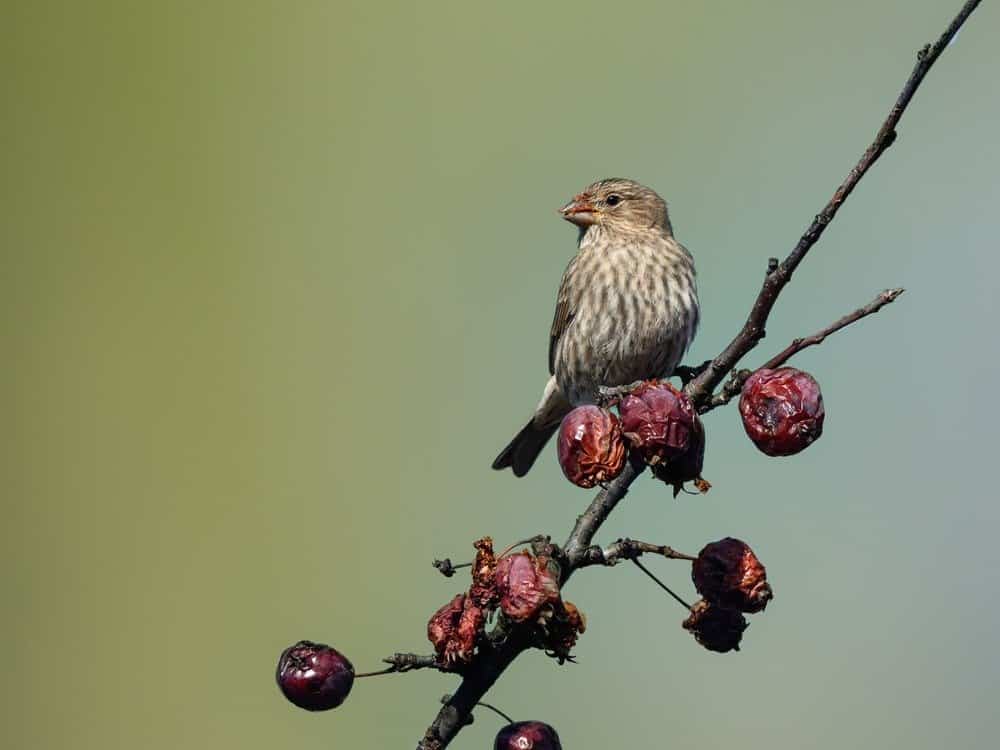
Finches are diurnal, foraging through the day for seeds, nuts, and fruits.
©FotoRequest/Shutterstock.com
How Do Finches Forage for Food?
Most finches are highly social, and they learn foraging behavior from their parents. However, researchers have found that stressed young finches turn away from their parents’ strategies and look to the wider flock to gain foraging skills. Finches forage primarily on the ground, but they may also forage in shrubs and trees. They generally forage in flocks, except during nesting season. Finches have strong, cone-shaped beaks to crack open shells, discard husks, and eat the seeds inside.
Finches are typically diurnal, singing and foraging throughout the day and sleeping at night. Most finches are not long-distance migrants, but they may migrate short distances based on food availability. Some finches in colder parts of the U.S., such as the Great Lakes region or the Northeast, may fly south for the winter.
How to Feed the Finches in Your Backyard
Attracting finches is one of the easiest and most rewarding activities for backyard birders. You can attract common finches, such as house finches, goldfinches, and more, using a traditional bird feeder or suet feeder. For most finches, a bird feeder filled with black sunflower or thistle seeds is irresistible, as those are among their favorite seeds.
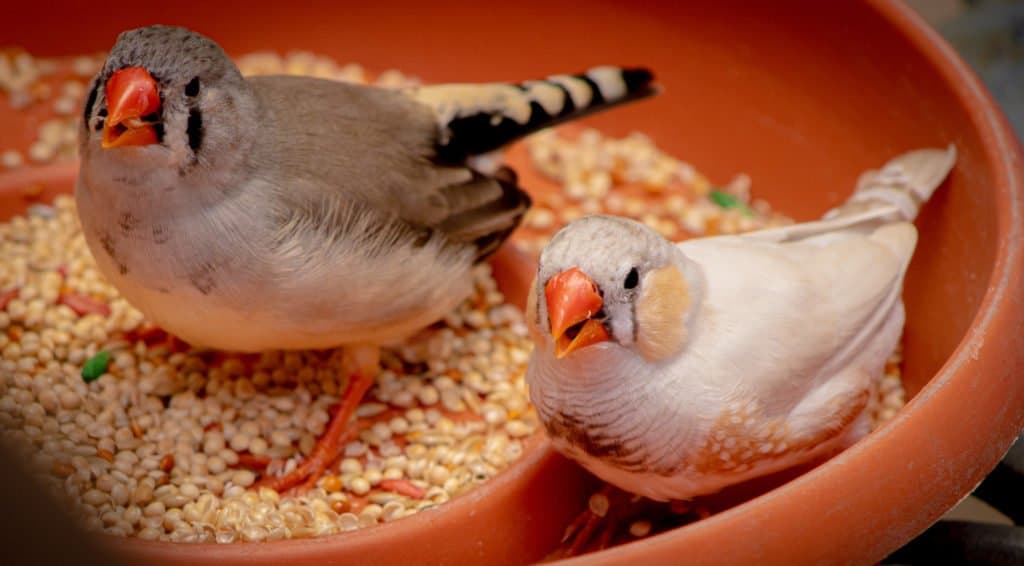
Finches are frequently found in urban and suburban areas and often visit backyard bird feeders.
©Wirestock Creators/Shutterstock.com
Finches are also likely to visit feeders in winter when resources are scarce. Suet feeders contain fatty cubes (often made with rendered beef fat or a similar ingredient), packed with seeds and nuts. The suet provides nutrition, and the embedded seeds offer an engaging foraging challenge. During the winter, finches are more likely to feed at a suet feeder because of its higher caloric content. Additionally, suet feeders often contain capsaicin — the compound in hot peppers that makes them spicy — to deter mammals like squirrels from stealing the birdseed. Birds cannot detect capsaicin, so it does not bother them.