
Quick Take
- One of Minnesota's best birding spots owes its fame entirely to a natural obstacle, though most visitors never realize why the birds pile up there. See how Lake Superior funnels migrants →
- There's exactly one place in all of Minnesota where you're reliably guaranteed to spot a rare southern species, and most birders wouldn't think to look there first. Find the blue grosbeak here →
- Minnesota's record-holding state park for bird diversity sits above a lake most people associate with scenery, not species counts. Explore Frontenac's record bird list →
- A patch of wilderness barely 15 acres wide near a major city hosts a bird list that rivals refuges hundreds of times its size. Discover the 15-acre sanctuary →
Around 450 species of birds have been documented in Minnesota, including swans, hawks, sparrows, warblers, and other songbirds. Of that number, over 250 are breeding species. Even if you live in the city, Minnesota’s ponds, marshes, wetlands, rivers, prairies, woodlands, gardens, and fields, all typical bird habitats, are closer than you might think. Read on to a look at some of the best bird-watching spots in the land of 10,000 lakes.
Hawk Ridge Nature Reserve
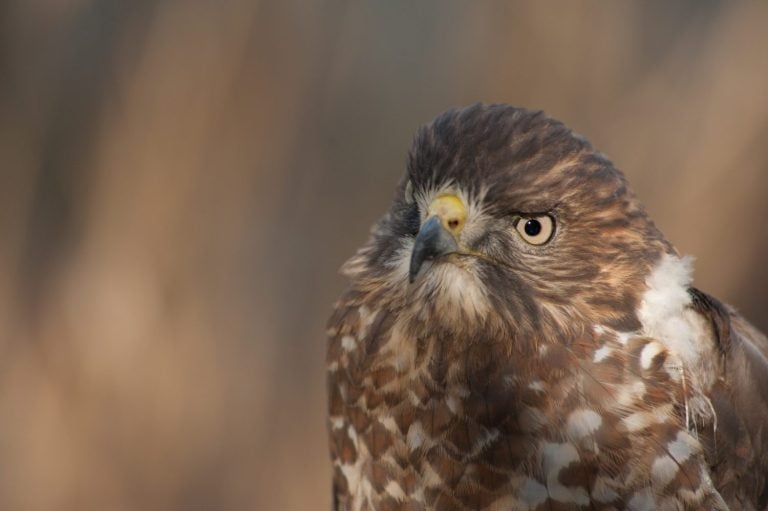
The most well-known birding location in Minnesota is probably Hawk Ridge, and with good reason. Several of Minnesota’s most popular bird species soar over Hawk Ridge. Hawk Ridge has also been designated as an Important Birding Area by the National Audubon Society. Birds are unwilling to fly across the natural barrier created by Lake Superior, which leads southbound migrants to congregate along Hawk Ridge. Hawk flocks, also known as kettles, fly in warm air currents that develop along ridges along the lake’s edge. Various species of eagles, red-tailed hawks, and northern goshawks can all be seen in considerable numbers in October.
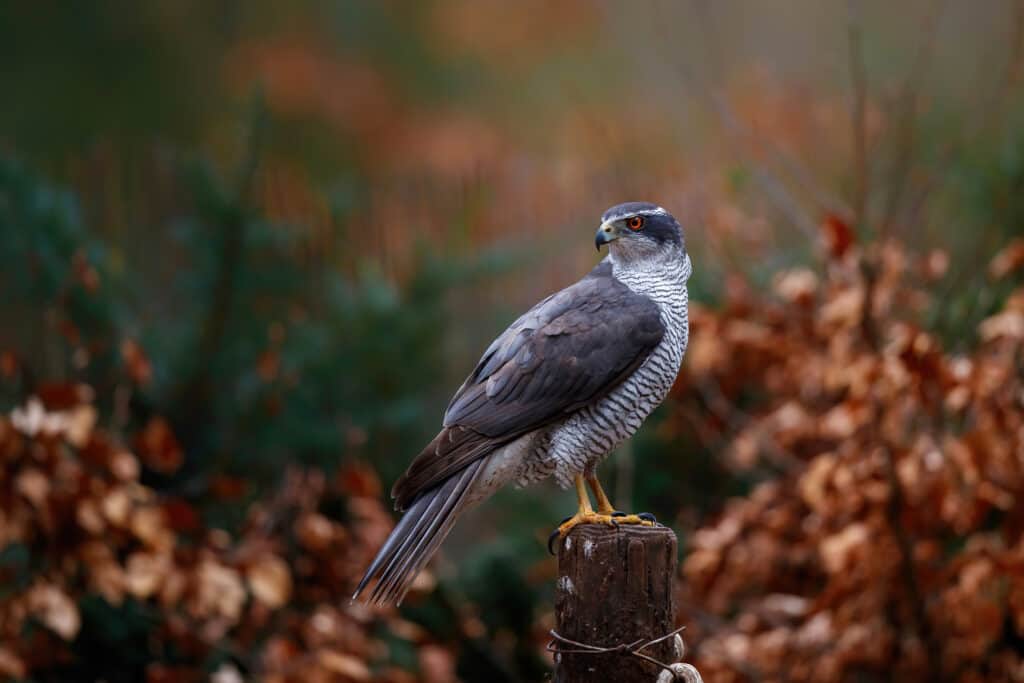
The northern goshawk, which you can spot at Hawk Ridge, is the largest of the true hawks.
©iStock.com/Henk Bogaard
Agassiz National Wildlife Refuge
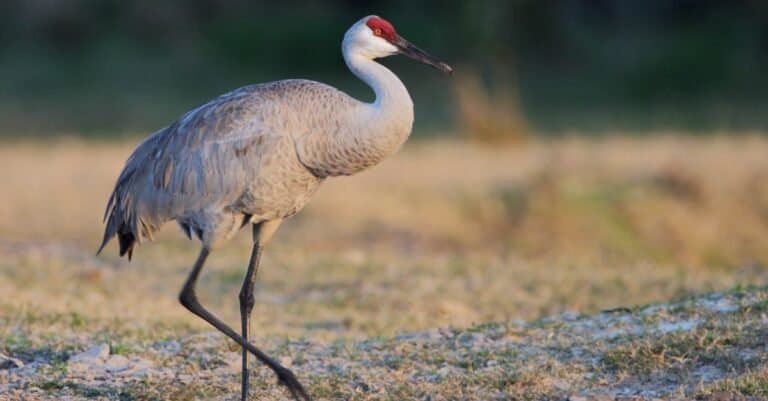
This 61,500-acre refuge in Marshall County is a Globally Important Bird Area with tens of thousands of waterfowl and shorebirds stopping over during migration. American white pelicans and sandhill cranes are seen here in large flocks. Birders can also view breeding birds such as sparrows, short-eared owls, magpies, and yellow-headed blackbirds in the woodlands here. Franklin’s gulls have a sizable breeding colony near Agassiz. A whopping 7,500 pairs of ducks and 250 pairings of Canada geese lay their eggs here annually.
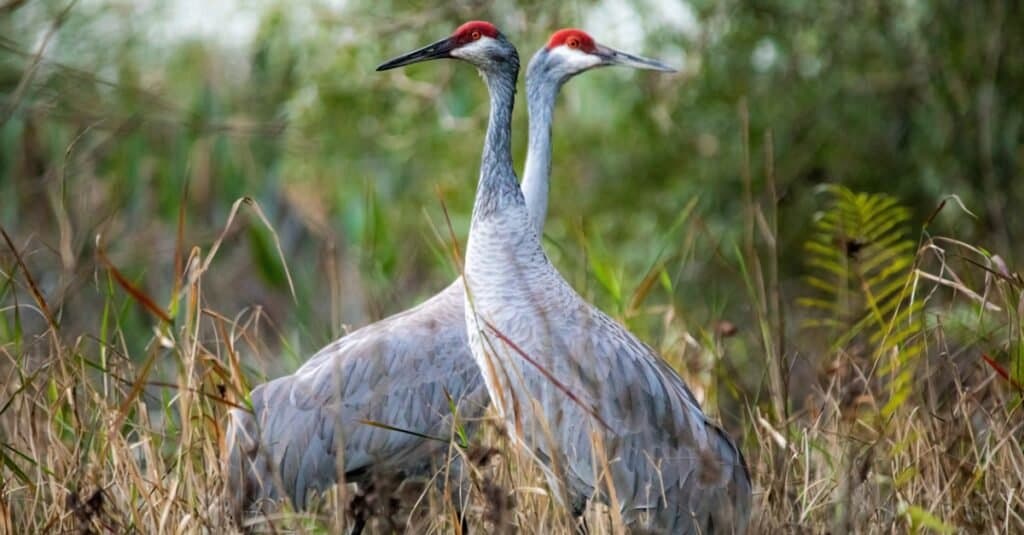
Sandhill cranes are seen in large flocks at Agassiz National Wildlife Refuge.
©iStock.com/GummyBone
Sax-Zim Bog
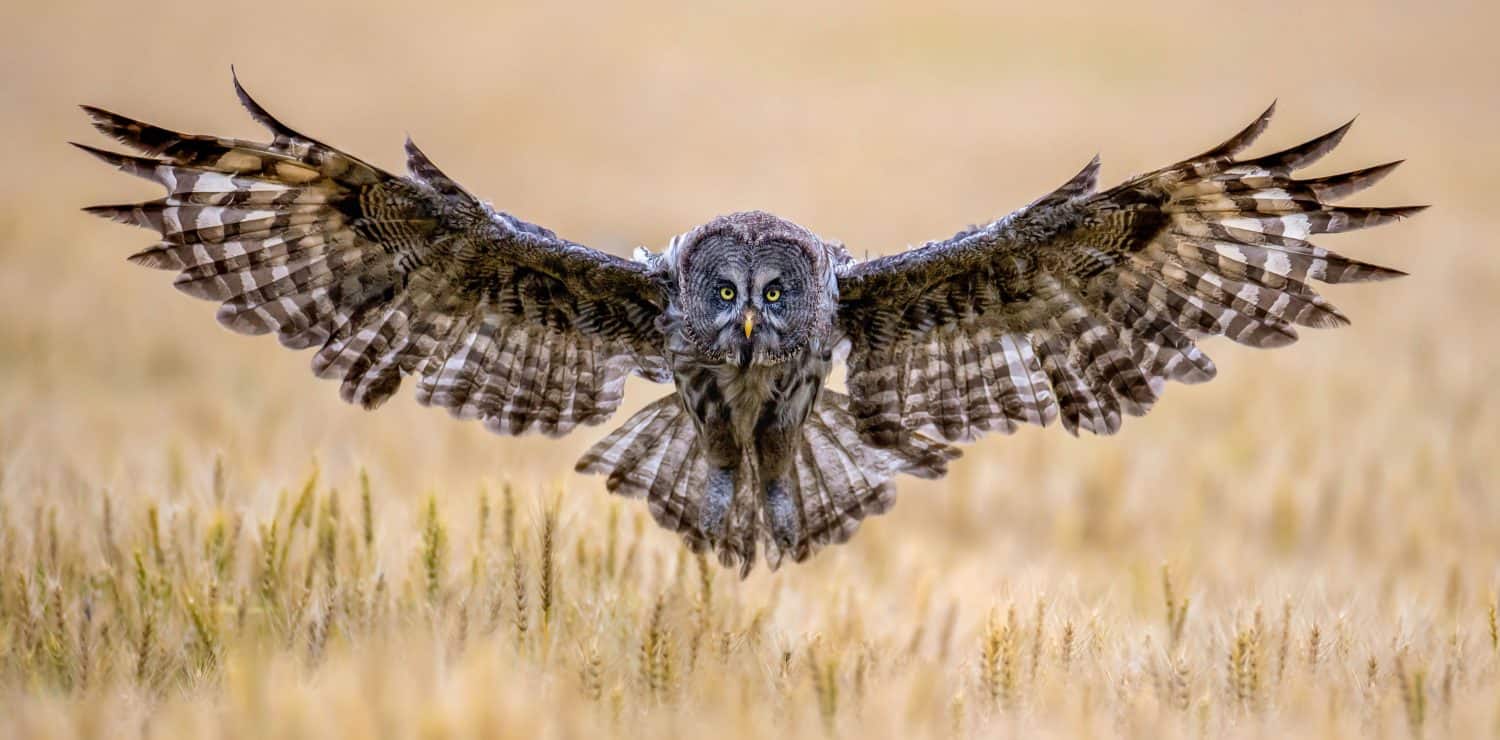
The Sax-Zim Bog is over 300 square miles of black spruce forest, wetlands, and tamarack bog located around 50 minutes northwest of Duluth in Forbes. It is a popular bird-watching site and a well-known wintering refuge for great grey owls, northern hawk-owls, and northern saw-whet owls. Nesting birds include ruffed and sharp-tailed grouse, sandhill cranes, upland sandpipers, black-backed woodpeckers, gray jays, boreal chickadees, and a variety of flycatchers and warblers. Birding is typically done from the roadside, but there are also some trails.
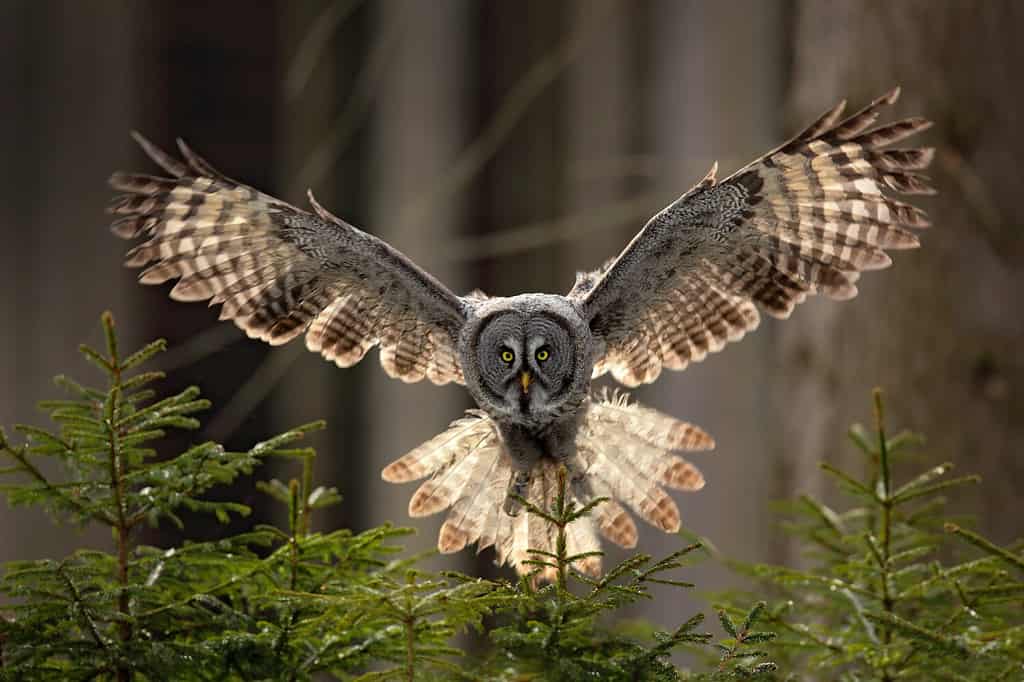
The Sax-Zim Bog is a well-known wintering area for great grey owls.
©Ondrej Prosicky/Shutterstock.com
Blue Mounds State Park
The name of this approximately 1,800-acre park in southwestern Minnesota comes from a 100-foot tall, 1.5-mile long rock that appeared blue to pioneers traveling west. Made up of mostly prairie and grasslands, the park has a wide variety of sparrows, warblers, blackbirds, woodpeckers, finches, thrushes, and other songbirds. Locals note the park is also the only dependable site to see a rare southern species, the blue grosbeak. Additionally, birders can see waterbirds such as Canada geese, wood ducks, blue-winged teals, great blue herons, and mallards throughout most of the year.
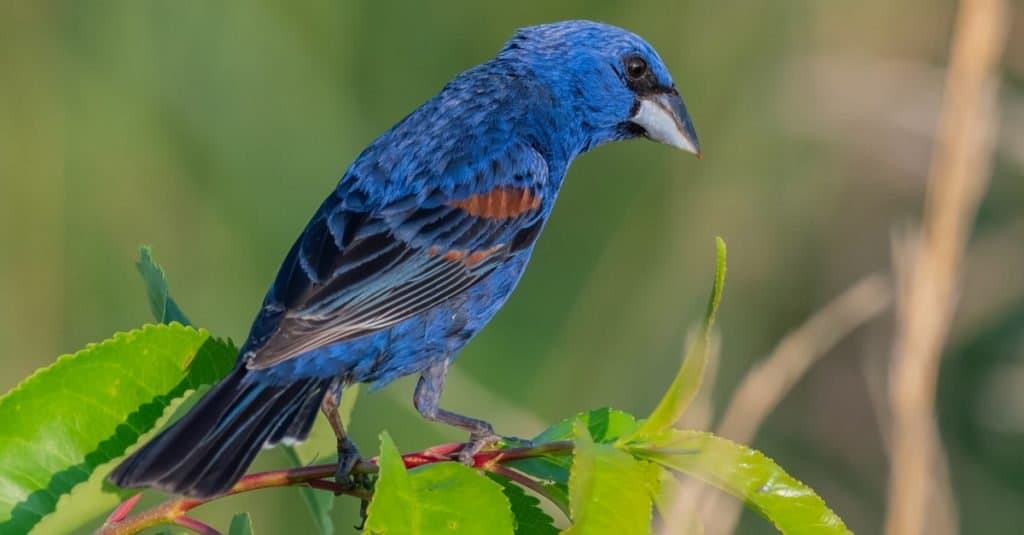
Blue Mounds is the only dependable bird-watching destination to see the blue grosbeak.
©Jim Beers/Shutterstock.com
Sherburne National Wildlife Refuge
Sherburne National Wildlife Refuge is a 30,700-acre sanctuary for migratory birds in Sherburne County’s St. Francis River Valley. Fall migration is a great time to visit the refuge, as sandhill cranes congregate and nest here. There are also tens of thousands of waterfowl of many species that pass through as they travel along the Mississippi Flyway. Nesting birds include bald eagles, wild turkeys, northern harriers, red-headed woodpeckers, marsh wrens, blue-winged warblers, and yellow-headed blackbirds, among others. Trumpeter swans are also year-round residents.
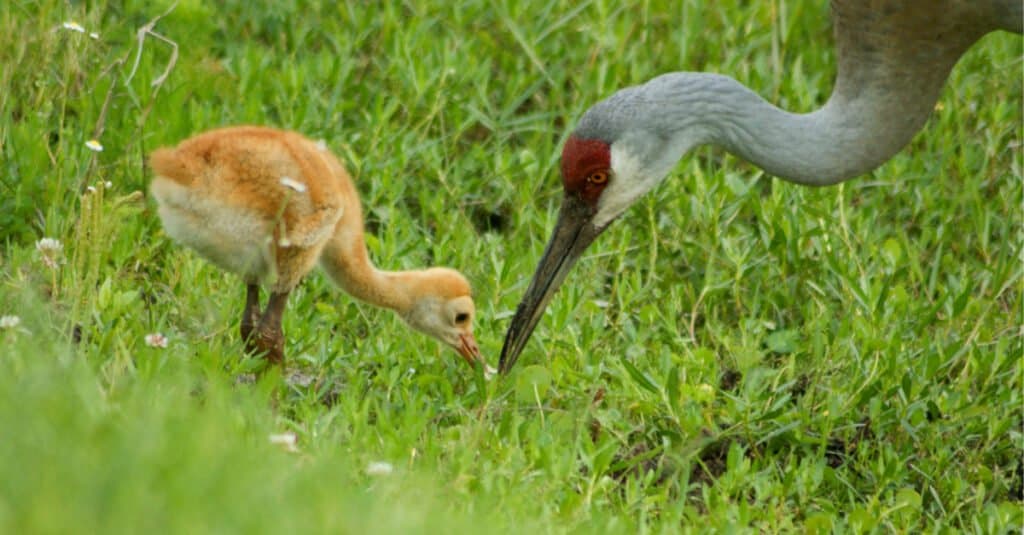
Sandhill cranes nest at the Sherburne National Wildlife Refuge.
©iStock.com/Bkamprath
Big Stone National Wildlife Refuge
Big Stone National Wildlife Refuge is located in Big Stone and Lac Qui Parle counties in far west-central Minnesota. The refuge includes 11,586 acres of marshes, woodlands, lakes, grasslands, and farmlands. The wide range of environments results in a large range of bird species. You can find sparrows, owls, orioles, wrens, blackbirds, dickcissel, and bobolink, as well as Western nesting birds, prairie species, and waterfowl. Western species include Swainson’s hawks, western kingbirds, western grebes, and western meadowlarks. More than 20 different species of ducks use the refuge as a primary resting place throughout their migration.
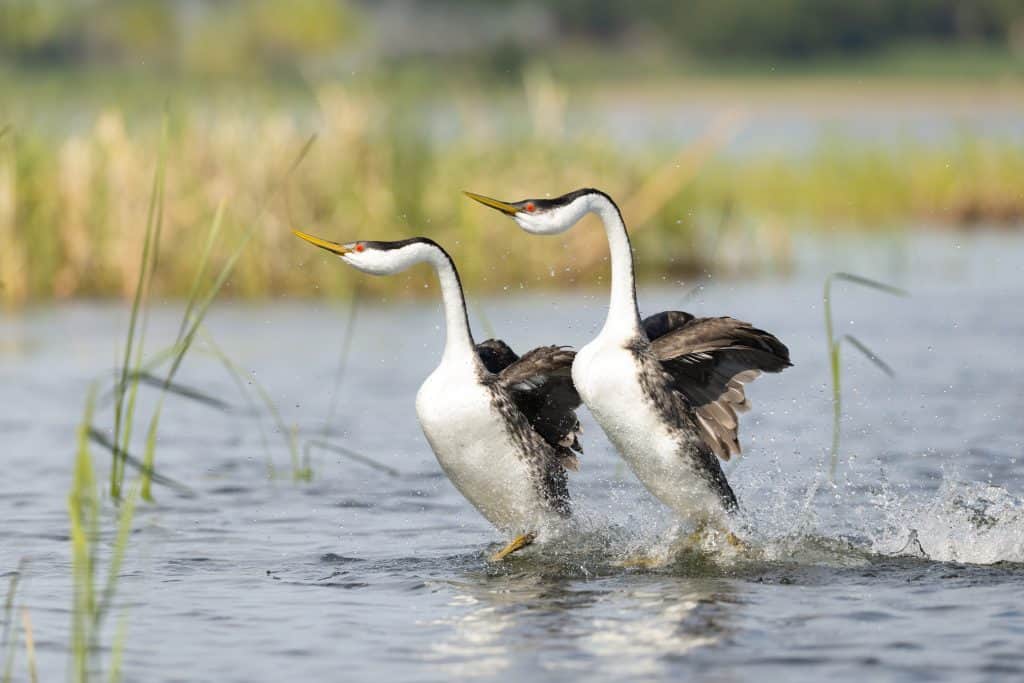
Western grebes are one of the western bird species found at Big Stone National Wildlife Refuge.
©Agnieszka Bacal/Shutterstock.com
Eloise Butler Wildflower and Bird Sanctuary
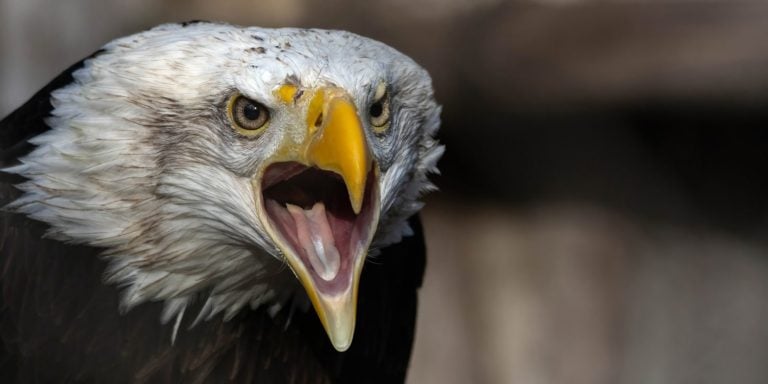
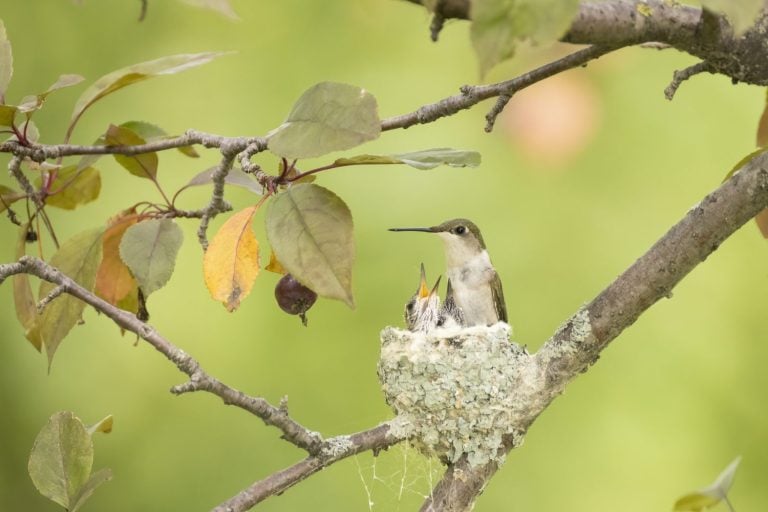
The Eloise Butler Wildflower and Bird Sanctuary is a 15-acre reserve just outside of Minneapolis. The sanctuary has various natural habitats, which include grasslands, forests, and wetlands. There are 600 distinct herbaceous and woody plant species that can be found there. The sanctuary has over 130 resident and migratory bird species, including scarlet tanagers, ruby-throated hummingbirds, barred owls, and red-headed woodpeckers. The park is part of the larger Theodore Wirth Park. The park spans 740 acres and has mud flats that are also excellent for bird-watching. White-breasted nuthatches, Canada geese, Cooper’s hawks, Baltimore orioles, pied-billed grebes, and common yellowthroats are a few of the birds that visitors can see here.
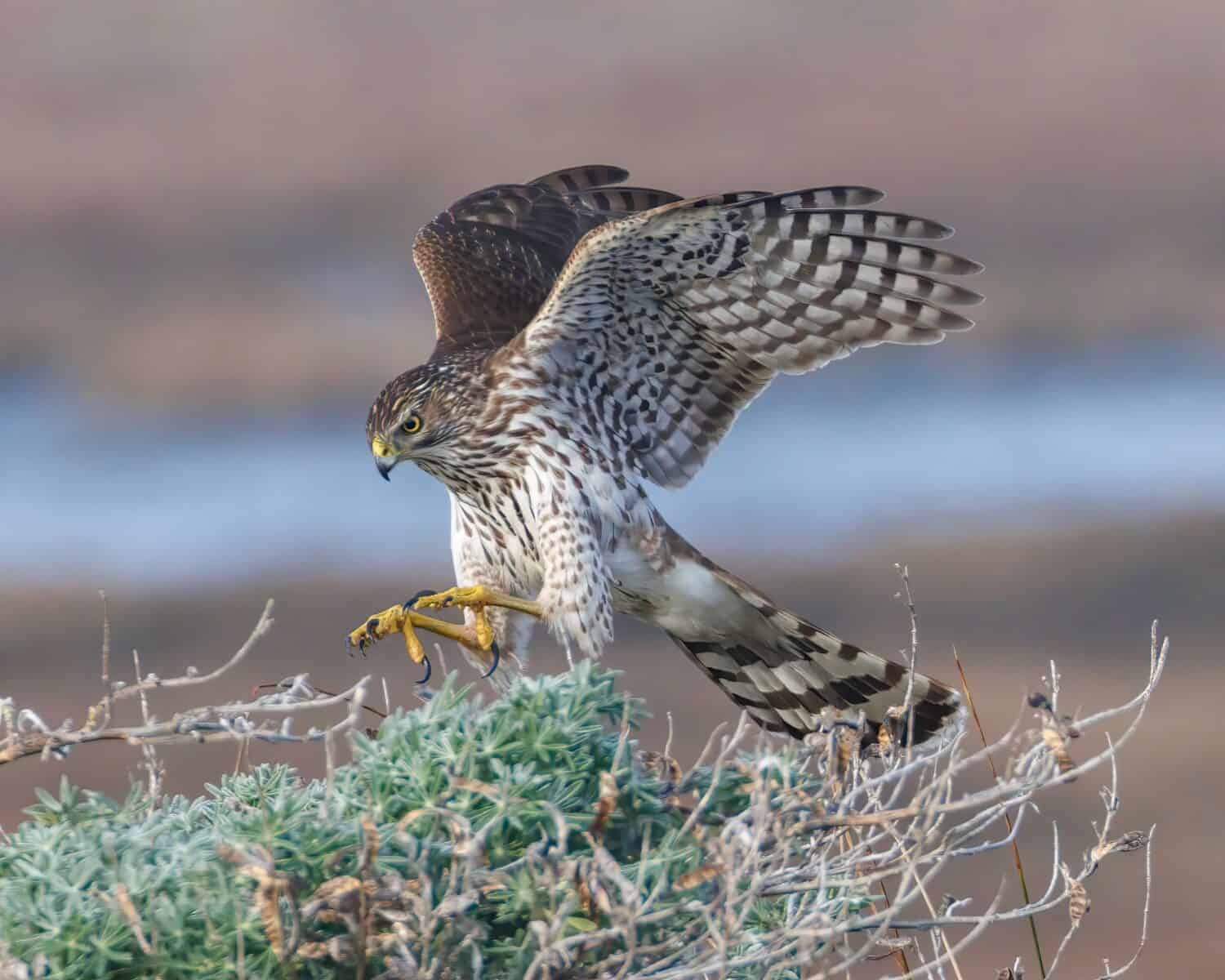
Cooper’s hawks inhabit the deciduous woods at the Theodore Wirth Park.
©J. S. Fisher/Shutterstock.com
Frontenac State Park
Frontenac State Park is situated 450 feet above Lake Pepin, among the county’s forested cliffs. The park has a variety of habitats, including oak savanna, forests, marshes, and a lake, providing habitat for a bird list of over 260 recorded species, which is the highest count of any state park in Minnesota. Migrating sharp-shinned hawks, broad-winged hawks, and red-tailed hawks can be seen in the autumn, along with bald eagles and turkey vultures flying over the bluffs. Shorebirds and wading birds can also be seen along the Lake Pepin shoreline. For veteran birders, the park is also a well-known spring location, with many warbler species, red-shouldered hawks, and blue-gray gnatcatchers in the forests and sedge wrens, sparrows, and bobolinks in the prairies.

Frontenac State Park has the highest bird species count of any state park in Minnesota.
©iStock.com/juliannafunk