
Quick Take
- Two birdwatchers standing feet apart at the same site can have completely opposite experiences, where one sees thousands of hawks overhead while the other sees none. See how geography concentrates hawks →
- Hawks in larger flocks actually flap their wings less than those flying in smaller groups, a fact whose explanation reveals a smarter survival strategy than flying solo ever could. Discover the energy-saving research →
- The name 'kettle' for migrating hawk flocks comes from a surprisingly visual comparison, one so apt that it makes the whole formation suddenly make sense. Explore the kettle explained →
- The entire spectacle compresses into a short window, and missing it by even a few days means waiting for next season. See the two-week window →
If you are lucky enough to be in their path, you may get the chance to witness a group of up to thousands of broad-winged hawks swirling overhead as they begin their southern migration in September. These small, forest-dwelling raptors are difficult to spot during their nesting season. However, your best chance to see them is when they gather in large groups for migration. Although typically solitary, these birds become highly social during migration, forming massive flocks.
Continue reading
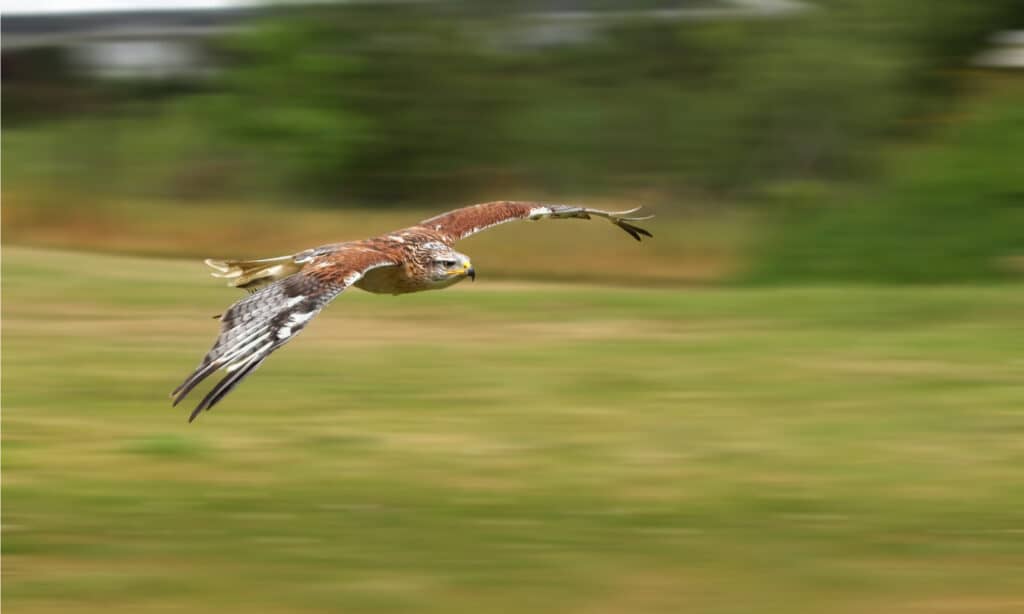
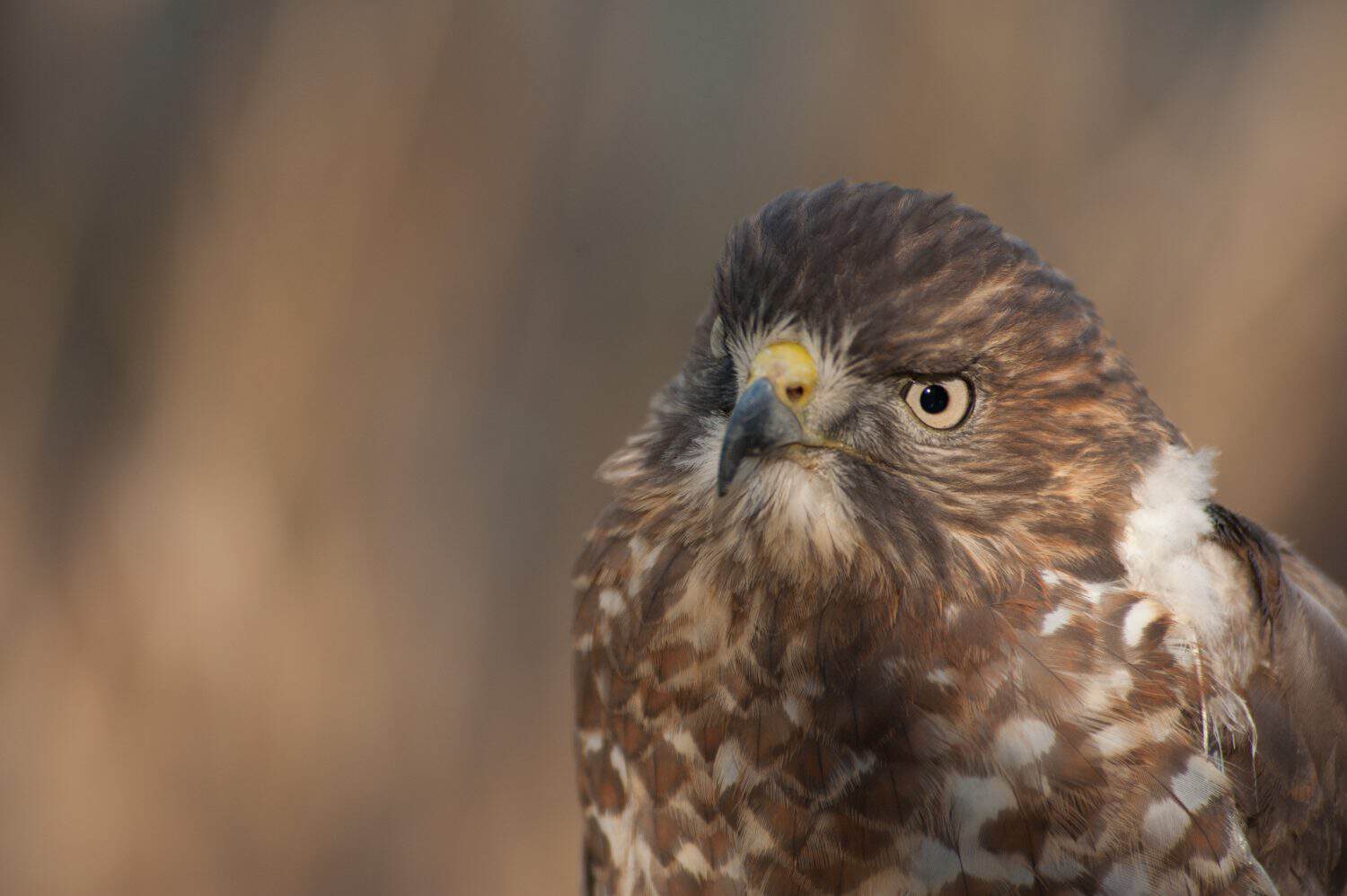
Broad-winged hawks have a wingspan of up to 39 inches.
©pr2is/Shutterstock.com
Why Broad-Winged Hawks Travel in Massive Flocks
Bird-watching enthusiasts gather in large numbers to witness the incredible sight of broad-winged hawks (Buteo platypterus) taking to the skies. Broad-winged hawks are one of the most numerous September migrants in the eastern half of the country. These small raptors are about 13 to 17 inches long with wingspans of up to 39 inches. Their breeding grounds are located in the eastern half of the United States and southern Canada. In the fall, they migrate south to Central America and northern or central South America, where they spend the winter.
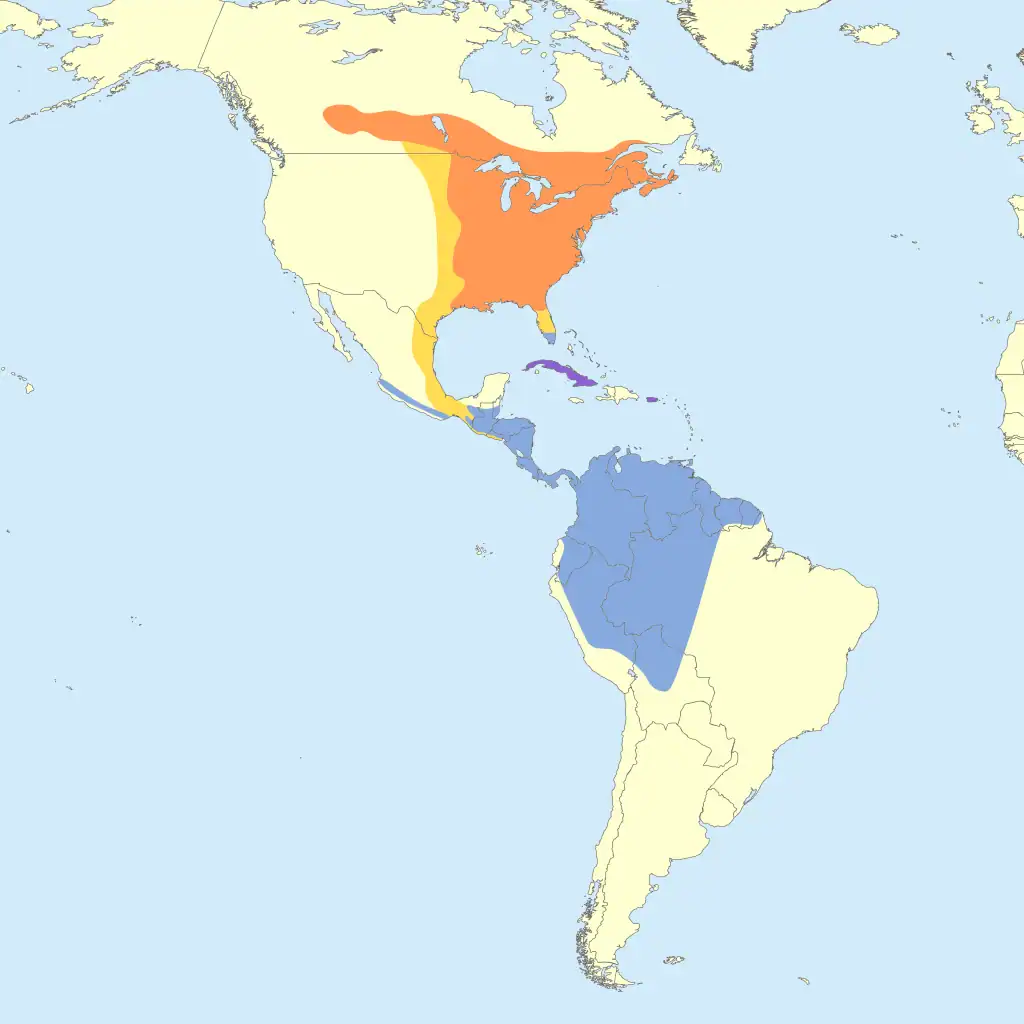
Broad-winged hawks migrate south in the winter from North America to Central and South America
©Cephas, CC BY-SA 4.0, via Wikimedia Commons – Original / License
Cornell Lab of Ornithology calls this “one of the greatest spectacles of migration.” Researchers tracked a group of migrating hawks using satellite transmitters and found they traveled about 69 miles per day and went a total of around 4,350 miles to reach northern South America. Once the hawks reached their wintering grounds, data from the tags showed they didn’t venture far, but stayed within about a 1-square-mile range.
What Is a Hawk Kettle?
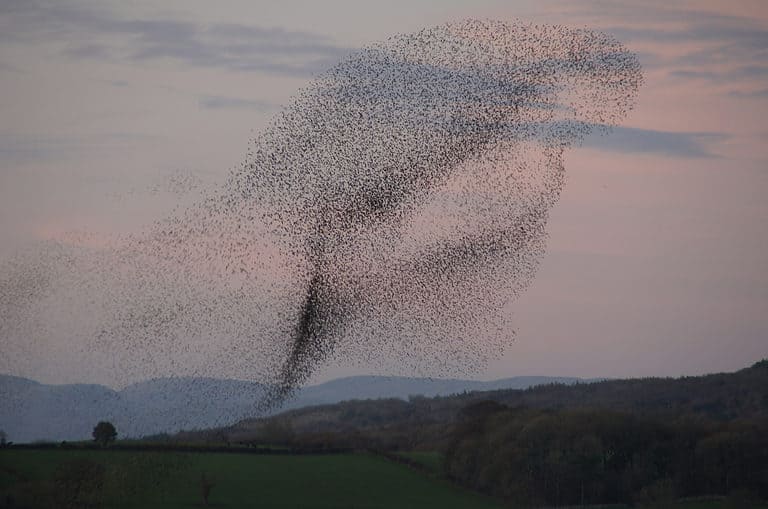
Groups of soaring hawks are called “kettles,” and traveling like this gives the hawks an advantage over flying alone. To conserve energy for the long trip, they take advantage of wind currents. The raptors gather in rising columns of warm air, called thermals. Thermals form when sunlight heats the ground, causing warm air to rise while cooler air sinks. The hawks keep their wings spread and rise in tight circles with barely any flapping.
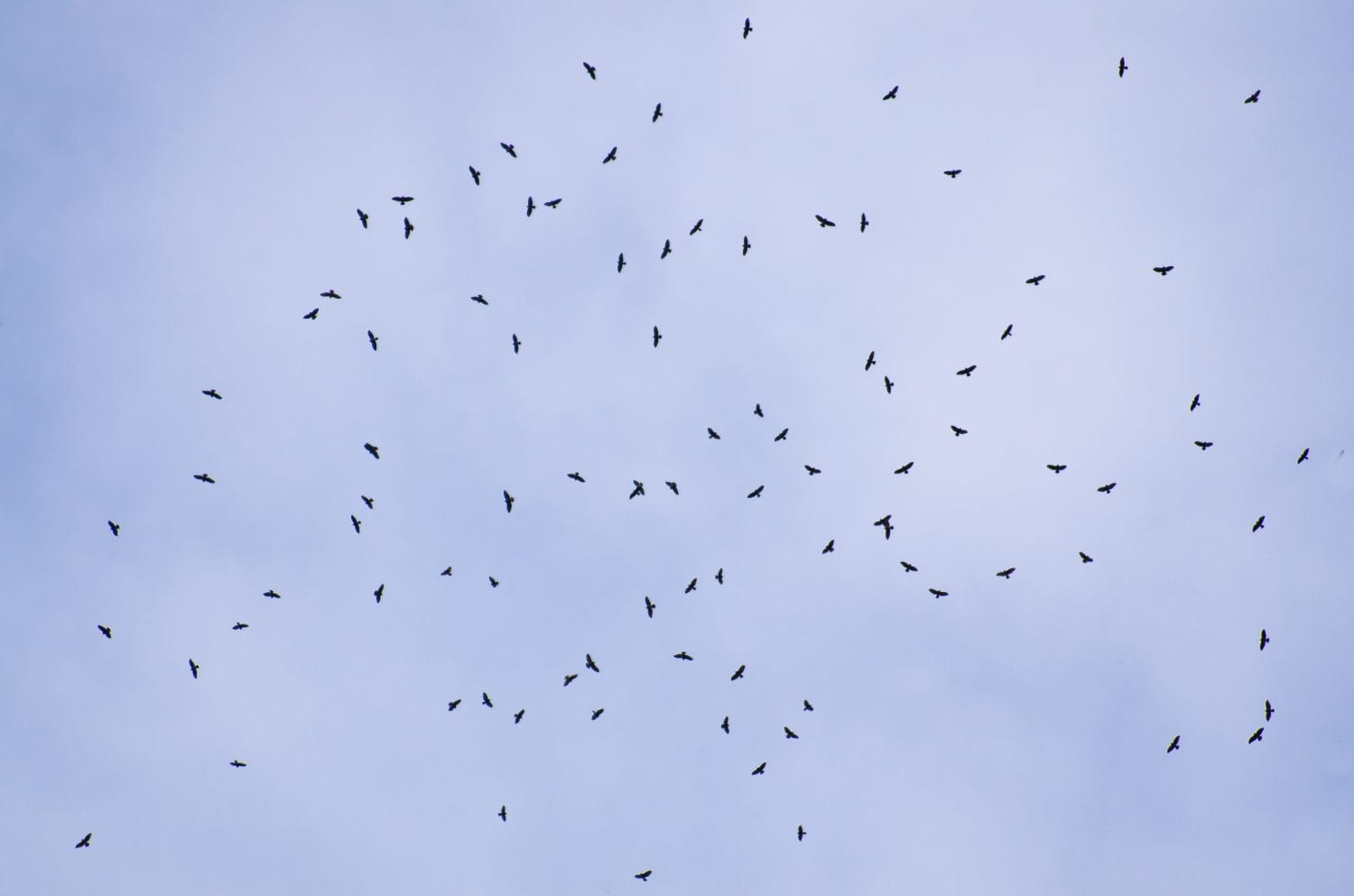
Soaring flocks of broad-winged hawks are known as kettles.
©rck_953/Shutterstock.com
When one thermal dissipates, the birds seek out another to continue gliding. Scientists have found they can cover many miles per day with this strategy. The migrating groups are called “kettles” because a group of raptors riding a thermal is reminiscent of bubbles rising in a kettle of boiling water.
How Kettles Help Hawks Save Energy
A 2006 study found hawks in larger kettles flapped less than hawks that traveled in smaller numbers. Scientists believe that, in addition to conserving energy by traveling on thermals, the hawks also travel more efficiently in groups. Furthermore, Hawk Mountain researchers suggested that the social flocks rising on the thermals can be easily spotted by other broad-winged hawks looking for thermals to ride.
One more advantage may be that juvenile broad-winged hawks learn about orientation and navigation by following experienced adults in a flock. Scientists have found that in mixed-age flocks, the adults are most likely to be the leaders of the group. Additionally, juveniles have been observed spending the winter in Florida, which may indicate that they may have become disoriented or lacked sufficient energy to continue farther south.
Why Hawk-Watch Sites Can Suddenly Explode With Hawks
Some of the best locations to watch broad-winged hawks migrate are places where the geography and atmospheric conditions make the raptors easier to observe. Ridges can provide favorable lift, while geographic features can funnel or concentrate migrating birds, making them easier to spot. Depending on your location and viewpoint, you might see hundreds or even thousands of birds in the sky, while someone nearby may not see any at all.
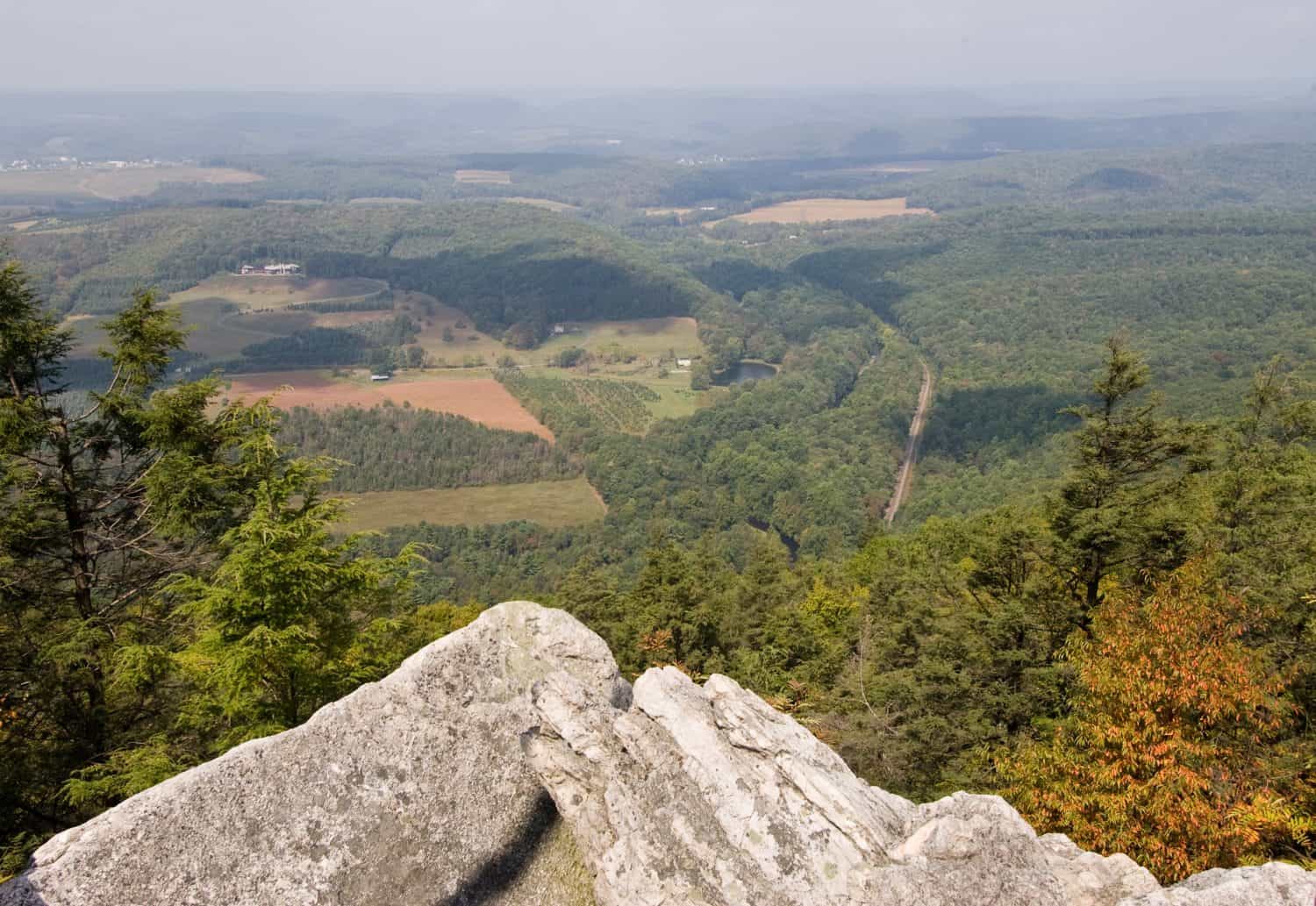
Hawk Mountain in Pennsylvania is an excellent spot to watch the annual fall migration of broad-winged hawks.
©Zack Frank/Shutterstock.com
A few of the most popular hawk-watching sites in North America include:
- Hawk Ridge Bird Observatory, Minnesota
- Hawk Mountain Sanctuary, Pennsylvania
- Corpus Christi HawkWatch, Texas
- Cape May Bird Observatory, New Jersey
Further south, hawk-watching is popular along the Gulf Coast in Veracruz, Mexico, where the hawks may form extremely large groups. Broad-winged hawks tend to avoid migrating over large bodies of water because there are no thermals to help them soar. Because of the geographic bottleneck along the Gulf coastal plain of eastern Mexico, the birds funnel through a small area, creating enormous groups that can number in the hundreds of thousands.
A Short Migration Window Creates a Spectacular Show
Broad-winged hawks migrate within a relatively short time frame. For example, about 95% of the hawks passing through Hawk Mountain do so within just two weeks. During this period, thermal and mountain updrafts are at their most predictable.