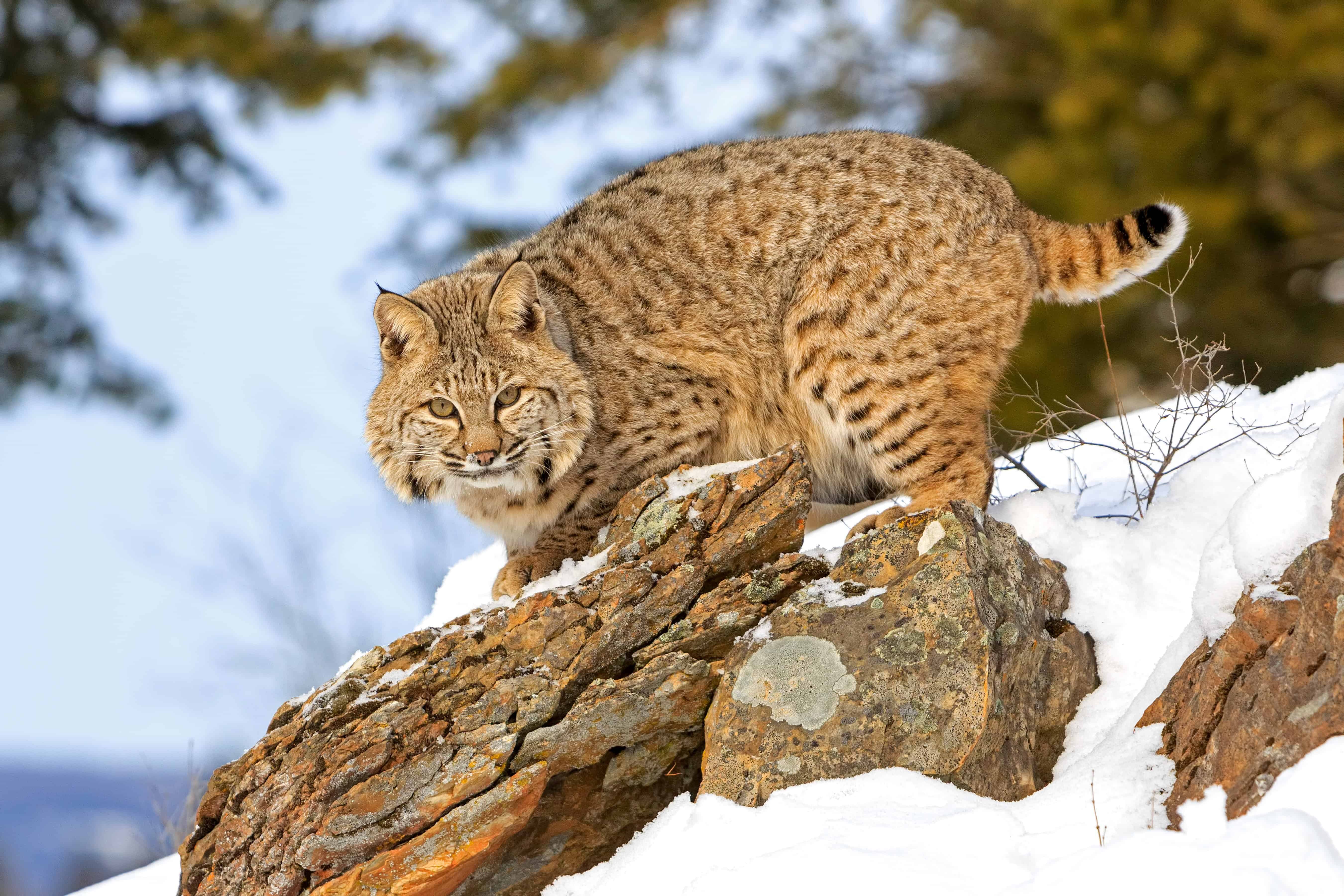

Bobcats (Lynx rufus) are the most common wild cats native to North America. They can be found from southern Canada down to southern Mexico, but most bobcats live in the U.S. They occur in 47 of the 48 contiguous states, with the exception of Delaware. These cats are very adaptable and are only limited in their range by the availability of suitable habitat. In accordance with Bergmann’s rule, bobcats generally grow larger the further north their habitat. But how big do they get? Keep reading to learn more about the biggest bobcats ever recorded.
Bobcat Facts
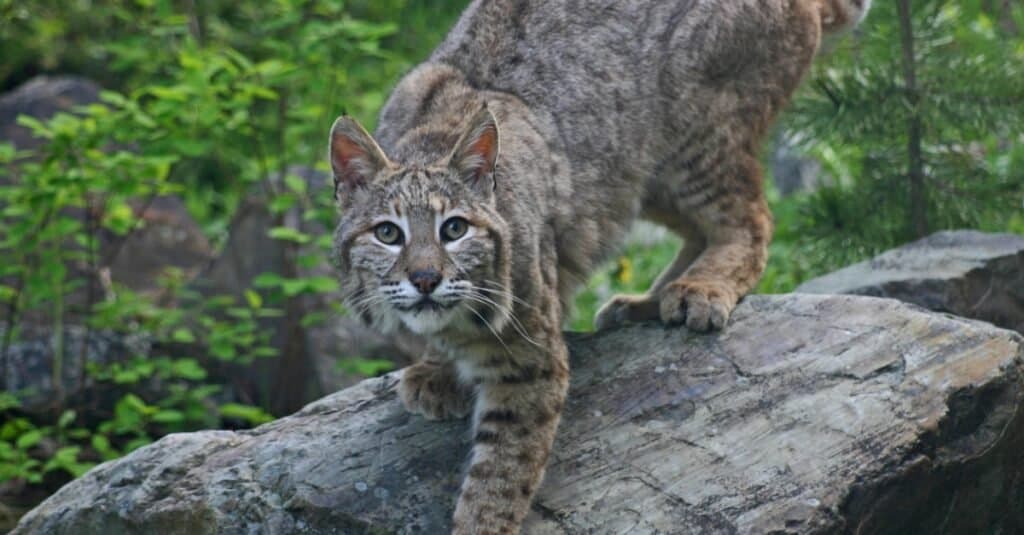
The bobcat is the smallest type of lynx.
©iStock.com/Anita Elder Design
Before we look at the largest bobcats ever caught, let’s take a closer look at the size of the average bobcat. We’ll also discuss their physical appearance, habitat and diet, behavior, and physical abilities.
Size
Bobcats are the smallest of the four Lynx species, with females being smaller than the males. They typically weigh 20-30 pounds, although large males may exceed this weight. They stand nearly 2 feet tall at the shoulder. Bobcats can grow to about 3 feet in length, with a short, “bobbed” tail that measures 4 to 7 inches long. Bobcats tend to grow larger at the northern end of their range and in areas where they have a larger home range.
Physical Appearance
Bobcats have brown to grey coats with black spots, lighter undersides, and white muzzles. They have a facial ruff, which is long cheek fur that makes them appear as if they have sideburns. Bobcats have short ear tufts that are usually less than 1 inch long. The backs of their ears are black, and they have striped tails with black tail tips. They have retractable claws on their furry feet.
Habitat and Diet
These wild cats can be found in a wide variety of environments, from dense woods to semi-deserts to agricultural land. They typically avoid areas with heavy snow, as they have relatively small feet compared to their Canadian Lynx cousins, which reduces mobility. These cats are ambush hunters with a diet that includes deer, rodents, rabbits, raccoons, foxes, various bird species, reptiles, and other small mammals.
Physical Abilities
Bobcats are superior climbers and swimmers, but they generally avoid water. They can run as fast as a domestic house cat, which is around 30mph for short periods. A bobcat’s sense of smell is good, but it primarily relies on its vision and hearing when hunting prey.
Behavior
Bobcats are typically solitary and reclusive. They only come together to mate and may have multiple partners. A litter of 1-5 kittens is born after around 60 to 70 days, and the young stay with their mothers for about a year. Bobcats are generally crepuscular, which means they are active at twilight. However, it is not unusual for them to be active during the day and night. Bobcats tend to avoid humans and attacks on humans are rare.
The Largest Bobcats Ever Recorded
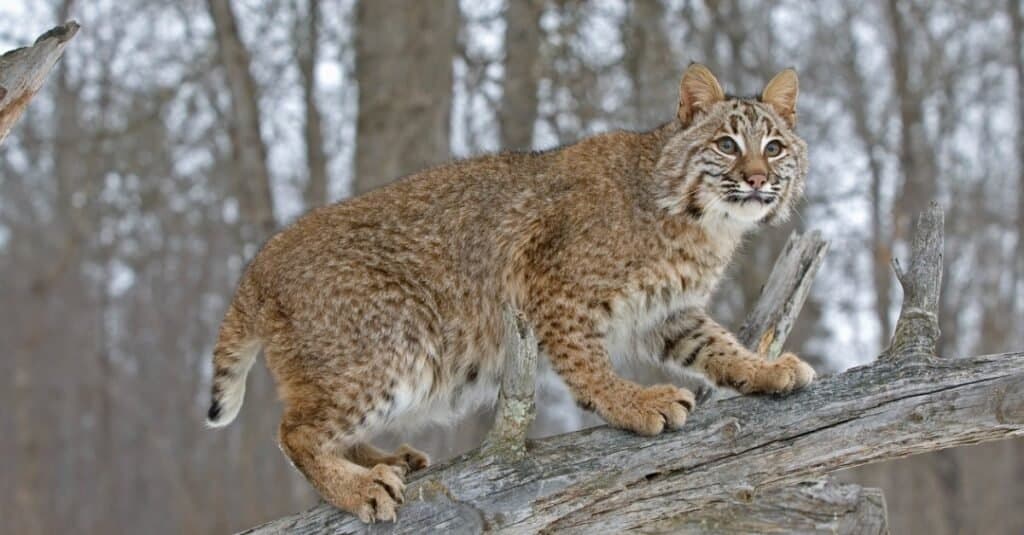
Some of the biggest bobcats ever recorded have weighed around 50 pounds.
©iStock.com/JohnPitcher
The largest bobcats are believed to be around 50 pounds. The largest officially recorded bobcat is often cited as a 49-pound male that was shot in shot in Marinette County, Wisconsin in 1984. Another large bobcat weighing 52 pounds was said to have been killed by a Wisconsin hunter in December 2008, but this is unverified.
The New Hampshire Fish and Game Department states that the largest recorded bobcat was a 51-pound male killed in Pittsburg, New Hampshire in 1927. Vermont Fish and Wildlife notes that there have been a few bobcats in both Vermont and New Hampshire that weighed in the 40-46-pound range.
They also mention an old record from Jackson, New Hampshire in which the bobcat was said to be 52 pounds.
Additionally, there are several unsubstantiated reports of a 76-pound bobcat that was killed in Maine. However, this is unlikely, as it is significantly larger than the largest verified bobcats. The story is also unsupported by reliable wildlife agencies or verifiable evidence.
There are also some larger-than-average bobcats recorded in the Midwest and in the Southwest, primarily due to the availability of territory. The West Texas Big Bobcat Contest has recorded two bobcats that weighed 42 pounds, one in 2009 and another in 2021. Contest results show that the winning bobcats frequently weigh over 30 pounds. The largest bobcat in Missouri was a 38-pound male taken in 2019.
Bobcat Conservation
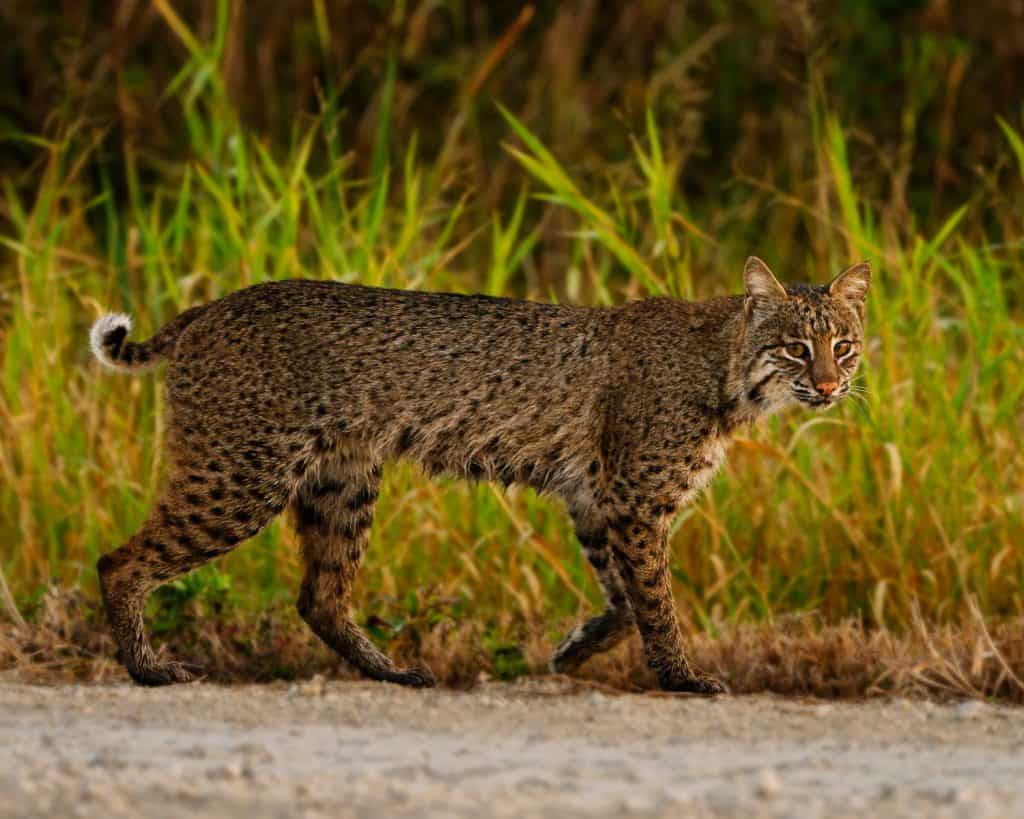
Bobcats have stable or increasing populations throughout most of their U.S. range.
©WIlliam Falla/Shutterstock.com
The IUCN classifies bobcats as a species of Least Concern. As mentioned previously, they generally have stable or increasing populations within their ranges in the U.S., although populations in Florida have seen a decrease. Even though they are hunted in some areas, this has not contributed significantly to population decline.