
Quick Take
- Bobcats have two sets of heterodont teeth: deciduous teeth and permanent teeth.
- A bobcat’s canine teeth are typically less than one inch long.
- Bobcats have a strong bite force for their size.
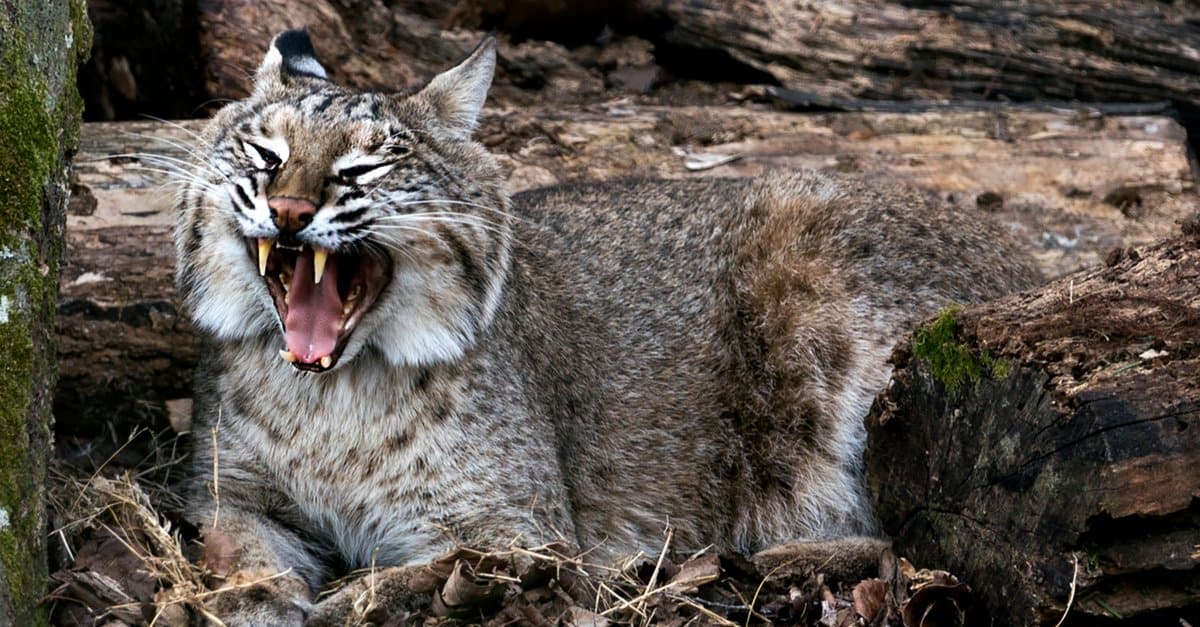
Bobcats (Lynx rufus) are carnivorous cats found across North America, including Mexico, the United States, and Southern Canada. They are adaptable creatures, thriving in diverse habitats from forests, swamps, and deserts to suburban backyards, mountainous terrains, and grasslands. Bobcats are about twice the size of the average domesticated cat. They typically weigh between 15 and 35 pounds, stand up to 24 inches at the shoulder, and measure 26 to 49 inches in length, not including their uniquely short tails. They are adept hunters with big, sharp teeth that can grab and grip small mammals like raccoons and squirrels. Continue reading to learn everything you need to know about bobcat teeth.
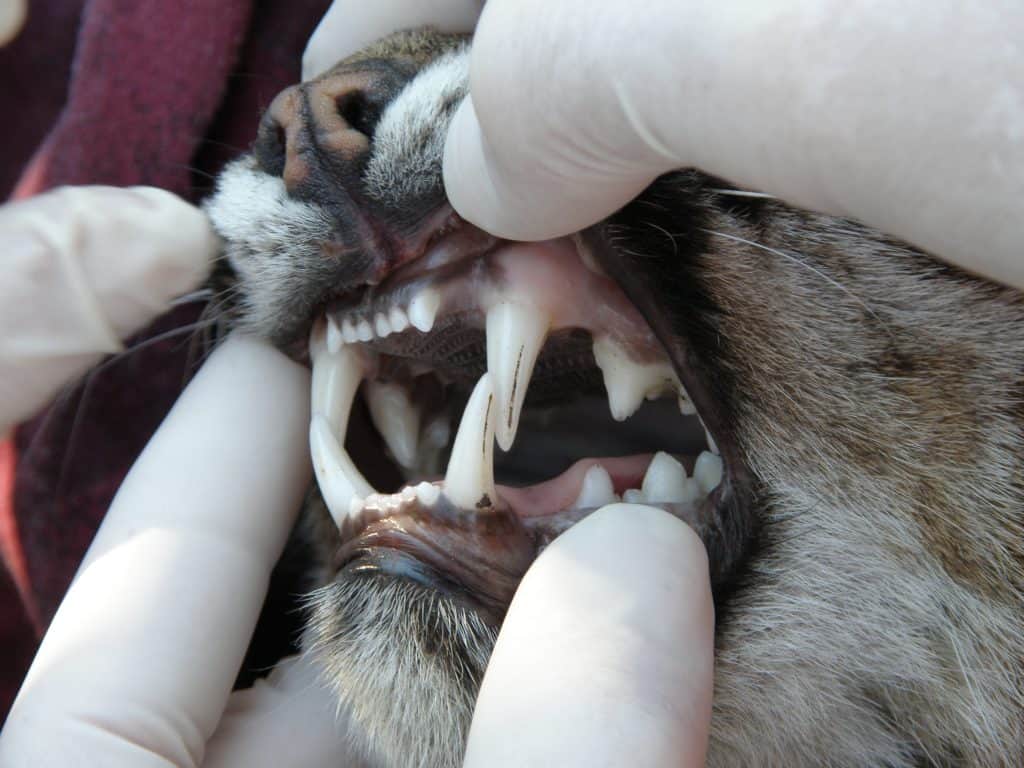
Bobcats have fang-like canine teeth that are typically less than one inch long.
What Kind of Teeth Do Bobcats Have?
Bobcats, like most mammals, are heterodonts, which means they have four distinct types of teeth: incisors, canines, premolars, and molars. Their dental formula is written as I 3/3, C 1/1, P 2/2, M 1/1, which totals 28 teeth, distributed as follows.
Adult bobcats have 12 incisors (six upper and six lower) located in the front of their mouth. Next to the incisors are the canines, of which bobcats have two pairs, upper and lower, for a total of four.
An adult bobcat typically has eight premolars in total, four in the upper jaw and four in the lower jaw, and four molars, one in each quadrant and located behind the premolars.
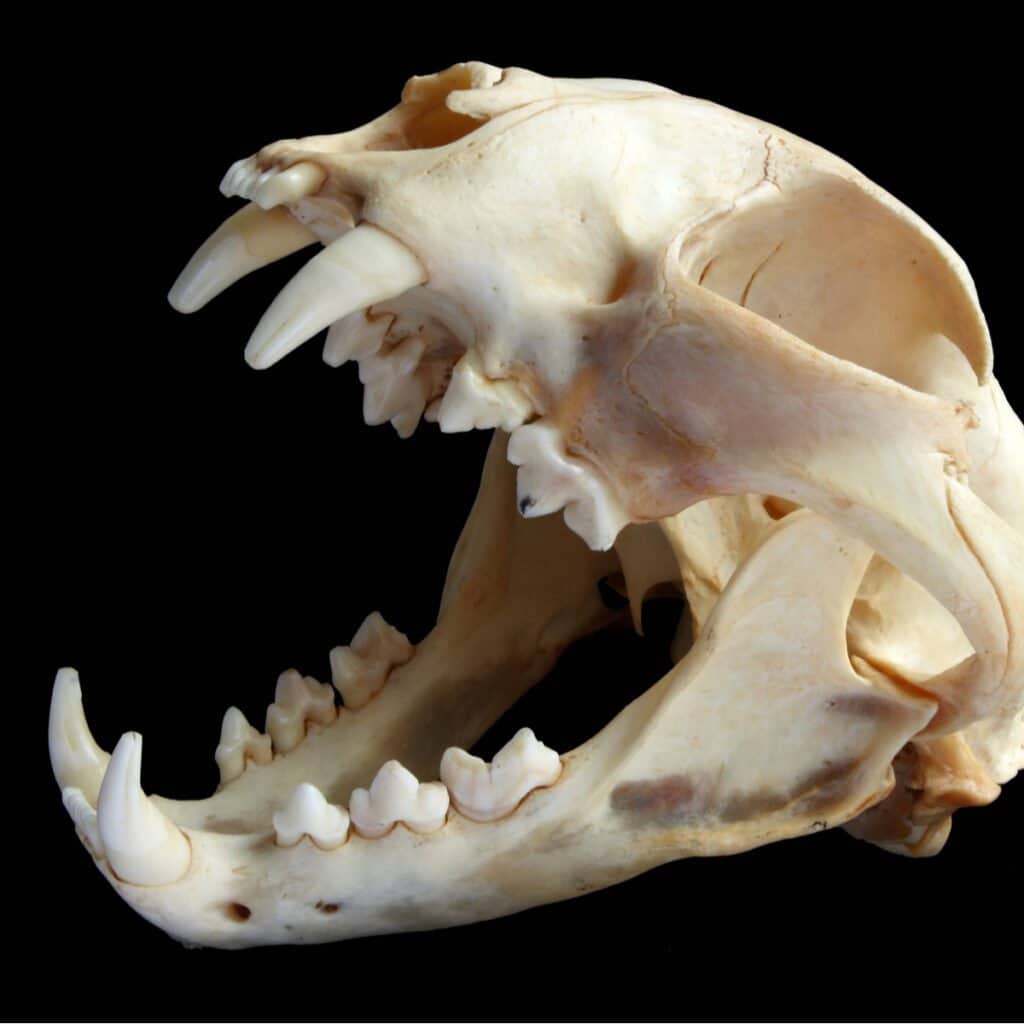
Bobcats have 28 teeth, which include 12 incisors, four canines, eight premolars, and four molars.
©photowind/Shutterstock.com
Baby bobcats, called kits or kittens, have deciduous teeth (baby teeth) which will be replaced by their permanent adult teeth. Kits are born without teeth. Their deciduous teeth begin to erupt when they are 11 to 14 days old. By approximately nine weeks of age, they will have a full set of 26 baby teeth. The baby teeth begin to fall out when the permanent teeth emerge, which occurs at 16 to 19 weeks old.
What Do Bobcats Use Their Teeth For?
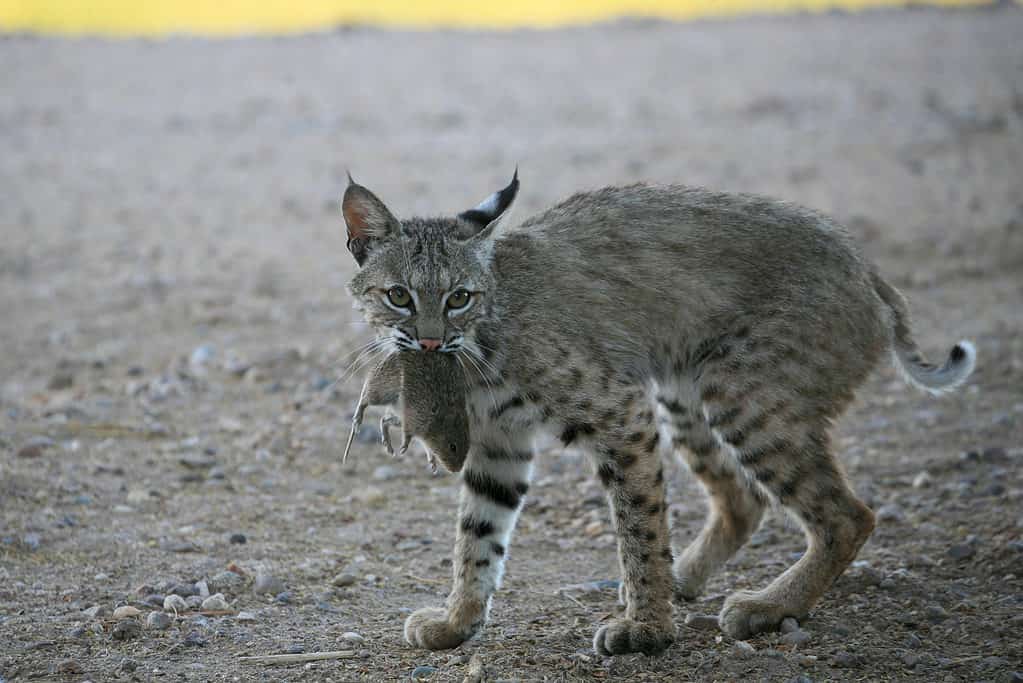
Carnivorous bobcats are skilled hunters.
©gobirdnerds/Shutterstock.com
Bobcats are obligate carnivores that prey on rabbits, rodents, squirrels, and birds. Rabbits and hares can make up as much as 75% of a bobcat’s diet, depending on region and prey availability. Their prominent canine teeth are essential tools, along with their sharp claws, for catching, gripping, and killing prey.
Bobcats use their incisors for grooming, removing debris such as dirt and vegetation that gets matted in their fur, and for nipping at fleas and other parasites. Incisors are also used to scrape bones clean of any remaining flesh.
The bobcat’s premolars and molars are carnassial teeth: sharp, scissor-like teeth with prominent cusps (points) at the edges, designed for shearing meat and tendons.
How Strong is a Bobcat’s Bite?
Bobcats have a strong bite force for their size, typically estimated approaching 200 pounds per square inch (PSI). This is more powerful than larger animals like coyotes (88 -153 PSI) and foxes (80-92 PSI).
Though bobcats prefer rabbits and smaller mammals, when food is scarce, they may attempt to take down larger prey like deer.