Quick Take
- A swarm circling your chimney at sunset might not be bats at all, and most people are surprised to learn what the real culprit is. Meet the real culprit →
- There's one behavioral clue that can tell bats and their look-alikes apart in seconds, though you have to know what to watch for. Spot the key differences →
- Bats can move into your attic without a single dramatic sighting, and the warning signs are far subtler than most homeowners expect. See the subtle warning signs →
- Removing bats at the wrong time can make the problem dramatically worse, and timing matters more than the removal method itself. Understand timing and removal →
Imagine looking outside and seeing a cloud of dark, winged animals circling a neighborhood house. Some appear to be gathering around the roof, while others dart through the air so quickly that it’s difficult to tell exactly what you’re watching. At first glance, it looks like a massive swarm of bats, and the scene is certainly strange enough to get your attention. But there’s an interesting twist: not every swarm around a chimney is actually made up of bats. In some cases, the animals are birds with remarkably similar silhouettes. Watch the video below and discover what might explain this unusual behavior.
Watch the Unusual Wildlife Encounter
Why Do Bats Gather Around Houses?
Bats are surprisingly comfortable living near people, particularly when buildings provide the kinds of sheltered spaces they would normally seek out in the wild. Attics, roof gaps, loose siding, and spaces around chimneys can all become attractive roosting locations. Depending on the species, these colonies may contain just a handful of bats or hundreds of individuals sharing the same general area.
Most bats are nocturnal, meaning they spend their days resting and emerge around sunset to search for food and water. When several leave a shared roost around the same time, the activity can be spectacular. Instead of seeing a single bat flutter across the yard, you might witness dozens streaming from an opening in the roof.
Female bats also form maternity colonies during warmer months, gathering in protected locations where they give birth and raise their pups. As the young become capable of flying, activity around the roost can increase. However, a group of flying animals near a house doesn’t automatically mean there’s a bat colony inside, and an unusual swarm alone isn’t enough to identify the species.
Could These Actually Be Chimney Swifts?
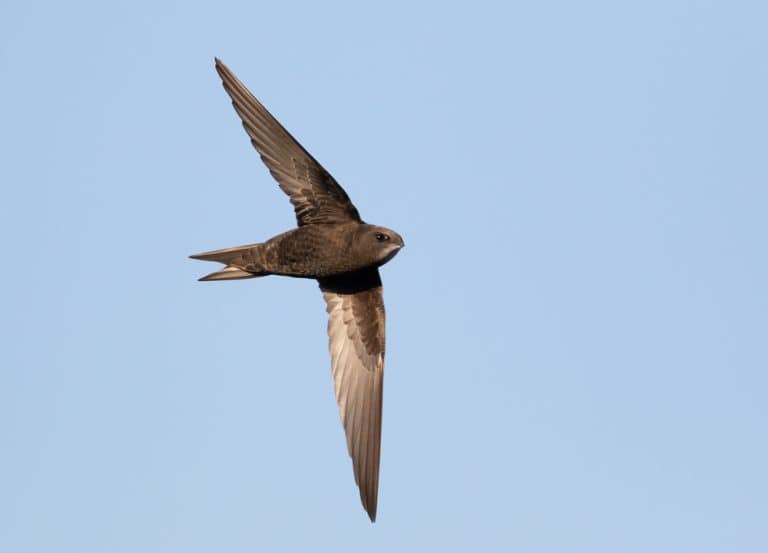
Here’s where things get especially interesting. Large groups of animals circling a chimney aren’t necessarily bats. They could be chimney swifts, small migratory birds that spend much of their lives flying and frequently use chimneys as communal roosting sites.
According to the Wisconsin Chimney Swift Working Group, these birds can gather by the hundreds or even thousands before descending into a chimney to spend the night. This behavior is particularly common during migration, when swifts gather at suitable roosting locations before continuing their journey. From a distance, the swirling formation can easily be mistaken for a swarm of bats.
One of the best clues is the direction the animals are traveling. Chimney swifts typically gather and enter chimneys around sunset, while bats usually emerge from their daytime roosts as evening approaches. Their flying styles differ, too. Swifts have long, narrow, curved wings and often glide between rapid wingbeats. Bats generally have a more fluttering flight pattern, although their movements vary considerably between species.
That distinction matters because the sight of hundreds of animals disappearing into a chimney doesn’t necessarily mean a homeowner has a bat infestation. Without a clear view of the animals and their behavior, identifying them from distant footage can be difficult.
What Makes Bats So Unusual?
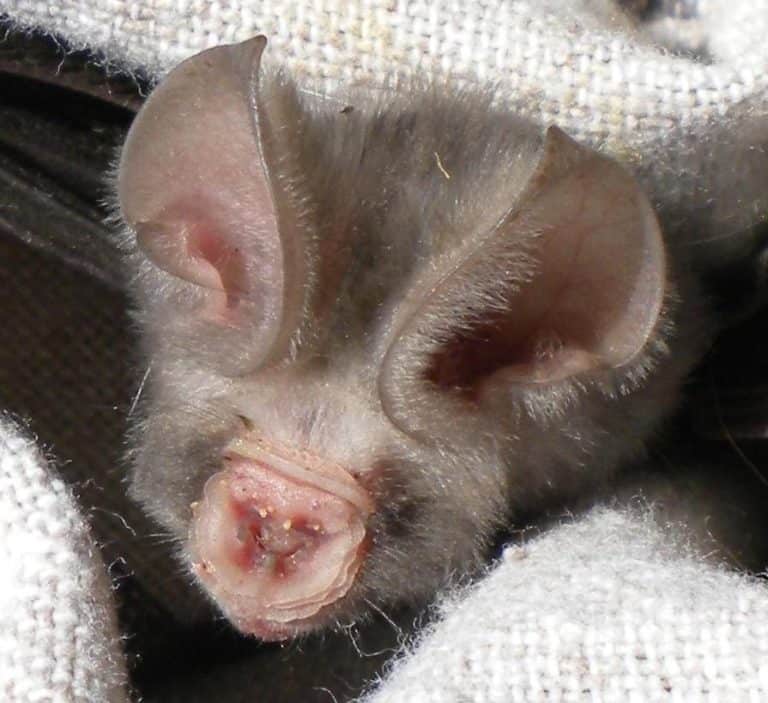
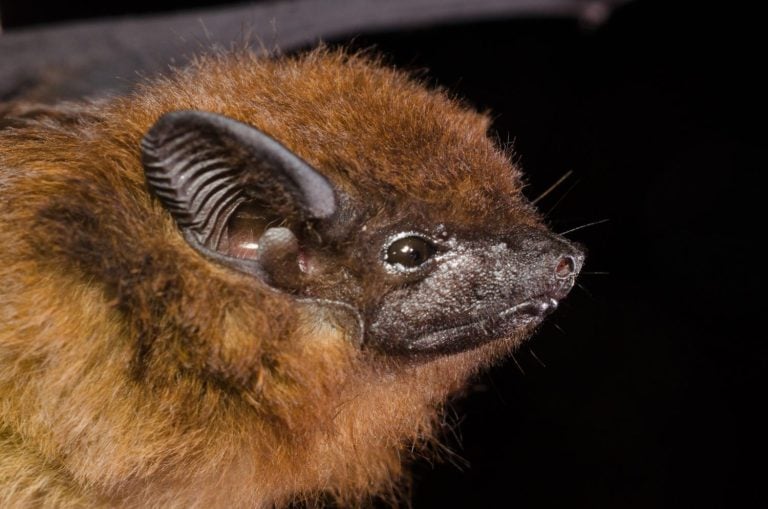
Bats belong to the mammalian order Chiroptera, and they’re far more diverse than many people realize. According to Bat Conservation International, scientists have identified more than 1,500 species worldwide. They inhabit every continent except Antarctica and play important roles in ecosystems ranging from tropical rainforests to agricultural landscapes.
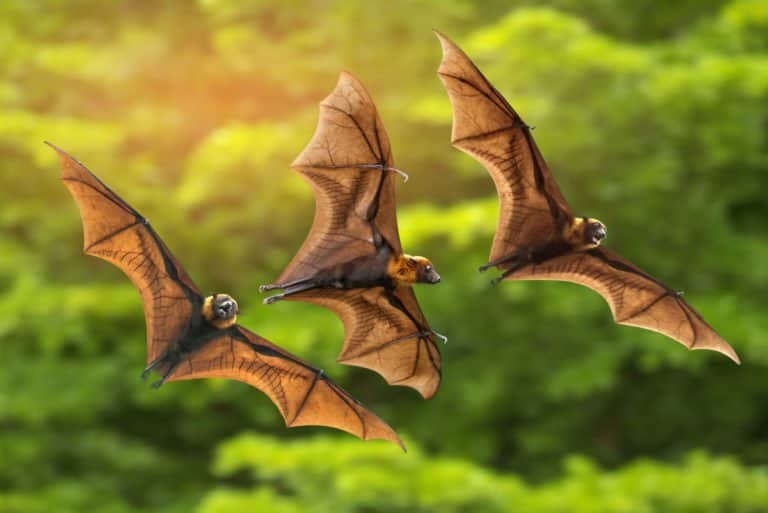
Their sizes vary considerably. Kitti’s hog-nosed bat, often called the bumblebee bat, weighs roughly as much as a small coin. Meanwhile, some of the largest flying foxes have wingspans approaching six feet. Both are bats, despite looking like completely different animals.
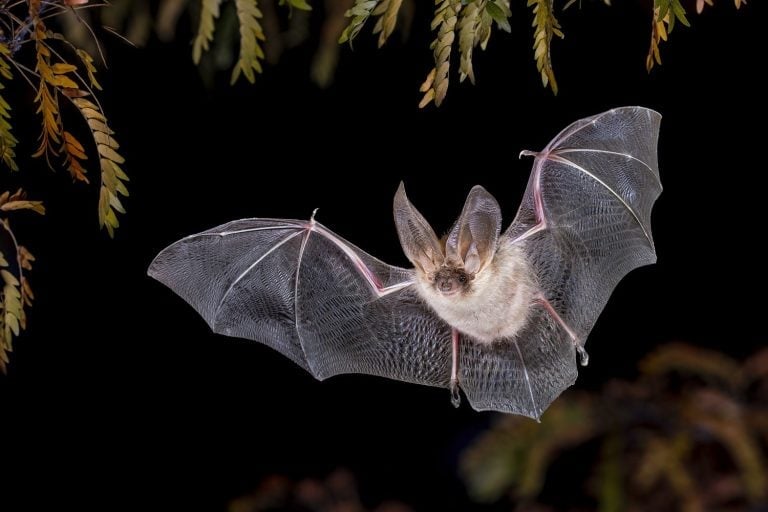
Perhaps their most remarkable feature is that bats are the only mammals capable of true powered flight. As the U.S. Department of the Interior explains, their wings have a structure resembling a human hand, with elongated finger bones supporting thin, flexible membranes of skin. This arrangement allows bats to maneuver through the air with remarkable precision.
Many species also use echolocation, emitting high-frequency sounds and listening for returning echoes to navigate and locate prey. Insect-eating bats can consume large quantities of mosquitoes, moths, beetles, and other insects. Other species pollinate flowers or disperse seeds, making bats important contributors to healthy ecosystems.
Where Do Bats Normally Live?
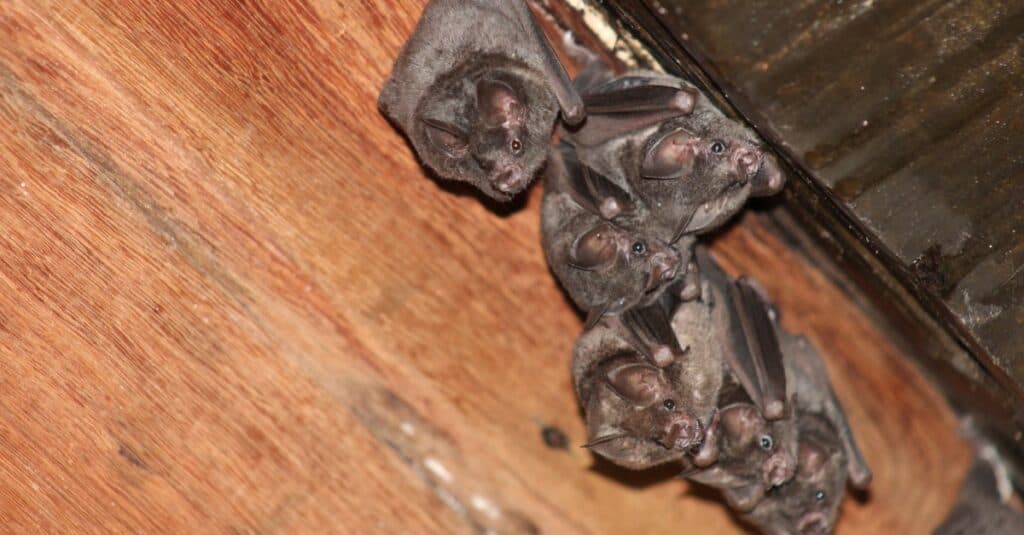
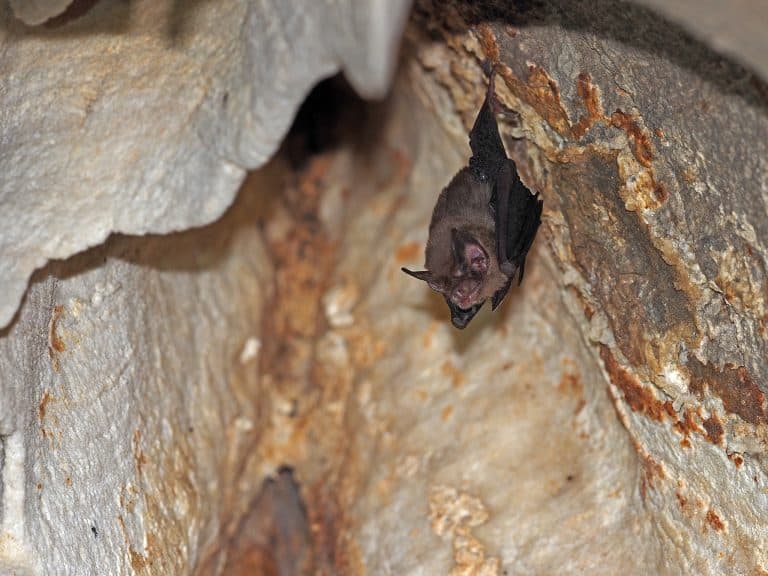
Bats can easily get into a house through open spaces.
©Hermann Moller/Shutterstock.com
In their natural habitats, bats often roost in caves, hollow trees, rock crevices, and other sheltered locations. However, some species have adapted remarkably well to human development. Bridges, barns, abandoned buildings, and residential structures can all provide suitable places to rest during the day.
According to Bat Conservation International, bats can enter buildings through openings as small as half an inch, depending on the species and shape of the gap. Loose roof flashing, damaged vents, gaps beneath siding, and openings around chimneys can all provide access to otherwise concealed spaces.
Buildings can be particularly appealing to maternity colonies because enclosed spaces often provide warmth and protection from predators. Some bats return to familiar roosting locations year after year, especially when those sites consistently provide suitable conditions.
That means an attic can become an attractive home for bats without the property owner realizing it. The animals may spend most of their time tucked away in spaces that are rarely inspected, emerging only after daylight begins to fade.
How Can You Tell if Bats Are Living in Your Attic?
Most homeowners won’t discover a bat colony through a dramatic scene of animals circling above their roof. Usually, the warning signs are considerably less obvious.
One of the most common clues is guano, the name for bat droppings. Small, dark droppings may accumulate beneath entry points, near attic vents, or along areas where bats regularly enter and exit. Dark staining around openings can also indicate repeated activity.
Other signs include scratching, squeaking, or fluttering sounds coming from an attic or wall cavity. These noises may be more noticeable around dusk and dawn, when bats are preparing to leave or returning to their daytime roost. Larger colonies can also produce noticeable odors as droppings and urine accumulate.
Watching the exterior of a house around sunset can sometimes help identify an active roost. If bats repeatedly emerge from the same roof opening, that’s a strong indication they’re using the structure. However, finding a single bat inside a house doesn’t necessarily mean there’s an established colony. Sometimes, an individual simply enters through an open door or window.
What Should You Do if Bats Move Into Your Home?
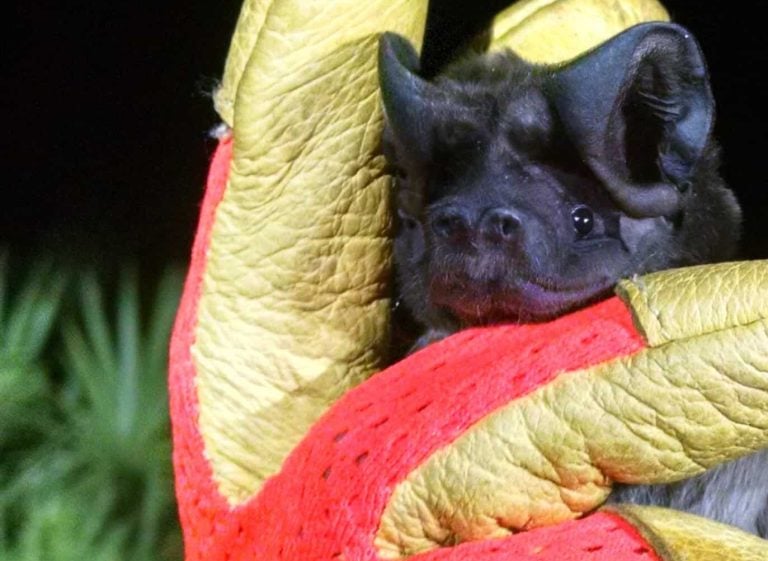
Bats are beneficial wildlife, but that doesn’t mean you necessarily want a colony living in your attic. The good news is that they can usually be removed without harming them through a process known as exclusion.
Humane exclusion uses specially designed one-way exits that allow bats to leave a structure while preventing them from getting back inside. However, timing is critical. Removing adult bats during maternity season can leave flightless pups trapped inside, where they may die without their mothers. Wildlife regulations also vary by location, so homeowners should consult their state wildlife agency or a qualified bat removal professional before attempting exclusion.
It’s also important to avoid direct contact with bats. Although not all bats carry rabies, the Centers for Disease Control and Prevention recommends seeking medical advice promptly following a possible bite, scratch, or other direct exposure. If someone wakes up to find a bat in their bedroom, public health officials should be consulted because an unnoticed bite may be possible.
Large accumulations of guano should be handled professionally as well. Disturbing contaminated material can expose people to airborne fungal spores associated with histoplasmosis, a respiratory infection. Homeowners should avoid sweeping or vacuuming large accumulations without appropriate precautions.
Whether a gathering around a house turns out to be bats or chimney swifts, it’s a fascinating reminder of how much wildlife shares our everyday surroundings. What looks like an ordinary rooftop to us might be an ideal place for hundreds of animals to rest. The trick is figuring out exactly who’s moving in before deciding what to do about it.