
You may think butterflies look so small and delicate that they can barely eat anything. But, like all animals, butterflies need nourishment. What, how, and when do butterflies feed? Read on to learn all about these beautiful creatures!
Interesting Facts About How Butterflies Eat
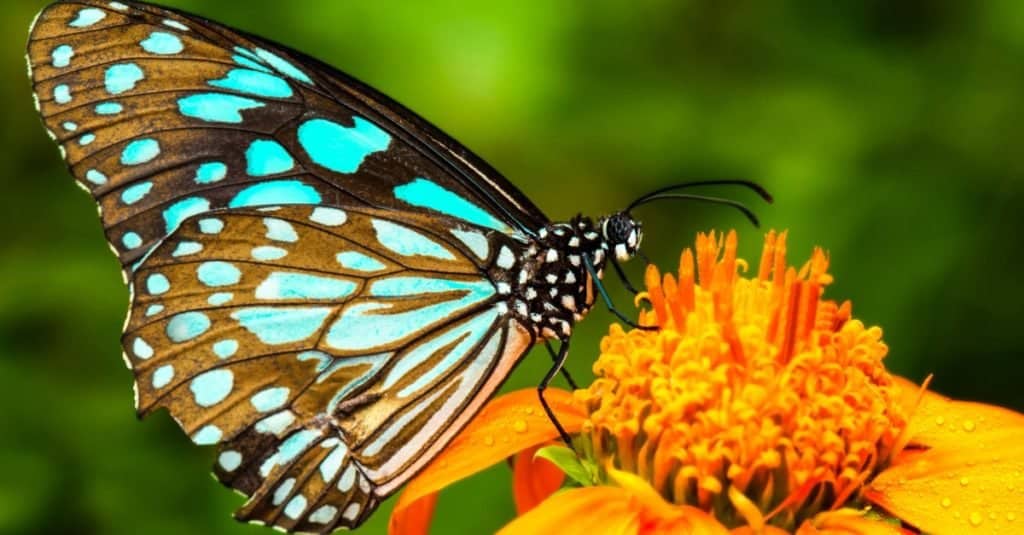
Butterflies use a straw-like appendage to consume liquids.
©anek.soowannaphoom/Shutterstock.com
Butterflies cannot bite or chew. They don’t have any teeth. They use a long, tube-like tongue to suck up nectar and other sweet and salty liquids like a straw. Butterflies also use their feet to taste the food that they’ve landed on.
Butterflies ingest substances such as nectar, sap, and even juice from rotting fruit. Some other facts about a butterfly’s diet include:
- Butterflies love sugary foods.
- Some butterflies, like the Harvester butterfly, eat other insects.
- Moths and butterflies eat in a similar fashion.
- Butterflies use a long feeding tube called a proboscis to eat.
- Butterflies like salty liquids, which is why they sometimes land on humans. They want to drink our sweat!
How Butterflies Eat
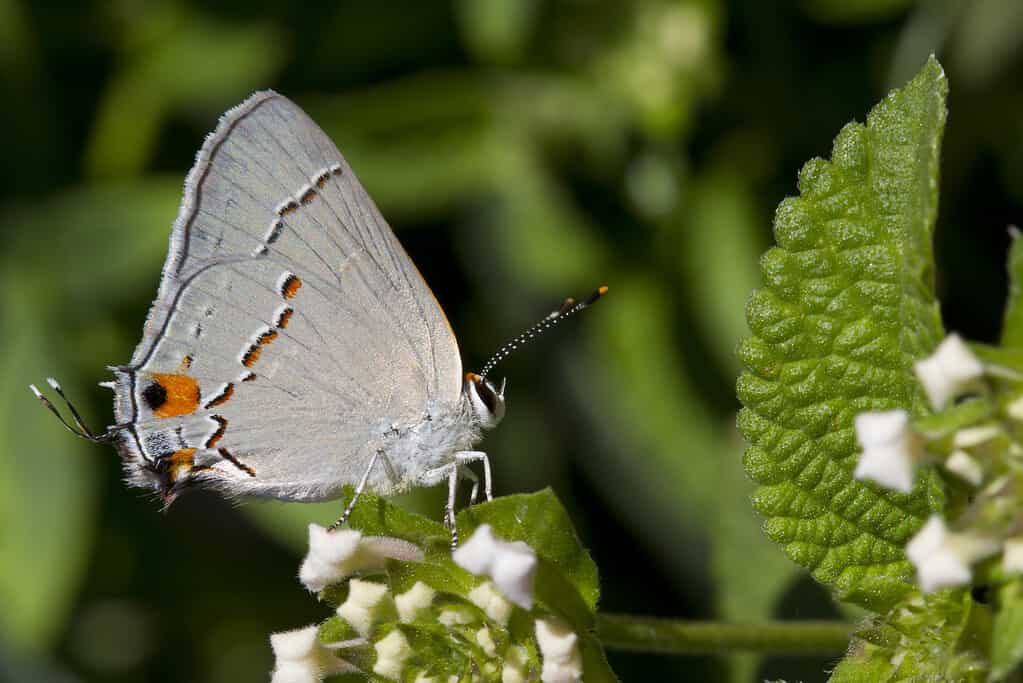
Butterflies are constantly on the move in search of food.
©iStock.com/jamesdvdsn
Have you ever watched butterflies flitting around a garden? As they go from flower to flower, they are feeding. Butterflies don’t have mouths or teeth. Each butterfly has a long feeding appendage called a proboscis.
This long extension looks like a slender straw that extends from the butterfly’s head. When the butterfly isn’t using it, the proboscis coils up into a ball. When it’s time to eat, the butterfly approaches the food source and uncoils the proboscis.
The butterfly then inserts the feeding straw into the flower or other source of nectar. The long feeding straw makes it easy for a butterfly to reach deep inside a flower to draw out the nectar.
Where Do Butterflies Find Food?
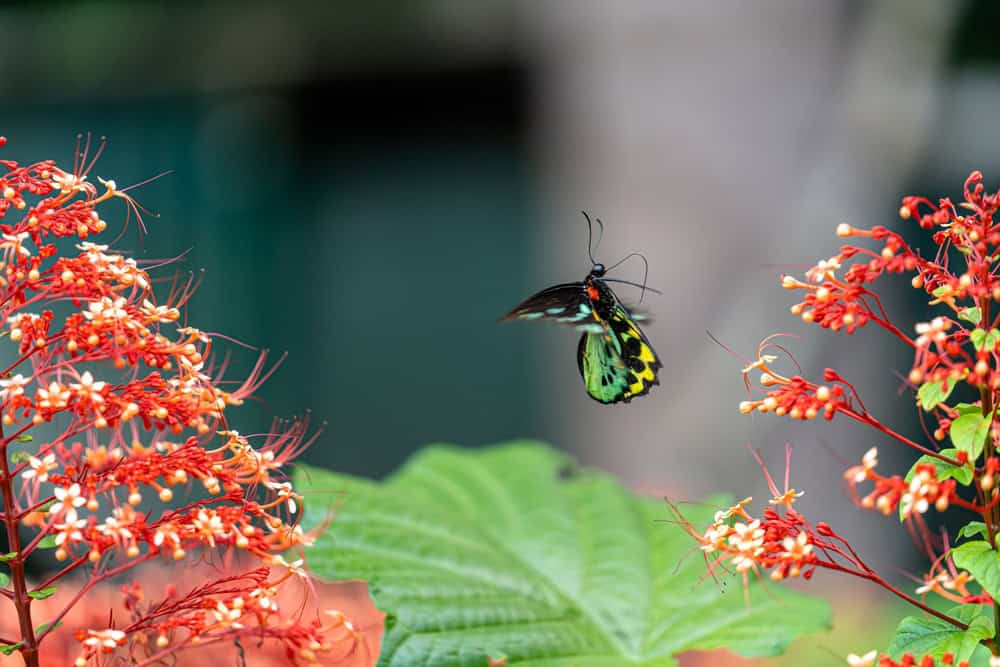
Butterflies will consume nectar as well as rotting fruit.
©Wirestock Creators/Shutterstock.com
Like most wild animals, butterflies are constantly foraging for food. There are many places they find it, but these are the most common.
- Flowers: Most butterflies get their nectar from flowers. They enjoy the nectars of both wild and domestic flowers.
- Rotting fruit: Fruit that’s fallen from a tree will turn liquid as it rots. Butterflies enjoy drinking this sweet fruit juice.
- Mud puddles: Muddy water is full of minerals that are important to butterfly nutrition. A group of butterflies gathered around a mud puddle is called a “puddle club.”
- Ditches: Butterflies need lots of liquids, and they will drink water from drainage ditches or gutters.
- Animal dung: When other animals eat fruit, they leave it in their dung. Many butterfly species are happy to drink the liquid surrounding their dung.
- Trees: Butterflies drink tree sap if they can’t find other liquids.
What Do Butterflies Eat?
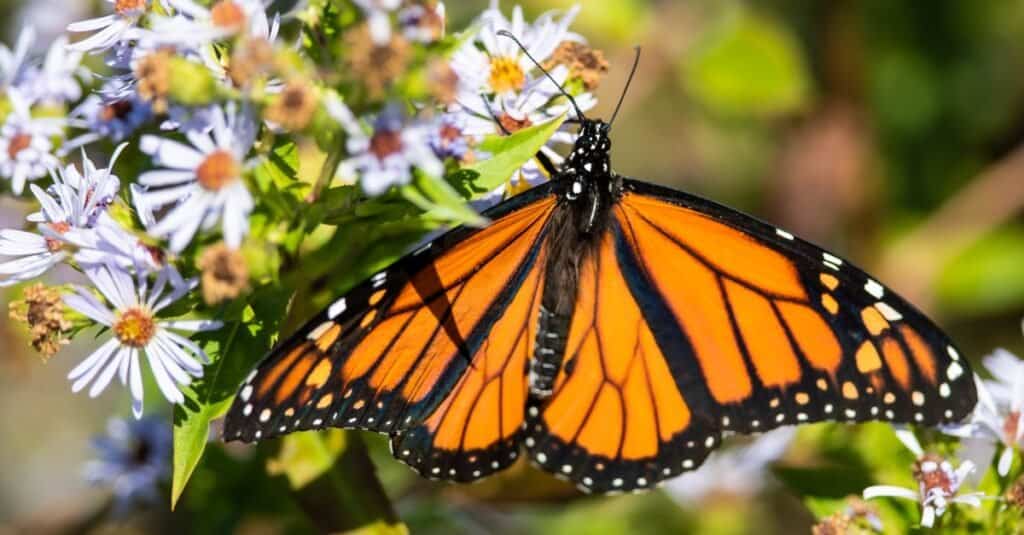
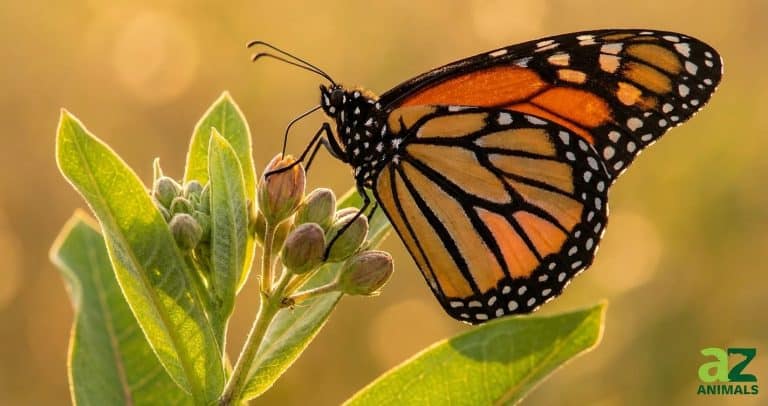
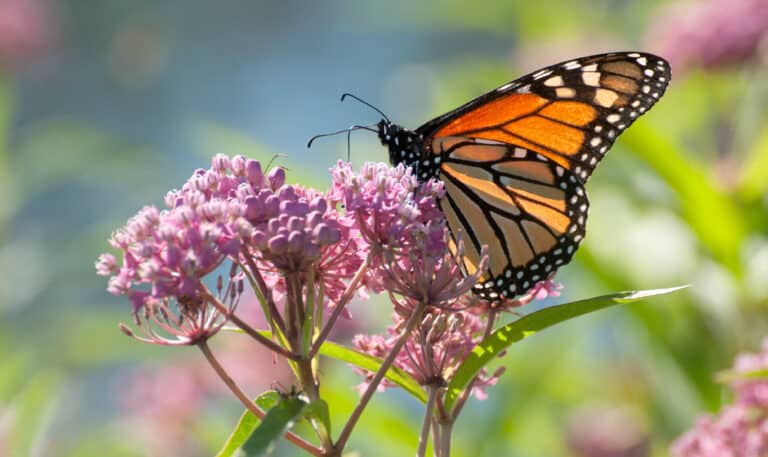
Monarch butterflies primarily consume and nest in the milkweed plant.
©rck_953/Shutterstock.com
Butterflies mostly eat nectar and water. Each butterfly species prefers a specific plant, but they will feed wherever food is available. Unlike caterpillars, they are not species-specific.
Some plants are popular among all types of butterflies. If you want to attract butterflies to a garden, for instance, you will draw many different species with the following plants:
- Zinnia
- Butterfly bush
- Mexican sunflower
- Lantana
- Milkweed
Milkweed is also a popular nesting place for monarch butterflies. Butterflies enjoy drinking from other flowers including azaleas, coneflowers, clover, daisies, dandelions, honeysuckle, meadow flowers, snapdragons, and sunflowers.
In Search of Nectar
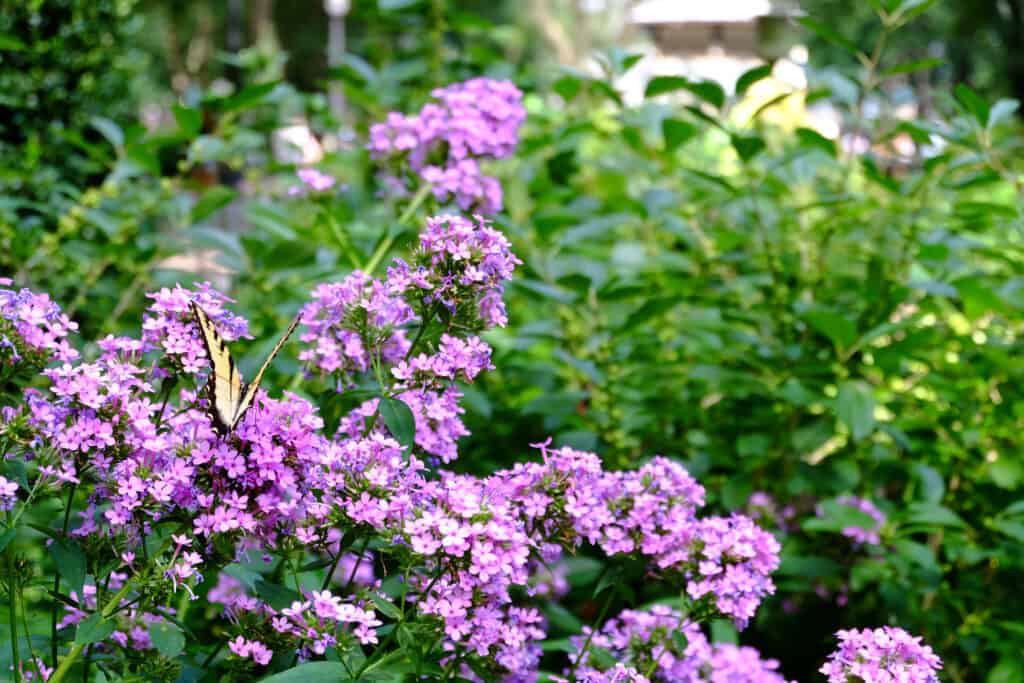
Planting pollinator favorites will encourage butterflies to visit your garden.
©Alex Dmr/Shutterstock.com
Like many wild animals, butterflies spend a lot of time foraging for food. Butterflies are important pollinators; many enjoy seeing them in their gardens. You can make your outdoor spaces more attractive to butterflies by planting nectar-producing flowers. Ensuring butterflies have easy access to food means they will thrive and visit your garden for years to come!