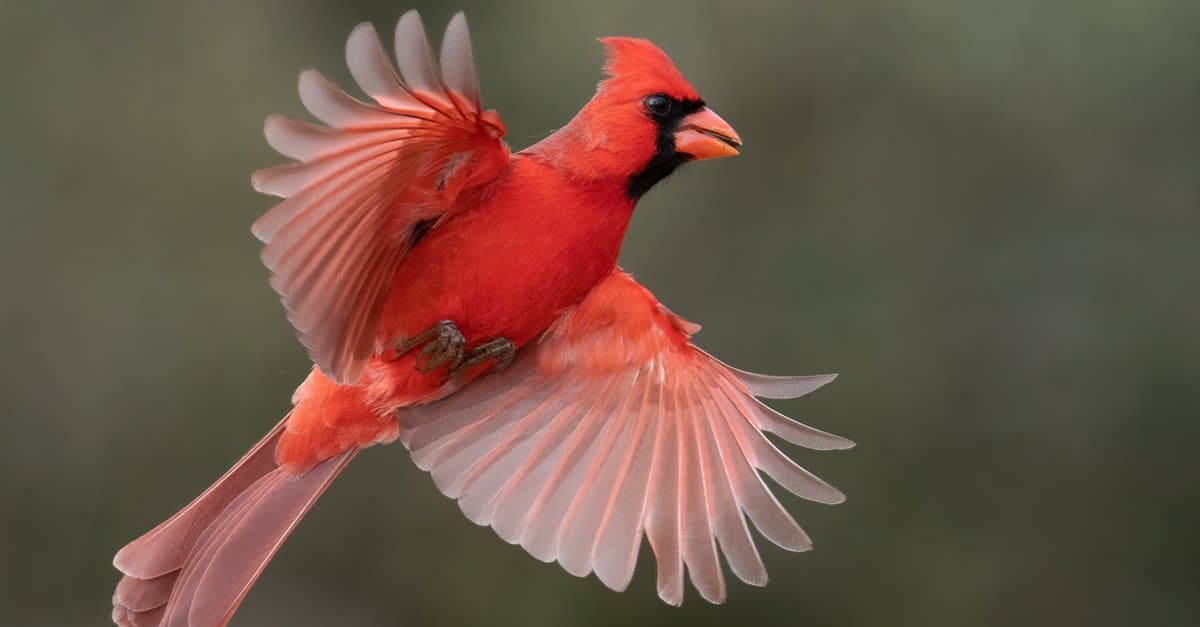

When most people mention cardinals, they’re referring to one specific type of cardinal: the northern cardinal. Known for its distinctive and colorful red plumage, the northern cardinal currently has 19 recognized subspecies. Only the males are red; among subspecies, the primary distinguishing factor is the variation in facial coloring of the females. Despite having a range that stretches from Canada to Guatemala, different northern cardinal subspecies tend to have similar diets. So, what do cardinals actually eat?
The Cardinal Diet
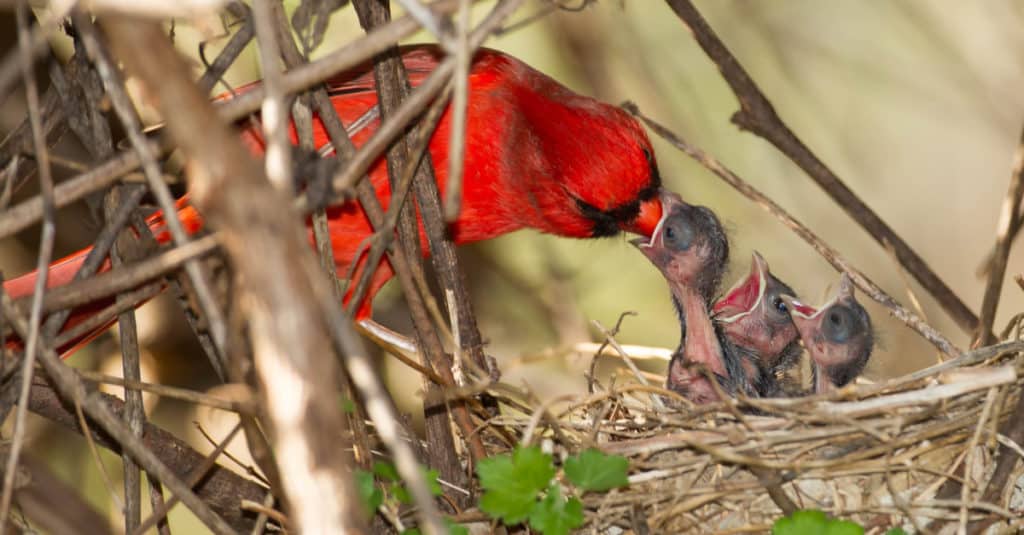
Northern cardinal hatchlings eat only animal matter.
©Agnieszka Bacal/Shutterstock.com
Cardinals aren’t picky eaters and have one of the most varied diets of any bird species. As omnivores, the typical northern cardinal’s diet consists of roughly 70% vegetable matter and 30% animal matter. During the winter, the amount of vegetable matter in their diet can reach as high as 88%. Cardinal chicks are fed exclusively on animal matter.
Nuts, seeds, and grains make up the bulk of their diet, while animal matter includes nearly any insect small enough for them to eat. However, the exact composition of the bird’s diet varies depending on the region. In the Northeast, major food items include grapes and grape seeds, mulberries, dogwood, sumac, tulip tree, oats, and corn. In the Southeast, cardinals prefer blackberries, grapes, bristle grass, panic grass, sedge, and corn. Birds inhabiting the southern prairies eat grapes, mulberries, hackberries, dogwood, doveweed, bristle grass, and knotweed. In the Southwest, they eat the fruits of Bursera trees and shrubs, spicebush, fruits of wild chiles, and honeysuckle.
Commonly consumed larval and adult insects include beetles, butterflies, mantises, crickets, cicadas, leafhoppers, stinkbugs, dragonflies, mayflies, ants, lacewings, and flies. They’re also known to eat spiders, centipedes, and snails. When it comes to bird feeders, studies have shown that cardinals prefer black oil sunflower seeds across their range. However, they will also eat safflower seeds, peanuts, cracked corn, and suet.
Throughout the year, cardinals eat a diet that includes:
- Crop seeds
- Weed seeds (39 known varieties)
- Grasses
- Grains
- Corn
- Fruit and fruit seeds
- Tree nuts
- Small spiders
- Insects
- Invertebrates
- Flowering plants and nectar
- Sunflower seeds (in bird feeders)
How Do Cardinals Hunt for Food?
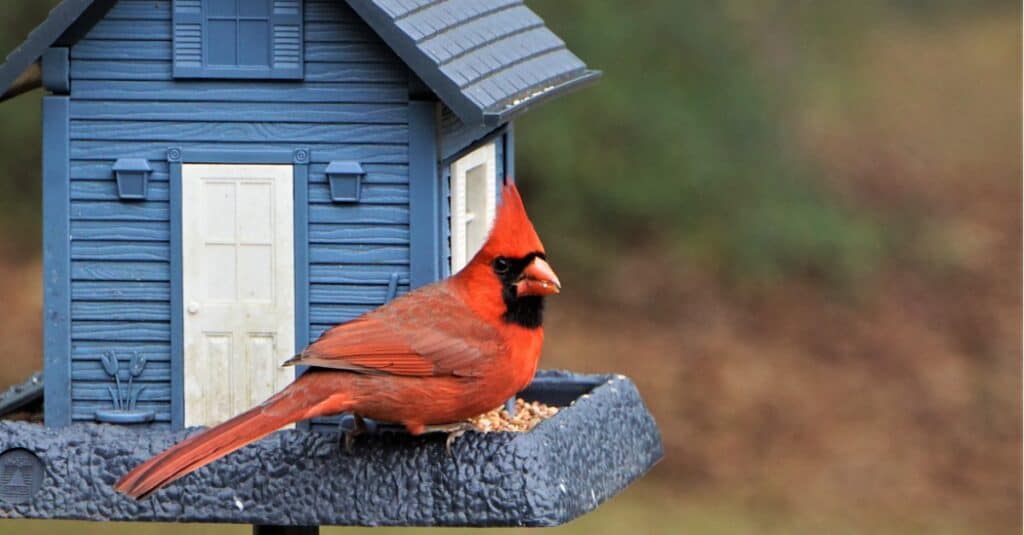
Cardinals prefer seeds that are high in fat and protein.
©iStock.com/ANCHASA MITCHELL
As opportunistic feeders, cardinals’ foraging habits change with the season. In the spring, they forage on the ground in open areas, like fields and forest floors, where they might find wild seeds. When leaves sprout in warmer weather, they eat insect larvae and buds on trees and shrubs. In the autumn, they take fruit and seeds directly from the plants or from the ground. In the winter, cardinals rely on any leftover fruits and seeds, as well as seeds provided in bird feeders.
Cardinals have thick, strong beaks with sharp edges. They hold the seed in their beak and apply pressure to the shell. When the seed’s shell is cracked, they use their tongues to pull out the seed. They also use their strong beaks to pull fruits from trees, vines, and shrubs. Some researchers report that they peel wild grapes in their bills, throwing away the skin and only eating the seeds and pulp. Additionally, they eat mulberry seeds that they extract from the pulp after discarding the skin. Cardinals have also been observed actively searching among the tree branches for insects.