















C
Species Profile

Cocker Spaniel

Canis lupus familiaris

Merry flusher, gentle retriever
iStock.com/Eva Blanco

Cocker Spaniel Distribution

Click a location to explore more animals from that region

Origin Location

This map shows the native origin of the Cocker Spaniel. As a domesticated species, they are now found worldwide.

Loading map...

Found in 1 country

Size Comparison

Human 5'8"
Cocker Spaniel 1 ft 3 in

Cocker Spaniel stands at 23% of average human height.

cocker spaniel laying on pavers

At a Glance

Domesticated
Also Known As Cocker
Diet Omnivore
Activity Diurnal+
Lifespan 12 years
Weight 16 lbs
Status Not Evaluated
Did You Know?

The name "Cocker" comes from the breed's historic use flushing Eurasian woodcock in dense cover.

Scientific Classification

A small-to-medium domestic dog breed/group within the spaniels, historically developed as a sporting gundog for flushing and retrieving game (notably woodcock), and now also widely kept as a companion animal.

Kingdom
Animalia
Phylum
Chordata
Class
Mammalia
Order
Carnivora
Family
Canidae
Genus
Canis
Species
Canis lupus

Distinguishing Features

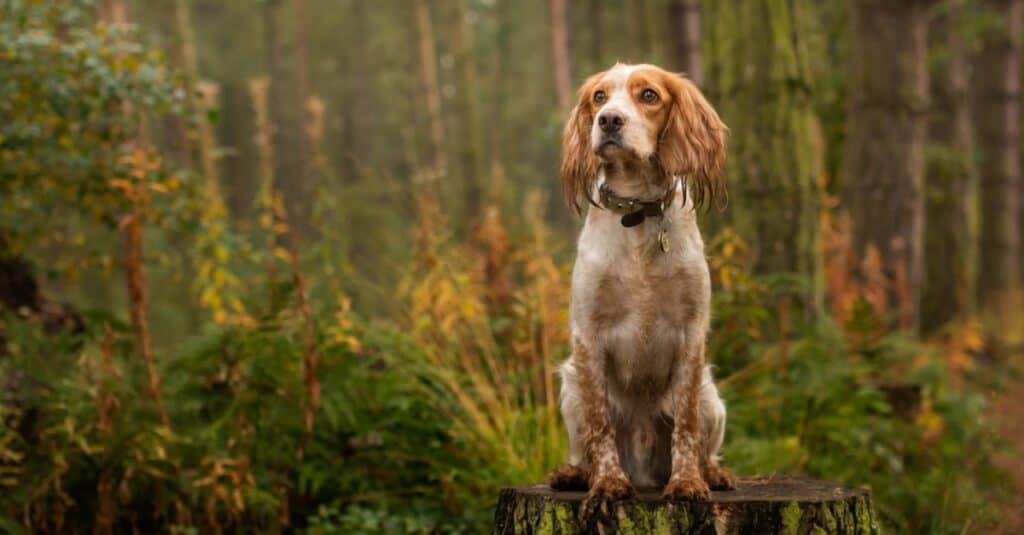
  • Long, pendulous, feathered ears
  • Silky, feathered coat with longer hair on legs, chest, and belly
  • Compact, athletic build suited to flushing/field work
  • Characteristic spaniel head shape; lively, alert expression
  • Common coat colors include solid black, buff/golden, liver, parti-color, roan patterns (varies by breed standard)

Physical Measurements

Males and females differ in size

Height
1 ft 3 in (1 ft 3 in – 1 ft 4 in)
1 ft 3 in (1 ft 2 in – 1 ft 3 in)
Length
2 ft 4 in (2 ft 1 in – 2 ft 7 in)
Weight
31 lbs (26 lbs – 35 lbs)
28 lbs (24 lbs – 32 lbs)
Tail Length
10 in (9 in – 12 in)
6 in (5 in – 7 in)
Top Speed
25 mph
short bursts of speed

Appearance

Primary Colors
Secondary Colors
Skin Type Cocker Spaniel (Canis lupus familiaris): dense, silky, medium-to-long double coat with soft undercoat and guard hairs; feathering on ears, chest, belly, legs, tail. Needs regular brushing, trimming, and frequent ear cleaning because of floppy ears.
Distinctive Features
  • Small-to-medium domestic dog breed within spaniels; compact, balanced build relative to the wider size/shape diversity of the base species (domestic dog).
  • Long, low-set, pendulous ears with abundant feathering; distinctive "spaniel" ear leather and ear fringe that can trap moisture/debris.
  • Silky, profuse feathered coat with heavy furnishings on legs and belly; coat is prone to matting without consistent grooming.
  • Large, expressive, dark eyes; rounded head with defined stop; relatively short, broad muzzle compared to many other gundogs.
  • Historically developed as a flushing/retrieving gundog (notably woodcock): strong nose, eager quartering/flush behavior, and soft mouth are typical behavioral/functional traits that influenced body and coat selection.
  • English Cocker Spaniel is slightly taller with a longer muzzle and more field-type body. American Cocker Spaniel has a domed skull, shorter muzzle, and a heavier, longer show coat with feathering.
  • Cocker Spaniels often get chronic ear infections because of their ear shape. They can have cataracts, progressive retinal atrophy, skin allergies, hip dysplasia or patellar luxation. Regular vet checks and ear care help.
  • Needs frequent brushing several times a week and regular professional grooming. Trim and clean ear hair and ear canals to lower infection risk. Clean feathering after outdoors to remove burrs and foxtails.

Sexual Dimorphism

Sexual dimorphism is mild, reflecting typical domestic dog patterns: males tend to be slightly larger and more heavily boned with broader heads; females often appear a bit finer and lighter in build. Coat length/feathering is not strongly sex-linked and varies more by line (field vs show) than by sex.

  • Slightly greater overall size and chest/neck thickness on average.
  • Broader skull and more pronounced head width in many individuals.
  • Slightly lighter frame and finer head/neck on average.
  • Often a more refined overall outline while retaining the same coat type and ear feathering.

Did You Know?

The name "Cocker" comes from the breed's historic use flushing Eurasian woodcock in dense cover.

Modern lines are commonly recognized as English Cocker Spaniel (field/show types) and the smaller, more profusely coated American Cocker Spaniel.

Cockers are classic "flushers": they work close to the hunter, zig-zagging ("quartering") to push birds into flight.

Their long, feathered ears aren't just cute-those heavy ear leathers can help sweep scent up from the ground while the dog tracks.

They've been among the most popular companion dogs at various times-especially in the mid-20th century United States.

A Cocker Spaniel named "Checkers" became famous in U.S. political history via Richard Nixon's 1952 "Checkers speech."

"Lady," the heroine dog in Disney's *Lady and the Tramp* (1955), is an American Cocker Spaniel-cementing the breed's "family dog" image.

Unique Adaptations

  • Compact, athletic build compared with the base domestic dog (Canis lupus familiaris): optimized for maneuvering through bracken, hedgerows, and woodland undergrowth rather than long-distance coursing.
  • Long, pendulous, feathered ears: provide some protection from thorns and debris and can help waft ground scents toward the nose during tracking.
  • Silky, feathered coat: offers light insulation and abrasion protection in brush; requires regular grooming to prevent mats, especially on ears, chest, legs, and belly.
  • Drive to work close to a handler: a behavioral "adaptation" selected by hunters-Cockers typically hunt within gun range, responding well to whistle cues and frequent direction changes.
  • Retrieving tendency with gentle carry: selectively reinforced in sporting lines to bring downed game back without damage.

Interesting Behaviors

  • Close-working hunting pattern: energetic quartering in front of the handler, naturally suited to thick brush and woodland edges.
  • "Flush-and-mark" instinct: bursts forward to spring game, then visually tracks where it goes-useful for retrieval work.
  • Soft-mouth retrieving: many Cockers naturally carry objects gently, a trait prized in gundogs.
  • High social contact: tends to follow people room-to-room and frequently checks in ("velcro" companion style).
  • Expressive ear-and-eye communication: frequent head tilts, ear lifts, and "asking" looks that pair well with reward-based training.
  • Scent-led exploration: nose-down sniffing with quick direction changes, reflecting their spaniel hunting heritage.

Cultural Significance

Cocker Spaniels (Canis lupus familiaris) are linked to British hunting as gundogs that flush out and fetch birds in woods. In the 1900s they became popular companion and show dogs, like the American Cocker in Disney's Lady and the Tramp. Nixon's 'Checkers' made the breed a symbol of loyalty.

Myths & Legends

In British sporting tradition, the breed's very identity is told through its "woodcock dog" origin: the Cocker was celebrated as the small spaniel that could slip through dense cover to put elusive woodcock to wing.

Old spaniel lore in European art and courtly symbolism cast spaniels as tokens of fidelity and devoted companionship-an association that later followed pet Cockers into Victorian and modern family life.

Hunters' tales from the era when "cockers" and "springers" were separated largely by size recount litters where smaller pups were kept as Cockers and larger ones became Springers-an origin story often repeated in breed histories.

In U.S. political storytelling, "Checkers" became a modern legend of the loyal family dog whose name and story entered national memory after the 1952 "Checkers speech."

Among mid-century American pop-culture anecdotes, the "Lady" archetype (from *Lady and the Tramp*) helped create a lasting folk image of the Cocker Spaniel as the gentle, well-mannered suburban companion.

Conservation Status

NE Not Evaluated

Has not yet been evaluated against the criteria.

Population Stable

Life Cycle

Birth 5 pups
Lifespan 12 years

Lifespan

In the Wild
10–14 years
In Captivity
10–15 years

Reproduction

Mating System Polygynandry
Social Structure Managed Domestic
Breeding Pattern Serial
Fertilization Managed Selective
Birth Type Internal_fertilization

Cocker Spaniels (Canis lupus familiaris) have puppies by internal fertilization but breeding is usually planned by humans. Females come into heat about every 5–8 months, pregnancy ~63 days, litters ~3–7 pups, mother cares; breeders check ears, eyes, hips.

Behavior & Ecology

Social Pack Group: 4
Activity Diurnal, Crepuscular, Cathemeral
Diet Omnivore Poultry-based meat (especially chicken/turkey)

Temperament

Affectionate, highly people-oriented companion; often seeks physical contact and close proximity to caregivers (more so than many baseline domestic dogs).
Eager-to-please and biddable; typically responds well to reward-based training and clear routines-harsh handling can increase fearfulness or avoidance due to sensitivity.
Sporting/gundog heritage: alert, curious, and motivated by scent; enjoys flushing/retrieving-style games, tracking, and 'find it' work. Prey/chase interest is often moderate and can be channeled into structured play.
Sociable with familiar people and dogs; can be reserved with strangers if not well socialized. Some lines show heightened noise sensitivity or timidity-early, positive exposure is important.
Emotional sensitivity: prone to stress-related behaviors (appeasement, submissive urination, clinging) in chaotic environments; thrives with calm handling and predictable schedules.
Breed-specific behavior risks: occasional guarding or fear-based snapping if poorly socialized or in pain; rare severe episodic aggression has been reported in some lines-screening temperament and avoiding punitive training are key.
Care-linked behavior notes (breed-specific): requires regular coat brushing/trimming to prevent matting that can cause irritability; long, pendulous ears predispose to otitis-ear discomfort can reduce sociability and increase head-shaking or touch aversion.
Health problems that can change mood and activity: ear infections, atopic dermatitis/allergies, eye disease (cataracts/PRA), hip dysplasia, patellar luxation, obesity, and some immune diseases; good weight and vet care help keep temperament steady.
Exercise/mental needs: moderate daily aerobic activity plus scent enrichment is usually sufficient; without it, may show nuisance barking, restlessness, or attention-seeking.

Communication

Barking: alerting to visitors/sounds; may increase with boredom or separation distress.
Whining/whimpering: attention-seeking, frustration, or anxiety; common in highly attached individuals.
Play vocalizations: short yips/barks during chase or retrieve games.
Growls: low, situational warnings around discomfort, resource pressure, or overstimulation; should be treated as valuable distance-increasing signals rather than punished.
Howling: uncommon but possible in response to sirens or other dogs.
Body language: soft eyes, loose wags, play bows; appeasement (lip-licking, head turns, crouching) is common in sensitive individuals.
Scent communication: intensive sniffing, urine marking (especially in novel areas), investigation of trails-reflecting strong scenting tendencies from sporting heritage.
Tactile/affiliative behaviors: leaning, pawing, nose nudges, bringing toys to solicit interaction; may 'check in' frequently with handler during walks.
Ear and tail signals: ear carriage (often low/relaxed when affiliative; pulled back when unsure), tail wag speed/height changes conveying arousal and intent.
Retrieval-based signaling: offering or 'presenting' objects to initiate play/training; some use a toy as a social buffer when excited or uncertain.
Attention and gaze: frequent eye contact and following behavior; can be used for training but may also indicate dependency-benefits from independence-building exercises Settle/alone-time practice

Habitat

Biomes:
Temperate Forest Boreal Forest (Taiga) Tundra Alpine Temperate Grassland Mediterranean Savanna Desert Hot Desert Cold Tropical Dry Forest Tropical Rainforest Freshwater Wetland Marine +8
Terrain:
Plains Hilly Valley Coastal
Elevation: Up to 16404 ft 3 in

Ecological Role

Domesticated omnivorous canid; primarily a companion animal with a historical niche as a sporting gundog that flushes and retrieves birds, now functioning mostly as a human-supported consumer rather than an independent ecological predator.

assistance in hunting/retrieving game (working lines) rodent/pest deterrence around human dwellings companionship and human well-being support canine-assisted activities and potential scent work/training roles (high food motivation aids training)

Diet Details

Main Prey:
Domestic livestock Fish Small game birds Small mammals
Other Foods:
Cooked grains and starches vegetables Fruits Plant-derived oils and fibers

Human Interaction

Domestication Status

Domesticated

Cocker Spaniel (Canis lupus familiaris) is a small-to-medium UK gundog bred to flush and retrieve game birds, especially woodcock. Friendly, people-focused, trainable, needs daily exercise, grooming, and socializing. Prone to ear disease, skin allergies, eye and joint issues, and weight gain. Care: ear cleaning, brushing, training, health checks.

Danger Level

Low
  • Bites/scratches possible if fearful, in pain (notably ear/skin pain), poorly socialized, or mishandled-risk generally lower than many larger breeds.
  • May nip during rough play if not trained; supervision recommended with small children.
  • Allergen exposure (dander/saliva) for sensitive individuals.
  • Zoonotic risks are low but include parasites or skin infections without routine hygiene/vet care.

As a Pet

Suitable as Pet

Legality: Generally legal to own as a pet in the United States and most jurisdictions; may be subject to standard local dog licensing/leash laws, breed-neutral dangerous-dog ordinances, landlord/HOA rules, and airline/transport requirements.

Care Level: Moderate

Purchase Cost: $150 - $2,500
Lifetime Cost: $18,000 - $45,000

Economic Value

Uses:
Companion animal market Sporting/working dog services Dog sports and competitions Grooming and boarding services Veterinary and preventive healthcare Breeding and showing (regulated markets) Rescue and rehoming services
Products:
  • puppies/dogs (purchase and adoption fees)
  • training services (basic manners, gundog training, behavior consults)
  • grooming (clipping/stripping, bathing, ear care)
  • pet food and supplements (weight/allergy management common)
  • veterinary services (vaccines, dental care, otitis/skin/eye treatment)
  • equipment (crates, leashes, harnesses, long lines, retrieval dummies)
  • insurance and preventive care plans

Relationships

Ecological Equivalents 7

Animals that fill a similar ecological role in their ecosystem

English Cocker Spaniel
English Cocker Spaniel Canis lupus familiaris Very similar sporting spaniel type. Typically a bit taller and longer-muzzled, and often bred more strongly for field work compared with many modern pet-line cockers.
American Cocker Spaniel
American Cocker Spaniel Canis lupus familiaris Close counterpart developed from cocker stock. Tends to have a shorter muzzle, heavier coat, and greater emphasis on companionship and show traits, yet historically occupied a similar flushing and retrieving niche.
English Springer Spaniel
English Springer Spaniel Canis lupus familiaris Occupies the same gundog niche, flushing upland birds and retrieving. Generally larger and with greater endurance for longer days in the field.
Field Spaniel
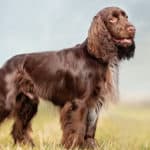
Field Spaniel Canis lupus familiaris Another flushing/retrieving spaniel with a similar nose and biddability. Often slightly larger and less common, and exhibits a steadier, more methodical working style.
Brittany
Brittany Canis lupus familiaris Upland bird-dog niche overlap: finds and works birds for hunters. Typically a pointing breed rather than a flushing spaniel, and often rangier and higher-energy.
Beagle
Beagle Canis lupus familiaris Similar size and activity level with a scent-driven hunting background; beagles are primarily scent hounds that trail rather than flush or retrieve.
Domestic dog
Domestic dog Canis lupus familiaris Cocker Spaniel is a small gundog with long feathered ears and a strong nose for close-range flushing and retrieving. Prone to ear, eye, skin, and joint problems (patellar luxation, hip dysplasia); requires ear care, regular grooming, exercise, and weight management.

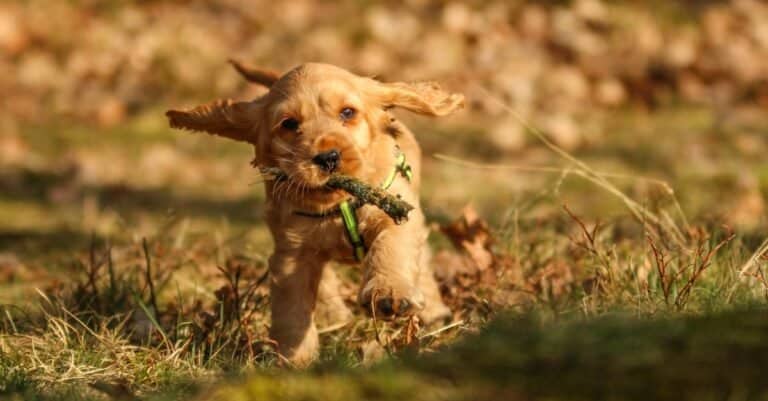
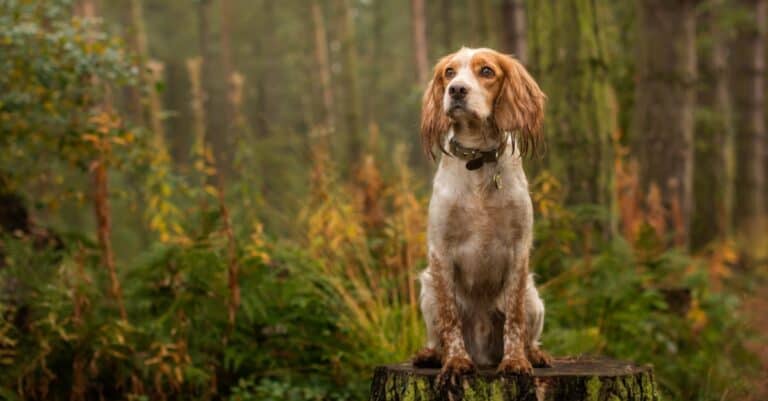
The cocker spaniel comes in many colors. The breed is rather small, but they use this small size to their advantage as a bird dog or a hunting dog. Not to be mistaken for the English cocker spaniel, this dog has been a separate breed since the 1940s.

The (American) Cocker Spaniel is slightly smaller than the English Cocker Spaniel (ECS), and they are groomed differently since the Cocker Spaniel has a heavier coat. The ECS was bred for hunting, while the American cousin is used for companionship and as a show dog.

Spaniels originated in Spain (thus the name). As far back as the 16th century, when spaniels were employed as hunting dogs, litters were divided into “springers,” which were larger pups used for hunting larger game, and “cockers,” smaller pups that specialized in hunting woodcock. The “cockers” eventually became the English Cocker Spaniel.

The first Spaniel came to America on the Mayflower in 1620, and it was registered with the American Kennel Club in 1878. Regal and adored, this breed often comes with a much bigger commitment to grooming than most owners realize.

3 Pros and Cons of Ownership

ProsCons
Companion-focused breed: This bird dog is just as happy while relaxing on its owner’s lap as it is going out for hunting season.Many health issues: Even with the best diet and a naturally long lifespan, you will have to spend a lot of money and time on veterinary care to screen for genetic problems.
Requires little space: Cocker Spaniels generally need at least 30 to 60 minutes of exercise each day, so while they can adapt to apartment living, owners should ensure they get enough daily activity.Immense grooming needs: The beautiful coat of this spaniel is quite tedious to maintain, which is a problem that most owners don’t realize when they initially adopt this breed.
Intelligent: While the breed is a little sensitive, the right training makes these dogs quite jovial to be around.Potential aggression: Take great care to train and treat the dog gently. Being too firm or angry with it could lead to barking and even biting.

Cocker spaniels were originally bred to be hunting dogs.

Size and Weight

Known as the smallest dog breed of the sporting group, the long-haired cocker spaniel has an average height of 14 to 15 inches when measuring from the foot to the top of the shoulder. Males can reach a maximum height of 17 inches, while females tend to be no bigger than 16 inches tall. The female tends to be slightly smaller in size, contributing to their lower weight. Once fully grown, the male reaches a weight of 24 to 28 lbs., with the female being 22 to 26 lbs.

While the breed typically lives to be about 15 years old, the oldest to have ever lived was over 22 years old with ideal care.

Common Health Issues

As many wonderful attributes as the spaniel has, one of the biggest problems with the breed is their health concerns. Every animal comes with some health issues to consider, but the right breeders can make a big difference.

The biggest health issues that this breed faces are related to their eyes, including progressive retinal atrophy, cataracts, patellar luxation, and glaucoma. Much like with bulldogs, cherry eye is a major concern, as are allergies and congestive heart failure. Getting exams with a vet can screen your dog for issues in its hips, knees, thyroid, and eyes. Although this dog is at risk for anemia, you can get a DNA test to determine if it is at risk due to phosphofructokinase deficiency.

Gastric torsion, elbow dysplasia, and epilepsy are also issues that this pup should be screened for. Though problems like hip dysplasia may be a risk, you can check with the breeders to see if it is inherited through the mother. Generally, this breed is also at risk for liver issues, urinary stones, cardiomyopathy, and hypothyroidism as well. Despite these many challenges, the lifespan of a healthy cocker spaniel continues to be up to 15 years old.

Temperament and Behavior
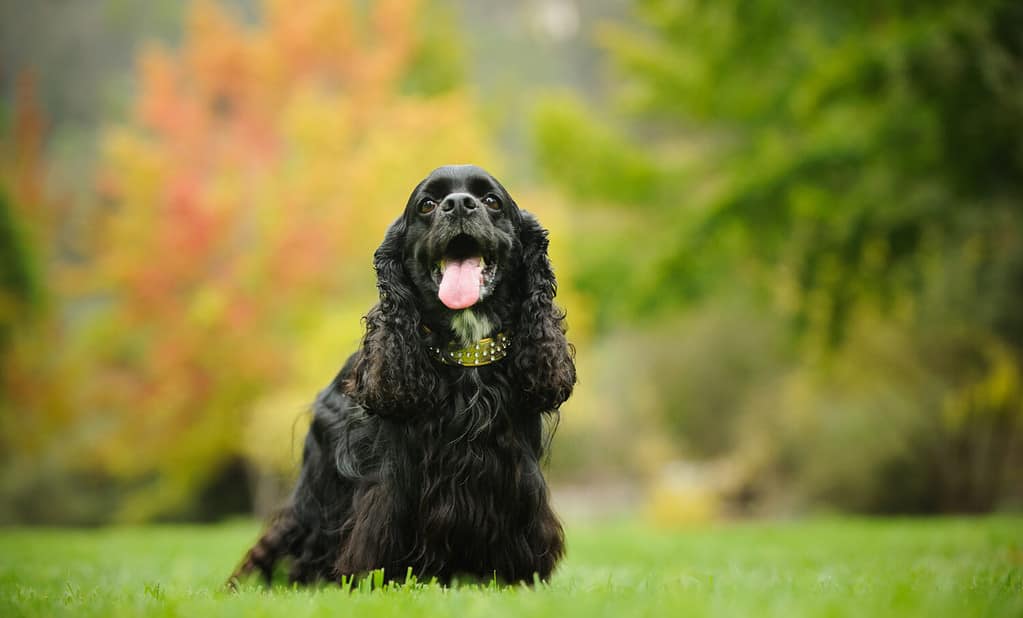
Black Cocker Spaniel dog standing on park grass

The Cocker Spaniel is lovable and affectionate, but also playful and active.

The lovable and affectionate personality of the cocker spaniel is the main reason that it has such a great reputation. Early socialization is easily the best way to preserve this nature. They love to cuddle with their family members, though they also become quite playful and active. Originally bred as bird dogs, bringing this dog along during a hunting trip can be a positive experience for both of you.

Even though the main appeal of this breed’s traits is their adoration of their family, they can be very sensitive. Harsh treatment or scolding is not met with positive behavior. Instead, fear and pain are often conveyed with growling at the person who acts that way towards them. The breed tends to be intelligent overall, but proper training for their manners is crucial to bring out their good side.

Care

Caring for a Cocker Spaniel requires specific attention to its needs. Even as a puppy, it must be groomed properly and fed a healthy diet to thrive. This pet has many health issues to watch for, which are primarily the result of careless breeding in their origins.

Best Dog Food

The diet of these dogs needs to consist of at least 1.5 cups of high-quality dog food every day, though they may eat up to 2.5 cups.

They have quite a voracious appetite, and their likelihood of becoming obese is quite high. To avoid being put on a diet, don’t give in to their begging for more food.

The exact amount your dog will eat will depend on its age, activity level, and other factors. If your pup likes to spend more time doing physical activities, it might be at the higher end of this range.

Maintenance and Grooming

A golden cocker spaniel with curly ears cocks its head

A Cocker Spaniel has a regal appearance with its thick fur and long, fluffy ears, but its beauty takes a lot of grooming.

With moderate shedding, this dog breed has to be cared for properly to keep its regal appearance. Their thick fur needs regular grooming, showing off the beautiful colors of their red, brown, light cream, or black coat. The grooming of this dog breed is labor-intensive and quite costly, which is why most owners outsource this task to a professional. The trimming, bathing, and brushing of this dog should happen every six to eight weeks, bringing up the amount of money you’ll have to spend on the right professional. Even with this care, brushing the coat at home each day is necessary to stave off matting. If you aren’t ready for the many grooming needs of this dog breed, you may want to look elsewhere.

To make the dog more comfortable with grooming, you should start the process relatively early. With this exposure, it’ll stand confidently and calmly among all of the clipping, brushing, cleaning, and other processes associated with its coat.

Training

These dogs tend to be easy to train, which gives them great appeal among novice dog owners. They particularly thrive in training for show rings, performing their obedience and agility challenges perfectly. However, that’s part of the reason you need to be gentle with your training — this breed becomes fearful of its owner if harsher methods are used. Be consistent and train with a kind hand.

Exercise

Since the spaniel tends to be rather active, the dog will enjoy nearly any physical activity, even if you just take it on a brief yet brisk walk. Most Cocker Spaniels require at least 30 to 60 minutes of exercise daily to stay healthy and happy. While they can thrive in apartments, regular walks and playtime are essential. They don’t require much space, and the space they do need is easy to get to on a walk or a trip to the dog park.

Puppies
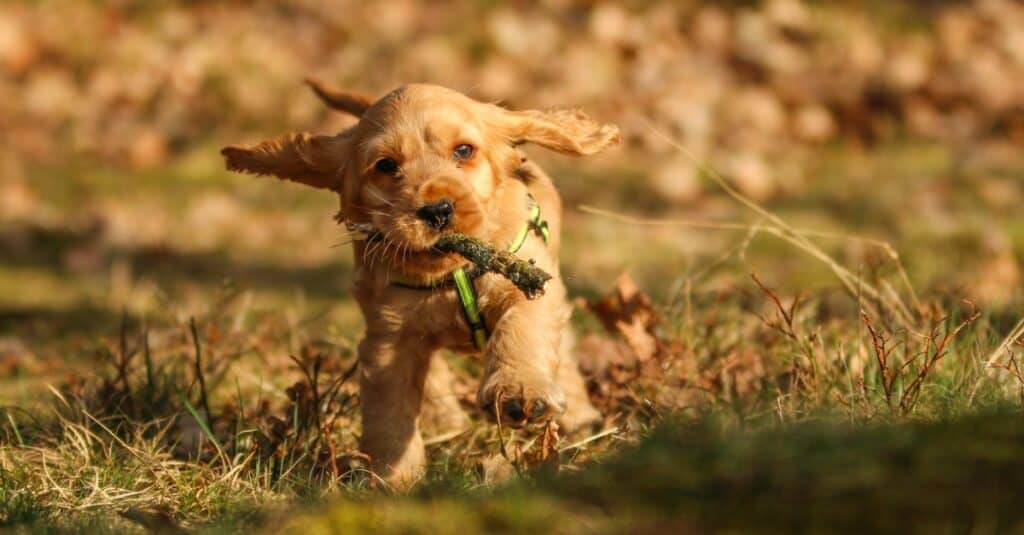
Cocker Spaniel puppies need early socialization and acclimation to their extensive grooming.

The main concerns with adopting a puppy are the socialization of the pet and the acclimation to grooming. Puppies need to be groomed early on to get them used to the amount of maintenance that needs to happen for their coat to be healthy. Since these dogs can be incredibly sensitive, it is important to train the puppy to be obedient to certain commands to avoid confusion. Always train gently and kindly to amplify the beloved temperament of this dog breed.

If you choose to buy a puppy from one of your local breeders, ask for proof of testing the parents for hip dysplasia and other problems. These concerns can often be avoided with the proper research. Considering their long lifespan, addressing health concerns during their younger years is a proactive way to keep this breed healthy.

Children

If you choose this dog breed, part of the appeal is the way that they bond with family members, especially children. However, you have a much better chance of a positive relationship with children in the house if the dog is raised from its puppy years with little ones. Since the Cocker Spaniel is incredibly sensitive, teaching your child to properly handle and interact with the pup is a necessity. It will not react kindly to any family member who is rough with it.

Similar Dogs

Some similar dog breeds that replicate many of the loved characteristics of Cocker Spaniels include the American Water Spaniel, the Cavalier King Charles Spaniel, and the English Cocker Spaniel.

Famous

Cocker Spaniels have a beautiful, regal, and friendly temperament that makes them ideal for movies and for the celebrities in them. Some of the most famous Cocker Spaniels in history include:

  • President Nixon and his family had a cocker spaniel named Checkers that lived to be 13 years old.
  • George Clooney adopted a Cocker Spaniel named Einstein from a shelter when he was five years old, which led the actor and his wife to adopt more animals from shelters.
  • Elton John’s dog Arthur has made multiple appearances with the musician on the red carpet.
  • Perhaps the most famous cocker spaniel of all time isn’t actually real. Lady from the Disney movie “Lady and the Tramp” is one as well!
View all 392 animals that start with C

Sources

  1. About Cocker Spaniels / Accessed December 26, 2021
  2. dogtime.com / Accessed December 26, 2021
  3. AKC / Accessed December 26, 2021
  4. Wikipedia / Accessed December 26, 2021
  5. PUPvine / Accessed December 26, 2021
  6. SpiritDog / Accessed December 26, 2021
  7. AKC / Accessed December 26, 2021
  8. Chewy / Accessed December 26, 2021
  9. PETMD / Accessed December 26, 2021
  10. mentalfloss / Accessed December 26, 2021
Thank you for reading! Have some feedback for us?


Cocker Spaniel FAQs (Frequently Asked Questions)

This dog breed is from the sporting group, though they have frequently been used for their prowess as a bird dog. They are great within a family, though they are a little less patient with children. Their colors are mainly blonde and white, giving them a regal and friendly appearance. They are incredibly vocal, though they are quite small.