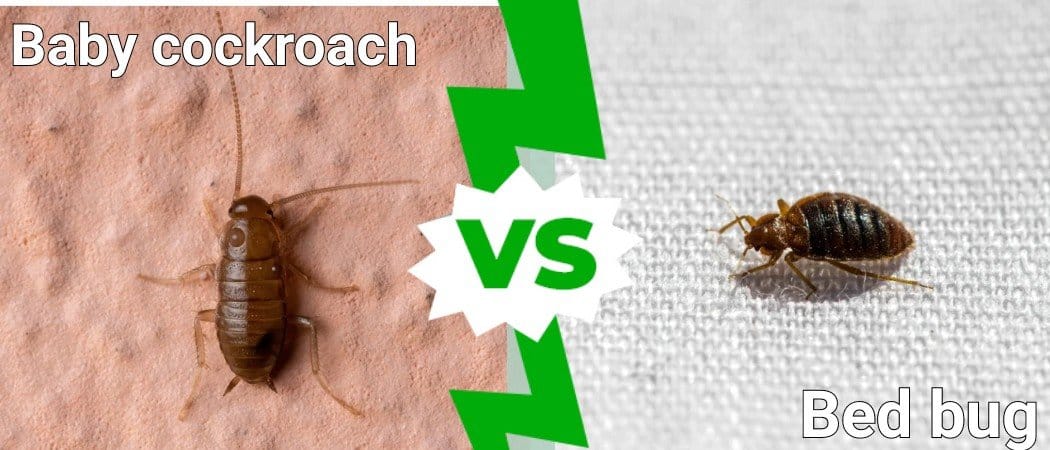

American cockroaches (Periplaneta americana) and common bed bugs(Cimex lectularius) are nuisance insects that pose health risks to humans. Cockroaches are commonly associated with unsanitary conditions and serve as vectors for bacterial, viral, and parasitic infections. While bed bugs don’t transmit disease, they are blood-sucking parasites that cause discomfort. Although they may appear similar from a distance, there are eight key differences between these two insects. Continue reading to learn how to distinguish a baby American cockroach from a common bed bug.
Size
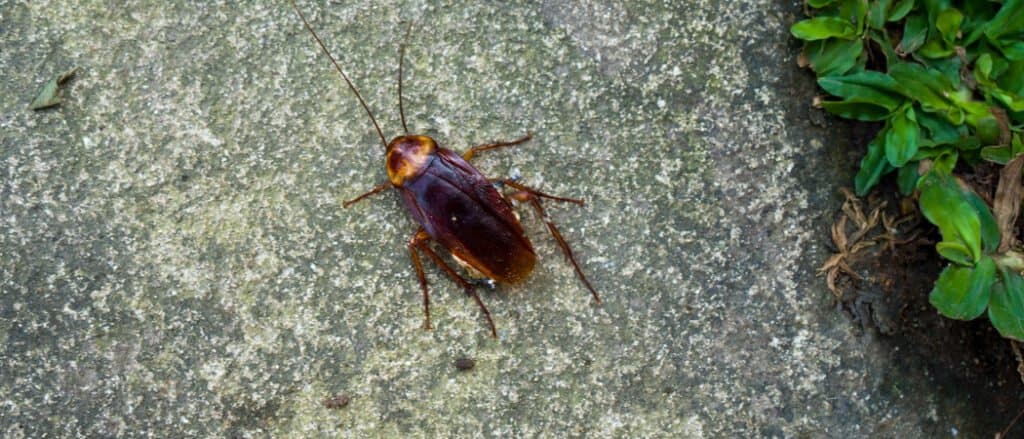
The American cockroach is found throughout the United States, although it is most common in Southern states due to its preference for warm, humid environments.
©Fajar Tri Amboro/Shutterstock.com
Baby cockroaches are larger than bed bugs in most cases. A baby cockroach measures about ¼ inch to ½ inch in length and will grow up to 2 inches long as an adult. Bed bugs are only about ¼ inch long when fully grown.
Shape
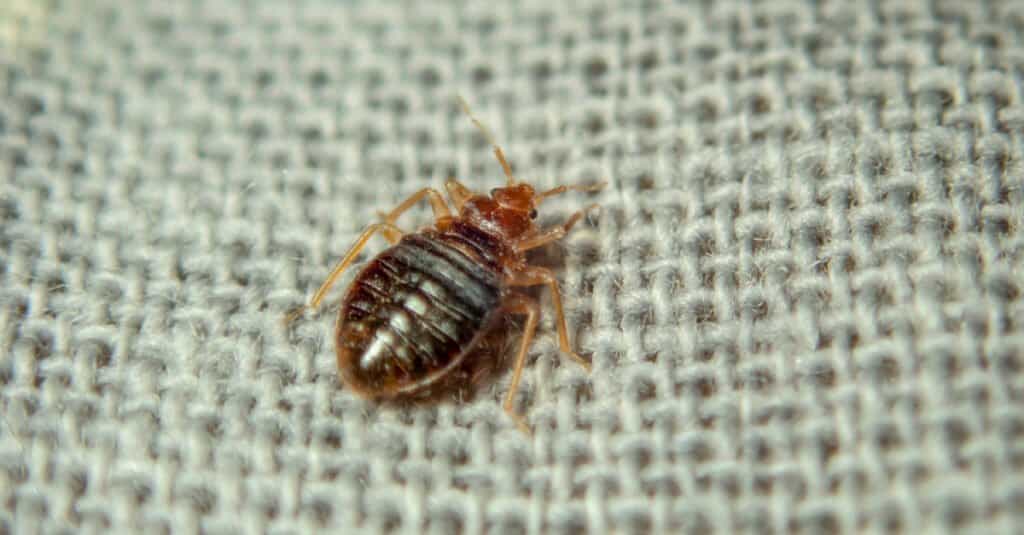
Bed bugs are rounder than cockroaches.
©Dmitry Bezrukov/Shutterstock.com
Baby cockroaches are cylindrical, whereas bed bugs are oval-shaped insects. The shape of these bugs is one of the easiest ways to tell these creatures apart.
Antennae
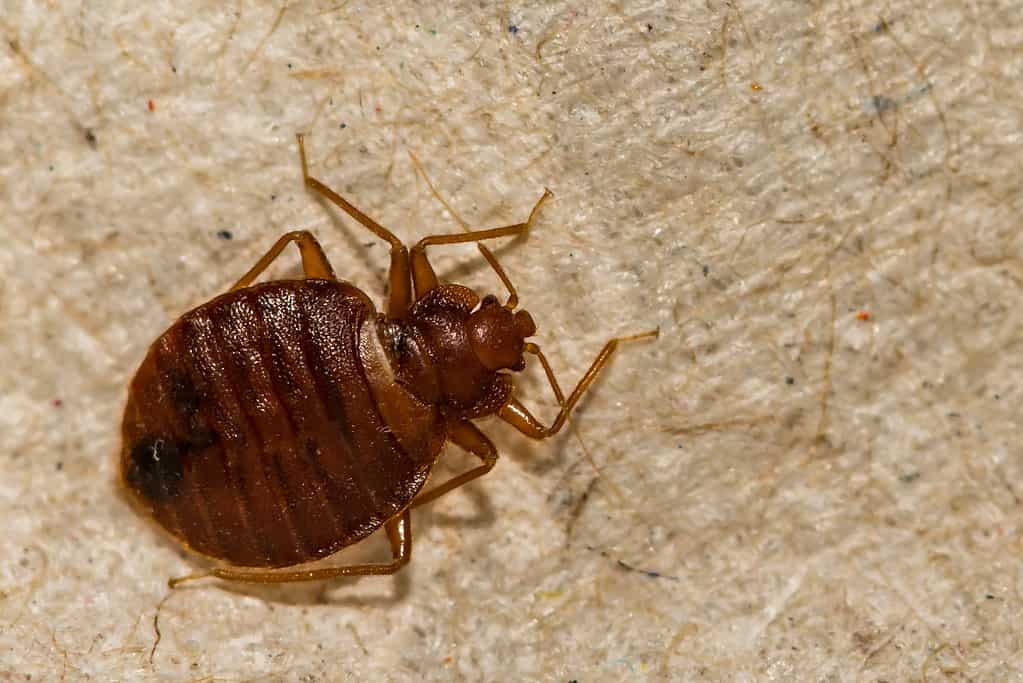
Bed bugs don’t have noticeably long antennae.
©Jay Ondreicka/Shutterstock.com
Baby cockroaches have antennae that are almost as long as their body. Bed bugs have relatively short antennae that do not extend from their body nearly as far as a cockroach’s antennae.
Color
Baby cockroaches can be white right after hatching or right after they molt as part of their growth phase. However, when they are still nymphs, many baby cockroaches will be reddish-brown, the same color as bed bugs. If you catch these insects when they are young or just after a molt, you can tell the difference. Otherwise, their color will appear the same.
Eyes
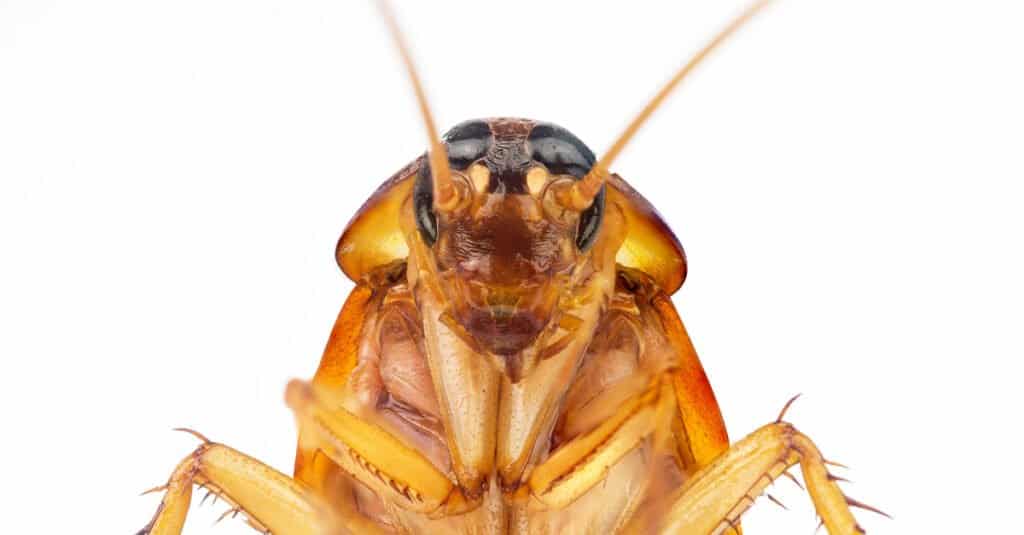
Cockroaches have eyes that round out their head instead of jutting out to the side.
©gan chaonan/Shutterstock.com
Bed bugs have abnormally prominent eyes when you look at them head-on. Their eyes jut outward from the sides of their head, while a cockroach’s eyes are large black spots that do not protrude as much and run from the top of their face toward the bottom.
Wings
Baby cockroaches won’t develop their wings until late in their juvenile stage; however, wings will become apparent after a few molting cycles. Bed bugs do not have wings at any stage, either as nymphs or adults. Thus, wings are a great way to differentiate between juvenile cockroaches and bed bugs.
Bite Potential
Bed bugs bite humans because they feed on blood, but baby cockroaches rarely bite humans unless the situation is extreme. Cockroaches tend to live in areas with ample food supplies, which means they can survive without coming into contact with humans.
Cockroaches rarely bite humans except in cases where the infestation is very large, food is scarce, or when a person has died.
Hiding Spots
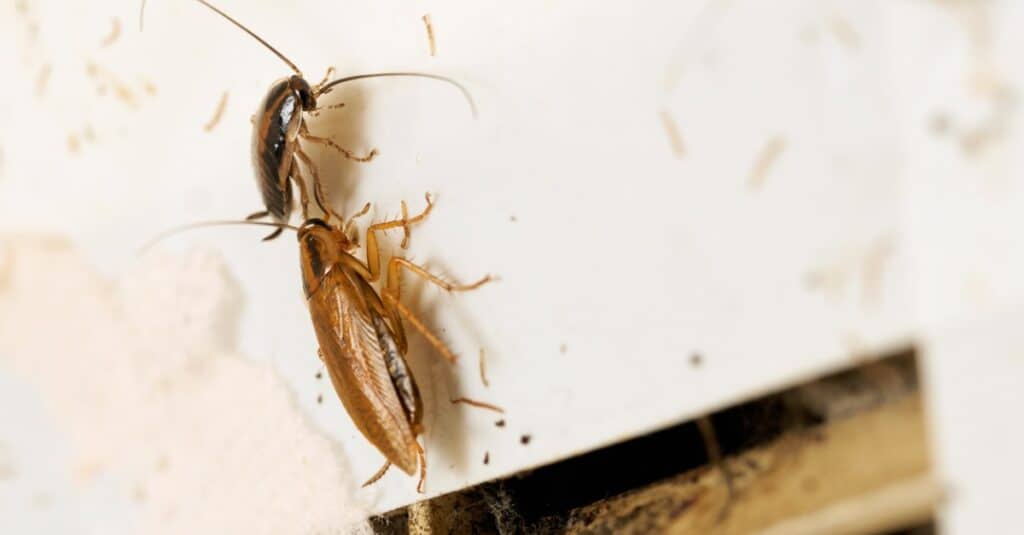
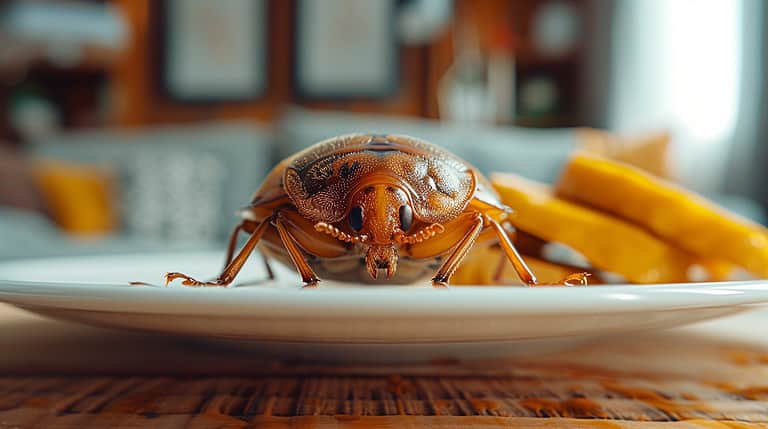
Cockroaches will stay in warm, moist areas to find food.
©iStock.com/Dzurag
Baby cockroaches can be found in warm, moist areas like kitchens or bathrooms where food is plentiful. As their name implies, you can find bed bugs in furniture, mattresses, and clothing.
Baby cockroaches need access to food and water to thrive, so they are not as likely to invade a bedroom if it doesn’t have anything available for them to eat. Bed bugs feed on blood, so they will secure a good meal by staying close to the furniture that humans and their pets use.
Although baby cockroaches and bed bugs may sometimes share a similar color, this is one of the few traits they have in common. By closely examining their size, shape, eyes, antennae, and preferred hiding spots, you can easily distinguish between these two insects.