
Gophers and squirrels are rodents belonging to the order Rodentia, but they come from different families within that order. Gophers are members of the Geomyidae family, with over 35 species of gophers in the Central and Northern United States. Squirrels belong to the Sciuridae family, which contains more than 200 species worldwide. Squirrels are divided into three types: tree squirrels (like gray and red squirrels), ground squirrels (including chipmunks and prairie dogs), and flying squirrels, and the U.S. is home to all three. The main differences between gophers and squirrels include their appearance, diet, habitat, behavior, and affinity for damage. Continue reading to learn more about these two rodents.
Appearance
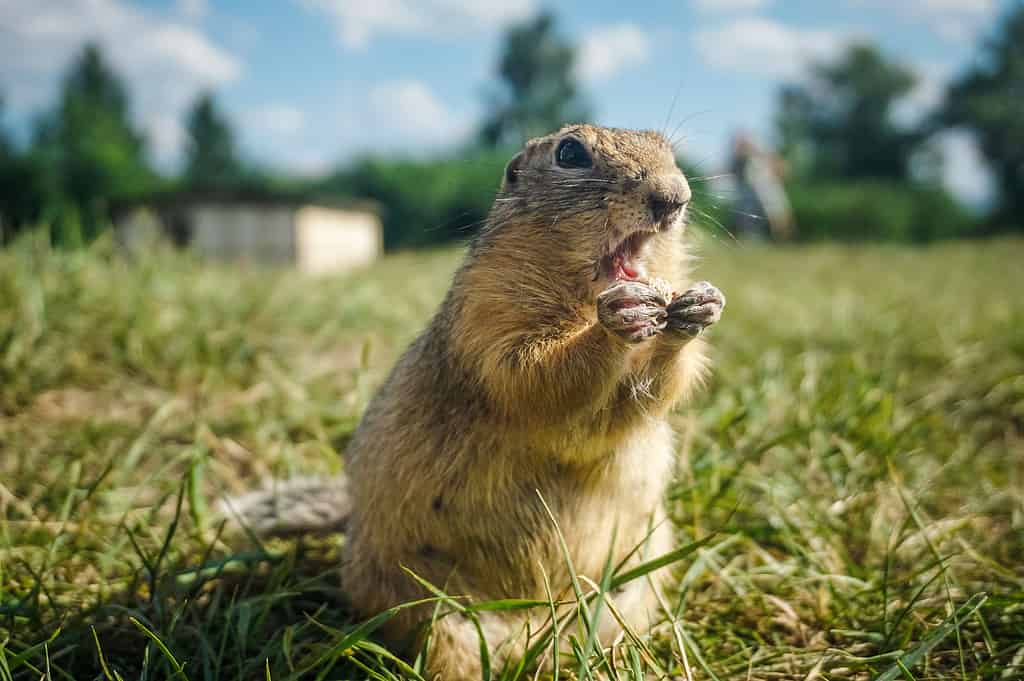
Gophers are destructive diggers that can be a nightmare for property owners.
©paha1205/Shutterstock.com
Gophers weigh approximately one pound and have a body length of between 5 and 14 inches. They have fur-lined cheek pockets for carrying food and nesting materials. Their lips close behind their large, yellow-orange incisor teeth so that dirt does not enter their mouths when they dig burrows with their teeth. Their fur has a uniform color, which can be black, brown, or gray.
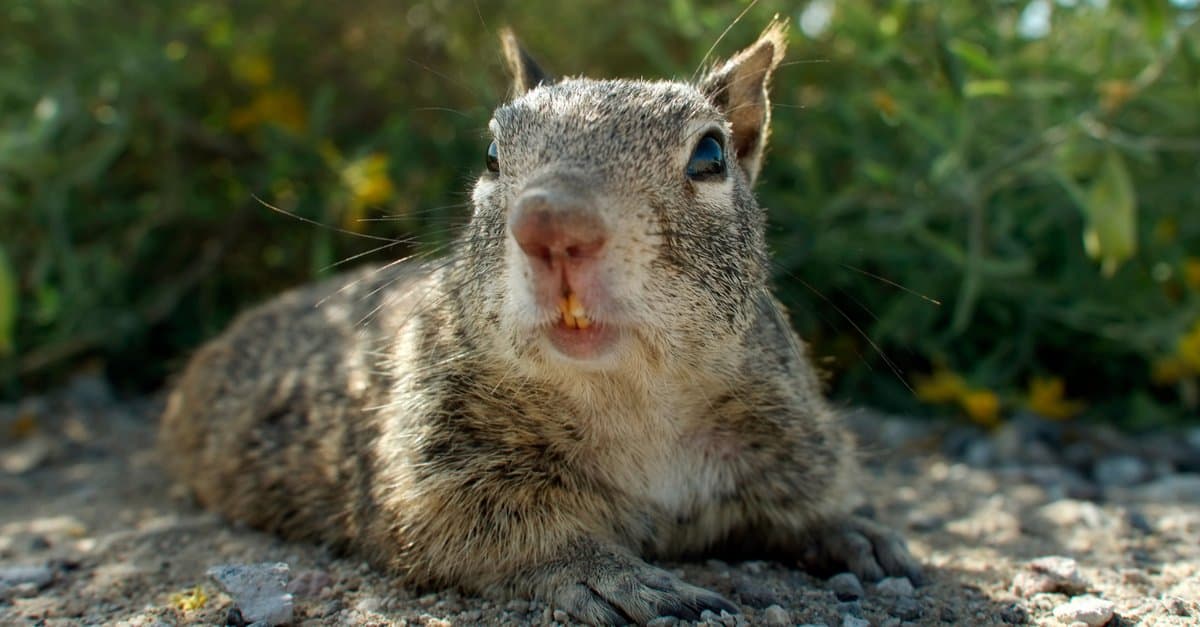
Ground and tree squirrels are about 11 to 25 inches long, with speckled brownish-gray fur and a semi-bushy tail. Known for their powerful claws and short legs, ground squirrels can stand upright for extended periods, primarily as a defensive behavior to scan for predators. They can do this thanks to powerful hind leg muscles and a plantigrade (heel on the ground) stance, which allows them to balance efficiently.
Diet
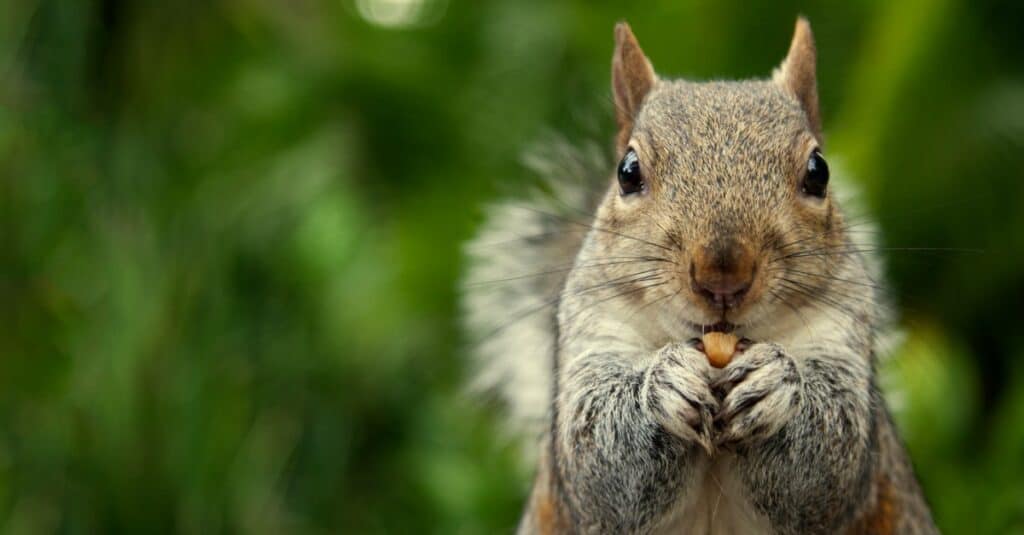
Nuts provide a perfect mix of protein and fat to support squirrels during the winter.
©iStock.com/sines-design
Gophers are herbivores who feed on plants, flowers, and grasses. Grass and forbs are their primary sources of nutrition. They also eat lettuce, carrots, and other vegetables, but rarely consume seeds and fruits. Even to locate water, gophers do not have to leave their tunnels, as the moisture in the plants they eat keeps them hydrated.
Squirrels are omnivorous, eating a diet rich in fungus, nuts, fruits, and seeds, as well as insects, eggs, and small animals on occasion. Though their diet is primarily plant-based, squirrels are omnivores and will eat various animal matter, including insects, bird eggs, baby birds, amphibians such as frogs and lizards, and even small rodents, including mice and shrews.
Plantwise, squirrels eat seedlings, such as corn and beans, as well as bulbs and flowers like tulips, crocuses, and lilies. They are also known to gnaw on tree buds and bark, and will dig for buried nuts and seeds.
Habitat
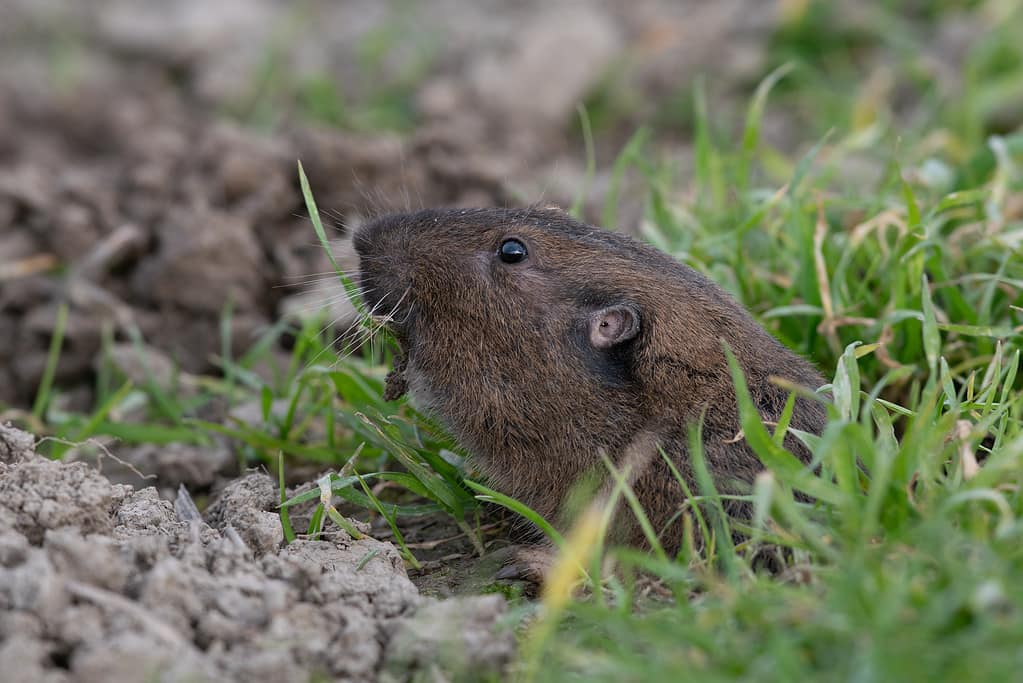
Gophers build underground tunnels near the ground’s surface to search for plant roots.
©zhuclear/iStock via Getty Images
A gopher’s primary habitat is loose, loamy or sandy soil, which they dig through to create a burrow. Their burrow is an extensive tunnel system, averaging 3 inches in diameter, that can extend up to 200 yards and reach depths of 6 feet or more. The system includes shallow foraging tunnels, deeper chambers for food and nests, and lateral tunnels that end in fan-shaped soil mounds on the surface.
Like the gopher, a ground squirrel’s nest is an underground burrow system that serves as a protected home for raising young and surviving harsh weather. Their burrows feature multiple chambers and reach depths of several feet below ground to stay below the freezing line and escape predators.
Tree squirrels, including Eastern gray squirrels and red squirrels, and flying squirrels, build dreys in trees. Dreys are constructed as nests or shelters, providing warmth and protection from predators. These spherical clumps of leaves and twigs are typically built in the branches of trees, though squirrels may also use tree hollows or abandoned nests for shelter.
Behavior

Young gophers establish their own burrows by three to four months of age.
©SERGEI BRIK/Shutterstock.com
Each gopher digs and maintains its own complex, individual tunnel system, and will aggressively defend their territory from other gophers. The only exception to their solitary behavior is during the breeding season, when a male may temporarily enter a female’s tunnel system to mate. A female will raise her litter of young in a nest chamber within her burrow system. The young are weaned and then quickly leave to establish their own burrows.
Although gophers are not social and do not live together, many individual gopher burrows can be found in a single area with a reliable food source. This gives the appearance of a colony, but each gopher is still occupying its own distinct, defended territory.
Like gophers, most tree squirrels are territorial and live alone for much of the year, with a few notable exceptions. Some tree squirrels will share nests, especially during winter. When the mercury drops, it is not uncommon for several squirrels (especially if related) to huddle together in a drey to conserve body heat.
Ground squirrels are social, living in colonies, communicating through sounds and movements, and engaging in behaviors like play and cooperative territorial defense. While sociality varies, common forms of social behavior include living in burrows or tunnels, sharing food and raising young together, and using alarm calls to warn others of predators.
Damage
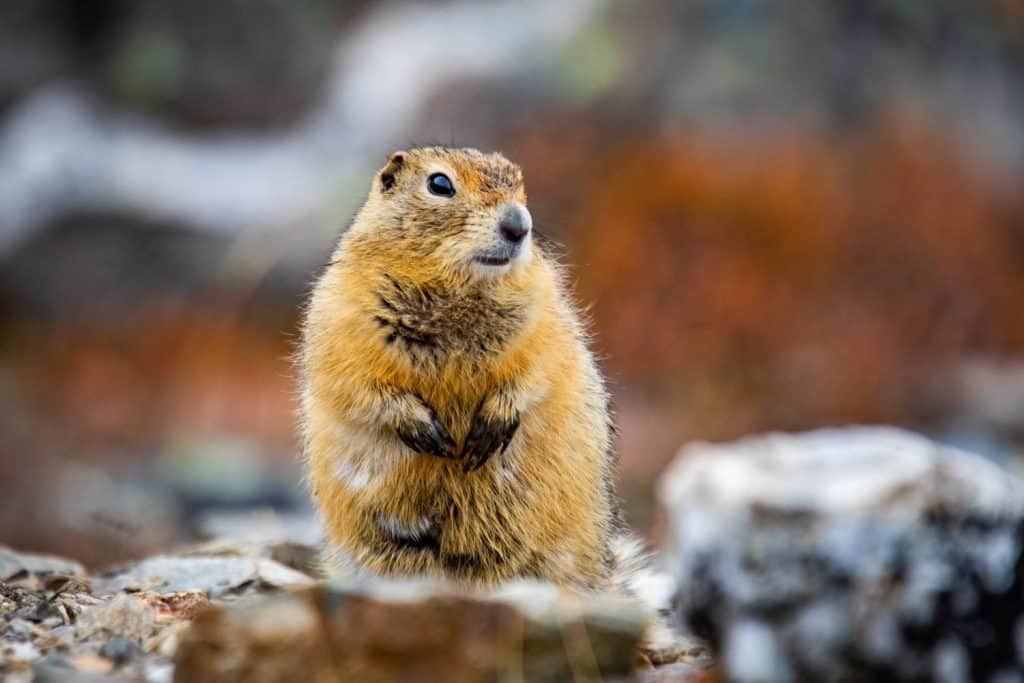
A ground squirrel’s burrow can cause damage to buildings.
©Photo Spirit/Shutterstock.com
Gophers and their burrows are destructive. They eat the roots and plants of crops, ornamental shrubs, and trees. Earthen mounds deposited by these rodents can smother and bury vegetation. In constructing their burrows, gophers can gnaw through and damage underground cables, including electrical, internet, and phone lines, and irrigation systems.
Ground squirrels typically nest by digging complex systems of burrows underground, often along ditches, fencerows, or under structures like rocks or logs. In developed areas, ground squirrels may also burrow under houses, sheds, or other structures, creating extensive tunnel systems that can be several feet deep and tens of feet long.
In some regions, ground squirrel burrows can cause structural damage by weakening foundations, leading to cracked slabs or shifting walls, and eroding the soil beneath structures, which can result in sagging decks or patios. The tunnels may also create pathways for water intrusion, potentially leading to damp basements, mold, and even flooding. This tunneling can be a significant problem for homes, sheds, and other structures, particularly where ground squirrel populations are high and soil conditions are favorable for extensive burrowing.