
Quick Take
- A 2,000-year-old scholar is responsible for one of nature's most stubborn myths, and his mistake reveals something surprising about how scientific misinformation spreads. Trace the myth's origins →
- Ostriches do lower their heads to the ground, though not for the reason anyone assumes. See the nesting behavior →
- When cornered by a predator, an ostrich has a defense strategy far more effective than hiding, and that strategy has nothing to do with sand. Discover their real defense →
- The camouflage trick ostriches actually use to hide from predators works so well the animal stays in plain sight. Explore the camouflage strategy →
Although ostriches possess some physical traits associated with digging birds, they neither burrow nor bury their heads in the sand. Ostriches, too, have these characteristics. However, not only do they not nest or burrow underground, but they also do not bury their heads. Why, then, is there the misconception that ostriches hide their heads in the sand?
Ostriches Do Not Bury Their Heads in the Sand
When people do not want to face a problem head-on and will do anything to avoid the unpleasant situation, they are often told not to bury their heads in the sand. This idiom comes from the idea that ostriches bury their heads in the sand. What many do not know is that the idiom is misplaced. Ostriches do not bury their heads in the sand or any other ground cover, for that matter.
The idea that ostriches bury their heads in the sand comes from the writings of Pliny the Elder. Pliny was a scholar who lived from 23 to 79 AD. During his lifetime, Pliny wrote a 37-book series entitled Naturalis Historia. This encyclopedia collection covered everything from astronomy to biology, botany, zoology, and more.
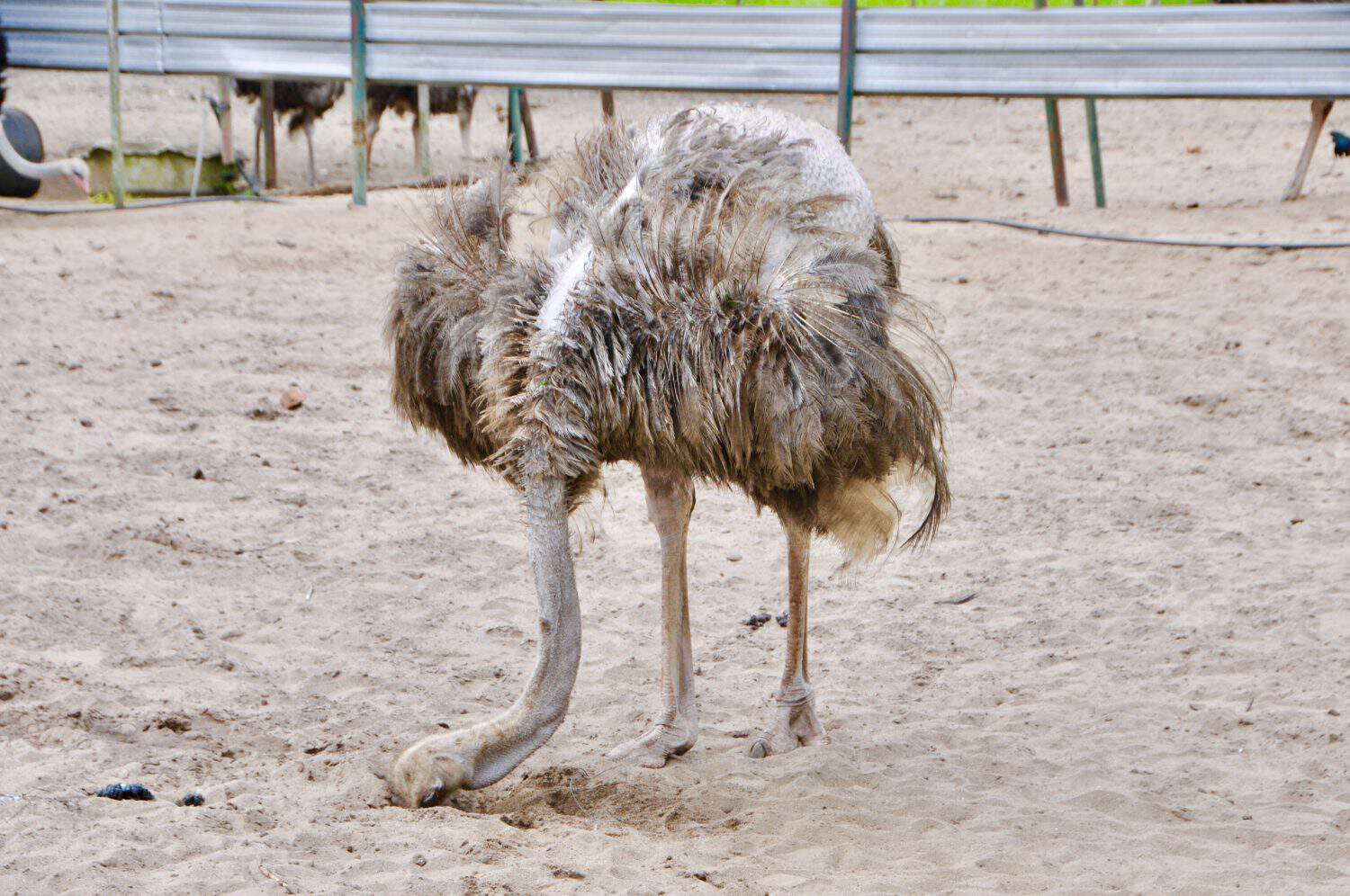
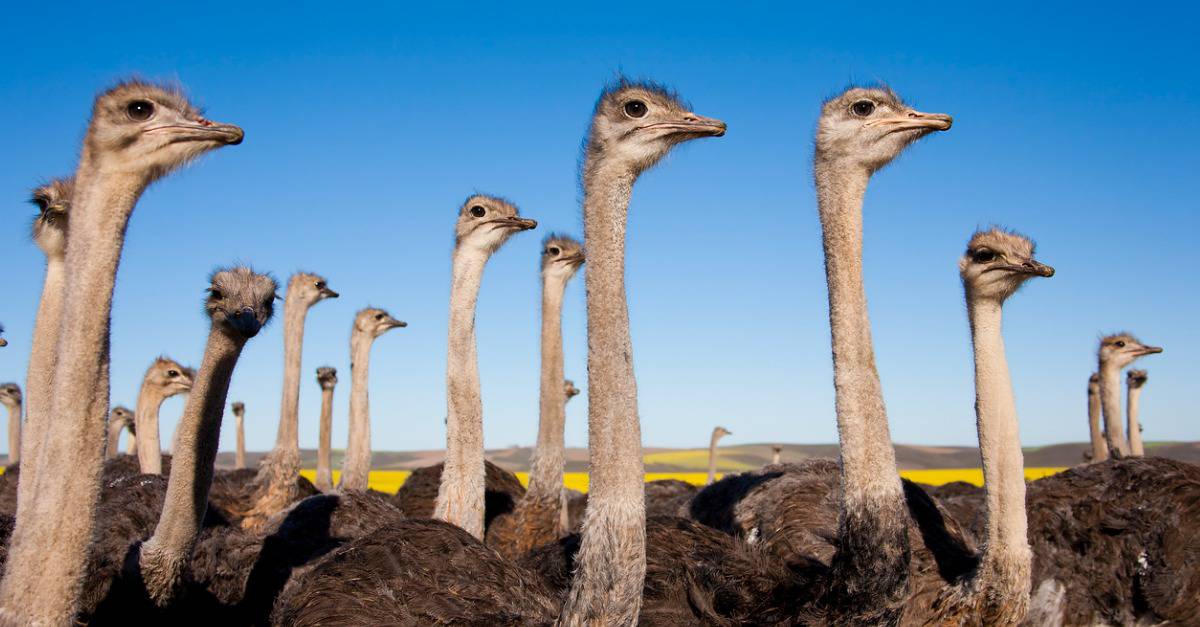
Ostriches do not bury their heads in the sand, despite what Pliny the Elder stated.
©eugeneokt/Shutterstock.com
In Book 10, Pliny described the ostrich. He went into detail about the massive bird’s height, its speed, and its leg strength. Pliny even mentioned that the ostrich could eat just about anything.
However, regarding the ostrich’s intelligence, Pliny claimed it was not intelligent. The Roman scholar stated that the ostrich buried its head in the sand, believing its entire body was covered and therefore was out of danger from predators.
While much of what Pliny wrote was accurate, a key statement was not. Ostriches do not bury their heads in the ground. Were they to do so, they would suffocate themselves. Yet the widespread belief is that ostriches hide their heads in the sand as a defensive mechanism against predators. Therefore, just what Pliny witnessed when he believed he saw an ostrich with its head buried in the ground is a mystery.
Why Do Ostriches Put Their Heads in the Ground?
Ostriches do not actually bury their heads in the sand. However, when nesting and tending to eggs, they may appear to do so.
Because ostriches cannot fly, they have to dig holes in the ground when nesting. Ostriches will use their beaks to create the holes. The holes can be 12 to 24 inches deep and nearly 10 feet across. In the process of building their nests, it can indeed look like ostriches are burying their heads. This is not the case; rather, it is an illusion.
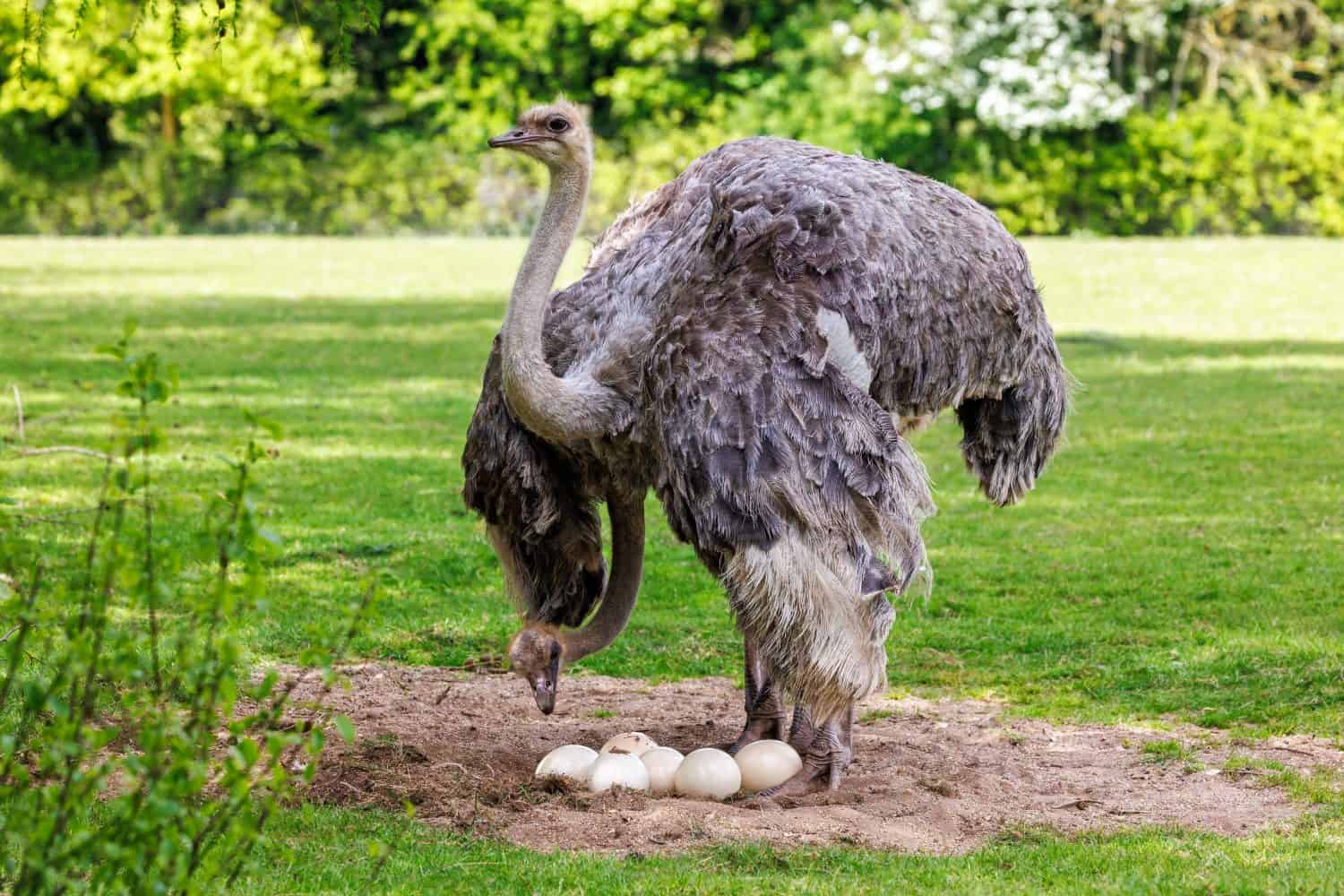
Ostriches use their beaks to both dig nests and turn eggs, giving the appearance of having their heads in the ground.
©Jane Rix/Shutterstock.com
Additionally, ostriches must turn their eggs during incubation. This helps to ensure that heat is evenly distributed across all the eggs. Turning the eggs also prevents them from cracking.
Because ostriches practice communal nesting, there can be up to 60 eggs in the nest at one time. The dominant female’s eggs will be in the middle, receiving optimal heat. Turning all the eggs takes time, which is why, again, it could appear that ostriches have their heads buried when they do not.
Ostriches Will Lay Flat for Camouflage
Ostriches will not bury their heads, but from time to time, they will lie flat to camouflage themselves from predators.
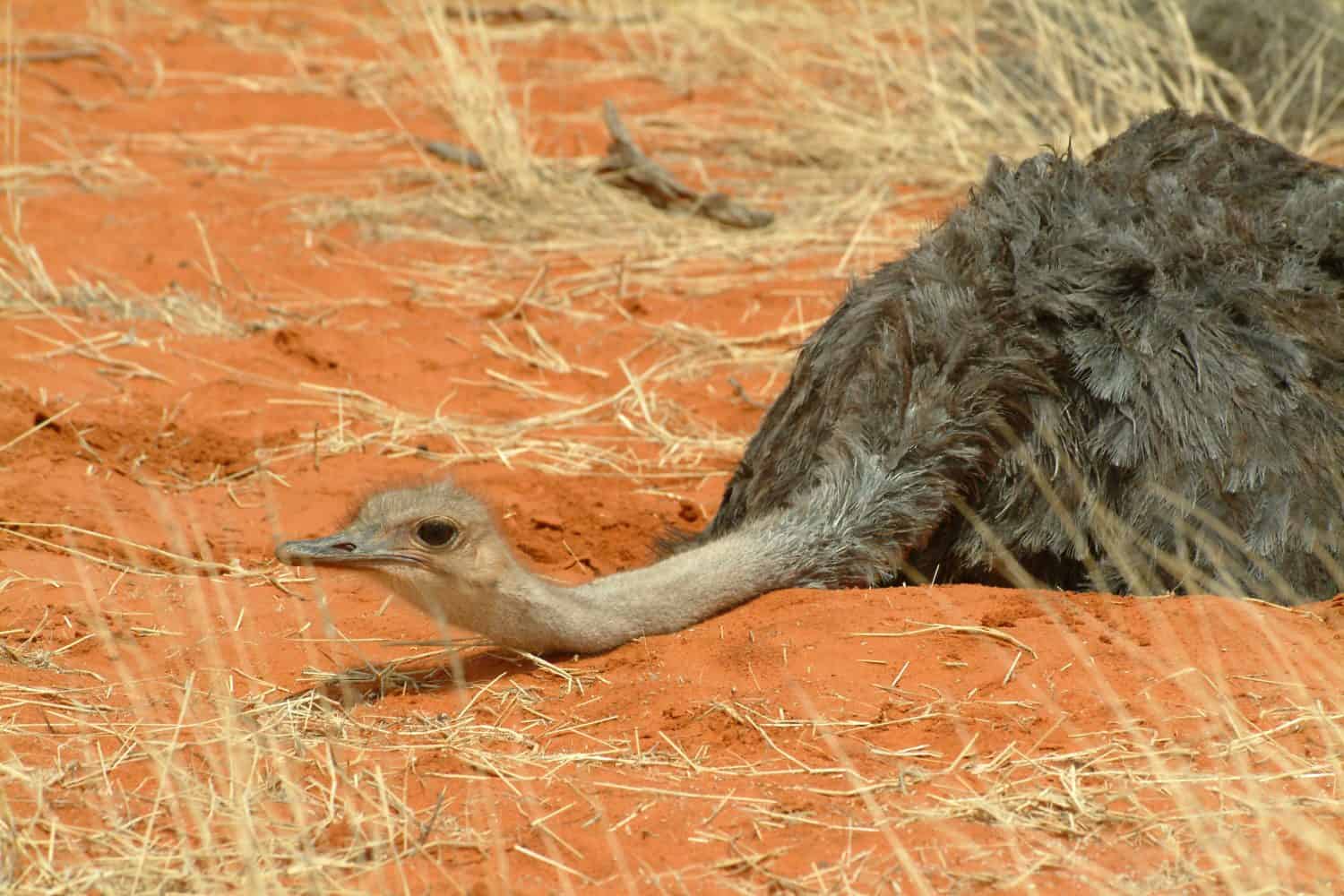
Ostriches will lay their necks flat on the ground to resemble a bush in the desert or savannah.
©Donal Mullins/Shutterstock.com
If ostriches are unable to get away from what they see as a threat, but have not been noticed by the predator in their territory, they will lie down. The birds will lower their necks and heads to the ground in hopes of blending in with the surrounding flora.
When accomplished correctly, ostriches look like bushes in the middle of the desert or savannah. Consequently, predators will pay the hiding ostrich no mind, even though it is in plain sight.
Ostriches Are Better Off Running to Escape Predators
Even if it were true that ostriches hid their heads in the sand to avoid predators, the fact is that they are better off running away from danger whenever possible.
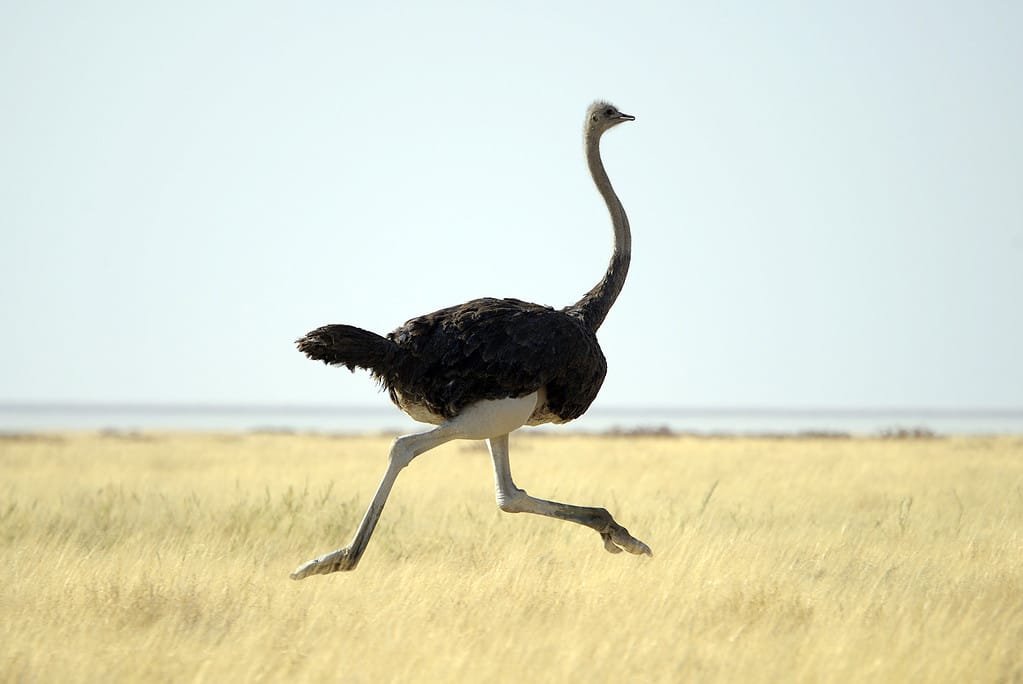
Ostriches do better for themselves by running away from predators than by burying their heads in the ground.
©JohnCarnemolla/iStock via Getty Images
Ostriches can run 43 to 45 mph in short bursts. Sustained running can reach 30 to 37 mph. Most predators cannot run at this speed. Those that can, such as the cheetah, can do so only for limited periods. Then they, like other predators that would target ostriches, tire out or overheat before catching the fast-running birds.
The long legs and feet with two sharp-clawed toes allow ostriches to cover 10 to 16 feet in one stride. Should an animal, such as a lion, hyena, or other predator, be interested in catching an ostrich for a meal and corner the massive bird, ostriches will use their strong legs to kick at and potentially injure those pursuing them. This is why ostriches are much better off relying on their speed and strength than they would be if they tried to hide by sticking their heads in the sand.