
Quick Take
- Aquarists must prepare for species that produce up to 500 offspring in a single breeding event.
- The labyrinth organ creates a mandatory surface-access constraint to avoid critical respiratory failure.
- Female guppies can successfully produce fry without any current male interaction.
- Initiating the nuptial embrace serves as the critical catalyst for ensuring proper egg fertilization.
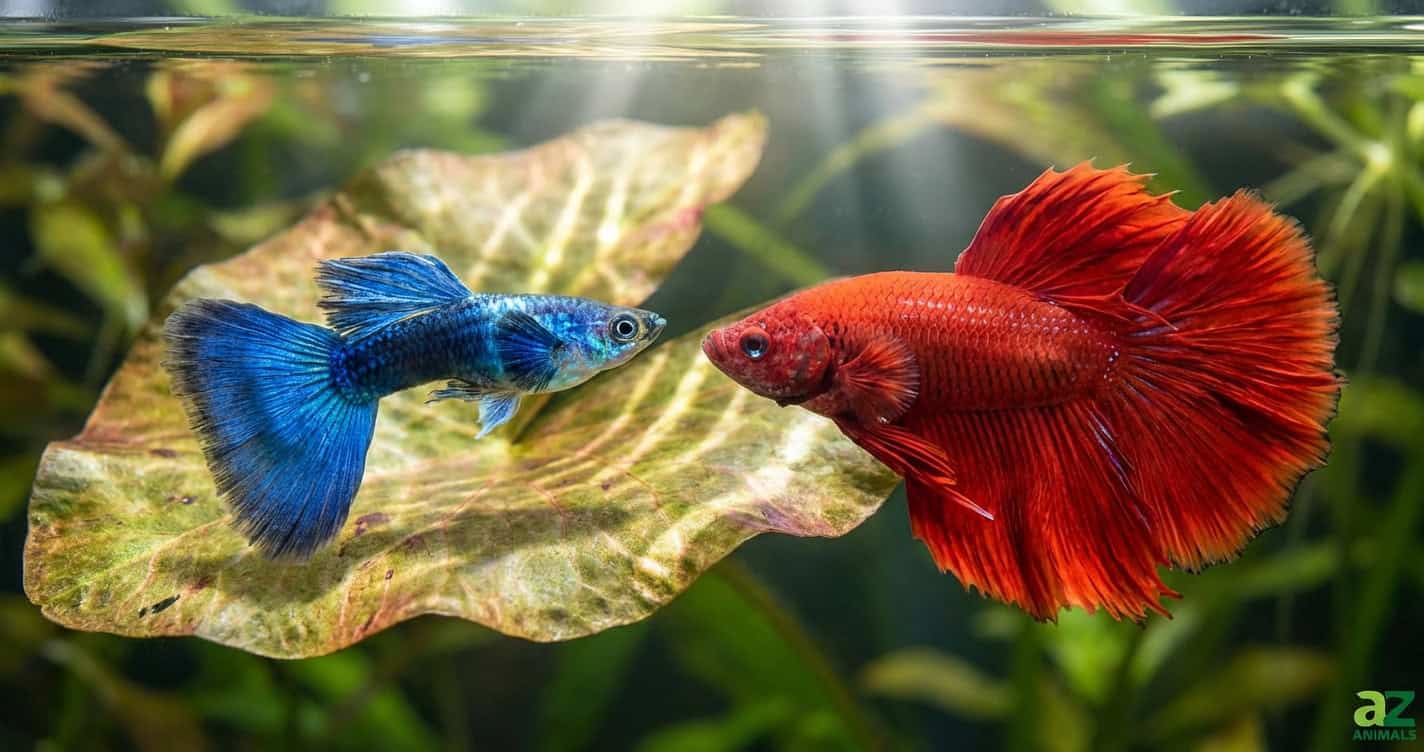
There are over 30,000 known fish species in the world, and while not all are suited to captivity, aquarists can choose from over 3,000 species for freshwater and marine aquariums. Bettas and guppies are small, incredibly colorful freshwater fish that are among the most popular aquarium species. Given their colorful appearance, they can often be difficult to tell apart. However, there are several fascinating differences between them. Continue reading to discover six key differences between guppies and bettas.

Key Differences Between Guppy and Betta Fish
The key differences between betta fish and guppies include size, reproduction, respiration, behavior, origin, and appearance.
There are currently 78 recognized species of betta fish. The most well-known species is Betta splendens, which is commonly known as the Siamese fighting fish. Siamese fighting fish are some of the most popular aquarium fish, but are listed as a vulnerable species in the wild by the IUCN due to habitat loss and pollution. Guppies are also commonly known as rainbow fish and millionfish. There is only one species of guppy, Poecilia reticulata, but there are around 300 different varieties, with variations in color.
Guppy Vs. Betta: Size
One of the most obvious differences between guppies and bettas is in their size. Bettas are usually larger, typically measuring between 1 and 3.1 inches long.
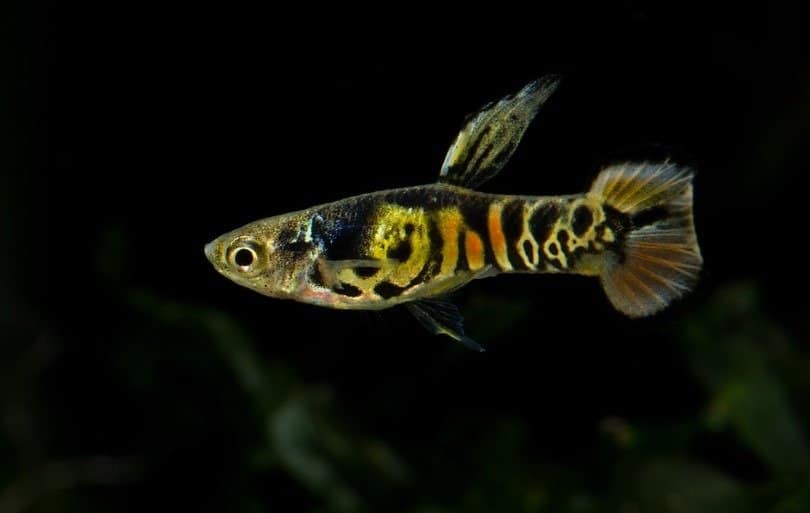
Guppies are much smaller than bettas.
©Brambo/Shutterstock.com
Male guppies are generally 0.6 to 1.4 inches long, while females measure 1.2 to 2.4 inches long. Female fish are typically larger than males, as they require more energy and capacity to produce offspring.
However, male betta fish are typically larger than females.
Appearance
Although guppies and bettas are both bright and vibrant, there are subtle differences in their colors. Female guppies are uniformly a drab grey color with little to no color on their tail. Male guppies can be virtually any color, which can be in an arrangement of spots, stripes, or blotches.
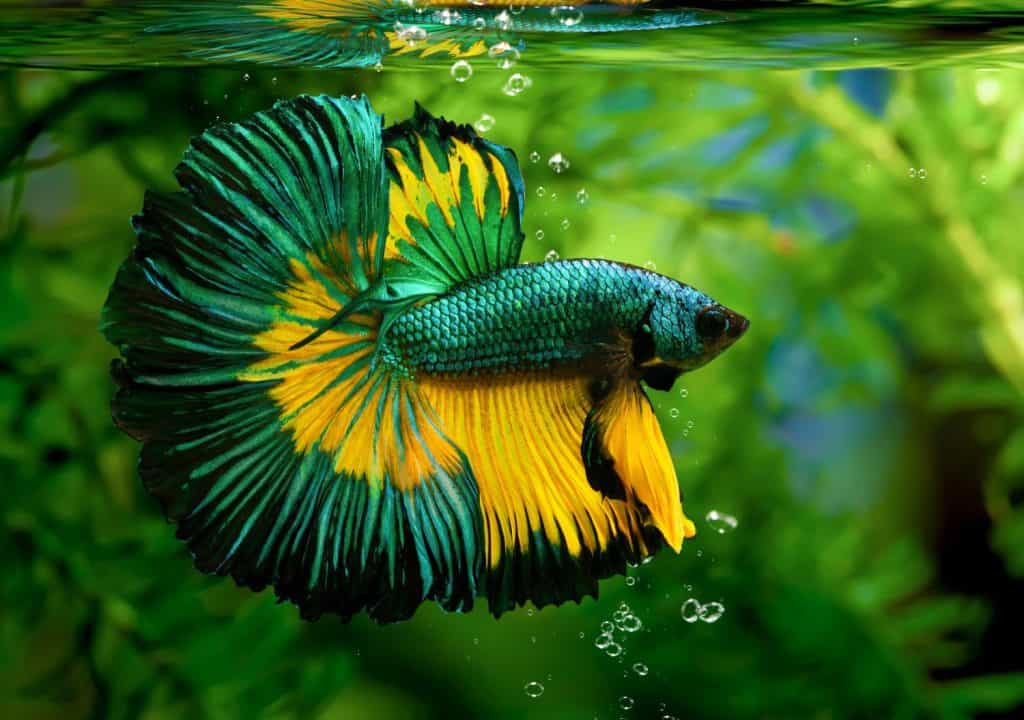
Betta fish have spectacular fan-like tails.
©panpilai paipa/Shutterstock.com
Male and female bettas are brightly colored, although females are not as vividly colorful as males. They come in a wide array of solid, two-tone, or rainbow colors. Bettas are generally considered to be the brighter of the two fish.
Guppy Vs. Betta: Tail
The most distinguishable difference between guppies and bettas is in their tails. Bettas have much larger and fancier tails than guppies. Male guppies have tails that have a distinctly rounded appearance, although the length varies widely. Their tails are as bright and colorful as their bodies. Female guppies also have a rounded tail, but it is usually shorter than the males and has little coloration.
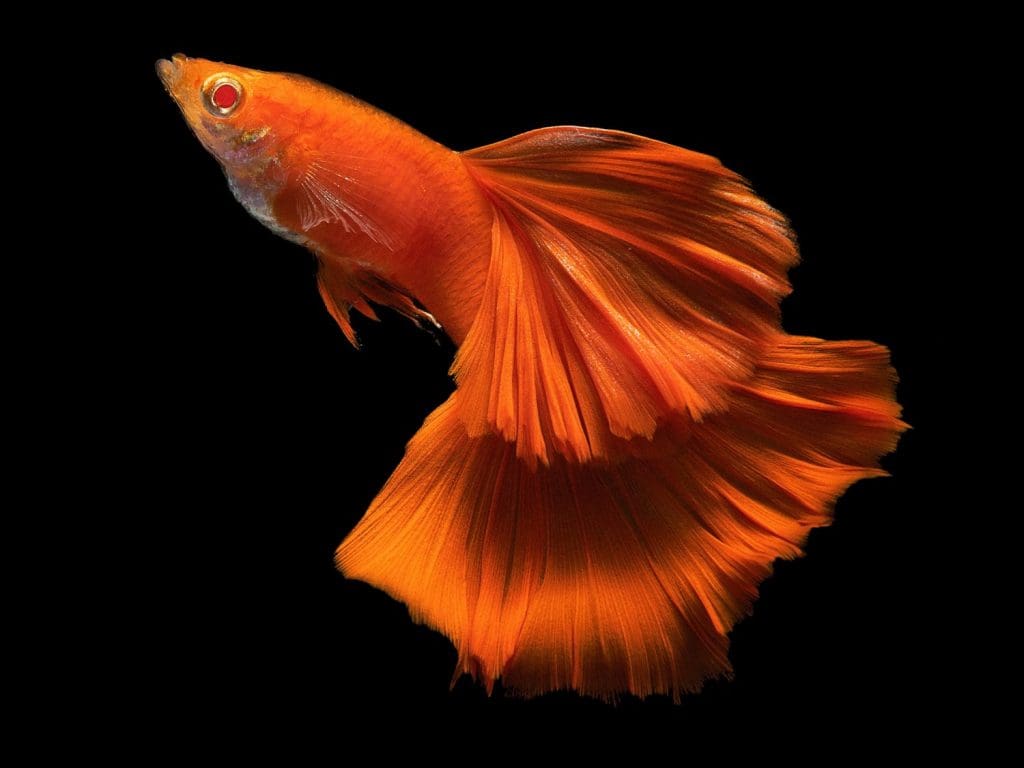
Guppies have countless color variations and tail shapes.
©Rose Garden Guppyroom/Shutterstock.com
Betta tails and fins are their most stunning features. They are usually long, flowing, and brightly colored. The actual shape of the tail can vary widely, with many different tail types. These include:
- Crown tail
- Delta tail
- Super Delta tail
- Fan tail
- Halfmoon
- Plakat tail
- Ruffled rosetail
- Spade tail
- Twin-lobed doubletail
- Veil tail
The most common betta fish sold in pet stores are veil tail bettas, characterized by long, drooping fins that taper to a point, though other tail types are also available.
Guppy Vs. Betta: Reproduction
Guppies are livebearers, giving birth to live young. Female guppies give birth to between 10 and 50 baby guppies, called fry, although larger numbers are not unheard of. Fry are only 0.2 inches long when they are born, but they are fully formed and able to swim. Guppies are also incredibly prolific breeders, and females can produce a new litter every 30 days, year-round. Female guppies can store sperm long after mating, allowing them to give birth even if they have not been near a male.
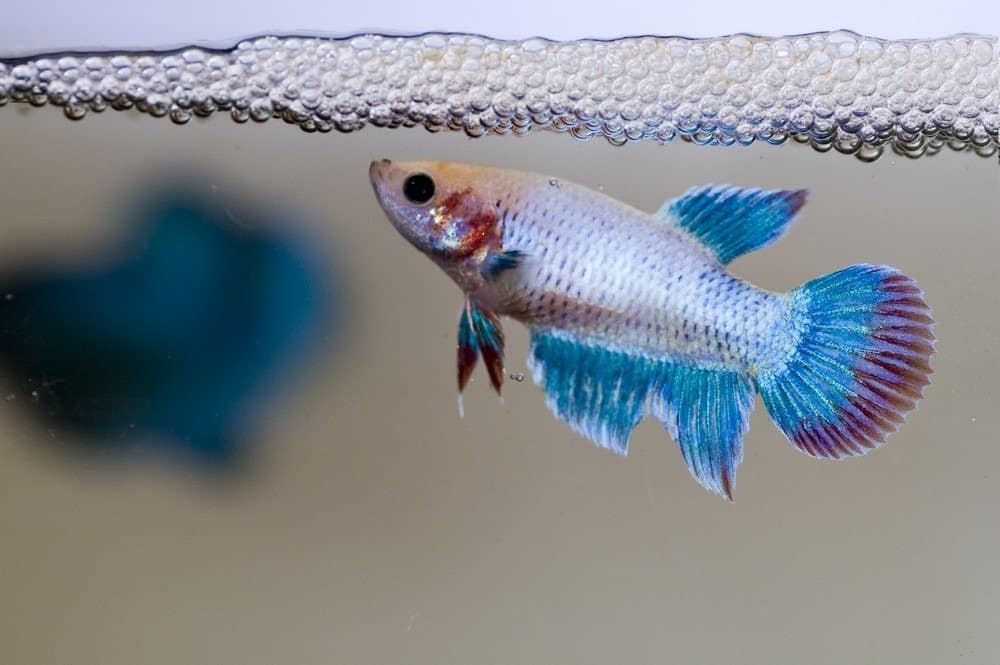
A female betta lays her eggs in a bubble nest constructed by her mate.
©mnoor/Shutterstock.com
The average clutch size of a betta fish is around 250 eggs, with clutches ranging from about a dozen to nearly 500 eggs in some cases. Many species of bettas are bubblenesters. Their eggs are protected in a nest of bubbles. These nests are usually constructed by the male and are often made from air coated with saliva. Once the female has laid the eggs, the male chases her away and guards the nest while making sure that none of the eggs fall out. He also repairs the nest when necessary. Bettas are also prolific breeders, and females can lay eggs after only a few weeks.
Mating
The method with which guppies and bettas mate is also different. Guppies mate very quickly while they are swimming alongside each other. Male guppies have a modified anal fin, which is long and pointy and has small hooks on it called a gonopodium, which is used to inseminate the females.
Bettas perform an elaborate mating ritual, which resembles a dance. The male and female spiral around each other during mating, known as the nuptial embrace. Before the nuptial embrace, the male shows his interest in the female by spreading his fins and twisting his body around in a dance. The nuptial embrace is the act of spawning and involves the male wrapping his entire body around the female.
Guppy Vs. Betta: Respiration
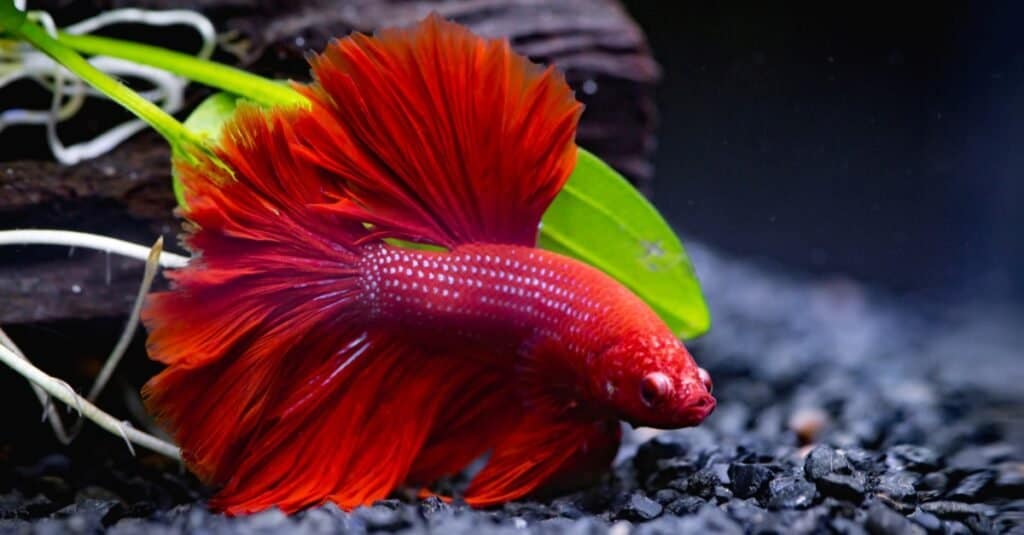
Bettas can breathe oxygen from the atmosphere as well as using their gills.
©ANURAK PONGPATIMET/Shutterstock.com
The most fascinating difference between guppies and bettas is in how they breathe. While guppies and bettas breathe through their gills, bettas also breathe oxygen directly from the air. Bettas come to the water’s surface to breathe air using an organ known as the labyrinth. This allows oxygen that is inhaled to be absorbed into the bloodstream. This unique feature allows bettas to survive in low-oxygen environments. It also means that they are able to survive out of water for short periods of time as long as they are kept wet. Fish with a labyrinth organ are known as anabantoids or labyrinth fish.