
Quick Take
- Sand naturally collapses, which makes it all the more remarkable that garden eels build permanent tunnels in it through a biological trick most engineers would envy. See the biological trick →
- A colony of thousands of eels can vanish from the ocean floor in an instant, and the way they pull it off is stranger than camouflage alone. Watch them vanish →
- Researchers found that when currents pick up, garden eels shift their posture in a way that significantly reduces how much energy they use to feed — and the difference is surprisingly dramatic. Discover the current advantage →
- The burrow that keeps a garden eel alive is also the one thing some predators have learned to specifically target, and some have cracked it from an angle you wouldn't expect. Meet the predator tactics →
When scuba divers think they see a bed of seagrass on the ocean floor instantly vanish, they’ve probably observed garden eels, sometimes called the civil engineers of the ocean. Anyone who has ever dug in sand knows it shifts and collapses on itself, but these little sea creatures are capable of building sturdy tunnels, where they spend their entire lives. How do they do it? We delve deep into this unique eel’s construction methods to find out.
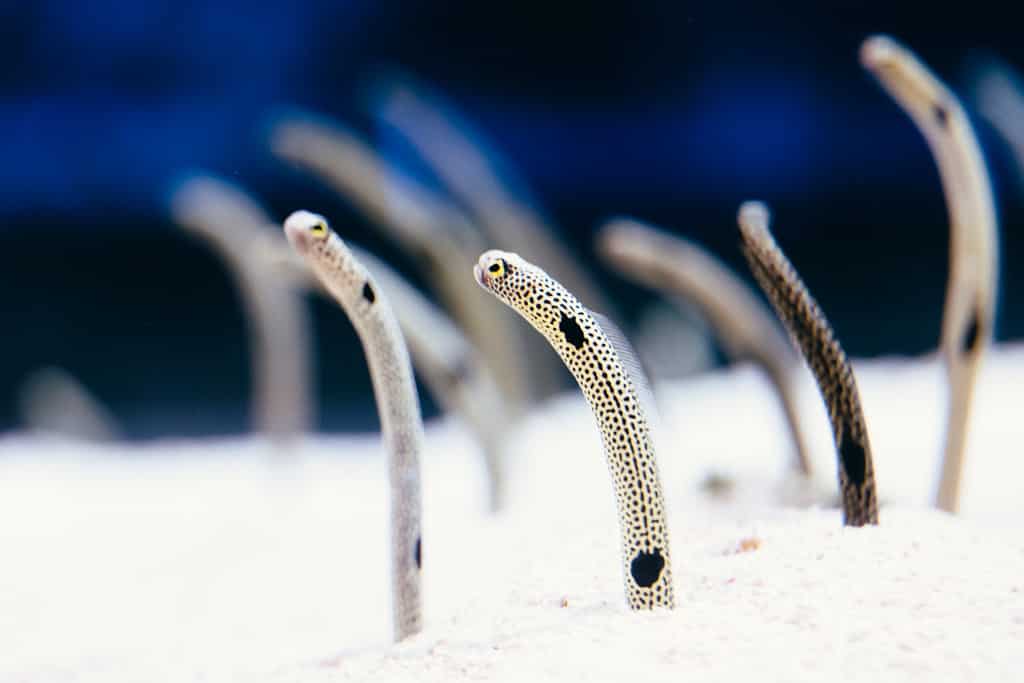
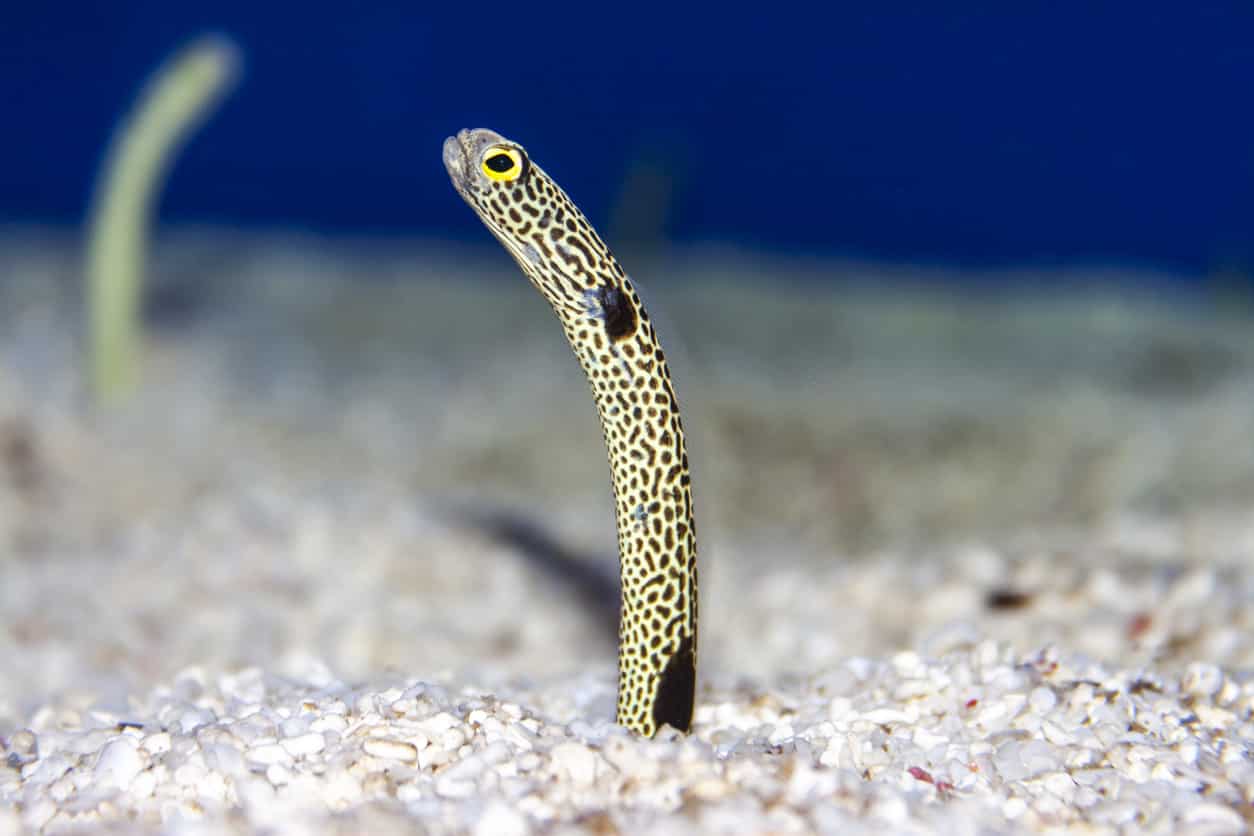
Spotted garden eels are a species of garden eel that live on sandy seafloor bottoms near coral reefs.
©gumichan/Shutterstock.com
Life in a Colony on the Sea Floor
Garden eels are in the subfamily Heterochongrinae. There are around 35 species of garden eels living in tropical waters worldwide, with most species found in the Indo-Pacific region. All species of garden eels, unlike other eels, burrow in the sandy ocean bottom, rather than swim freely. Although they can swim, they spend most of their lives with their tails anchored to their burrows, where they pop their bodies in and out to catch food, which is plankton. They have excellent eyesight and do most of their hunting using their vision. Garden eels tend to live in clear water where they can easily spot plankton.
Garden eels live in colonies that can number in the thousands. By living together, they camouflage themselves to resemble a bed of seagrass, which helps to avoid being eaten by predators. They may also live in or near actual seagrass beds to help with the disguise.
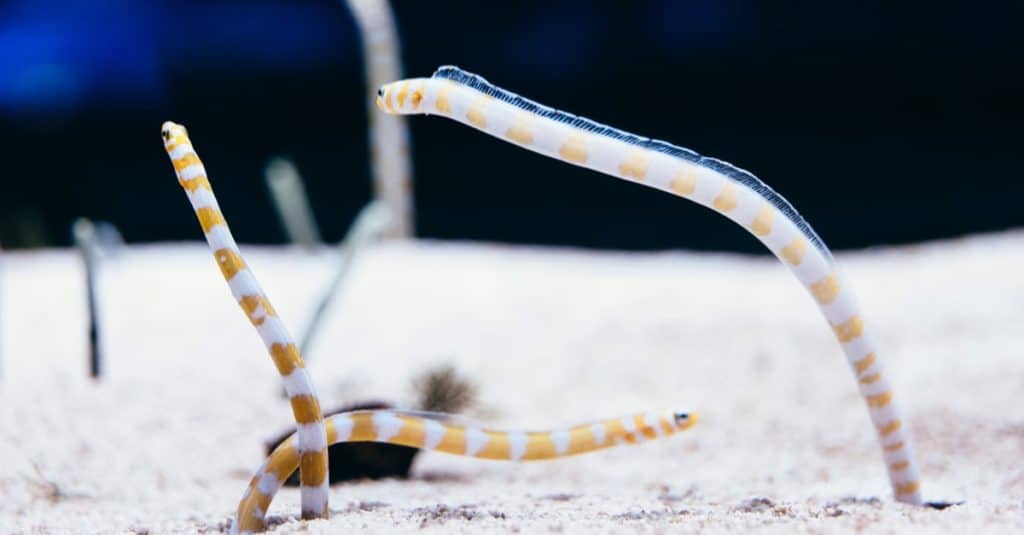
Splendid garden eels are a species of garden eel found in tropical Indo-Pacific waters
©gumichan/Shutterstock.com
The eels face the current in an attempt to catch plankton as it flows by. When frightened, they duck their entire bodies into their hole and seal the opening with a mucous plug, leaving no trace behind. Because they are so extraordinarily shy, scuba divers may have a hard time spotting garden eels before they seek cover.
An Anatomy Built for Burrowing
Garden eels dig their burrows vertically into the sand, tail first. They have small heads and slender bodies, making them the ideal shape to live their lives in a tunnel. Their tails are stiff and muscular with a pointed end, ideal for burrowing. As they dig down, they stiffen their bodies by tightening their muscles. Finally, they wiggle their dorsal fins to push the sand out of the tunnel.
How Garden Eels Adapt to Moving Water
Researchers have found that garden eels change their posture based on the flow of the current. Because more plankton are available in strong currents, it’s beneficial for the eels to adapt to withstand fast-moving currents. “This is a really important adaptation, as faster currents require more energy to move in,” said Kota Ishikawa, first author of the study, explained in a statement. Scientists observed that by curving their bodies, the eels reduced their drag by 57% and conserved energy.
The Secret Ingredient That Holds It All Together
As the garden eel burrows into the sandy floor, it secretes a specialized mucus from its skin that acts like cement to stabilize the tube walls. This keeps their home solid and stable, preventing the sand from sinking back into the hole. This way, the garden eel can safely live in its sturdy burrow, extending most of its body, minus its tail, to catch plankton floating by.
Why the Burrow Is a Lifeline
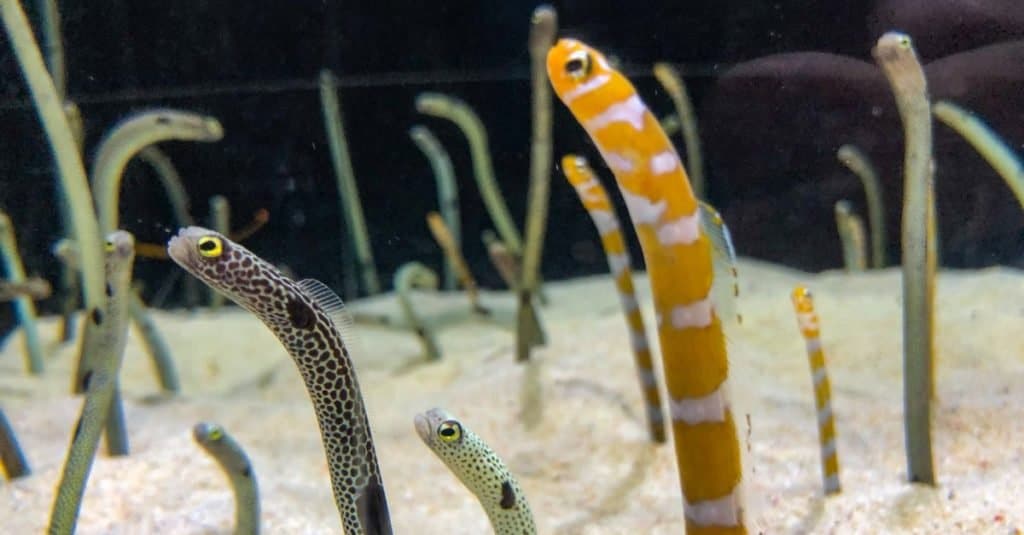
Garden eels hide from predators by quickly ducking, tail-first, into its tunnel-shaped burrow.
©Sergey Vladimirov/Shutterstock.com
Once a garden eel has established its burrow in a colony of other eels, it’s a rare occasion for the eel to leave its home. Eels swimming freely are in danger of being eaten by predators, including skates and rays. But if a garden eel spots a predator and can quickly duck into its tunnel, it can remain safe. That is, unless it encounters other types of predators that have found ways to reach garden eels. Snake eels sometimes burrow under the garden eels and attack from below. Triggerfish are known to attack the burrow with all their force, dislodging the eel.
A Risky Mating Strategy
Despite the risk of swimming freely, some species of garden eels may briefly leave their burrows during mating. When ready to mate, the males and females stretch towards each other. If necessary, the male may exit his burrow and dig another closer to the female. Scientists have observed that the male returns to his original burrow after mating.
A Drifting Start for the Next Generation
Garden eels do not take care of their young. The females lay eggs that float through the water until hatching. The new hatchlings must swim until they are large enough to find an adult colony and build a burrow.