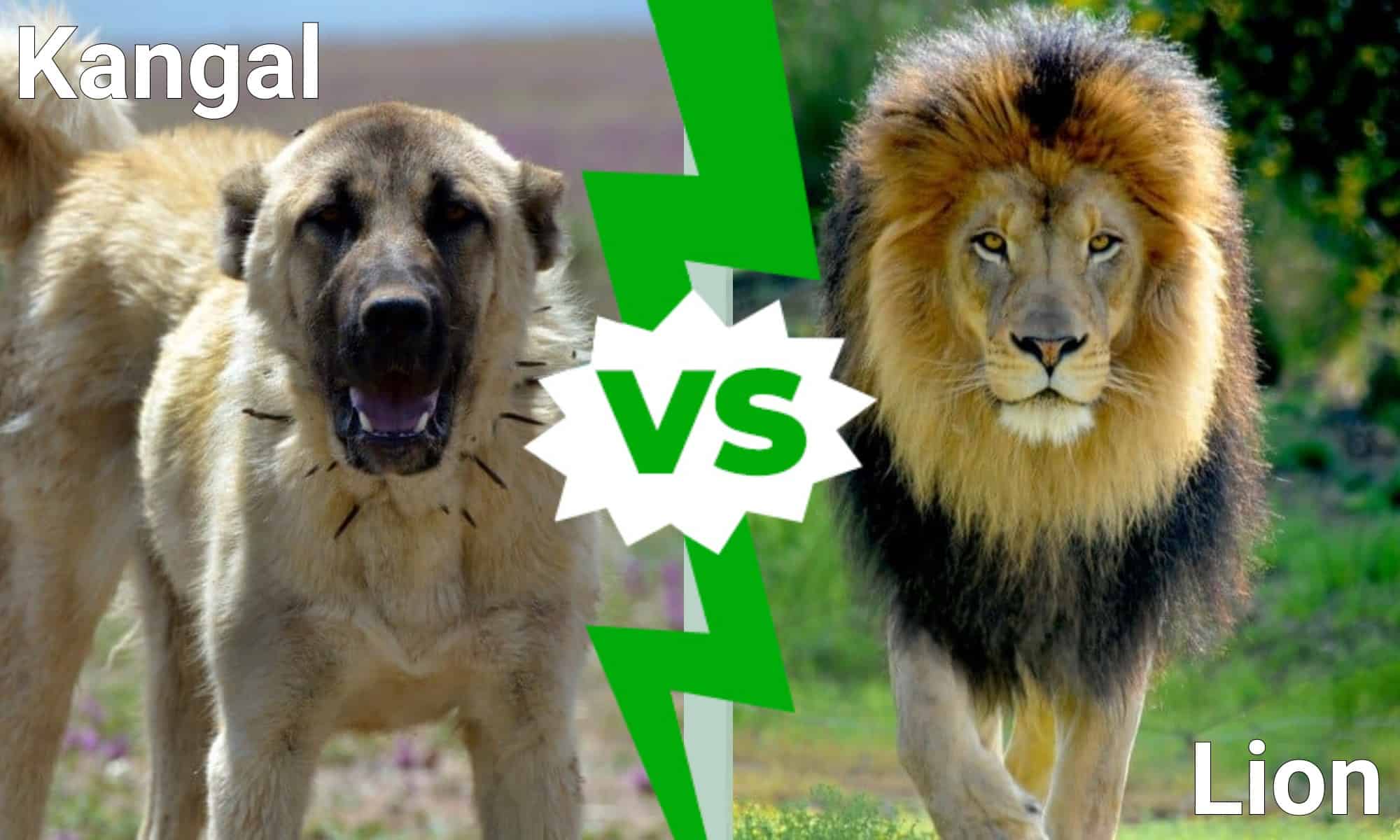

Have you ever wondered which animal would win in a fight between a Kangal vs. a lion? If you didn’t know already, the Kangal shepherd dog is a large breed of livestock guardian bred in Turkey. Kangals have been imported to Africa to help guard flocks against lions and other predators. However, does this mean that a Kangal dog could actually win a fight against a lion? Learn more about the strengths of both of animals to determine which animal would win. Let’s take a look at our two competitors in more detail: the majestic lion and the impressive Kangal shepherd dog.
Comparing a Kangal and a Lion
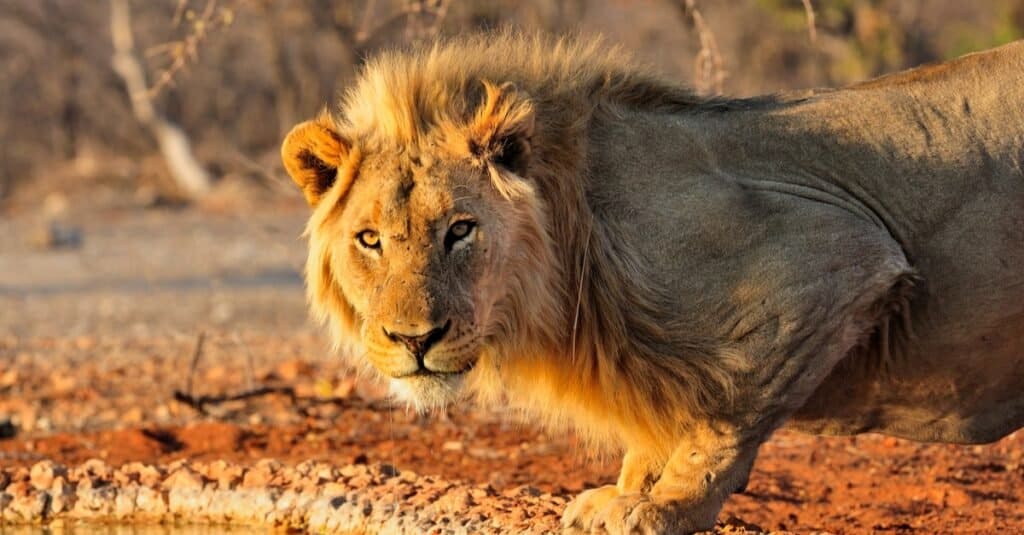
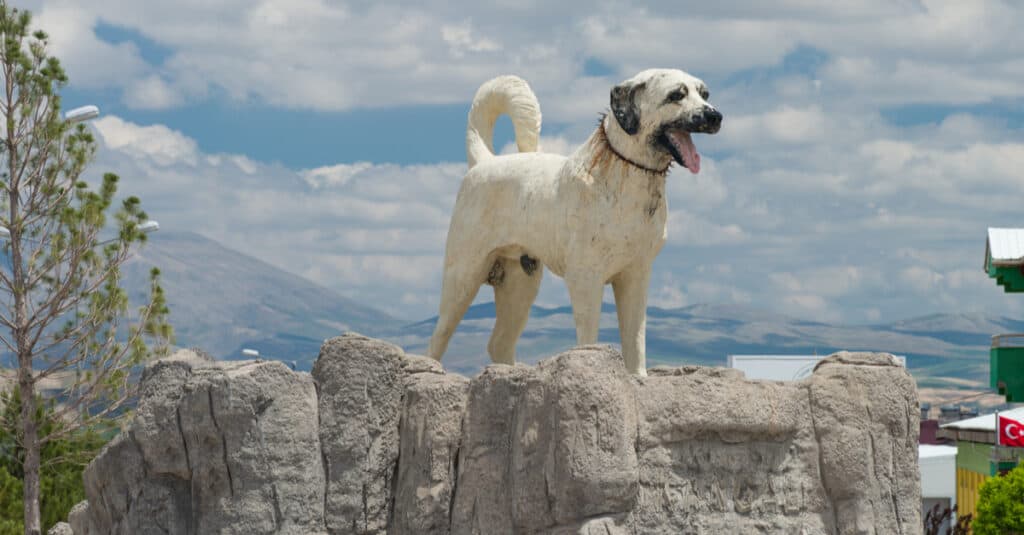
While the Kangal is one of the largest guard dog breeds, it is still half the size of the smallest lions.
©Stephanie Periquet/Shutterstock.com
| Kangal | Lion | |
|---|---|---|
| Size | Males: 29-33 inches tall; 110-145 pounds Females: 27-31 inches tall; 90-130 pounds | Males: Up to 48 inches tall; 330-500 pounds Females: Up to 42 inches tall; 270-420 pounds |
| Physical Capabilities | 35mph in short bursts; excel at maneuvering to intercept threats; bred for endurance | 50mph for short distances; adapted for attacking, not chasing; small lungs and heart limit stamina |
| Offensive Techniques | Powerful jaws with 743PSI bite force; tall, muscular body; will attack on command; intelligent and adaptive; often work in pairs | 650PSI bite force; large, heavy body; sharp claws; larger mouth and teeth; problem-solving and strategic; cooperative hunters |
| Defensive Strategies | Deep bark to warn intruders; avoiding attack; thick fur; prefer to deter threats; shepherds provide protection | Intimidation through vocalizations; defensive posturing; attempt to avoid fights; thick fur and skin |
Key Considerations in a Fight Between a Kangal vs. Lion
Key considerations in a fight between a Kangal and a lion include size, physical capabilities, offensive techniques, and defensive strategies. Let’s take a look at how these animals compare in greater detail below.
Size
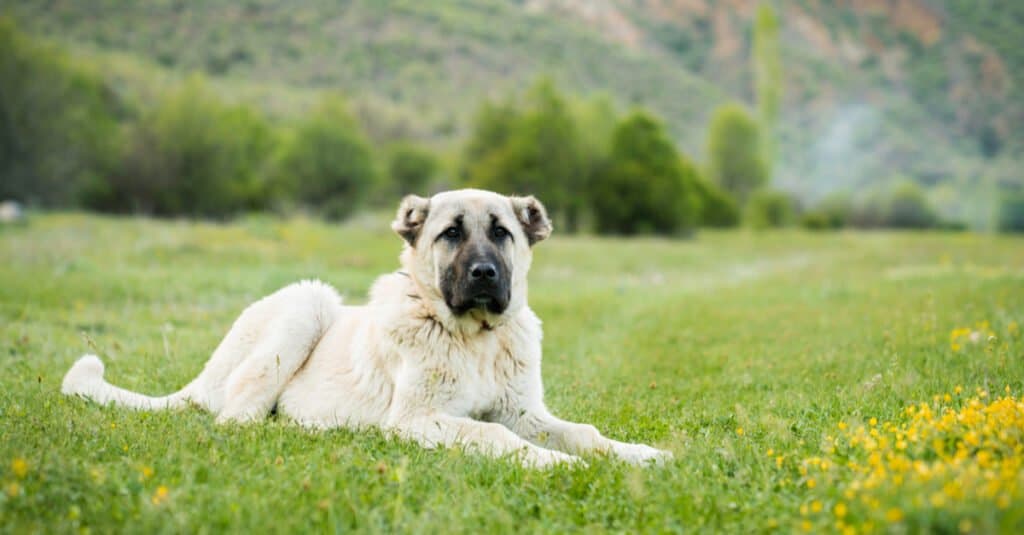
The Kangal is a giant dog, but it doesn’t come close to the size of the average lion.
©shodography/Shutterstock.com
One of the primary advantages in the fight between a Kangal and a lion is the immense size difference in the lion’s favor. The Kangal is a giant dog, but it doesn’t come close to the size of the average lion. Even female lions are almost double the size of the largest Kangal dog. Lions are the largest carnivores in Africa, with muscular frames and deep chests. Male lions reach up to 48 inches tall and weigh 330-500 pounds. Females measure up to 42 inches tall and weigh 270-420 pounds.
Kangals also have a muscular body and a powerful chest, but they cannot compete with a lion when it comes to size. Kangal males reach 29-33 inches tall. A healthy, mature male dog weighs between 110 and 145 pounds, although some exceptionally large dogs can be taller and heavier. Female Kangals are smaller, measuring 27-31 inches tall and weighing between 90 and 130 pounds. However, experts note that both males and females are equally effective guardians.
Physical Capabilities
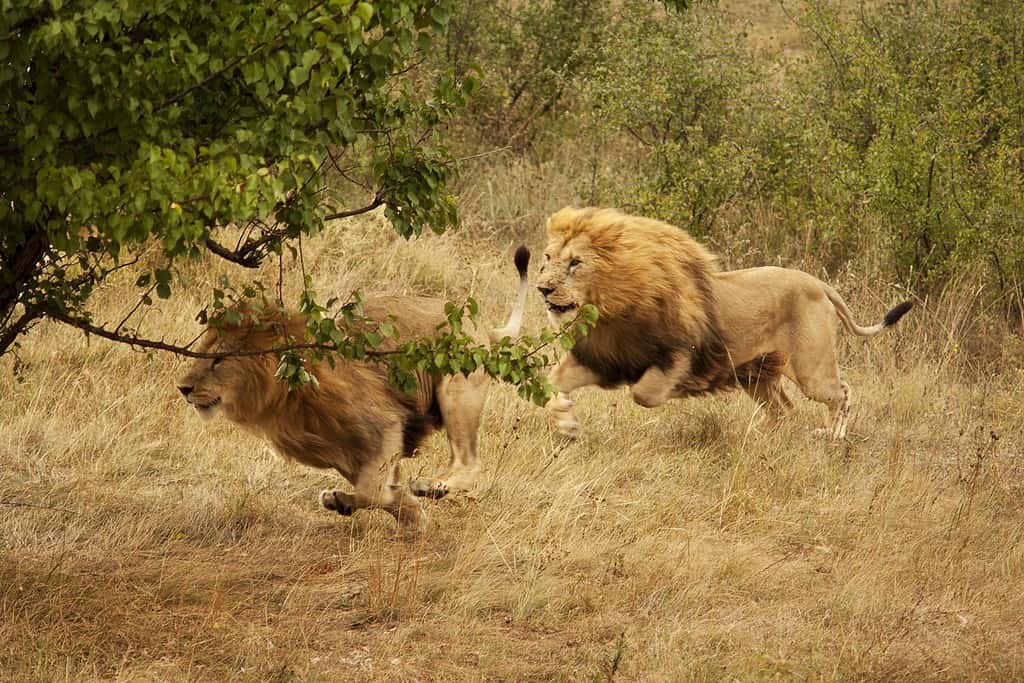
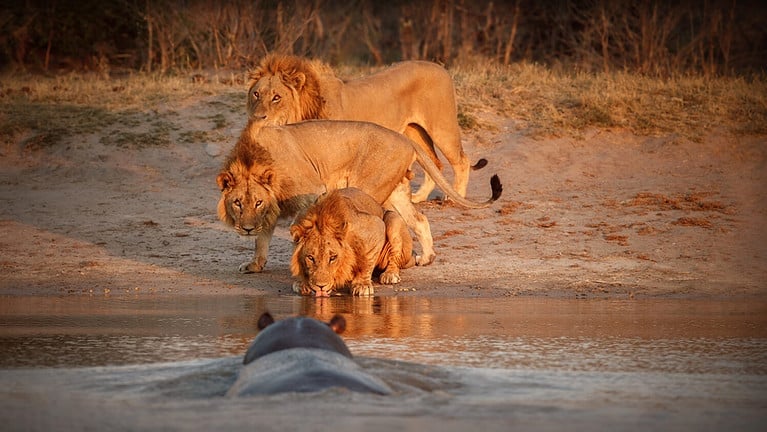
Lions typically ambush their prey to conserve energy, as they are built for explosive movement, not endurance.
©Elagina/Shutterstock.com
Despite their massive size, lions are surprisingly agile. Lions can run up to 50mph, but only for distances of around 650-980 feet. Lions have powerful limbs that were adapted for attacking, not prolonged chases. They typically ambush their prey to conserve energy, and they can leap up to 36 feet. Due to their lighter weight, female lions are generally faster and more agile than males. However, lions have small lungs and hearts relative to their body size, which limits their stamina.
Kangals can only run at a top speed of around 35mph, but they were bred for endurance, not for sprinting. Given their background in traversing difficult terrain while guarding and herding livestock, Kangals are adept at maneuvering through their environment. Kangals excel at quickly positioning themselves to intercept any threat to their charges. Although Kangal dogs may be more agile than other dog breeds, they are not as nimble as big cats. However, they have more stamina and tenacity due to their breeding and protective instincts.
Offensive Techniques

Kangals have a bite force of 743PSI, which is stronger than a lion’s bite force of 650PSI.
©klenger/Shutterstock.com
The average lion has more offensive techniques and abilities compared to a Kangal dog. As mentioned above, lions are adapted for offense, while Kangals are adapted for defense. Lions have larger jaws and teeth compared to the Kangal, with an average bite force of 650PSI. They also have sharp, strong retractile claws. Lions rely on their stealth and explosive power to ambush prey. Lions are known to have problem-solving skills and strategic thinking abilities. The lionesses, which are responsible for hunting for the pride, are cooperative hunters. In a physical confrontation, lions may bite, grapple, or attack in a group.
Surprisingly, a Kangal dog has a stronger bite force than a lion. They have a large, broad head which houses huge jaw muscles, giving the dog a bite force of 743PSI. They are believed to have the strongest bite force among all dogs. Kangals are also intelligent and adaptive. These dogs can work independently and have the ability to assess situations and make their own decisions. Kangal dogs also often work in pairs or groups. They use their powerful bite to attack intruders at the neck and use their large bodies to pin the animal down. They can overpower most threats, especially predators like wolves. However, a single Kangal cannot match a lion in a confrontation.
Defensive Techniques
Farmers and shepherds provide protection for their dogs, including spiked collars.
©daphnusia/Shutterstock.com
Few animals are willing to take on an adult lion, so they typically defend against other lions. However, they attempt to avoid confrontations through defensive posturing. One tactic they use is intimidation through vocalizations. Male lions can be heard roaring for up to 5 miles in optimal conditions. Their roar establishes that the territory is occupied and the lion is willing to defend it. Male lions also growl, grunt, and snarl as warnings to intruders. Both males and females defend the pride’s territory. Males patrol the territory, especially the edges, and scent mark the boundaries. In a conflict, lions take the offensive, but their thick fur and skin offer some protection from bites and scratches.
Kangals were bred and trained to defend their charges from large predators, but they prefer to deter threats rather than force confrontations. Kangals have a deep bark to warn intruders that they are willing to defend their flock or herd. This can encourage predators to avoid the area rather than attempt a confrontation. Kangals have thick coats and flexible skin that can mitigate the impact of bites. The farmers and shepherds also provide the dogs with protection, specifically spiked collars to protect their throats. Some owners crop the dogs’ ears so predators are unable to grab them in a fight. Kangals may also scent mark around the flock to warn other animals away.
Would a Kangal or a Lion Win in a Fight?
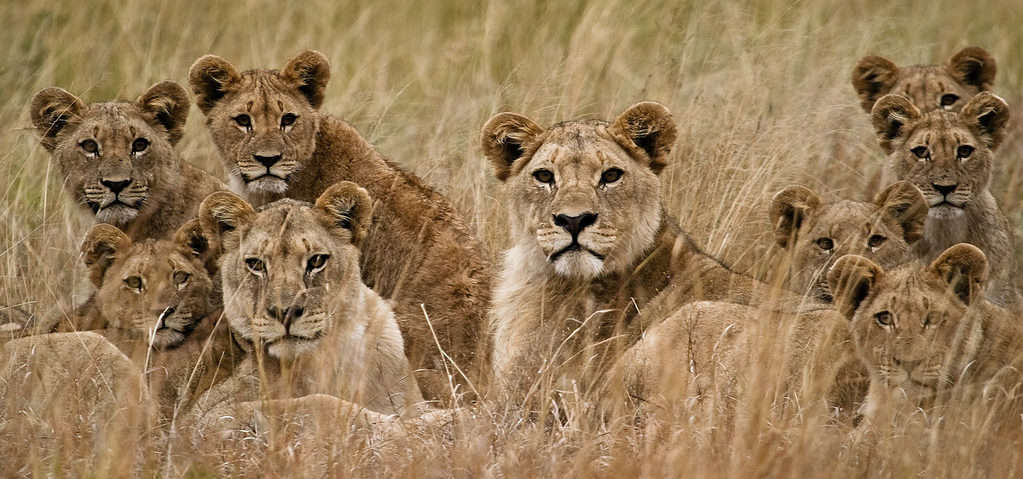
Female lions are primarily responsible for hunting, and they typically hunt collaboratively.
©Riaan van den Berg/Shutterstock.com
In a direct confrontation, a lion would more than likely win against a Kangal. Lions are offensive predators, and Kangals are bred for defense. Although Kangals have a stronger bite force, even the smallest adult female lion is twice the size of a Kangal. Additionally, a fight would most likely be against a group of lionesses, as the females are responsible for hunting, and they typically hunt in a group. Male lions may also hunt if they if they decide to participate or they are nomadic, but lions hunting alone are not as successful. However, lions typically attempt to avoid fights, so a direct confrontation is unlikely.
The purpose of using Kangals as livestock guardians in Africa is to prevent conflict. Kangals attempt to deter threats instead of fighting, and they are frequently successful. Although there is no specific data on Kangals scaring away lions, there is data on another big cat. Since the early 1990s, Kangals have been imported to Namibia by the Cheetah Conservation Fund. Conservationists estimate that the number of cheetahs killed annually has fallen from 19 to 2.4 per farmer. Livestock losses have also dropped more than 80% on farms where Kangals are present — but not all of the threats were cheetahs. In addition to cheetahs and lions, the dogs have also been successful in defending their charges against leopards and troops of baboons.