
Quick Take
- The ibex survived a massive vertical tumble during the high-stakes snow leopard pursuit.
- Ibex are the preferred prey for snow leopards.
- Snow leopards have perfected not only stalking ibex but also ambushing ibex from up high.
- Ibex are not without defenses and can outrun or outclimb snow leopards if given the opportunity.
Ibex are a preferred prey for snow leopards. With snow leopards only hunting every eight to 10 days, one ibex can feed them not only on the day of the hunt, but for several days after.
Given the snow leopard’s hunting prowess, the ibex may seem like a sitting duck, just waiting to be prey. As an incredible video shows, this is not necessarily the case. An ibex was nearly dinner for a snow leopard; however, thanks to its agility and unwillingness to give up, the ibex proved to be a formidable foe that the snow leopard was not anticipating.
Snow Leopard Saw a Massive Ibex as a Tasty Meal
Living in the rugged Central Asian mountains can be challenging. Yet two species, the snow leopard and the ibex, make it look easy. Both are agile and strong. However, because one is a predator and the other is prey, the two do not live side by side peacefully. The ibex is the snow leopard’s preferred prey, which is why it is targeted. But hunting does not always go as planned, as seen in an Instagram video in which a snow leopard initially has the upper hand before things go sideways and the ibex gets away.
Photographer Andres Novales posted the video, which has now gone viral. Describing it as “the best wildlife moment of my life,” the video shows the moments before and after a snow leopard attacks a lone ibex.
According to the caption, the snow leopard had left her cubs at the bottom of the gorge to pursue the ibex. She worked her way up the mountain until she was just feet away from the unsuspecting ibex, who also happened to be the largest male in the group.
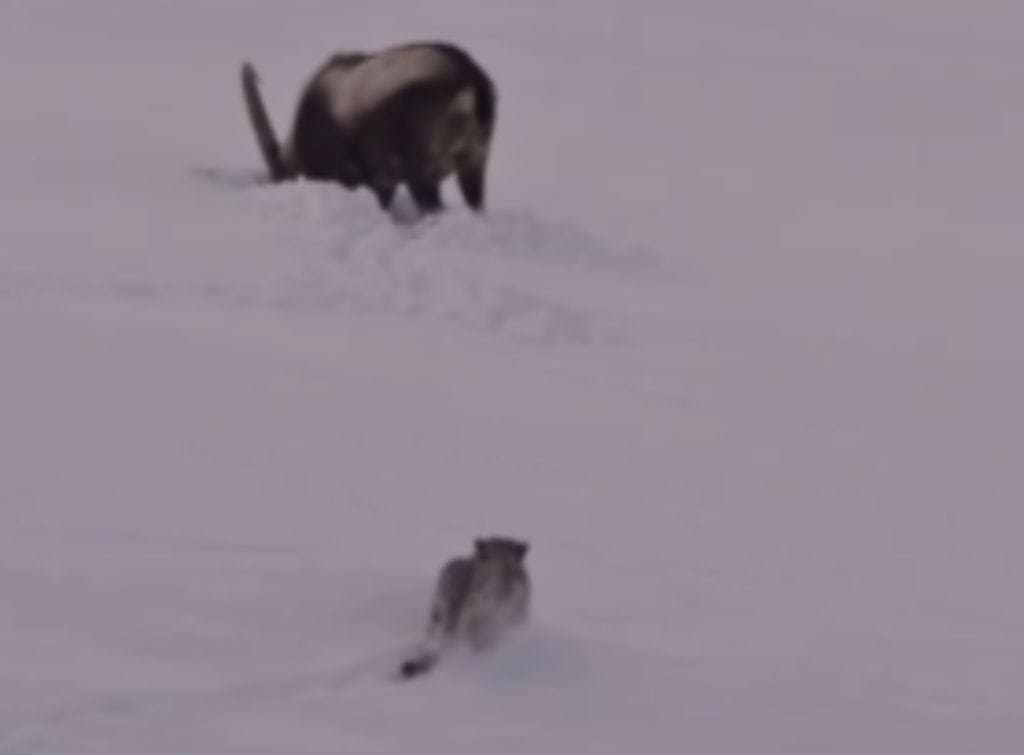
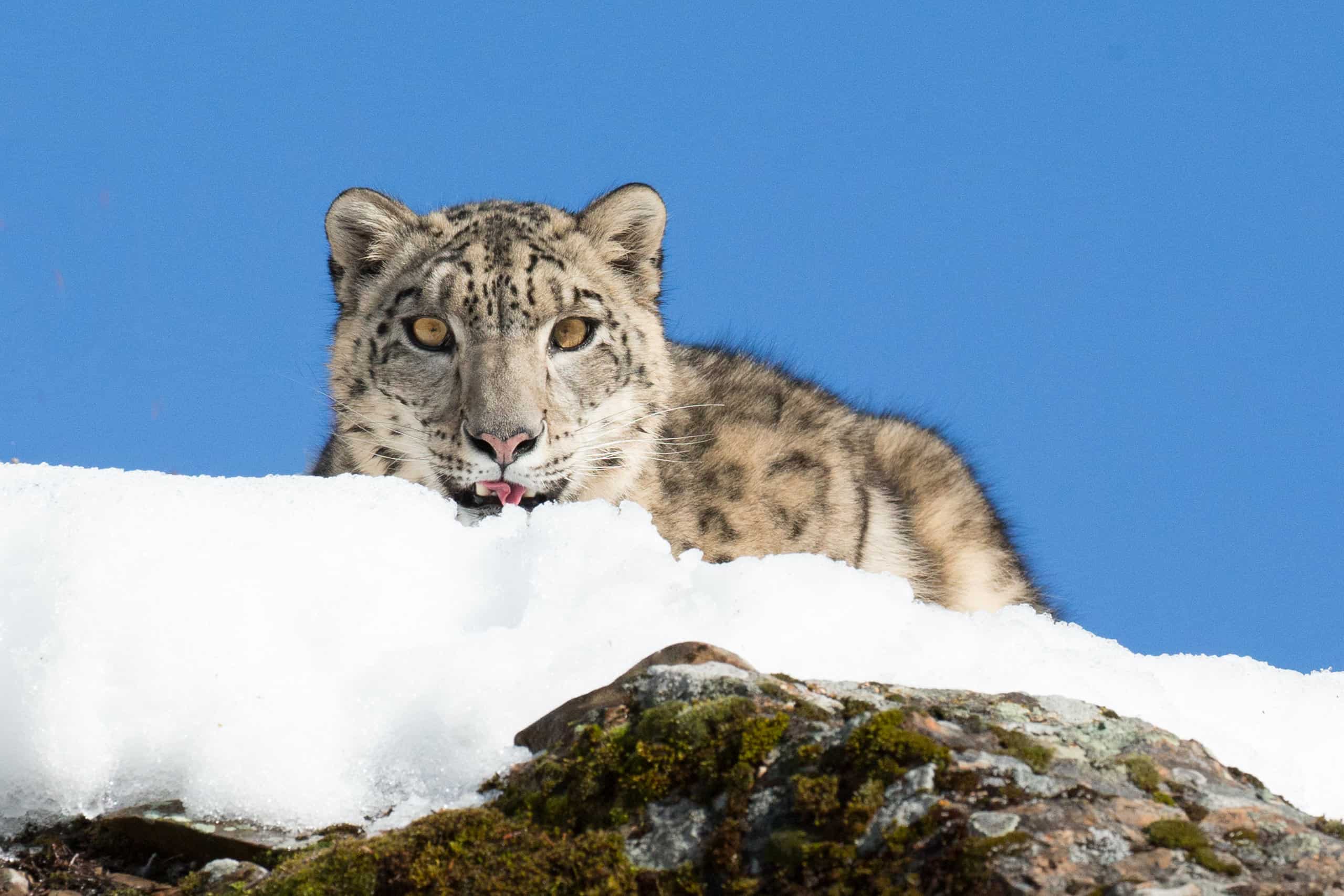
Snow leopard stealthily stalks an ibex.
© – Original
Gracefully, the snow leopard sprang onto the back of the ibex, who immediately took off in a run down the mountain. With the snow leopard attached to his back, the ibex continued his run toward the cliff. According to Novales, it looked as though both were racing toward “sudden death.”
The ibex and the snow leopard crashed down the mountainside, tumbling over one another at times. The snow leopard refused to let go. But after one especially jolting tumble, the big cat lost her grip. The ibex quickly changed direction and galloped off, still with the snow leopard in tow. However, the ibex proved too swift, and the feline could not keep up. While the hungry cat survived being thrown off the side of a mountain, she left the hunt empty-handed.
As mentioned, the snow leopard targeted the largest male ibex in the group. This may sound counterintuitive given the size differential between the two animals, but choosing the largest animal is a common strategy for snow leopards, especially during the winter months.
Snow Leopards Prey on Male Ibex Far More Often Than Females
A male ibex is significantly larger than a female snow leopard. Yet the leopard in the video did not hesitate to attack the ibex, even having an upper hand in the chase until the very end. It is not by chance that these formidable cats target male ibex, either. It is done by choice.
According to a 2025 study published in the Journal of Zoology, male ibex are singled out of the herd time and again by snow leopards. While the fight would appear to be lopsided given the size differential between the two, it is not. In most instances, the kitties are victorious in their hunting efforts.
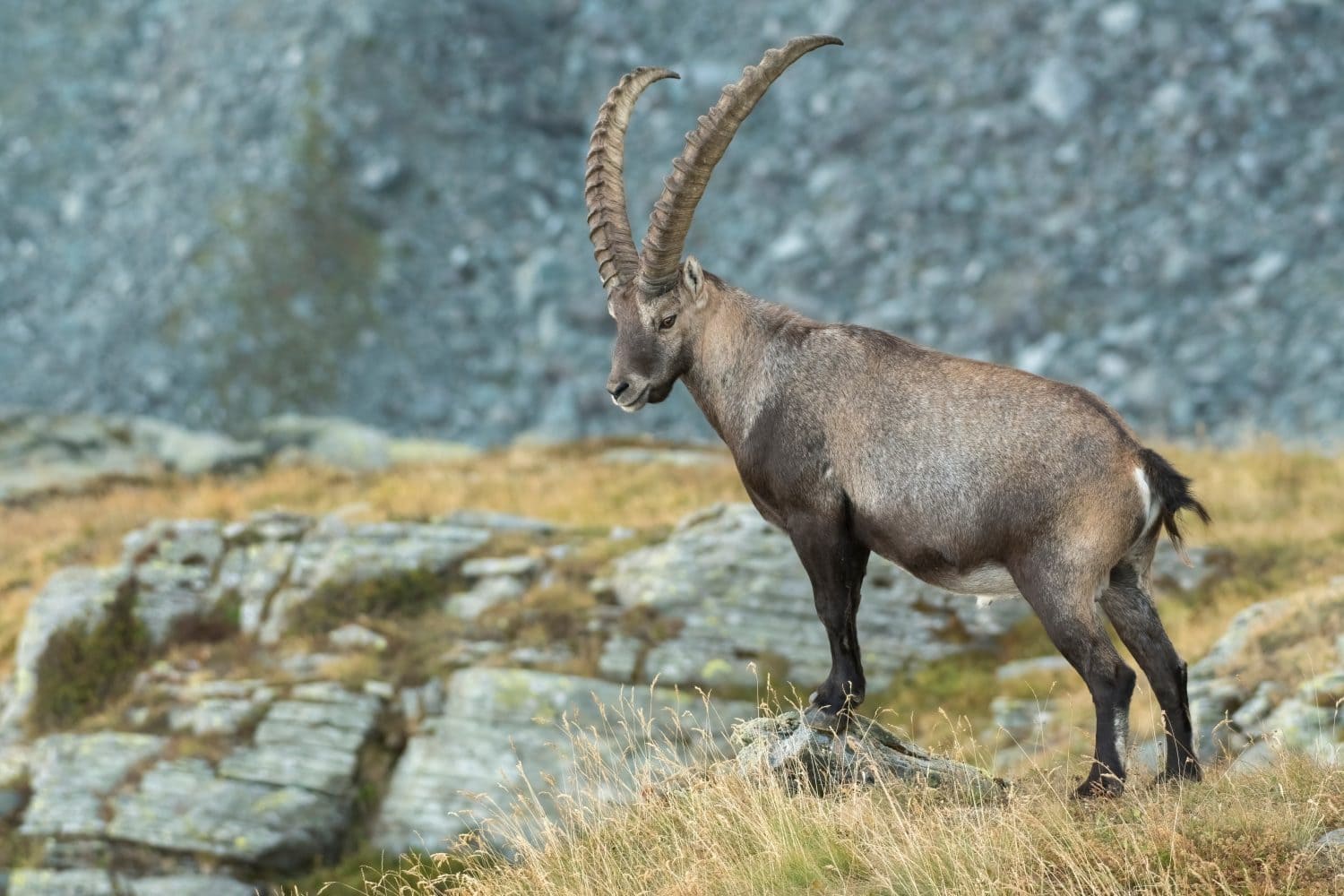
Male ibex are more often the targets of snow leopards than the others in the herd.
©Dario Pautasso/Shutterstock.com
The males are chosen because of their size. The more weight the ibex carries, the harder it is to maneuver and turn on steep hillsides at top speed. This bodes well for the snow leopard, which is incredibly agile. More often than not, the ibex becomes a substantial meal, especially during the winter season.
While males are the main targets, there is often a shift in targets in the spring. This occurs as the young ibex are now part of the herd. The younger ibex are substantially smaller than the adult male ibex, but they are also easier to catch and subdue. Therefore, the males receive a brief respite when young ibex are present in the herd.
What Are the Typical Hunting Habits of Snow Leopards?
Snow leopards are opportunistic hunters. While ungulates are their preferred prey, if smaller, more vulnerable prey becomes available, snow leopards will not hesitate to take advantage.
Living in the mountainous regions of Central Asia, these large cats are solitary creatures. Unless they are caring for cubs, they spend much of their time away from other leopards. Living this way benefits them when it comes to hunting. Their ability to camouflage themselves into the mountainside makes them incredibly difficult to see and increases their chances for a successful hunt.
Snow leopards prefer to watch for prey from a distance. With their excellent vision, they can accurately tell how far away potential prey is, allowing them to hunt without being detected.
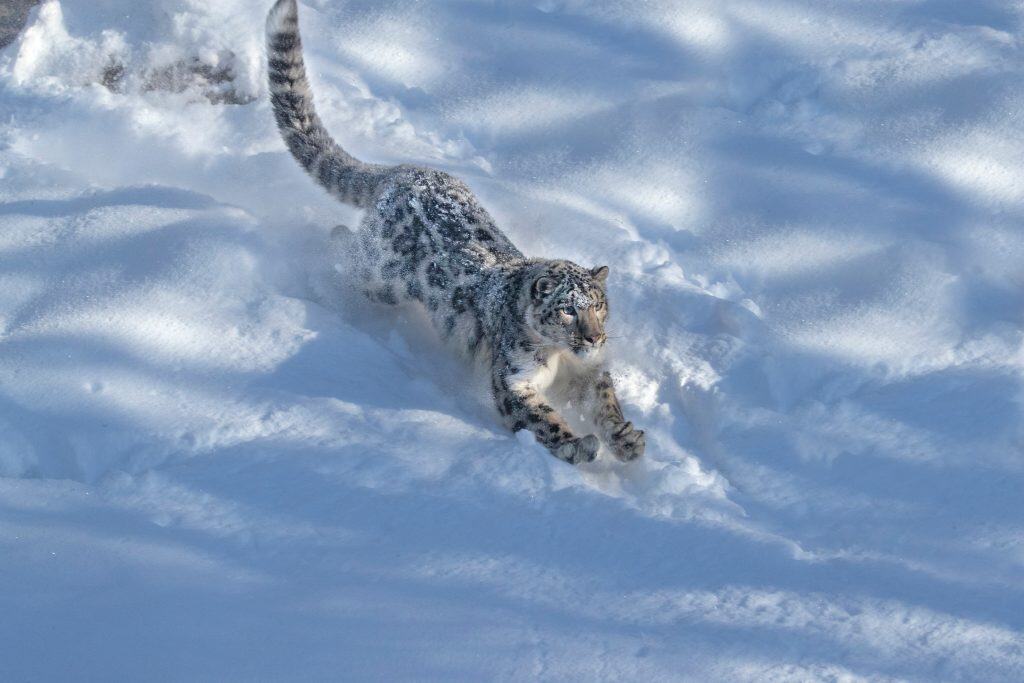
Snow leopards are agile hunters that not only stalk but also ambush their prey.
©Danita Delimont/Shutterstock.com
Once prey has been selected, snow leopards move silently and slowly toward their chosen victim. It is not uncommon for snow leopards to take several hours to stalk their prey. The closer snow leopards can get to their target, the better the chances of a successful hunt. Snow leopards will not make their presence known until they are between 20 and 50 feet from their prey.
Additionally, if snow leopards recognize that prey is actually moving toward them, they will lie in wait. Cats are not only good stalkers but expert ambush predators as well. They can jump 50 feet to grab and stun unsuspecting animals.
In general, snow leopards hunt before the sun rises in the morning and before it sets in the evening. This allows them to use shadows for additional camouflage when hunting, making them skilled apex predators on terrain that many animals would find difficult to navigate.
How Strong is the Snow Leopard Grip?
In addition to their superior hunting techniques, snow leopards are also very strong. It is this strength that allows the cats to successfully take down prey many times their size.
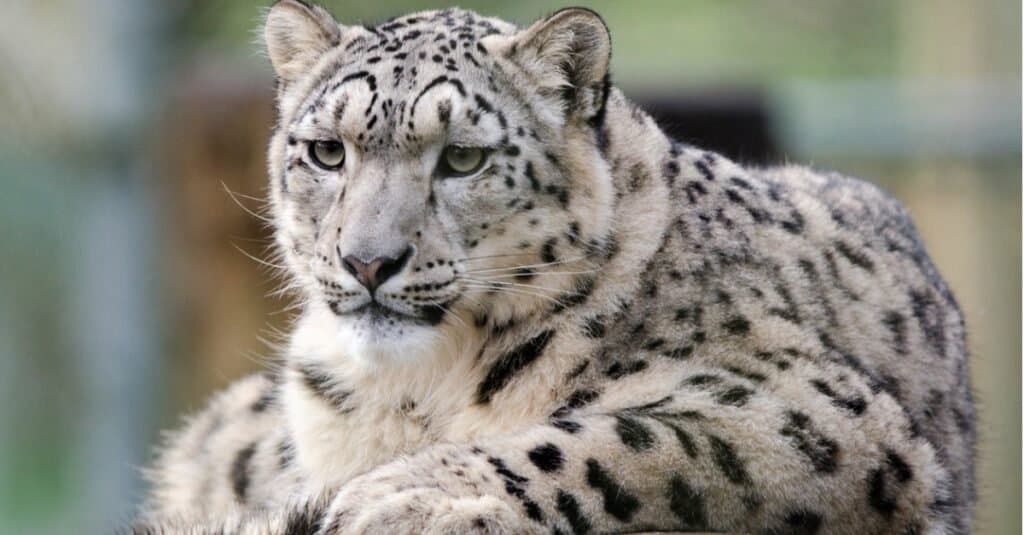
Snow leopards have a bite force of 400 psi, which is incredibly strong for a smaller predatory wild cat.
©iStock.com/RobFranklin
With the ability to jump 30 to 50 feet in one leap, there is no denying that the snow leopard is all muscle. However, that is only part of what makes them successful hunters. The strength allows them to jump onto the animal’s back and hold on to it until it becomes too tired to resist. They also have incredibly strong jaws, meaning their bite is just as important during the course of a hunt.
It is reported that snow leopards have a bite force of 400 psi. To put this into perspective with other animals with strong bite forces, an American alligator has a bite force of 2,125 psi, a gorilla has a bite force of 1,300 psi, and a lion has a bite force of 650 psi. While the snow leopard bite is less than all of these animals, they are also much smaller animals. Pound for pound, snow leopards potentially have a stronger bite force than larger animals.
How Ibex Are Able to Evade Snow Leopards
The hunting prowess of snow leopards tends to make it appear that ibex are at the mercy of the stealthy predators. But as seen in the Instagram video, snow leopards are not always successful. Ibex have their own set of defenses they can use to escape and avoid capture altogether.
As well versed as snow leopards are to the rocky terrain, ibex are just as skilled at navigating their environment. The ibex have strong legs and are light on their feet, enabling them to climb and descend mountains with ease. Because the ibex enjoys being in higher elevations, there are fewer opportunities for a snow leopard to ambush them, making it necessary for the leopards to stalk them instead.
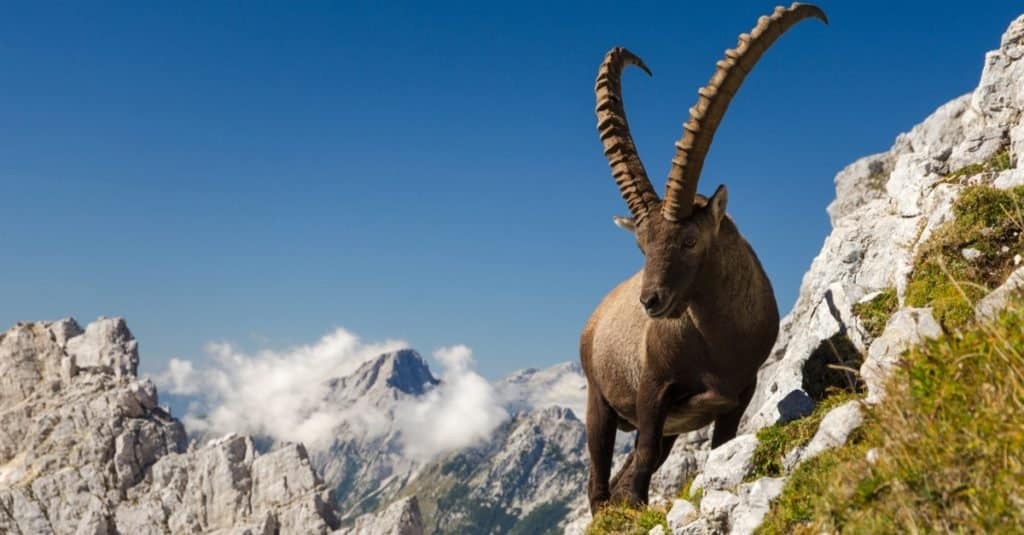
Ibex elude snow leopards by not only living in herds, but also having the strength and agility to climb the sides of mountains with ease.
©Foto Matevz Lavric/Shutterstock.com
Ibex are herd animals. While a large herd may look like an easy target for wild cats, the more ibex there are in a group, the greater the difficulty snow leopards have in targeting just one animal. A larger herd also means some ibex can be on guard and warn the herd of danger. Their great eyesight and hearing ability allow them to spot predators from a distance, many times giving ample opportunity for the herd to save themselves from becoming a meal.
Those who are caught by snow leopards do not automatically become prey. Instead, if an ibex is able to maneuver steep terrain and throw the snow leopard off, they have the opportunity to escape. Whether they survive will depend on any injuries sustained during the attack.
Snow leopards are apex predators of their ecosystems. By preying on ibex, they help to keep the population in check, which could easily grow out of control. But just because these kitties are mighty predators does not mean their hunting techniques are always successful, as illustrated by the lucky ibex that was able to escape the intense chase and live to see another day.