
Quick Take
- Owls and hawks have distinct physical traits, hunting styles, and activity patterns.
- Owls have large eyes and can rotate their head up to 270 degrees. Hawks have smaller eyes and curved beaks.
- Hawks are diurnal and hunt during daylight. Owls are nocturnal and hunt at night.
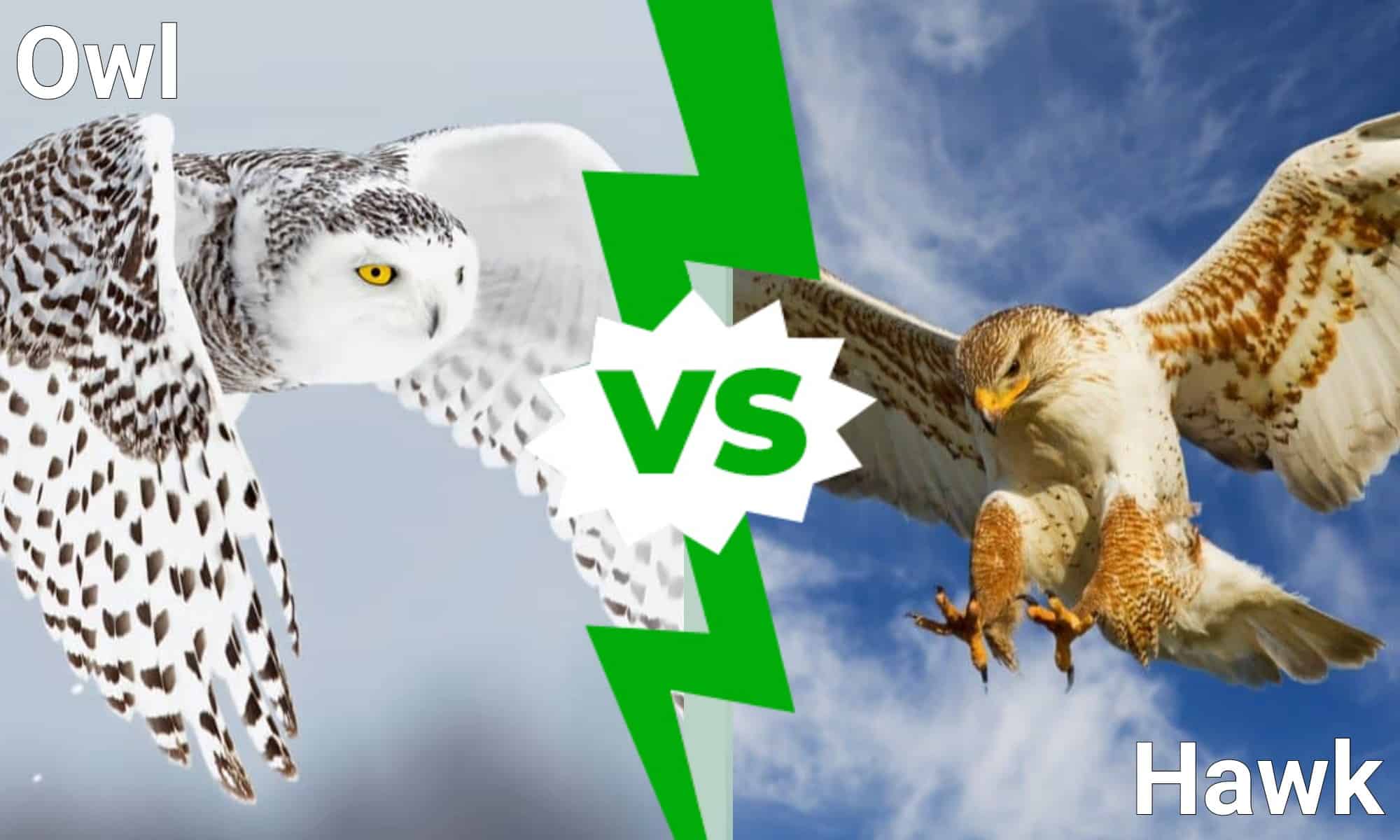
There are approximately 270 species of hawks belonging to the family Accipitridae, which also includes eagles, kites, and Old World vultures. Hawks are generally divided into two main groups: broad-winged buteos and smaller, more agile accipiters. There are approximately 254 species of owls in the world, divided into two families: true owls (Strigidae) and barn owls (Tytonidae). When comparing an owl and a hawk, there are several key differences to consider, including physical characteristics, hunting styles, and adaptations. Continue reading to learn more about what sets these two raptors apart.
Physical Characteristics
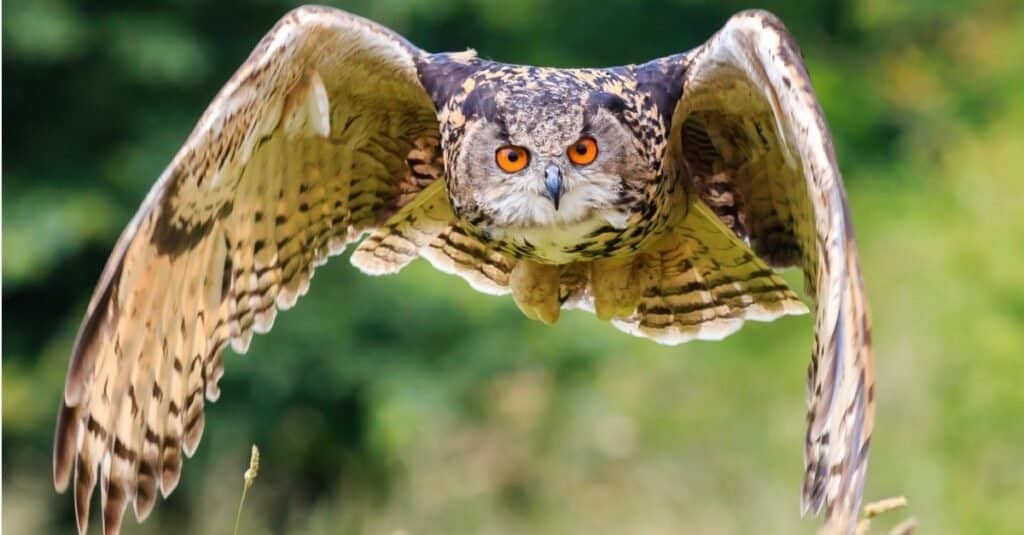
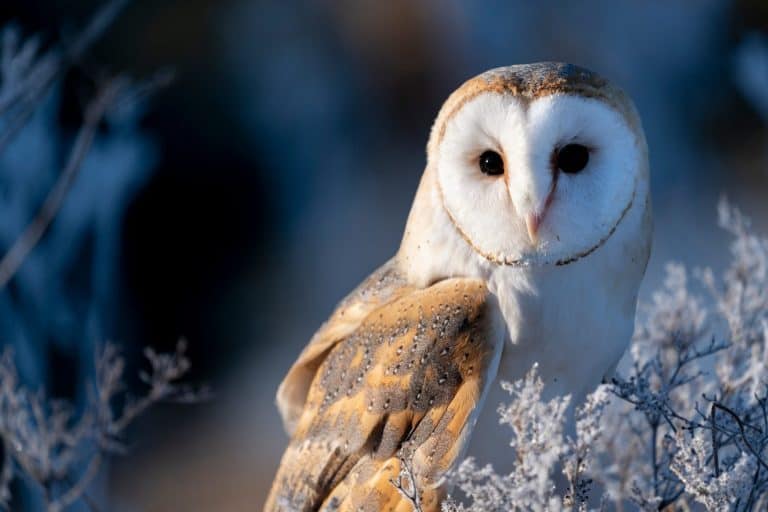
The best way to identify an owl is by its large eyes and head, as well as its ability to rotate its head up to 270 degrees.
©Richard Whitcombe/Shutterstock.com
Owls are most easily identified by their large eyes and heads, and particularly by their ability to rotate their heads up to 270 degrees. Owls have heads that appear to blend seamlessly with the thickness of their bodies. Some owl species are larger than some hawks, but there is significant overlap in size between hawks and owls, and many hawk species are similar in size or larger than many owls. Their bodies are stouter and less streamlined, making them less agile but often stronger than hawks of similar size.
An owl’s talons are powerful, sharp claws primarily used to capture and kill prey. They have a locking mechanism that keeps them tightly clenched around prey or a perch, and the four toes can be arranged to provide a secure grip, with one rear toe able to pivot forward for added versatility. While the talons subdue the prey, the owl often uses its hooked beak to deliver the final, fatal blow.
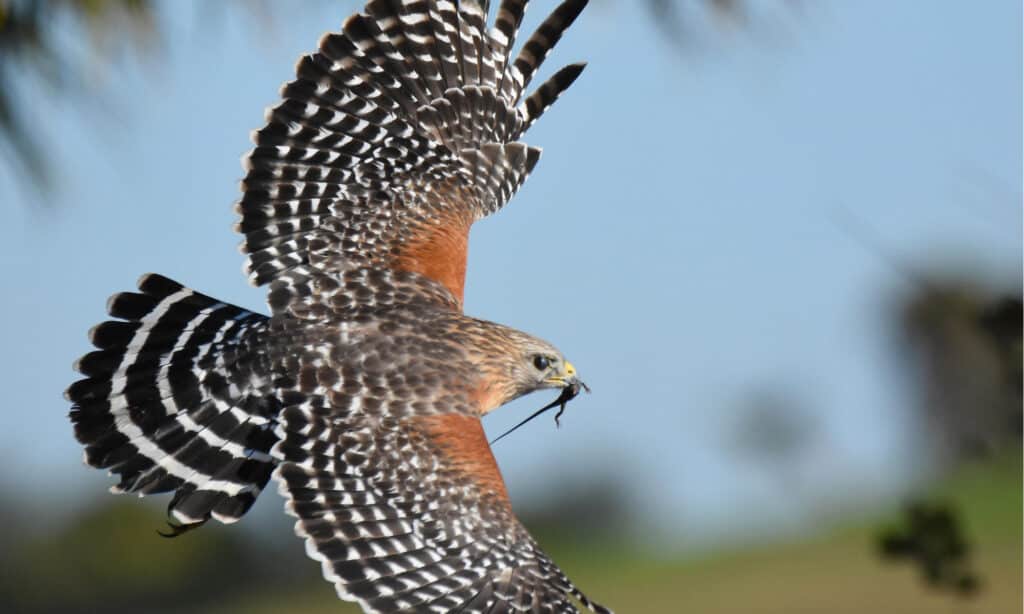
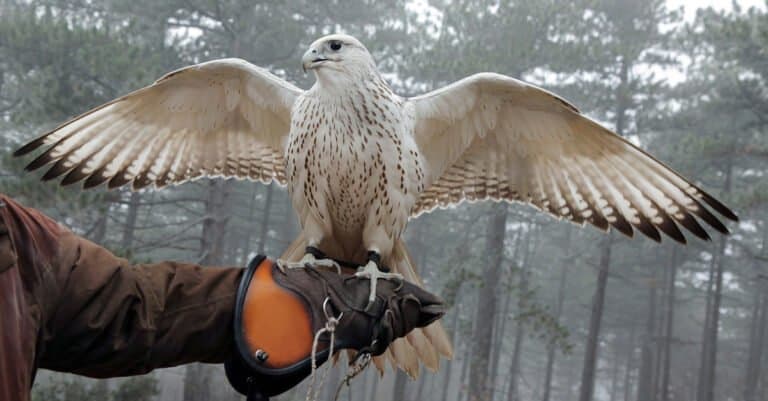
Hawks are most easily identified by their smaller eyes, curved beaks, and small heads.
©MTKhaled mahmud/Shutterstock.com
Hawks are known for their slim, streamlined bodies, small heads, and sharply curved black beaks. The average size of hawks and owls varies greatly by species, and many hawks are similar in size or larger than many owls
Hawks’ talons are sharp, powerful claws used for hunting, and they serve as its primary tool for catching, subduing, and killing prey. They are also used to grip perches and for defense. The grip is incredibly strong, capable of crushing prey’s spine or suffocating it, and is strong enough to immobilize even large prey.
When are Owls and Hawks Active?
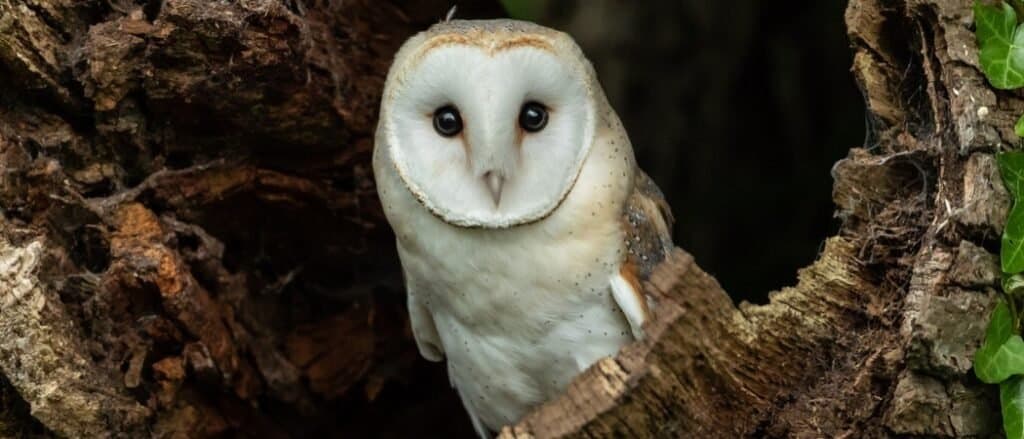
Another way to easily tell a hawk and owl apart is by the time of day. Owls are nocturnal and only hunt at night, though occasionally you might see one before sunset!
©iStock.com/Alan Walker
Owls and hawks often share the same habitat, but their behaviors are as different as night and day. Most owls are nocturnal and hunt at night, but some species are diurnal or crepuscular and may be active during the day or at twilight.
Owl hoots are among the most recognizable bird calls, and owls are most active from late evening to sunrise. Owls are capable of silent flight, rarely use thermals, and flap their wings more frequently than hawks.
Many owl species form long-term, monogamous bonds, and both parents often share the duties of caring for the young, though this is not universal for all species. While the male hunts and brings food, the female often broods the chicks and tears the prey into smaller pieces for them to eat. Most owls roost alone or near their nest during the breeding season, though a few species may roost communally.
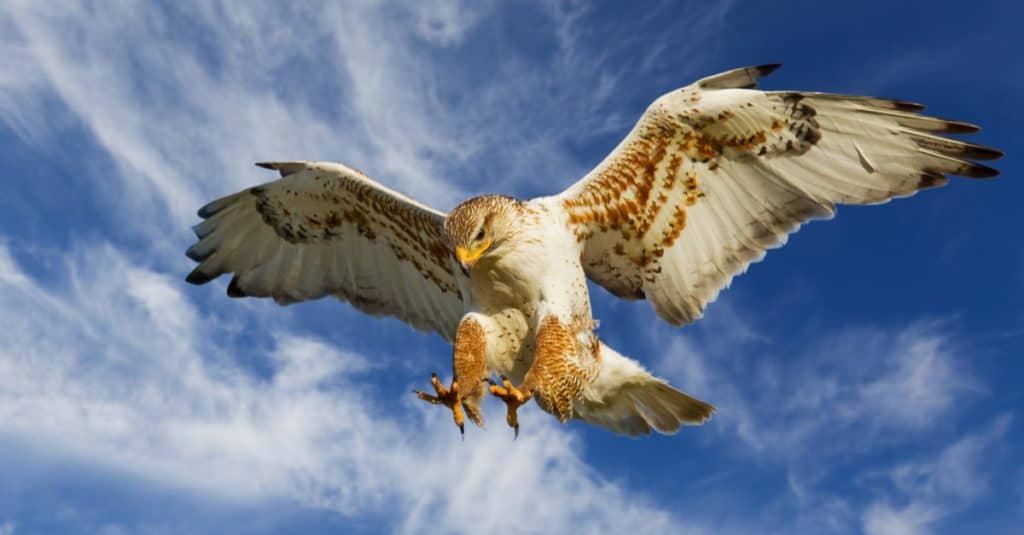
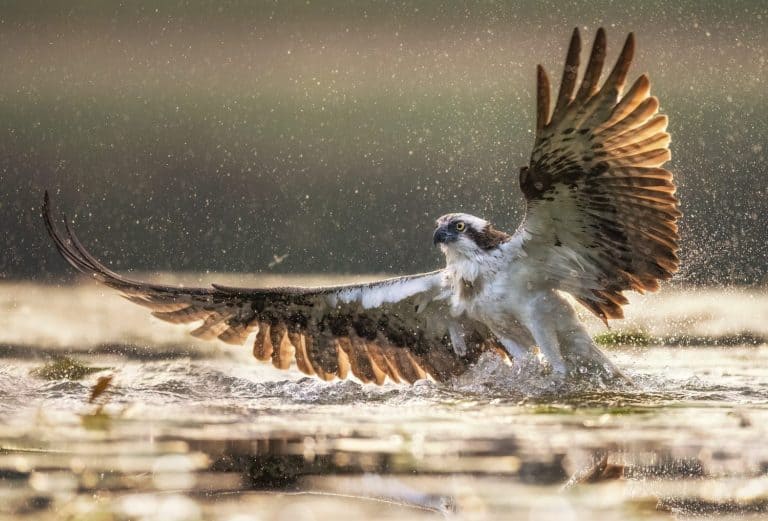
Hawks are one of the most common raptors to be seen by humans, thanks to their diurnal nature.
©Stephen Mcsweeny/Shutterstock.com
Hawks are diurnal, meaning they hunt only during daylight hours. A hawk is active between sunrise and sunset, attacking with speed and precision by diving at its target. They snatch prey with their powerful talons and carry it off to eat in a secure place. Prey that is too heavy to carry is consumed immediately. Many hawks mate for life but are solitary outside of the breeding season; both parents may share incubation duties, though the female typically does most of the incubation while the male hunts.
Hawks use thermal air currents to soar, gaining altitude and gliding long distances with minimal energy expenditure. By circling in columns of rising warm air (thermals), they can rise thousands of meters before gliding to the next thermal.
Which Raptor Is More Likely To Win In A Fight?
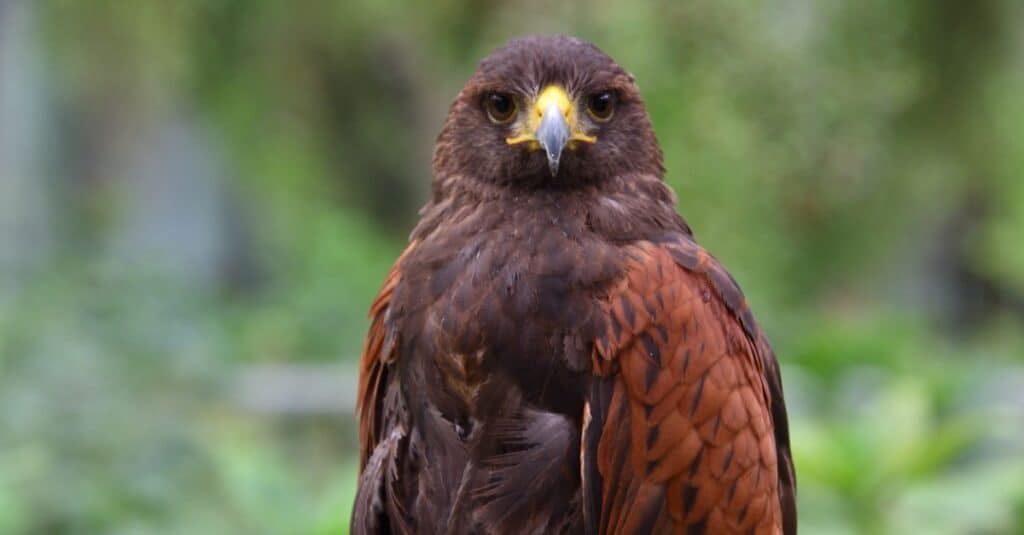
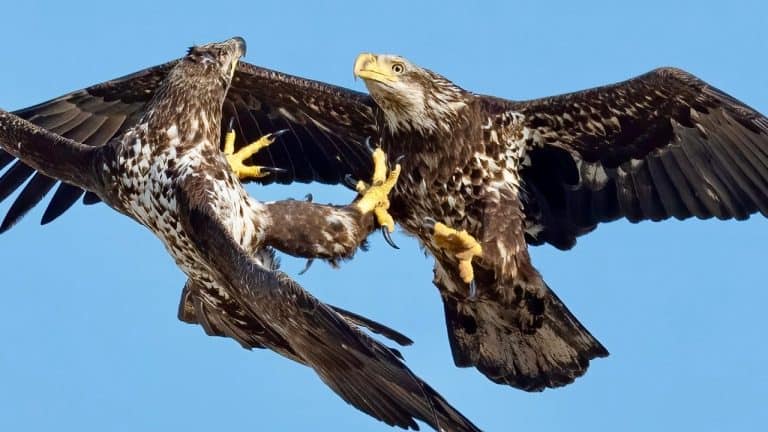
Hawks are fast and agile, and take fewer risks than owls.
©iStock.com/Josiah S
Hawks are powerful animals and far more agile than owls, but owls are often much stronger. Owls have powerful talons that can cause serious injury, but hawks are generally quicker. So, are they evenly matched?
Hawks are known for their keen eyesight and quick reflexes, which help them assess situations rapidly and avoid unnecessary risks. This gives hawks the added benefit of taking fewer risks than other birds. However, this sense of caution is why a hawk may lose a fight against an owl of comparable size.
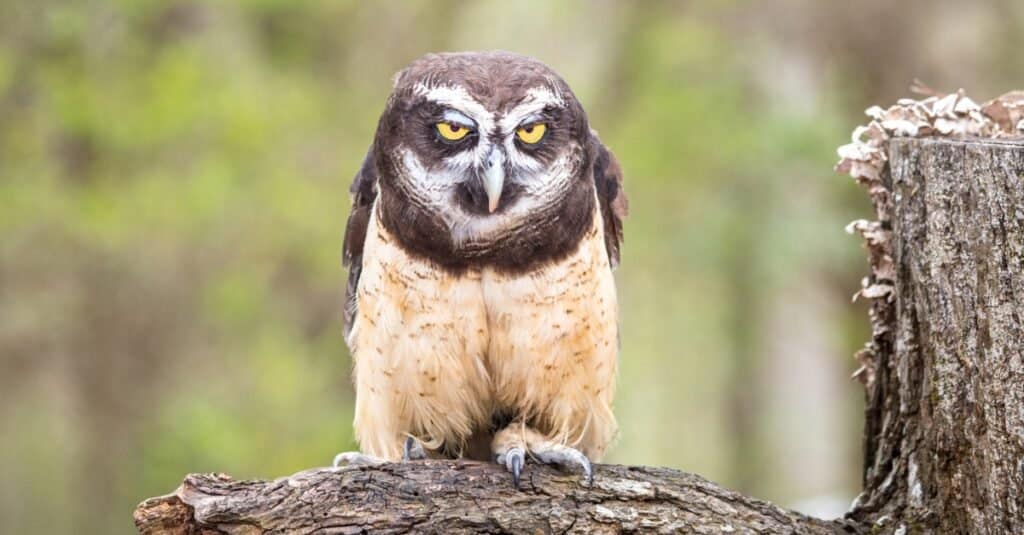
An owl’s brainpower is focused on its vision.
©iStock.com/garytog
Owls have a reputation for being wise. A significant portion of an owl’s brain is dedicated to processing vision and hearing, but this does not mean they lack the capacity for fear. Combined with their silent attacks, nocturnal hunting, and powerful strikes, an owl would likely win a fight against a hawk.
However, hawks are far more rational than the fearless owl and are unlikely to put themselves in a position in which they would be attacked.