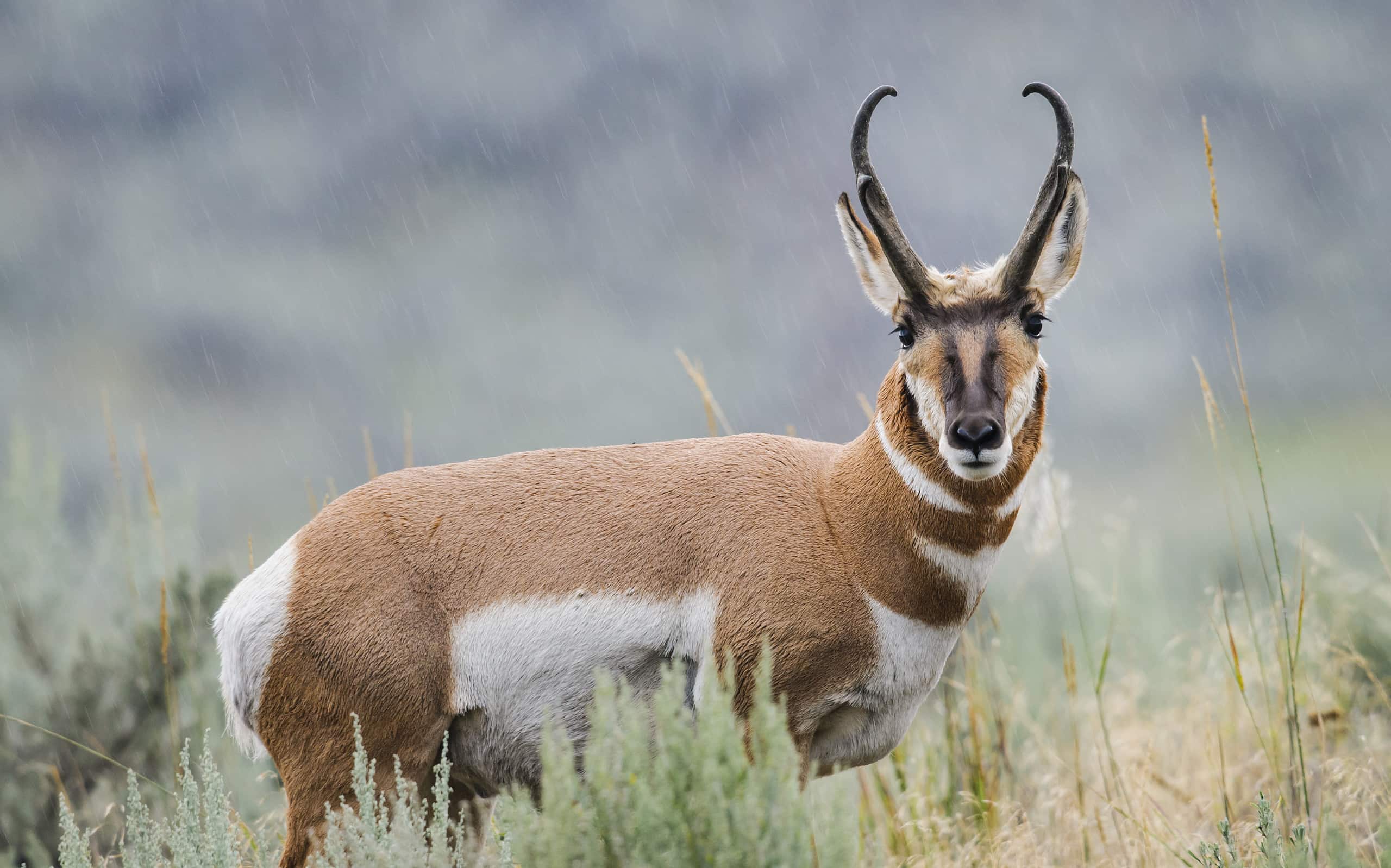

Although the pronghorn is often referred to as “the American antelope,” it is not an antelope at all. It is the only member of its family, Antilocapridae. While the pronghorn is a single species, there are around 91 species of antelope in the family Bovidae, which also includes goats, cattle, and sheep. The pronghorn is indigenous to North America, while antelope species can be found in Africa, the Middle East, and Asia. So there is little chance that these animals will cross paths. However, a pronghorn vs. antelope comparison can aid in distinguishing their differences. Find out more about these two similar-looking species and learn what sets them apart.
Comparing Pronghorn vs. Antelope
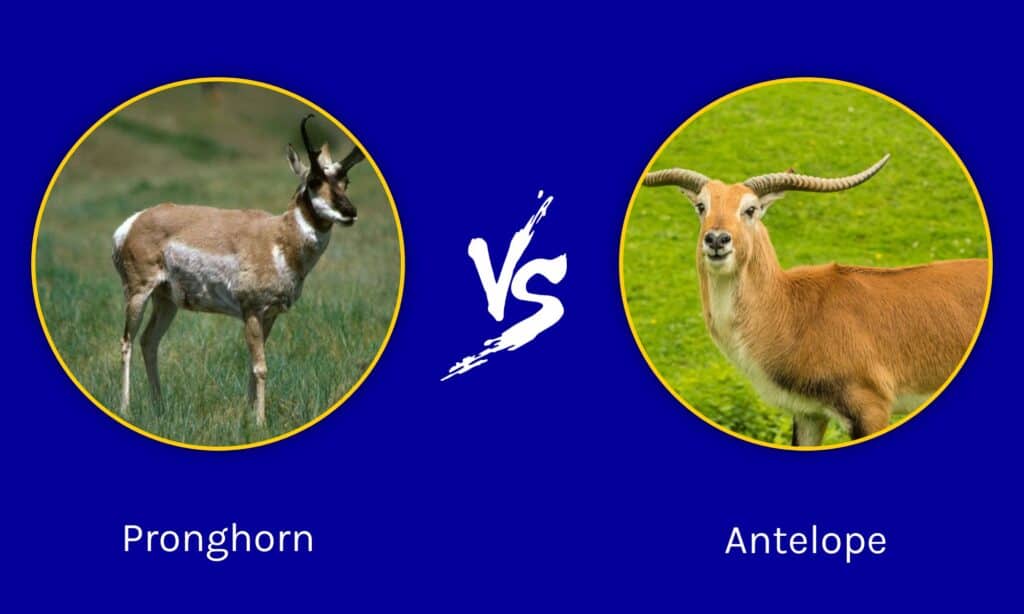
| Characteristics | Pronghorn | Antelope |
|---|---|---|
| Scientific Classification | Antilocapridae; one species | Bovidae; 91 species |
| Distribution and Habitat | Western and central North America | Africa and parts of the Middle East and Asia |
| Size | 88-130 pounds; 32-41 inches at the shoulder; 3-5 feet long | Varies by species; 6-2,200 pounds; 20 inches to 5 feet at the shoulder; up to 9.5 feet in length (giant eland) |
| Horns | Forked or branching horns that shed and regrow each year | Varies by species; horns do not branch; continuous growth throughout animal’s life |
| Hoof Structures | Two toes; lack dewclaws; Specialized cartilaginous padding | Four toes including dewclaws; most lack specialized padding |
The Key Differences Between Pronghorns and Antelopes
Although pronghorns and antelopes have some superficial similarities, they are not closely related. Both animals have narrow legs and are some of the fastest land animals in the world. Pronghorns and antelopes both have horns, and their coats are varying shades of brown with white markings. However, there are differences in scientific classification, distribution and habitat, size, horns, and hoof structures that distinguish these animals. Take an in-depth look at each of these characteristics in the following sections.
Scientific Classification
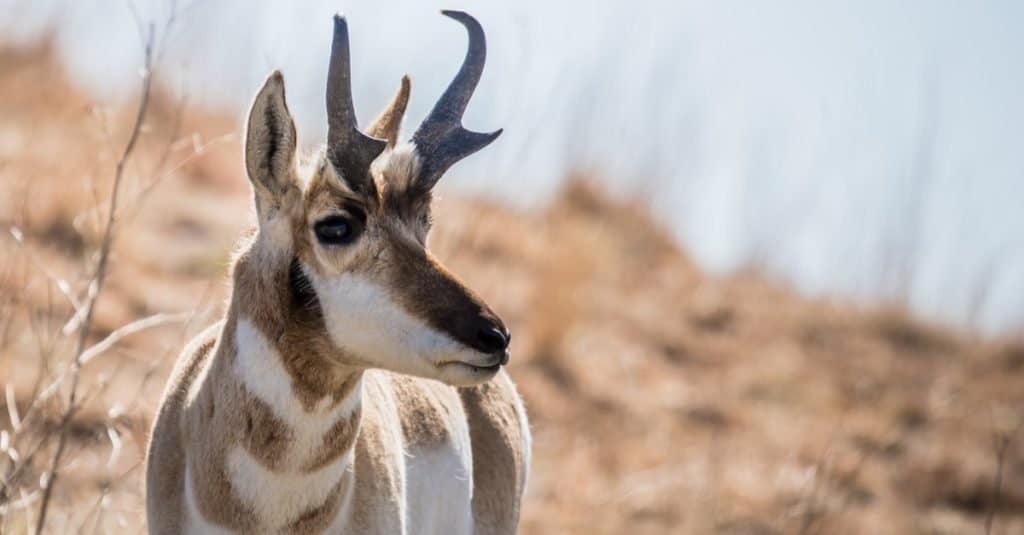
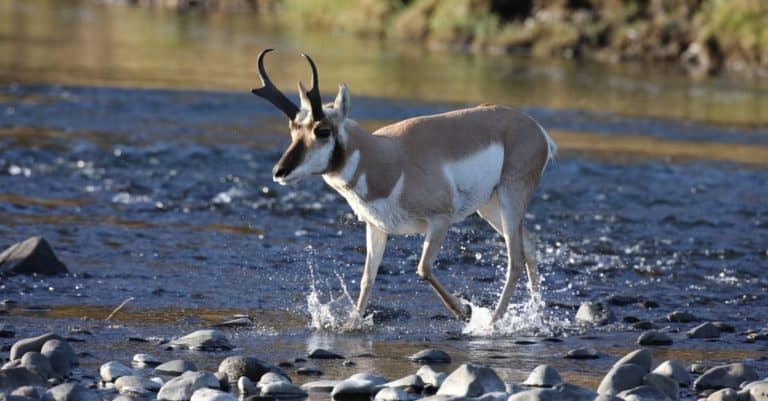
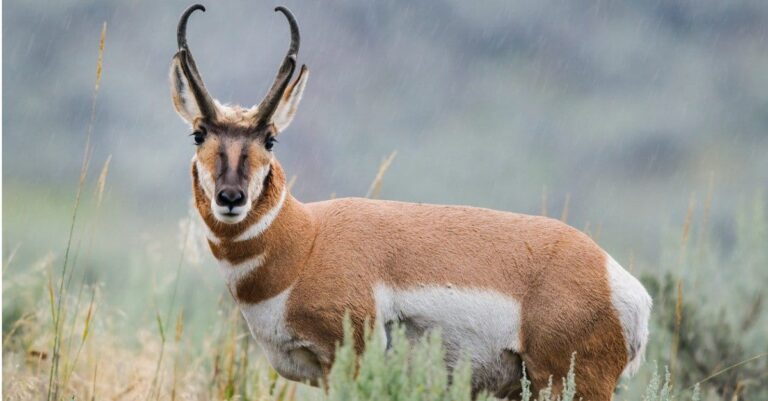
Pronghorns may appear similar to antelopes, but they are not closely related.
©Jen DeVos/Shutterstock.com
As mentioned above, the pronghorn (Antilocapra americana) is the only member of the Antilocapridae family. While they have some similarities to animals in the Bovidae and Cervidae families, more recent genetic studies indicate they are more closely related to Giraffidae. Although there is only one species of pronghorn, five subspecies have been named, primarily due to slight differences in appearance and geographical differences. However, only three are generally recognized.
Antelopes are part of the Bovidae family, characterized by ruminant mammals such as cattle, goats, and sheep. There are at least 91 species of antelope in about 30 genera. The debate about subfamilies within superfamily Bovoidea is ongoing, as the term “antelope” is not well-defined. Currently, ‘antelope’ is used to describe all members of the family Bovidae that are not classified as cattle, goats, or sheep.
Distribution and Habitat
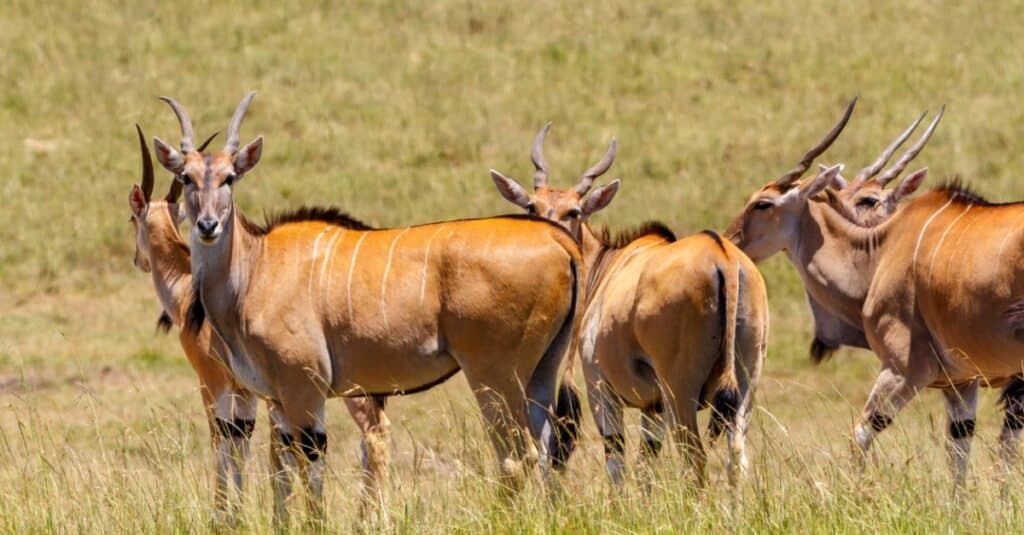
Antelopes are found throughout Africa, as well as the Middle East and Asia.
©iStock.com/TT
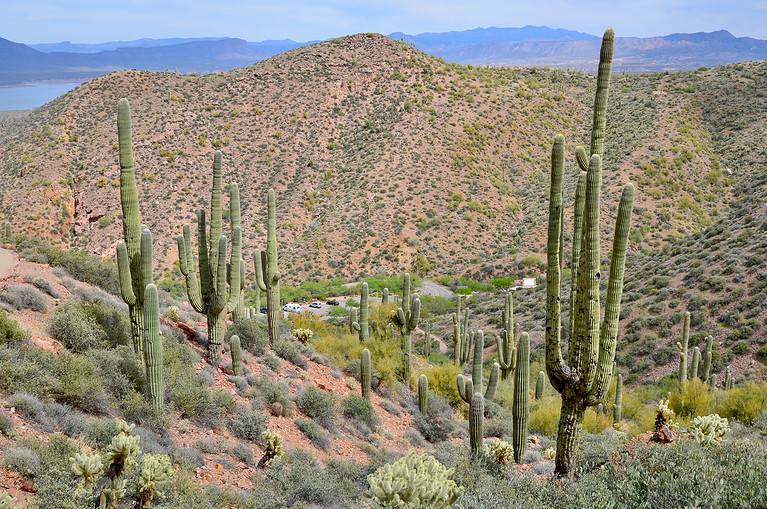
Since there are 91 species of antelope, their distribution is naturally larger than that of the pronghorn. Pronghorns are only found in North America. They inhabit the western part of the continent from southern Canada down to northern Mexico. Pronghorns favor more open areas such as short-grass prairies, steppes, and shrublands.
Most antelope species are found in Africa, but there are smaller populations in the Middle East and Asia. The majority of antelopes inhabit open grasslands, but some species can be found in rainforests, high mountain forests, and other wooded areas or areas with heavy vegetation.
Size
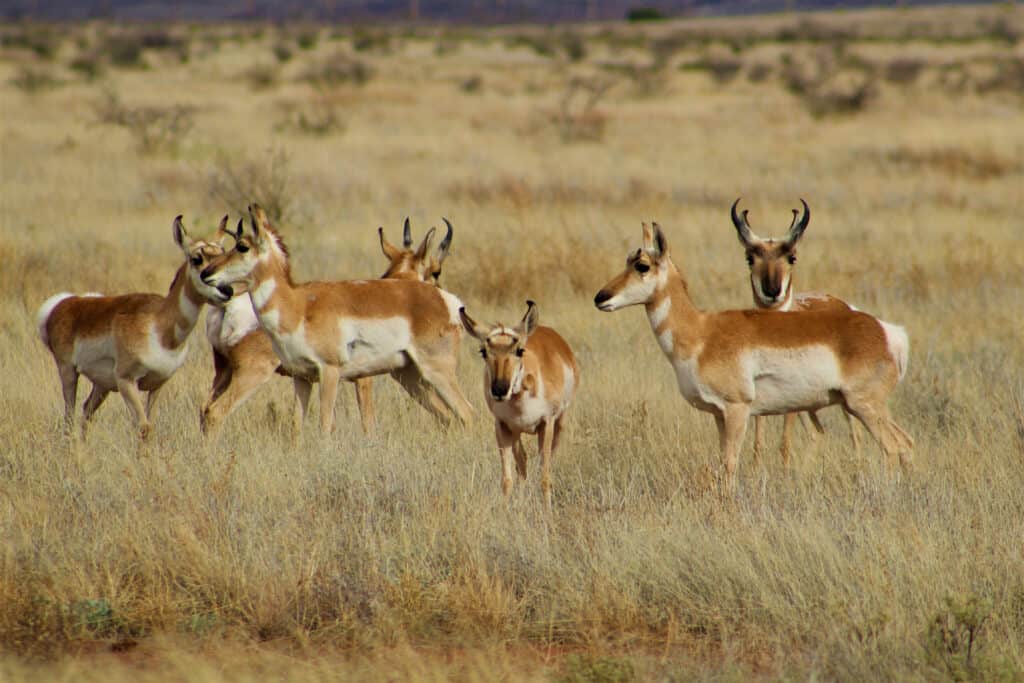
Pronghorns can grow up to 5 feet long from nose to tail.
©Charles Lemar Brown/Shutterstock.com
Pronghorns typically grow 3 to 5 feet long from nose to tail. They weigh between 88 and 130 pounds, with females being about 10% smaller than males. They stand from 32 to 41 inches at the shoulder, averaging about 36 inches.
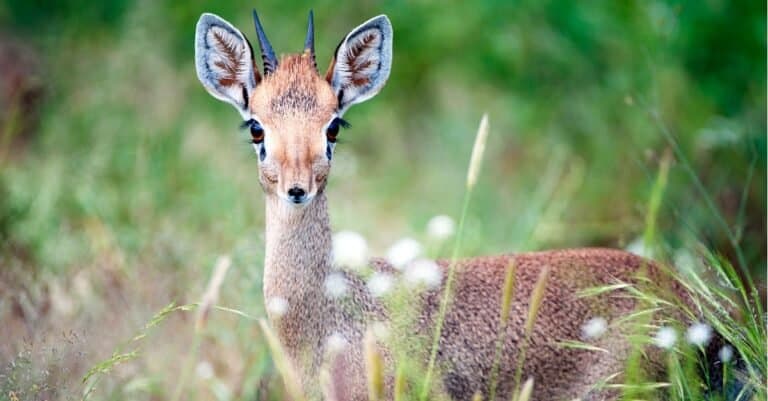
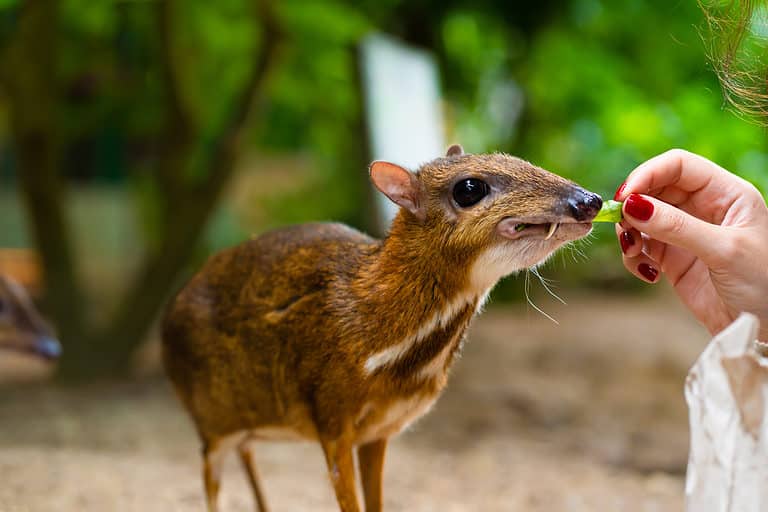
Antelope size varies by species. For example, the largest antelope species, the giant eland, can reach 9.5 feet long and stand nearly 6 feet tall at the shoulder. Giant elands can weigh up to 2,200 pounds. The smallest species, the royal antelope, measures up to 20 inches in length and stands about 10 inches tall at the shoulder. They only weigh between 4 and 6 pounds, with the heaviest ever recorded only weighing 7 pounds and 11 ounces.
Horns

Antelope horns vary by species, but they do not fork or branch like pronghorn horns.
©Brockhaus and Efron Encyclopedic Dictionary / Public Domain – Original / License
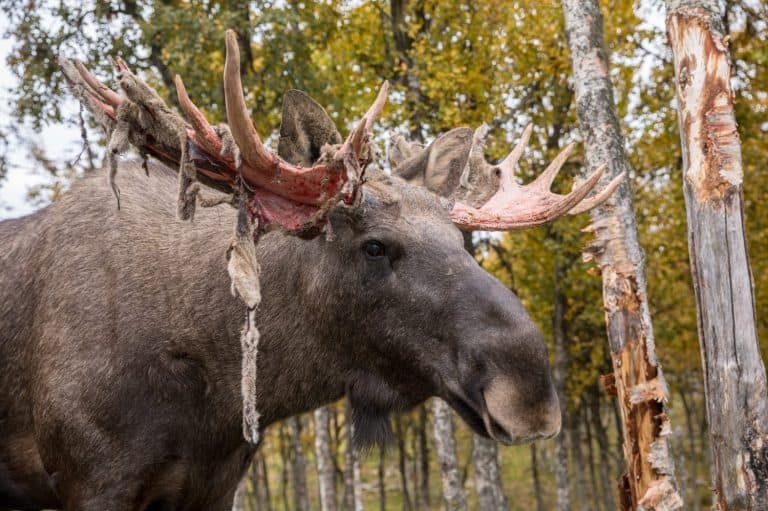
Both pronghorns and antelopes have horns, not antlers. The pronghorn’s horn has a permanent core of bone covered in a keratin sheath. The sheath is shed and regrown each year, similar to the way deer shed and regrow their antlers. Each sheath is branched or forked. The horns are shaped like a lyre, curving back and inward near the tips. There is a short, wide prong sticking out about halfway up their horns, which is where these animals got their name. The male’s horns can grow up to 19.7 inches long. Around 70% of female pronghorns grow horns, which are typically less than 4 inches long.
Antelope horns do not branch or fork. They do not shed their horns, which grow continually throughout their lives. Both male and female antelopes can have horns, but the males’ horns are longer. However, the exact shape and size of the horns vary by species. For example, greater kudu have long, spiral horns with tips that point up and out. They have the longest horns of any antelope species, growing up to 6 feet long. Bongos have spiraled horns that curve over their backs. Steenbok have simple, straight, upward spikes.
Hoof Structures
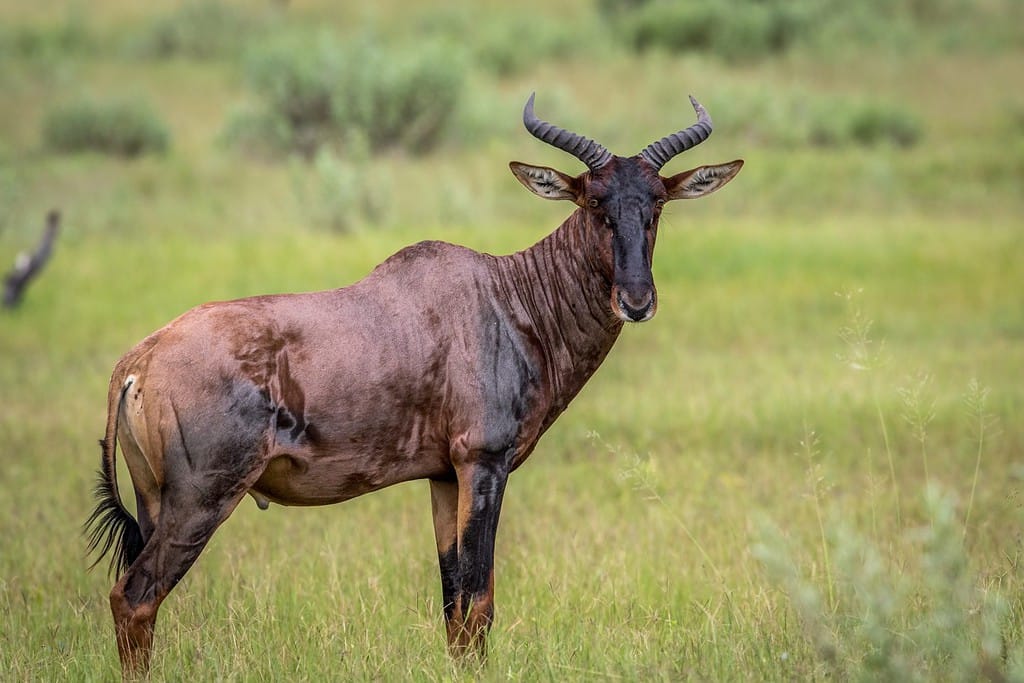
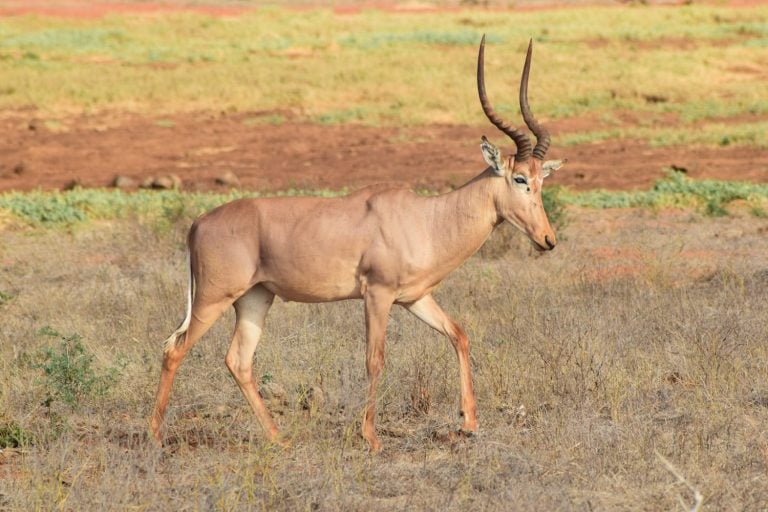
The tsessebe can run very fast, but it lacks hoof padding and cannot match the speed and endurance of the pronghorn.
©Simon Eeman/Shutterstock.com
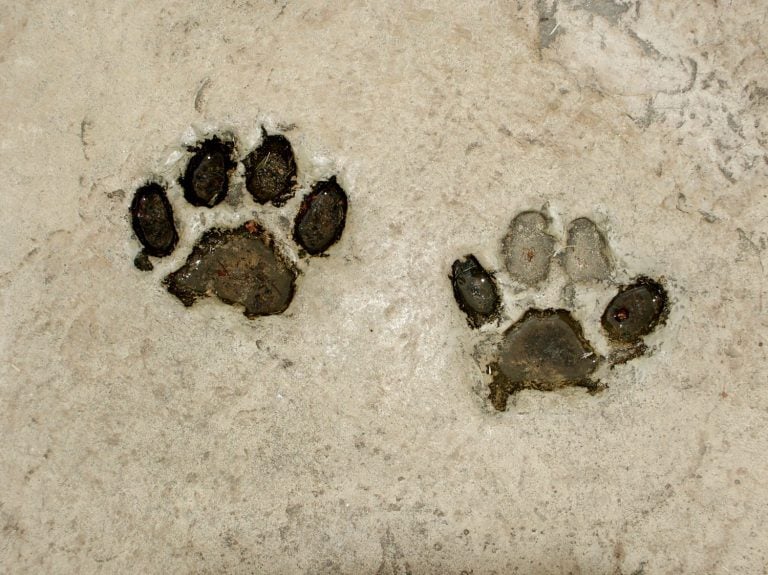
Pronghorns and antelopes also have different hoof structures. Pronghorns have two toes on each foot, and they lack dewclaws. Their hooves are pointed and narrow, with larger hooves in the front to take most of the weight. They have specialized cartilaginous padding in their hooves that acts as a shock absorber when running at speeds of up to 60mph for long distances over hard terrain. Scientists believe their hooves are adaptations to escape predators like the American cheetah, which is now extinct.
Antelopes have four toes on each foot, including two dewclaws, which are much smaller and typically do not touch the ground. The shape of their hooves varies by species and habitat. For example, sitatunga have long, narrow hooves for navigating swamps and wetlands, while the addax has broad, flat hooves to travel over sand. Most species lack the specialized padding of the pronghorn. Although some species, such as the tsessebe, can reach high speeds of up to 55mph, they do not have the same endurance as the pronghorn.