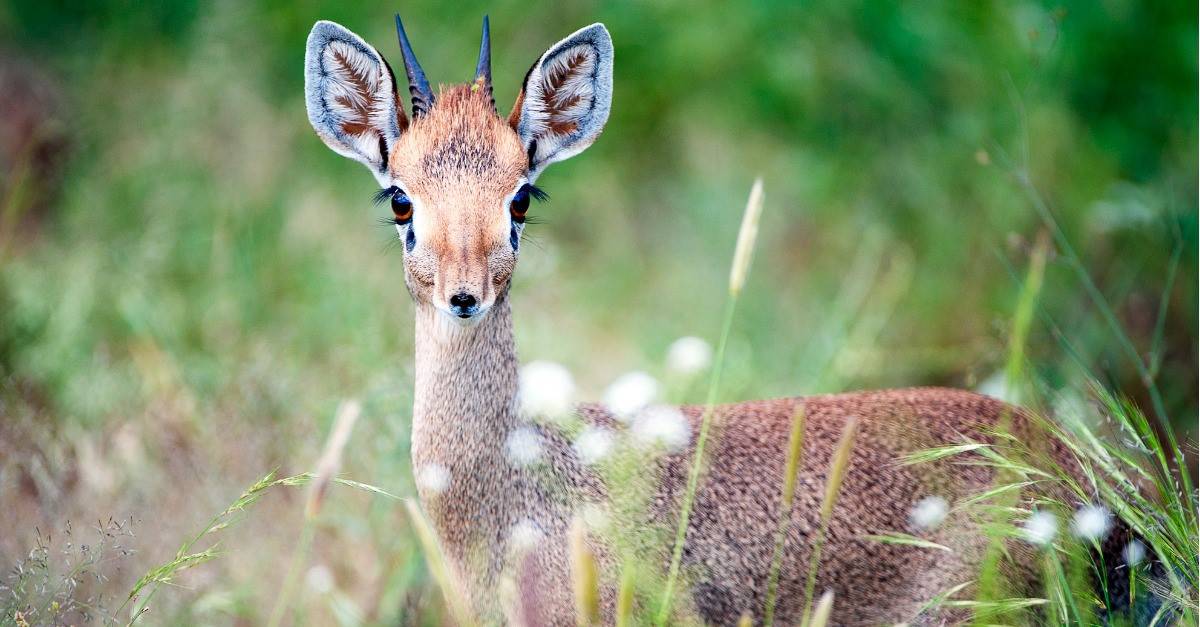

This is not a drill! We’ve just found the world’s cutest animal, and it’s small enough to fit in a backpack. And it’s an animal that most people would never anticipate falling in love with: an antelope. Africa is home to the dik-dik, also known as one of the smallest of its species. Consequently, it’s also the cutest, according to this post by @discover.animal. If its small stature doesn’t capture your heart, its big eyes and long eyelashes surely will. Here’s everything you should know about the world’s cutest antelope.
Meet the Dik-Dik: Africa’s Most Unique Animal
Dik-diks are native to regions in southern and eastern Africa. The tall bushlands of the Savanna provide perfect cover for these 12 to 16-inch-tall antelopes. They weigh less than 14 pounds, and can move their lightweight bodies at speeds of up to 26 miles per hour. It’s hard to believe these tiny animals are even real, and that’s partially what makes them so fascinating.
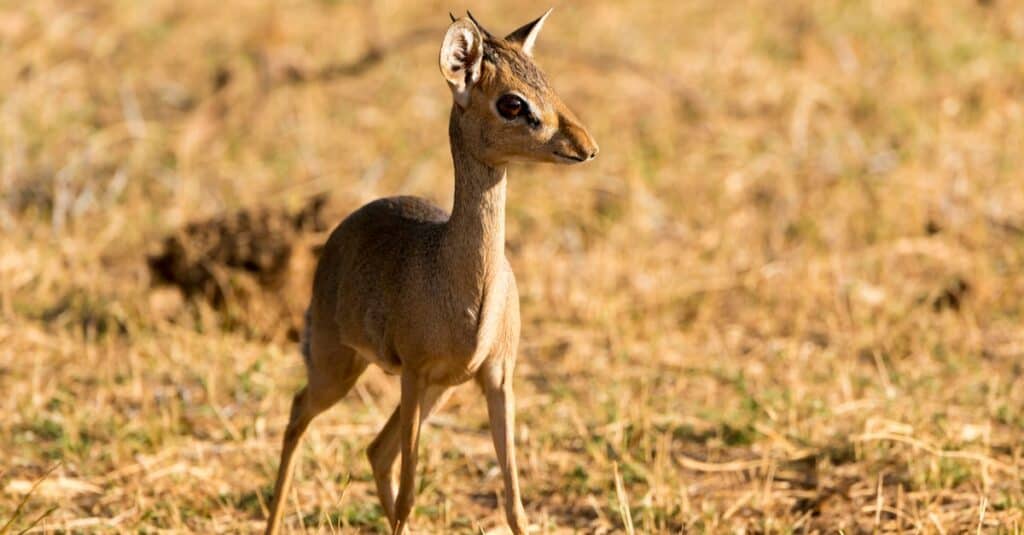
Dik-diks are speedy antelopes, and their small size helps them evade predators.
©imageBROKER.com/Shutterstock.com
While dik-diks have several natural enemies in the bushlands, they themselves are herbivores. They forage for berries, fruits, and various types of foliage in the same brush that keeps them sheltered. The plants they eat provide enough water, allowing them to avoid watering holes for extended periods. This reduces their risk of running into potential predators. This, combined with their preference for dense shrubbery, helps keep them well-hidden from larger animals.
The Dik-Dik’s Adorable Appearance
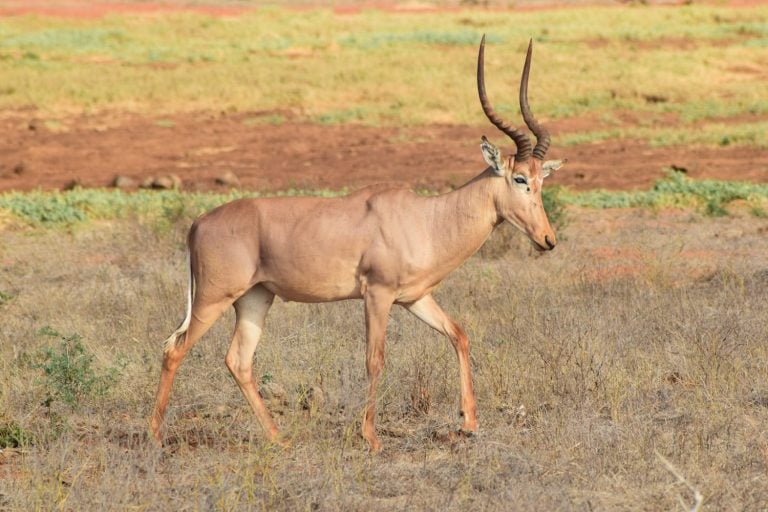
If you were to see a dik-dik in the wild, you’d probably assume it was a cross between a deer, an anteater, and a rabbit. Its appearance is unique, which only enhances its cuteness. The body of a dik-dik is covered in brown, tan, and white fur, which helps it blend in with its surroundings. It has tiny black hooves at the bottom of its short legs, and males have two small horns protruding from their heads. Dik-diks have small, pointed ears, large beady eyes, and a nose that resembles a snout more than a deer’s nose.
Despite their small stature, all of these features are key to their survival. Dik-diks have long, slender legs that give them bursts of speed when running, and their agile bodies help them navigate Africa’s terrain with ease. Since dik-diks are typically shy and elusive, their ability to evade predators is one of their greatest strengths.
One Unusual Feature
As if the dik-dik couldn’t get any cuter, it has one more unique physical feature. Its nose isn’t only for breathing; it’s a multi-purpose organ. This elongated snout allows for extra blood flow, causing it to pant. As this happens, the increased airflow acts like an internal air conditioner. This means that even on extremely hot days, the dik-dik has extra protection against overheating.
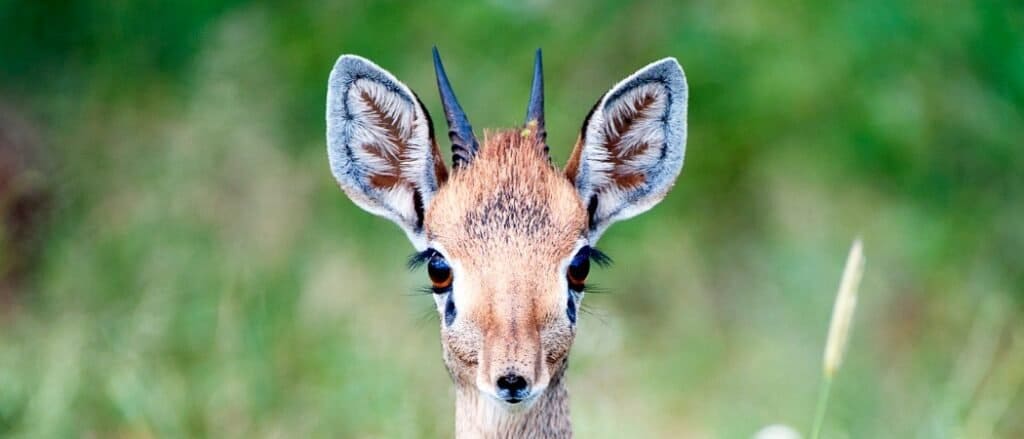
Male dik-diks have small horns on the top of their heads.
©iStock.com/pilesasmiles
The elongated snout also serves as a warning system. As air flows through its nose, the dik-dik can produce a unique noise that resembles its name. This is often referred to as a “dik-dik” or “zik-zik” sound. Dik-diks make this sound to alert other herd members of a threat, which is highly effective in the bushlands.