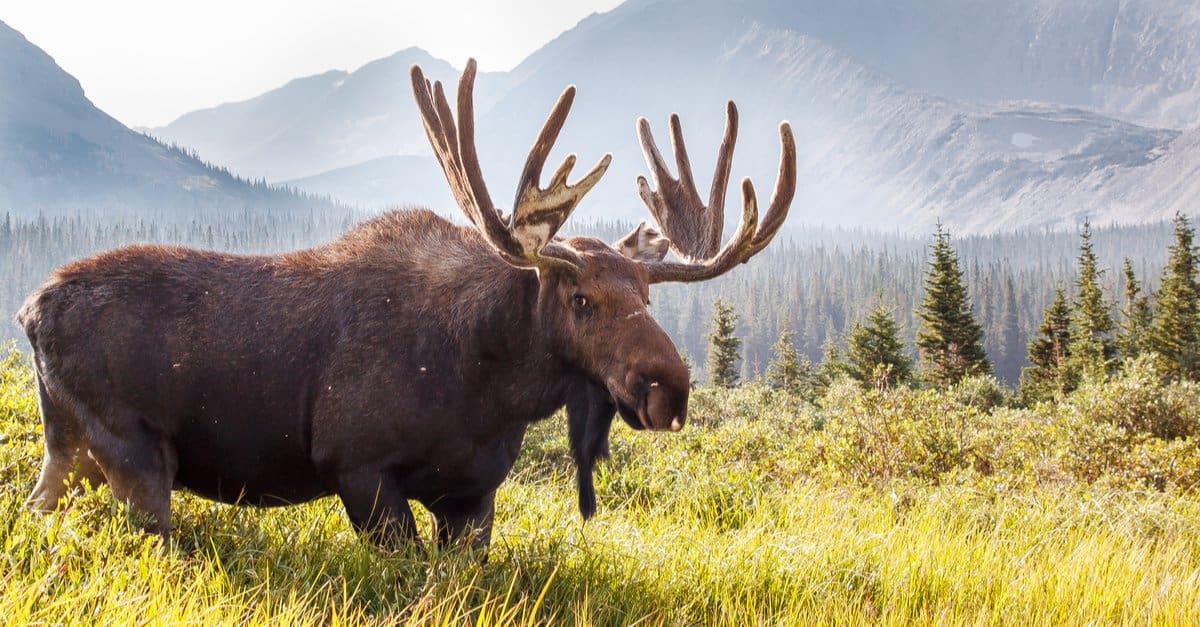

As the largest species of deer, moose (Alces alces) have several features in common with other deer. Members of the Cervidae family are primarily characterized by solid, bony antlers that are shed and regrown each year. Cervids are also herbivores with four-chambered stomachs. However, moose have a number of unique characteristics that set them apart from other deer. Keep reading to learn the differences between moose vs. deer.
Comparing Moose and Deer
| Moose | Deer | |
|---|---|---|
| Size | 600 pounds to 1,500 pounds; 5-7 feet at the shoulder | Weight varies by species, 13 pounds (pudu) to 1,100 pounds (elk); 15 inches (pudu) to 5 feet (elk) at the shoulder |
| Distribution and Habitat | Far northern reaches of North America, Europe, and Eurasia | North America, Eurasia, Europe, Asia |
| Speed | 30-35mph | 40mph |
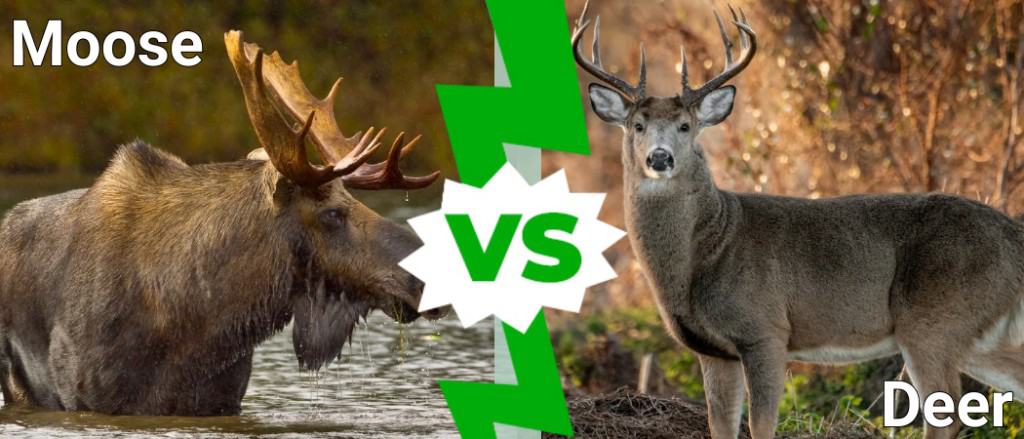
| Antlers | Broad, flat antlers that grow horizontally and then upwards; can reach 80 inches across | Branch-like antlers that grow straight up; can reach over 51 inches wide (reindeer) |
| Physical Appearance | Hump on back; long snout; dewlap below chin | Shorter, thinner snout; no dewlap or hump |
| Social Behavior | Solitary unless it is mating season | Live in herds |
The 6 Key Differences Between Moose vs. Deer
The key differences between moose and deer include their size, distribution and habitat, speed, antlers, physical appearance, and social behavior. Take a closer look at these differences in the paragraphs below.
Size
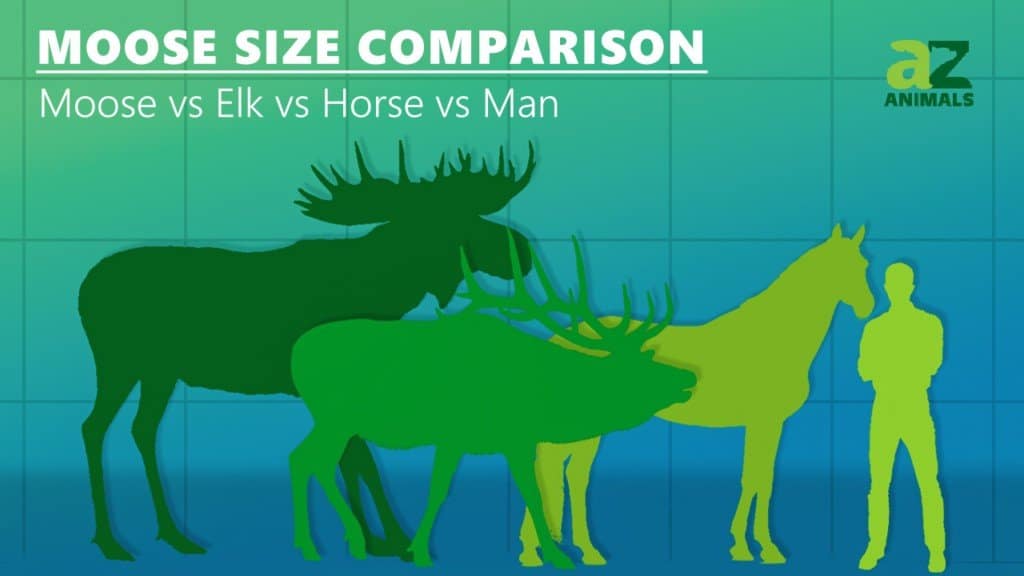
Moose are much larger than deer. A moose can stand up to 7 feet tall at the shoulder. After moose, the largest deer species is the elk, which can reach about 5 feet at the shoulder. In fact, moose are the tallest mammals in all of North America.
Moose also weigh more than other deer. A moose can weigh between 600 and 1,500 pounds. A moose can weigh between 600 pounds and upwards of 1,500 pounds. They regularly weigh over 1,000 pounds when fully grown. Elk can reach weights of up to 1,100 pounds, but they average closer to 700 pounds.
Distribution and Habitat
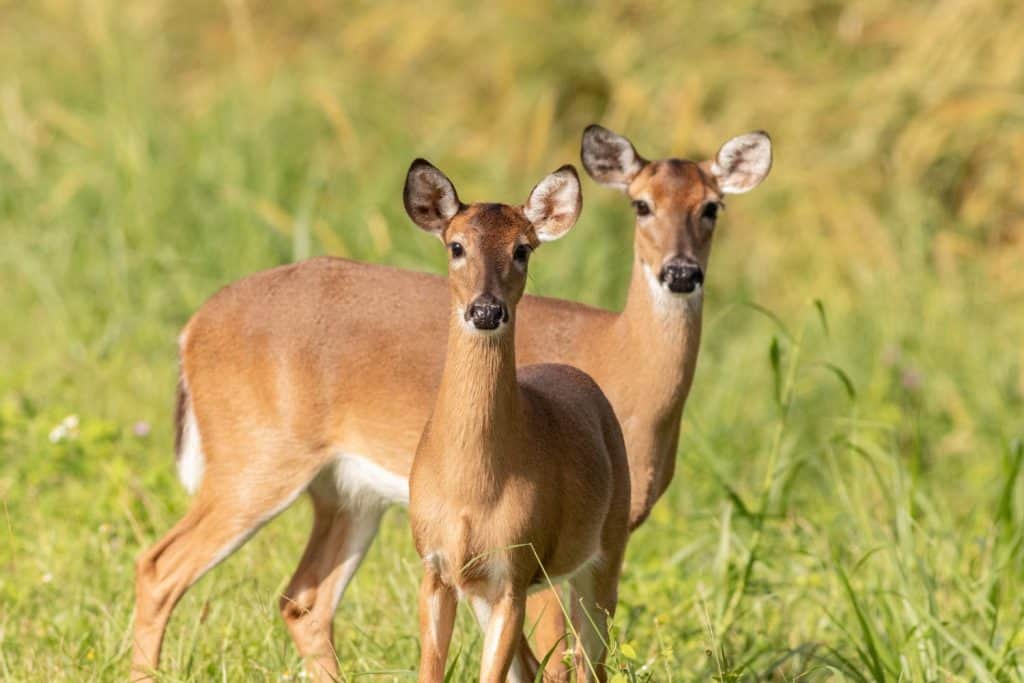
Deer live in a wider range of climates than moose.
©Omar F Martinez/Shutterstock.com
Moose primarily live in the cold northern regions of North America, Europe, and Asia. This includes the U.S., Canada, Scandinavia, Russia, and China. Moose tend to live in forested areas near rivers and streams so they have easy access to forage and water.
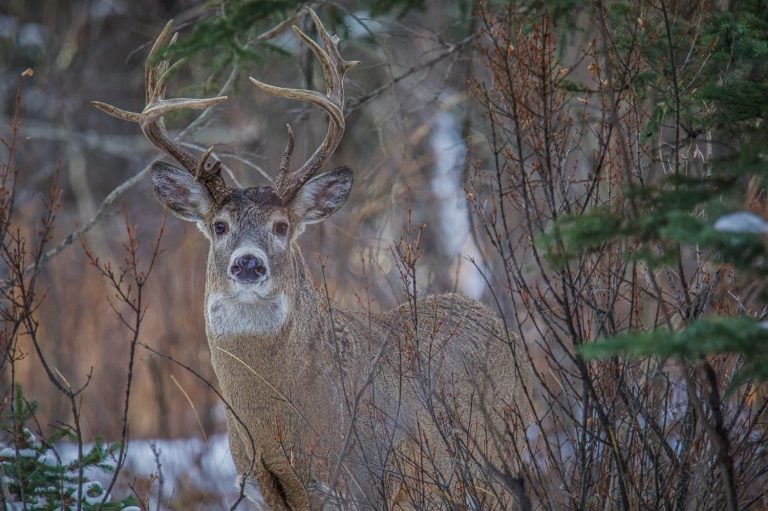
Deer can also be found in North America, Europe, and Asia. However, most species, aside from reindeer and Siberian musk deer, are not restricted to the cold northern regions. Most deer can inhabit a wider range of climates and a variety of habitats. Deer tend to prefer wooded areas, places with tall grass in which to hide their young, and open fields where they can congregate with their herds in the winter.
Speed
Deer are generally faster than moose. The most common deer in the U.S., the white-tailed deer, can run through the forest at speeds of 35-40mph. Mule deer can reach up to 45mph, while reindeer can reach speeds of 50mph.
Moose can run between 30-35 mph. Moose have long, powerful legs that allow them to keep running through shallow water, chest-deep snow, or uneven ground. The average deer might be faster than a moose, but moose can reach impressive speeds, especially considering their size.
Antlers
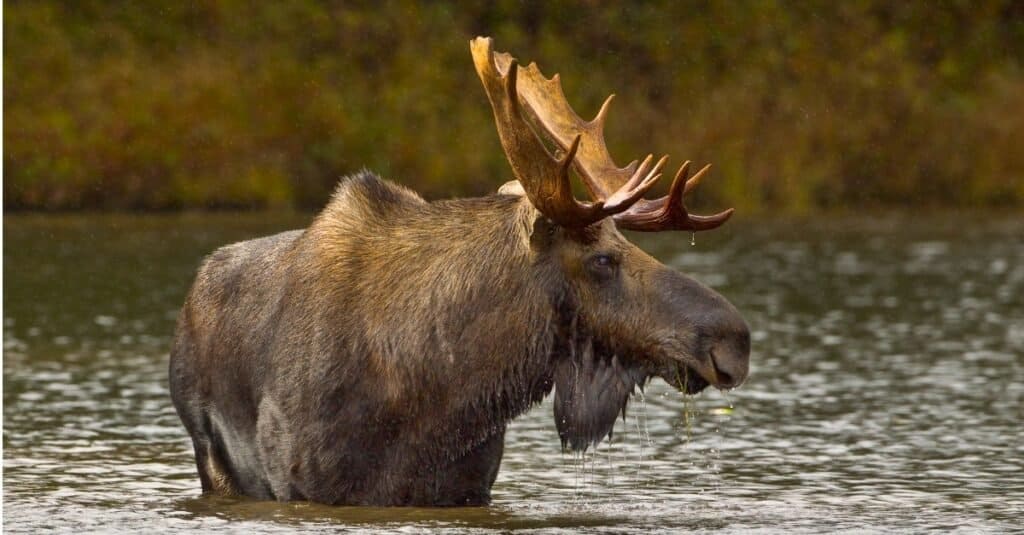
Moose antlers are larger and flatter than deer antlers.
©iStock.com/RichardSeeley
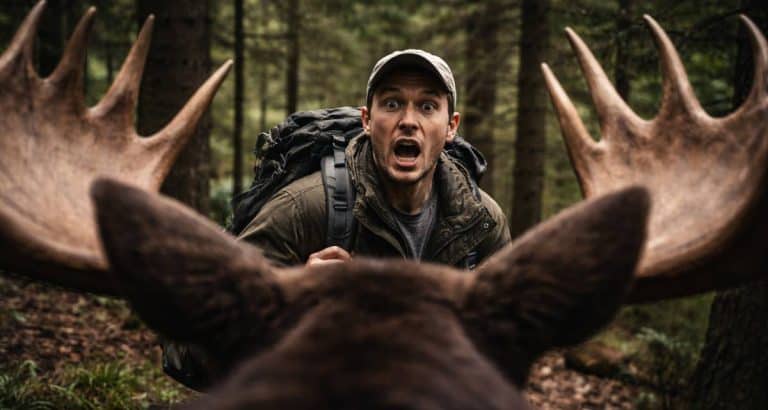
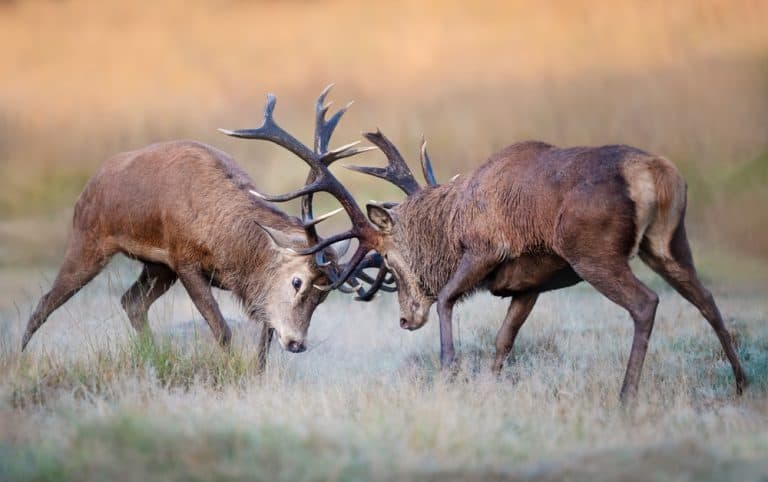
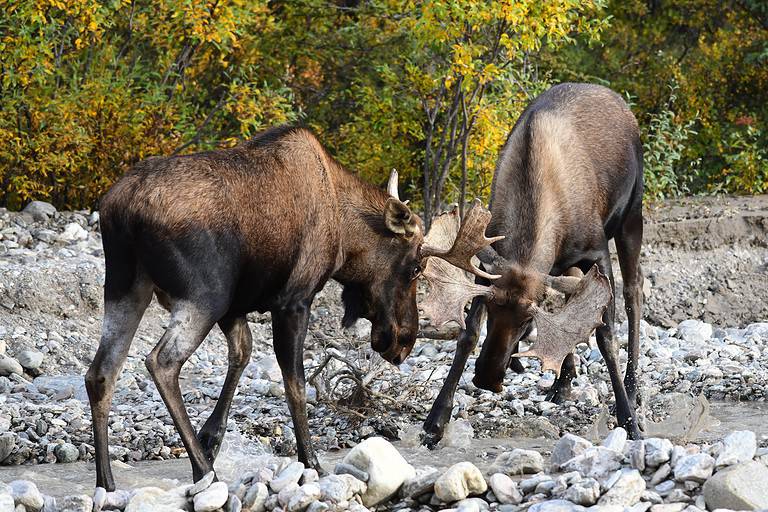
Moose have much larger and more impressive racks of antlers than the average deer. Their antlers grow horizontally and then upwards from the tips, creating broader, flatter antlers that are used for display and combat during the mating season. They can use their antlers to intimidate their competition, as well as locking horns and pushing their rivals during combat. The largest moose antlers on record were over 80 inches wide. Moose also hold the record for the largest antlers of any living species.
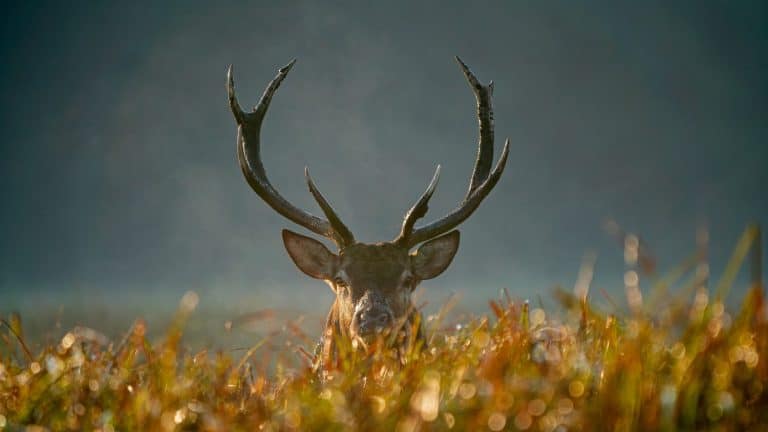
Deer antlers are large, but they are more branch-like with many points. Their antlers start by growing straight out of their heads and continue to grow and spread from the tips. Deer also use their antlers for display and combat. Reindeer grow the largest antlers proportional to their size among deer species, measuring up to 51 inches wide.
Physical Appearance
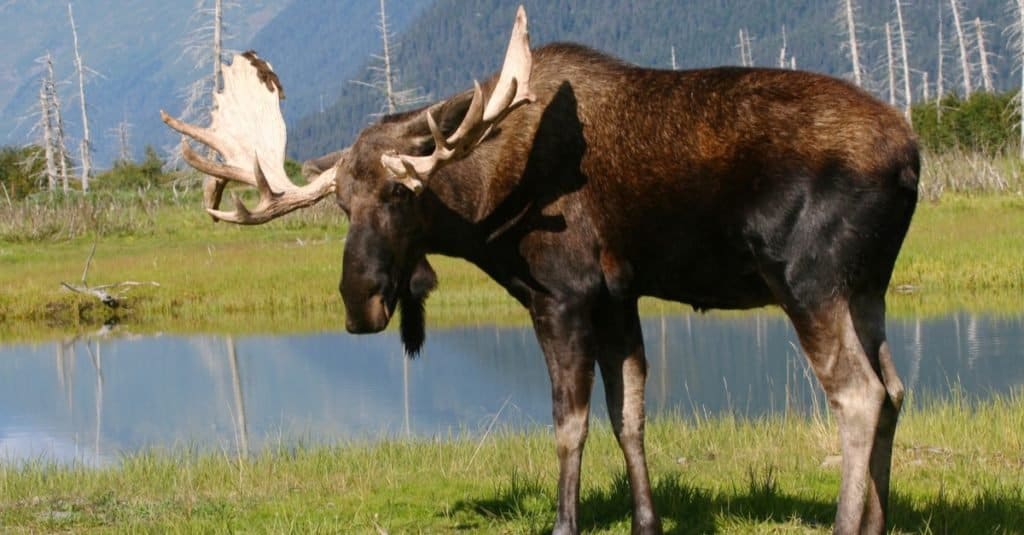
The skin hanging under the moose’s jaw is called a dewlap.
©Steve Bower/Shutterstock.com
Moose and deer have significant differences in their physical appearance. Aside from their unique antlers, the moose is known for having a hump on its back and a much larger head relative to its body. Moose also have long, broad snouts. Below that snout is a piece of fatty skin that is called a dewlap. The dewlap can measure several inches to over a foot in length.
Deer are smaller with thinner, more delicate builds when compared to moose. Deer do not have humps on their backs. They also have much smaller, narrower snouts, and they lack dewlaps under their chins.
Social Behavior
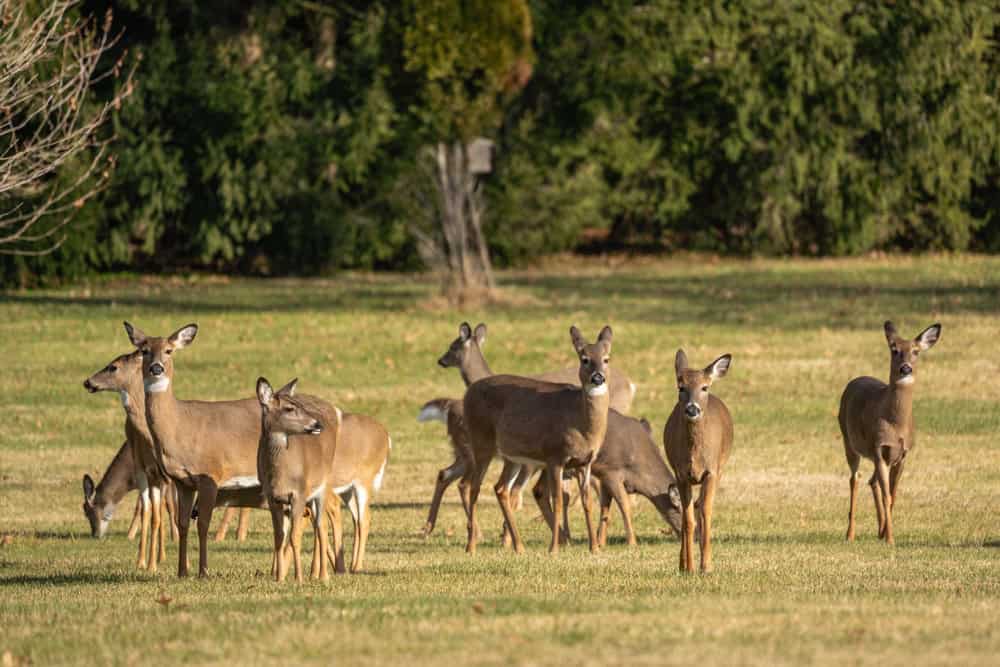
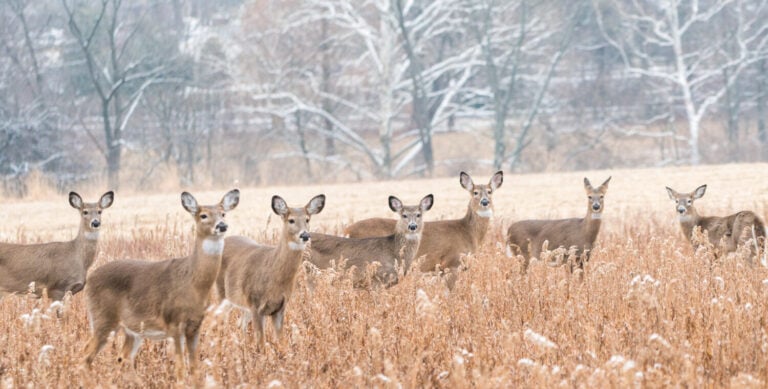
Most deer live in small, multi-generational family herds.
©Amy Lutz/Shutterstock.com
Moose are solitary animals that rarely seek the company of others except during the mating season. Bulls may gather to find cows and compete for mating rights. During the breeding season, they may form small groups consisting of one male and several females. During the winter, small temporary herds may form in areas with good resources. Cows and calves are also social, especially during the calf’s first year. Moose are much more territorial and aggressive than other deer, especially during the breeding season and when females are protecting their calves.
Deer are social animals that typically live in small herds for protection. Does and fawns live in multi-generational family groups, while juvenile males often form bachelor herds. Deer will usually live with their family herds throughout much of the year, but they may combine with other family herds to increase their chances of survival through the winter.