
Many beautiful and strange fish fill the oceans of the world. Although it’s more entertaining to talk about the large, dangerous sharks that lurk in the water, other important fish swim the oceans as well. For example, small schooling fish provide an important part of the ocean’s food chain and help sustain life in Earth’s deep waters.
Species of these small fish look so much alike that phylogenetically different creatures are sometimes grouped together, like sprats and sardines. What are the differences between sprats and sardines, and can you tell them apart at a glance?
These are the questions that we’re going to answer throughout this article as we look to uncover the major differences between these animals.
Comparing Sprats and Sardines
| Sprats | Sardines | |
|---|---|---|
| Size | Weight: 0.4-0.7 ounces Length: 3.5-7 inches | Weight: 2-3 ounces, on average; up to 7 pounds Length: 3.9-11 inches |
| Morphology | – Thin, silver fish with blue or green on their backs – Pointed mouth – Fan-shaped, singular dorsal fin | – Silver with green or gold colors – Reddish-brown flesh – No scales on the head – One small, triangular dorsal fin shaped like a shark’s tooth |
| Diet | – Fish larvae – Plankton | – Zooplankton – Phytoplankton – Fish larvae |
| Phylogenetic Family | – Clupeidae family – One genus: Sprattus – Five species considered true sprats – Sprattus sprattus (European sprat) is one of the most common of the true sprats | – Clupeidae family – Includes five genera of fish, such as Sardina – Over 20 species can be considered sardines – The European pilchard—Sardina pulchadus—is considered the true sardine |
| Location | – Western Europe – Australia – New Zealand – Falkland Islands – Baltic Sea | – North America – South America – Europe, including the Mediterranean Sea and the Black Sea – Pacific and Indian Oceans – Off the coasts of Australia and parts of southern Africa |
The 5 Key Differences Between Sprats and Sardines
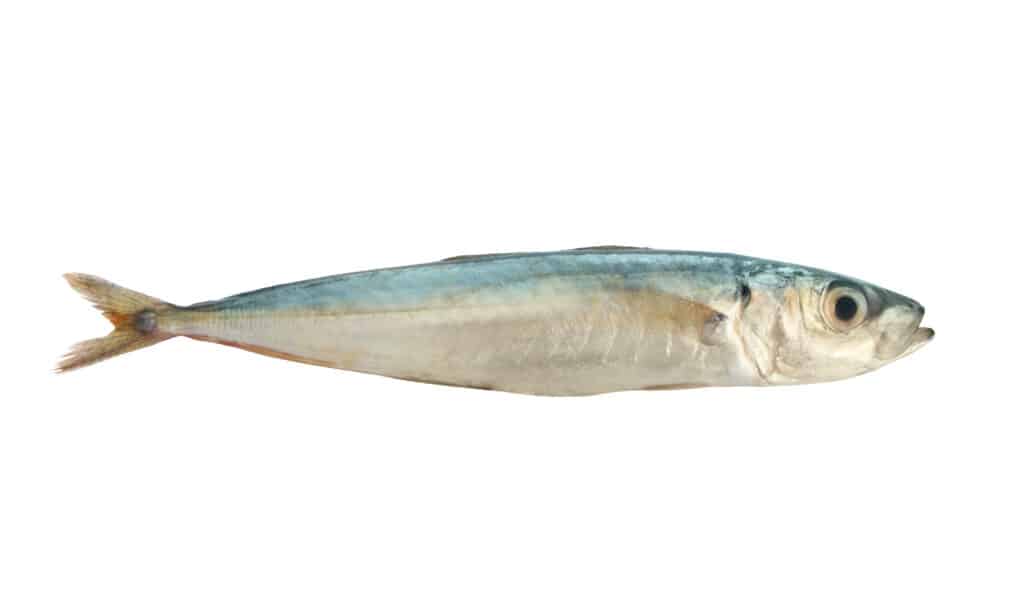
Sprats are generally smaller than sardines.
©Valerii Evlakhov/Shutterstock.com
While the biggest differences between sprats and sardines are in their morphology and their phylogenetic family, there are several other distinctions between the two fish. Such features include their size, diet, and where they live. Both sprats and sardines belong to the Clupeidae family, but their taxonomic similarities end there.
Sprats vs. Sardines: Size
The average sardine is larger than a sprat. Sardines usually weigh between 2 and 3 ounces, but they can, in some cases, weigh as much as 7 pounds. They measure anywhere between 3.9 and 11 inches.
Sprats are somewhat smaller fish that weigh between 0.4 and 0.7 ounces and measure 3.5 to 7 inches in length. Given the fact that both terms are broadly applied to both types of schooling fish, these measurements are approximate, but offer a good idea of their general size.
Sprats vs. Sardines: Morphology
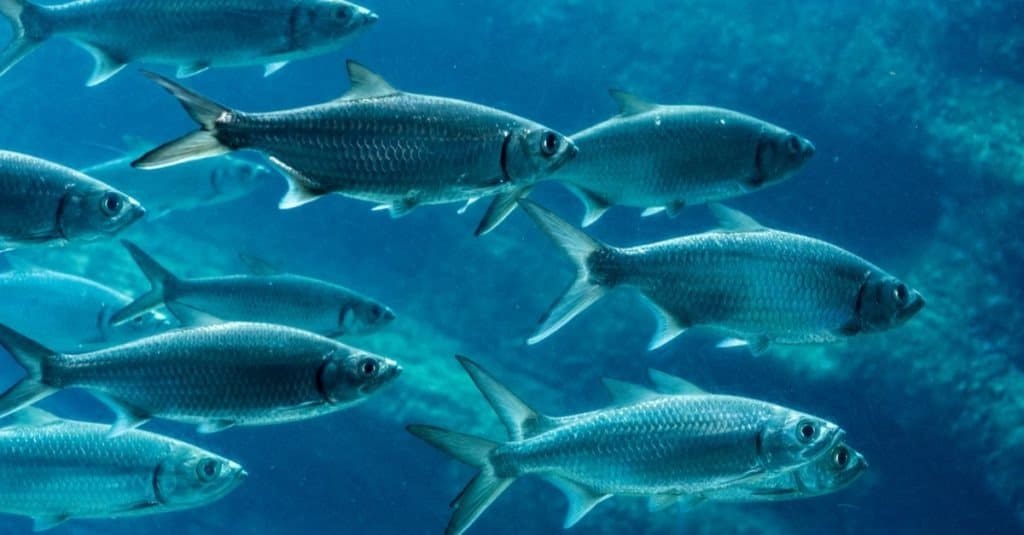
True sardines lack scales on their head and have very small dorsal fins.
©Dennis Forster/Shutterstock.com
Sprats and sardines look a lot alike at first glance; however, there are some key features that distinguish the two silvery fish. Sprats have blue and green on their backs; possess a single, fan-shaped dorsal fin; and their mouths come to a point.
Sardines are silver, green, and gold; have no scales on their heads; and they have a very small, triangular dorsal fin that resembles a shark’s tooth. True sardines also have reddish-brown flesh.
Sprats vs. Sardines: Diet
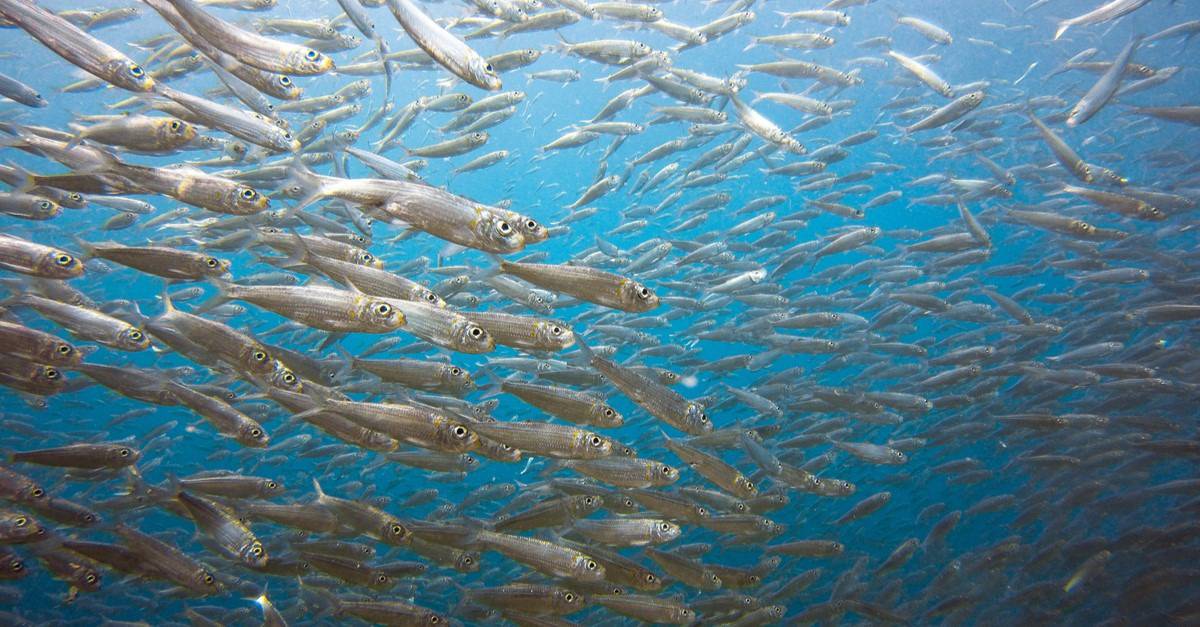
Sprats and sardines are important members of the food chain. These fish school in large groups, and they are eaten by larger ocean creatures. Since they are so small, sardines and sprats eat some of the smallest foods on the planet.
Sprats feed on plankton, as well as floating fish eggs. While generally sharing the same diet, sardines are known to favor zooplankton and phytoplankton, specifically.
Sprats and sardines are a staple in the diets of a number of carnivorous fish as well as humans. These tiny fish pack an omega-3 punch. A 100-gram serving provides 1.4-1.5 grams of omega-3s, which covers more than the recommended daily amount. Omega-3s are linked with decreasing chances of heart disease, improving brain and eye health, strengthens bones, help in muscle growth and repair, improves nerve function, and reduces inflammation and oxidative stress. Enjoy them in moderation!
Sprats vs. Sardines: Phylogenetic Family
Sprats and sardines both stem from the same phylogenetic family, Clupeidae; however, they belong to completely different genera.
True sprats belong to the Sprattus genus, and five different species of fish exist within that. The most common of the true sprats is the Sprattus sprattus, the European sprat.
Five genera of fish are considered sardines. These include Dussumieria, Escualosa, Sardina, Sardinella, and Sardinops. The Sardina pulchadus is considered the most common of the true sardines, and it may be the origin of the fish’s name. This fish’s common name is the European pilchard.
Twenty species of fish are considered sardines, including ones that do not belong to the Sardina family. In fact, many different fish that do not belong to the same genera as true sprats and true sardines are often included when people identify these creatures. Because the fish are small and hard to tell apart, they’re lumped together in larger groups. These small pelagic forage fish are used as bait, food for humans and animals, and more, so it’s easy to put them under umbrella terms like sprat, sardine, or herring.
Sprats vs. Sardines: Location
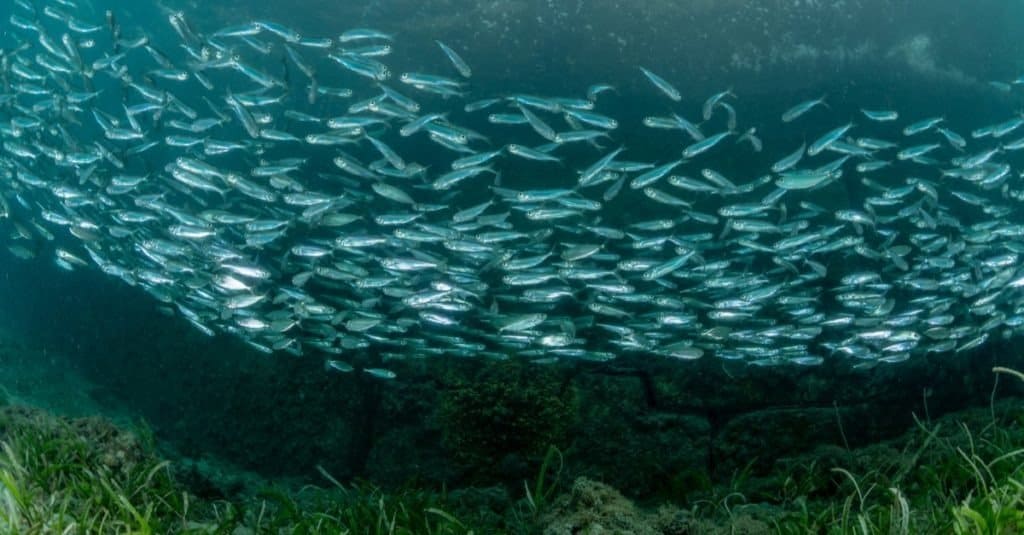
Sardines can be found around the world.
©divedog/Shutterstock.com
Between the two of them, true sprats and sardines are found all over the world. Sprats can be found in western Europe, Australia, New Zealand, the Baltic Sea, and near the Falkland Islands.
Meanwhile, sardines are located around the Americas, Europe, the Mediterranean Sea, the Black Sea, off the coast of Australia, off the coast of some parts of southern Africa, and widely in the waters of the Pacific and Indian Oceans.
Now that we’ve looked at sprats and sardines, you can see how similar these two types of fish are. As can be seen, though, they’re different in key ways. While it’s hard to quantify these differences across all species of sardines and sprats, you should now have a basic overview of what makes each fish unique.
Are Sprats like Anchovies?
In Scandinavia, the “anchovies” in tins are often flavored and preserved sprats, not actual anchovies. The name refers to the taste, not the fish. While they’re different fish, the spicing and storage make them quite similar.
Sprats are occasionally used as substitutes for other fish. Products labeled as anchovies, and even sardines, have sometimes been made from sprats since the 19th century. This happened when the real ones were harder to come by.
Sprats have a similar mild taste, making them easy to confuse with young sardines.