
Beetles are some of the most common insects in the world. Many of them share characteristics with other beetles. For instance, if you see a beetle with a large, horn-like structure on its head, it could be a stag beetle or a rhino beetle. How do you know the difference? Keep reading to learn the differences between the stag beetle and the rhino beetle.
Comparing a Stag Beetle and a Rhino Beetle
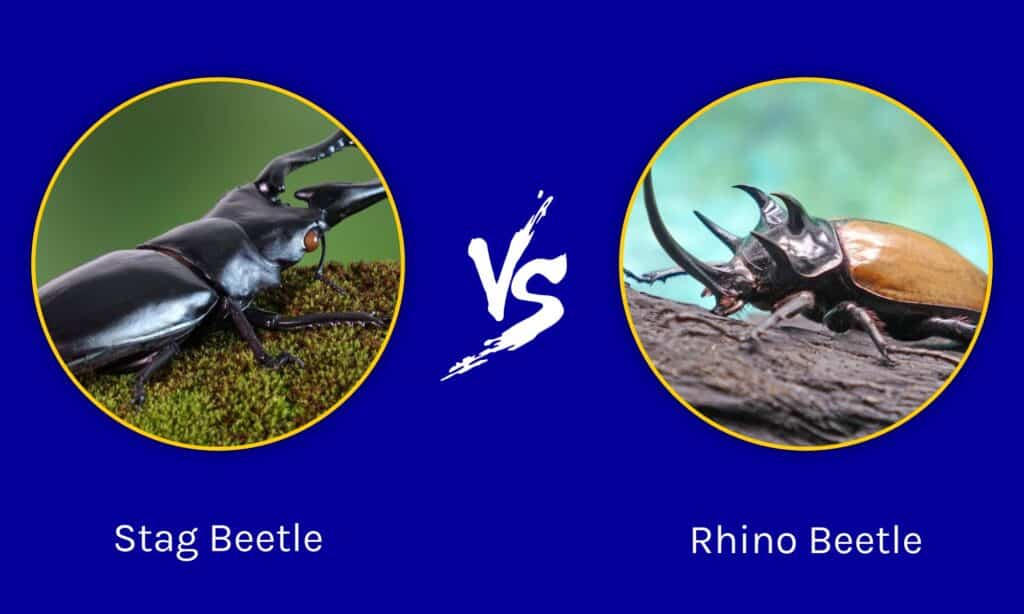
The table below lists some of the primary differences between stag beetles and rhino beetles.
| Stag Beetle | Rhino Beetle | |
|---|---|---|
| Size | Weight: Around 0.21 ounces Length: 1-3 inches | Weight: 0.2-1.2 ounces with an upper limit of 3.5 ounces Length: 0.5-3 inches, can reach 7 inches in the largest species |
| Physical Appearance | Known for their large mandibles; wide, segmented body; two pairs of wings; commonly brown or black, but can be red or green | Horn-like structures on heads; most are yellow, green, black, and gray; cylindrical body; two pairs of wings |
| Diet | Herbivorous; feather-like mouthparts; eat rotten wood in larval stage; adults don’t feed | Herbivorous; chewing mouthparts; larvae eat rotten wood; adults eat tree sap, some fruit, and nectar |
| Species | Lucanidae family; Aesalinae, Lampriminae, Lucaninae, and Syndesinae subfamilies; roughly 1,200 species around the world | Scarabaeidae family; Dynastinae subfamily; around 1,500 species of rhinoceros beetles |
| Distribution and Habitat | On every continent but Antarctica; found in many habitats, but tend to stay near wooded areas | Lives on all continents except Antarctica; can be found in wooded habitats, grasslands, and more |
The Key Differences Between a Stag Beetle vs. Rhino Beetle
The most significant differences between a stag and a rhino beetle can be found in their size, physical appearance, diet, species, and distribution and habitat. Take a closer look at each of these aspects in the following paragraphs.
Size
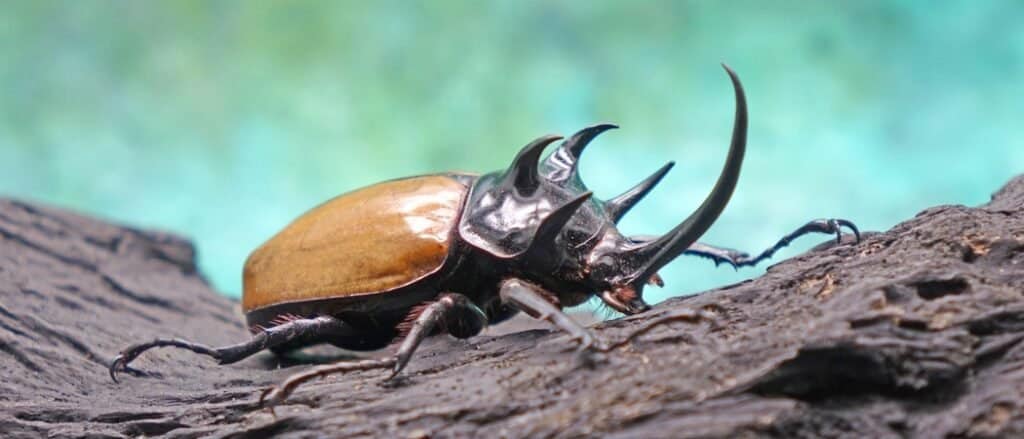
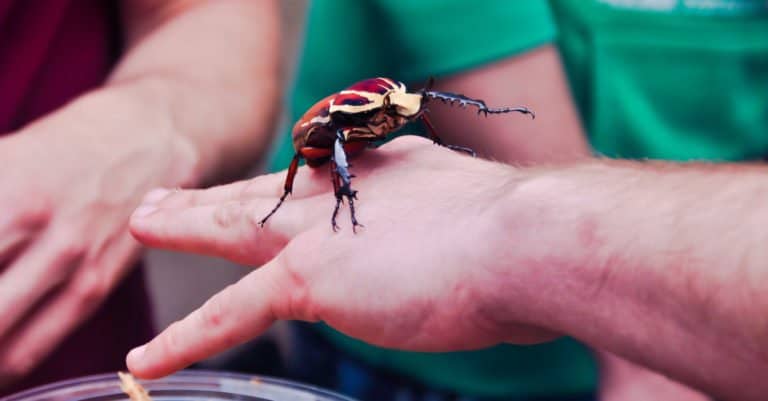
Rhino beetles are larger than stag beetles on average.
©Mark Brandon/Shutterstock.com
Rhino beetles are larger than stag beetles in most cases. The rhino beetle family includes the Hercules beetle and the Actaeon beetle, two of the largest beetles in the world by length and weight, respectively. The average rhino beetle weighs between 0.2 and 1.2 ounces compared to the stag beetle’s average weight of up to 0.21 ounces.
Rhino beetles are also longer on average. They typically measure between 0.5 and 3 inches in length, though some species can grow up to 7 inches. Stag beetles can reach up to 5 inches in length, including their mandibles, but most average around 2 inches.
Physical Appearance
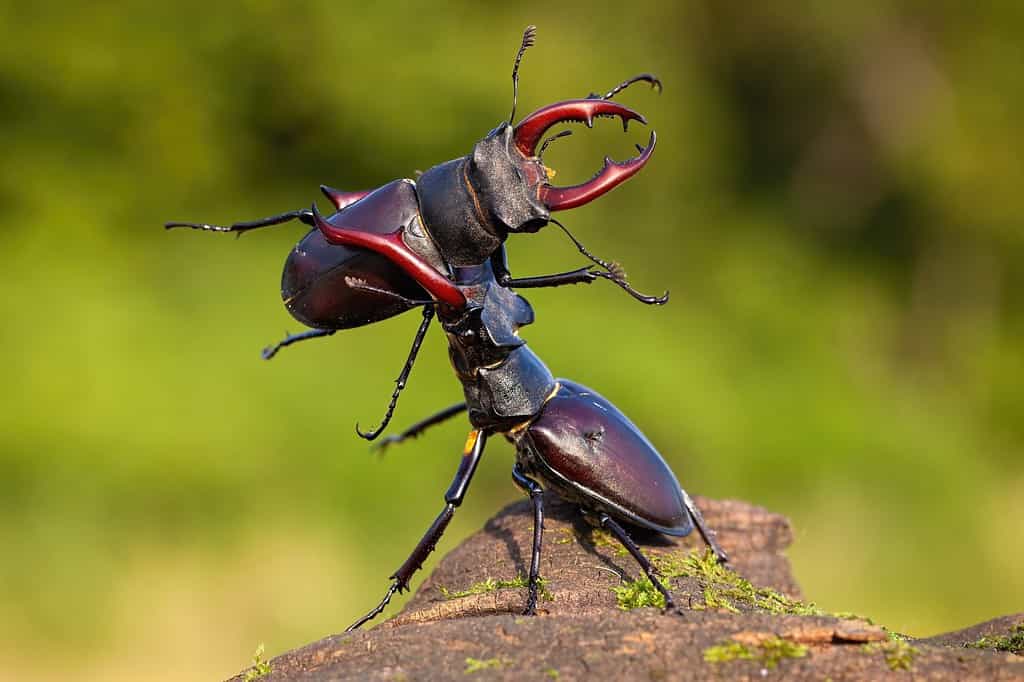
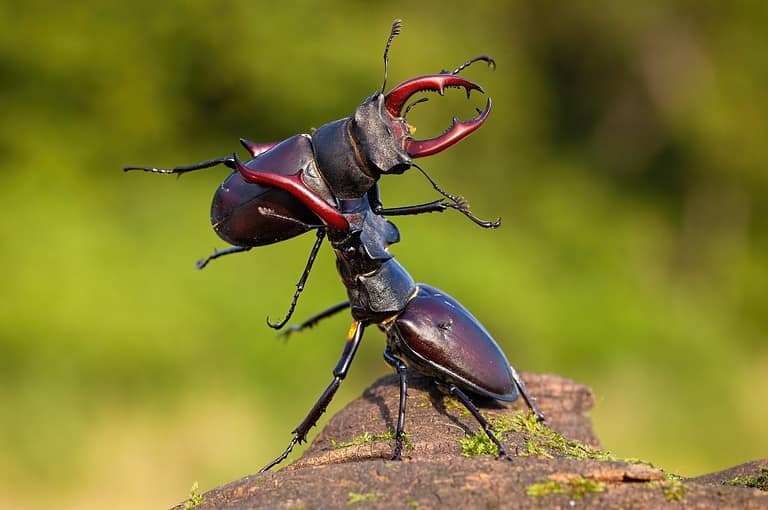
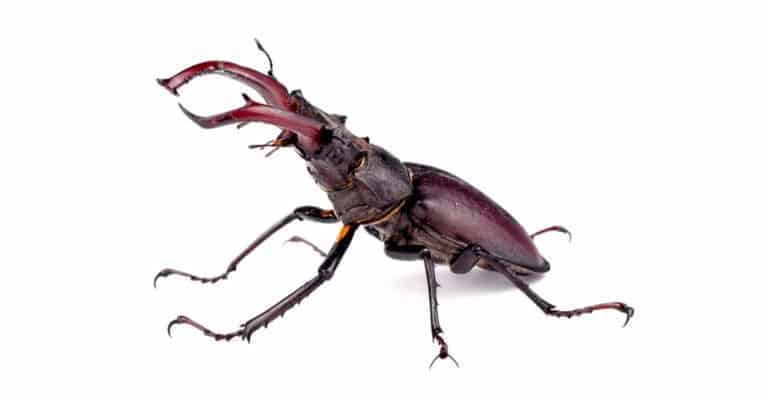
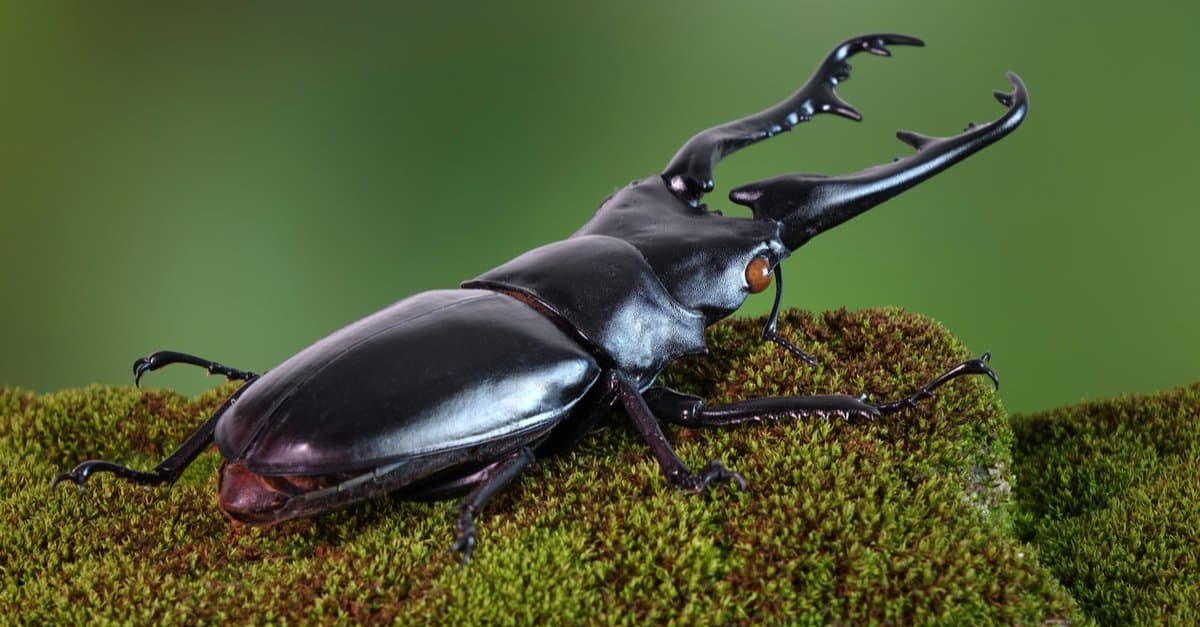
Stag beetles use their mandibles to fight off other males.
©WildMedia/Shutterstock.com
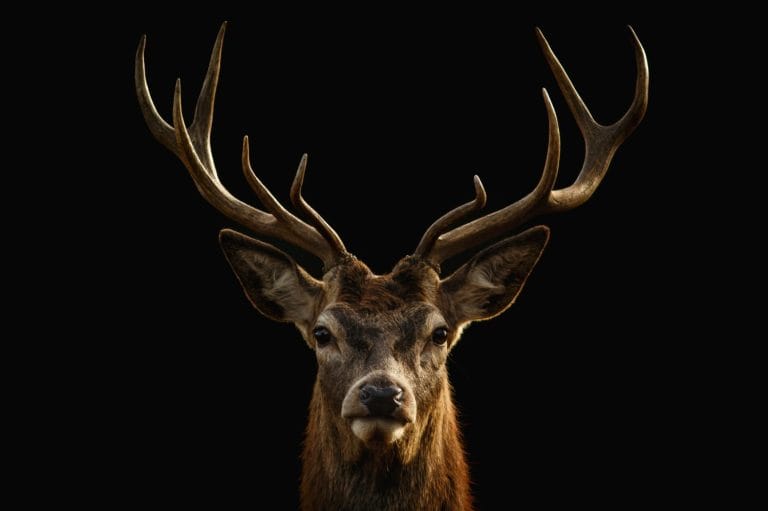
The stag beetle and rhino beetle are similar in that they have segmented bodies, four wings, chitinous exoskeletons, and similar colors. Stag beetles are usually brown or black, but they can also include colors like green and red. Each of those colors is found in the rhino beetle. Both beetles can fly. The primary difference is the structure on their heads. The male stag beetle has enlarged mandibles that it primarily uses to fight off other males trying to encroach upon its resources. The stag beetle’s name is derived from these mandibles, which are said to resemble a stag’s antlers.
Rhino beetles are known for the single large horn structure on their heads, which in some species can measure up to one-third of the beetle’s total body length. Like the stag beetle’s mandibles, these horns are also used to fight other males. Some horns curve from the top of the head toward the bottom, while others have a deep curl before curving upwards.
Species
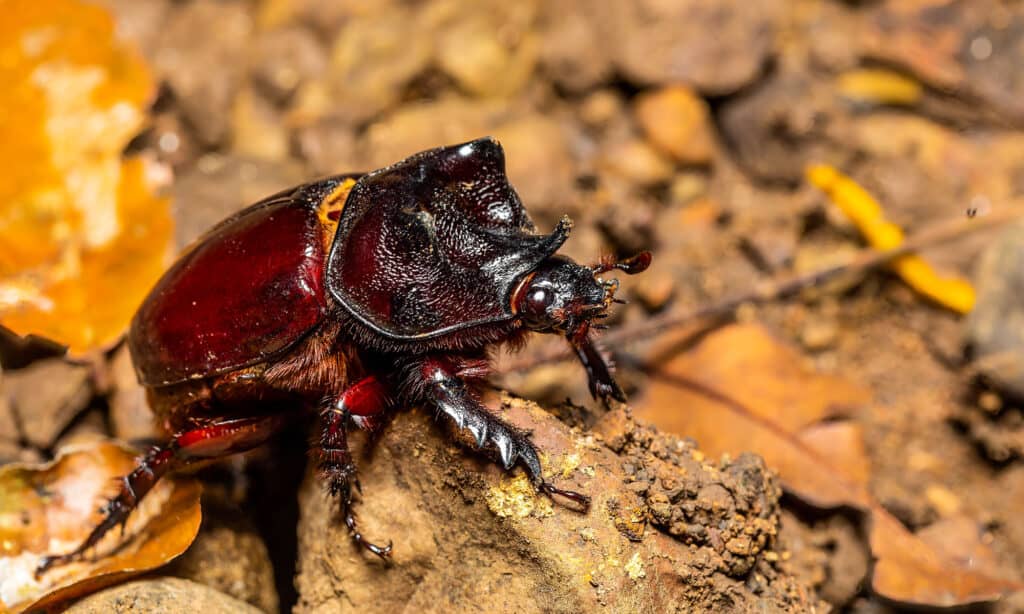
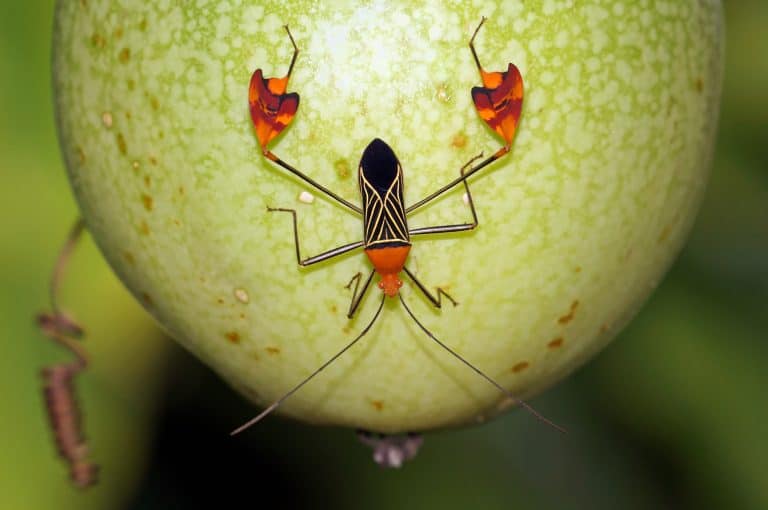
There are about 1,500 species of rhinoceros beetles.
©Artush/Shutterstock.com
The stag beetle comes from the Lucanidae family, but the rhino beetle comes from the Scarabaeidae family. Rhino beetles belong to the Dynastinae subfamily, and they have 1,500 species spread across 225 genera.
Stag beetles belong to one of four subfamilies, including the Aesalinae, Lampriminae, Lucaninae, and Syndesinae subfamilies. There are roughly 1,200 species throughout the world. However, both Lucanidae and Scarabaeidae belong to the same superfamily, Scarabaeoidea, which includes around 35,000 beetle species.
Diet
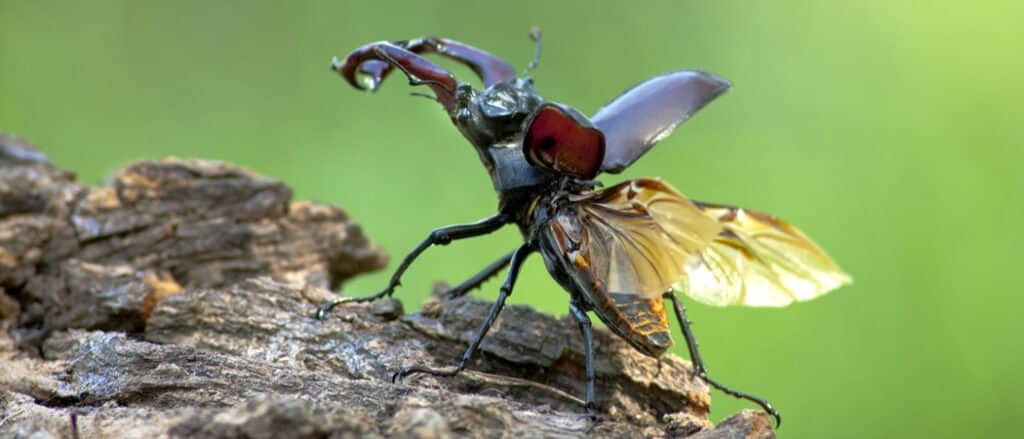
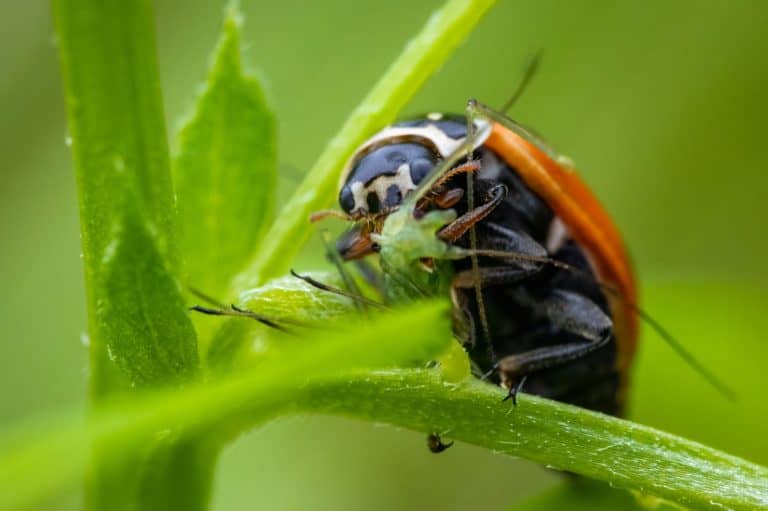
Adult stag beetles are focused on reproduction so they do not eat, instead depending on their fat reserves.
©Czesznak Zsolt/Shutterstock.com
Both beetles are herbivores. Stag beetle larvae consume rotting wood. As adults, stag beetles do not eat because they are focused on reproduction. So they primarily depend on the fat reserves they accumulated as larvae. However, they may occasionally drink tree sap or fruit juices using the feather-like mouthparts under their jaws, which are designed for drinking liquids.
Rhino beetle larvae also consume rotting wood, as well as leaf litter. Although adult rhino beetles also rely on their fat reserves and have low nutritional requirements, they feed on tree sap, nectar, and soft fruits. Unlike stag beetles, rhino beetles have chewing mouthparts they use to cut into trees to access sap. For example, the coconut rhino beetle burrows into the stems of coconut palms, oil palms, and other palm species to feed on the sap.
Range and Habitat
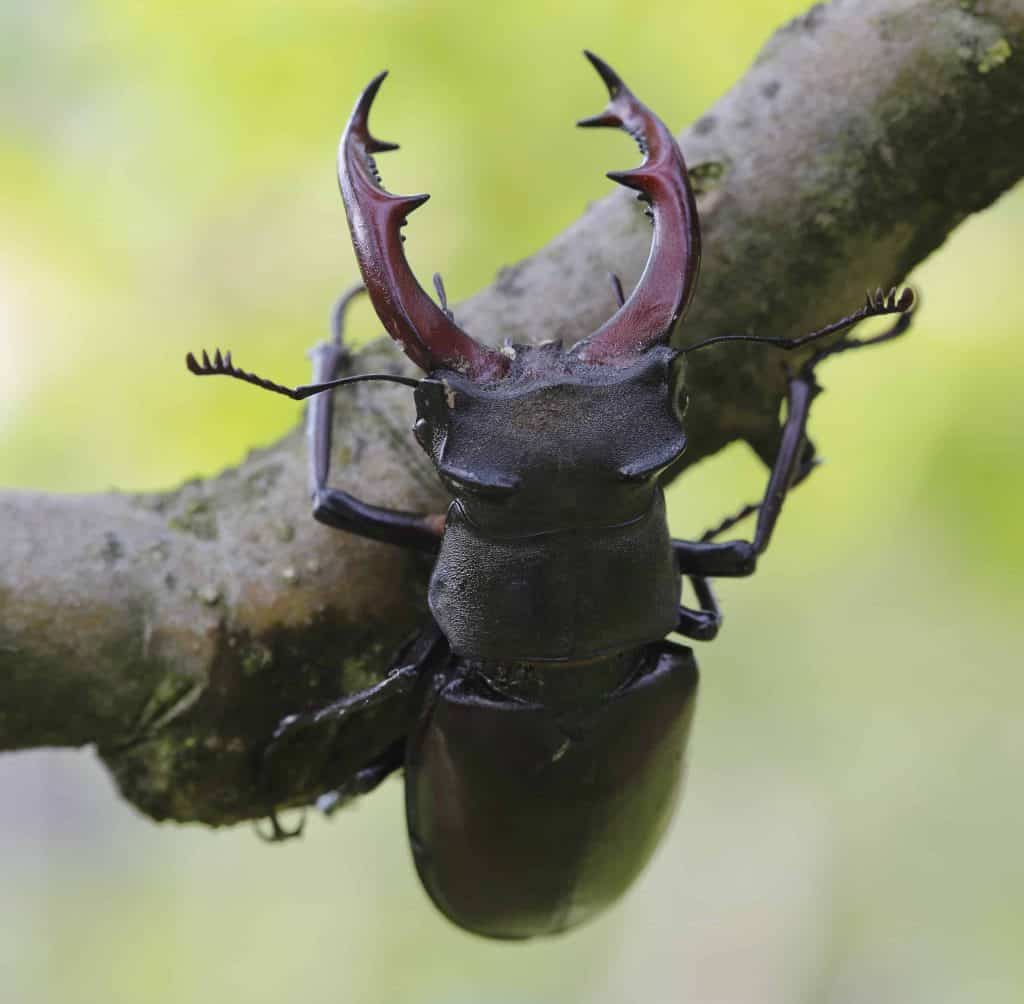
The elk stag beetle, also called the giant stag beetle is native to the U.S.
©iStock.com/Lukasok
Both the stag beetle and rhino beetle are found throughout the world, except for Antarctica. Noteworthy stag beetles, such as the elk stag beetle, the European stag beetle, and the Giraffe stag beetle, are found in the U.S., Europe, and Asia, respectively. The most well-known rhino beetle, the Hercules beetle, is found in southern Mexico, Central America, South America, and the Lesser Antilles.
Both species prefer to live in forests and other woodland areas, but they can also be found in grasslands, rainforests, and even deserts. Stag beetles require damp, decaying wood for their larvae and loose soil for females to lay their eggs. Rhino beetles also require damp climates, but they need a deep substrate of moist, rich organic material, where the female can burrow to lay her eggs.
Overall, size and physical appearance are the easiest ways to distinguish between these two beetles. However, there are other differences as well. By examining these insects closely, you can likely determine which beetle you are observing.