
Quick Take
- Black and greater one-horned rhino populations have increased significantly following decades of conservation efforts.
- White rhino numbers are declining again despite the species' impressive recovery from historic lows. White rhino population trends →
- Sumatran and Javan rhinos face severe threats from tiny, fragmented populations and continuing poaching. Northern white rhino survival efforts →
- Conservationists are using anti-poaching measures, dehorning, translocation and habitat restoration to protect the world's remaining rhinos. Humane dehorning explained →
There are just five surviving species of rhino left in the world, but their populations are in very different states. Some species are continuing to grow thanks to years of protection, yet others remain dangerously close to extinction. However, even those that have made significant steps towards recovery remain in a perilous position due to poaching and habitat loss. Let’s take a look at how each of these species are doing and see which ones are most in need of protection.
Black and Greater One-Horned Rhinos Are Recovering
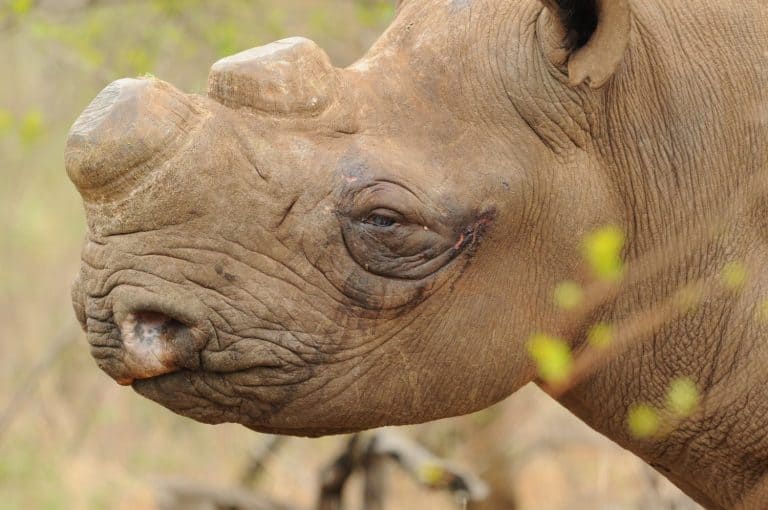
There are signs of hope for two species of rhino: black rhinos and greater one-horned rhinos. Populations of these species are currently increasing. Black rhinos are still classified as a critically endangered species by the IUCN. However, their numbers have more than doubled since the start of the 21st century, following a massive decline during the previous decades.
By 1970, there were around 65,000 black rhinos in Africa, but widespread poaching reduced the population to just 2,300 by 1993. Since then, a combination of conservation strategies, including anti-poaching measures, have helped the population to gradually recover. Currently, roughly 6,788 black rhinos live across twelve countries in Africa. However, it is estimated that the population could reach almost 9,000 by 2032.
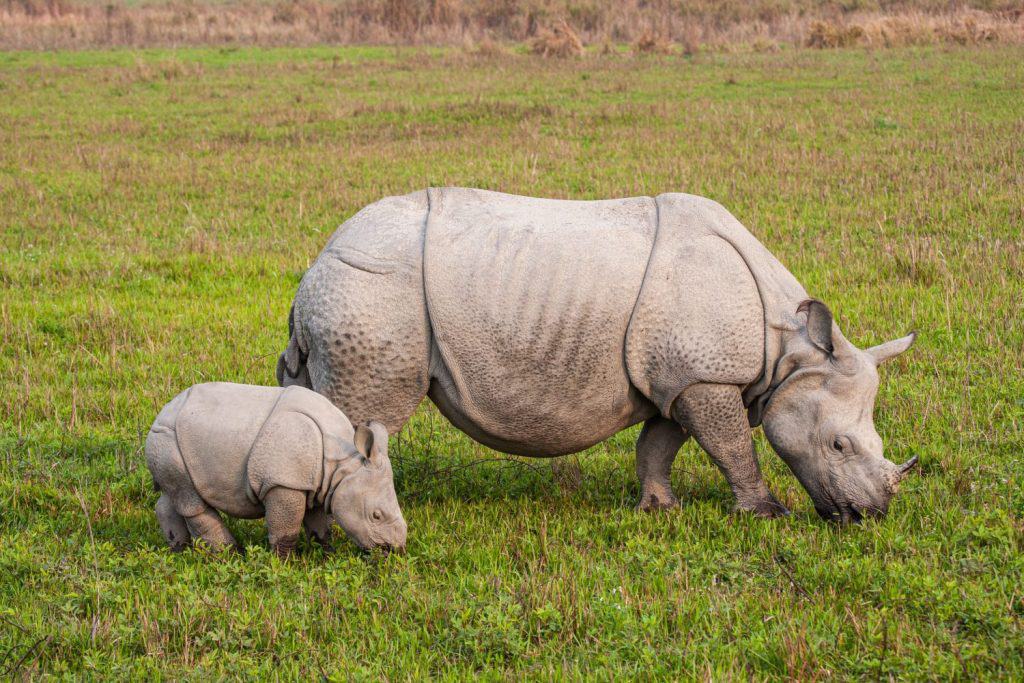
Greater one horned rhinos have one of the most impressive rhino recoveries.
©Wayne Marinovich/Shutterstock.com
Greater one-horned rhinos in Asia have had a similar recovery after being hunted almost to extinction. By the early 1900s, there were just 100 to 200 greater one-horned rhinos left. However, strict protection measures have managed to help the species recover to a current population of approximately 4,075 individuals. The species is still classified as Vulnerable by the IUCN, and poaching remains the greatest threat, but their recovery is widely regarded as one of the greatest rhino success stories.
White Rhinos Are Declining
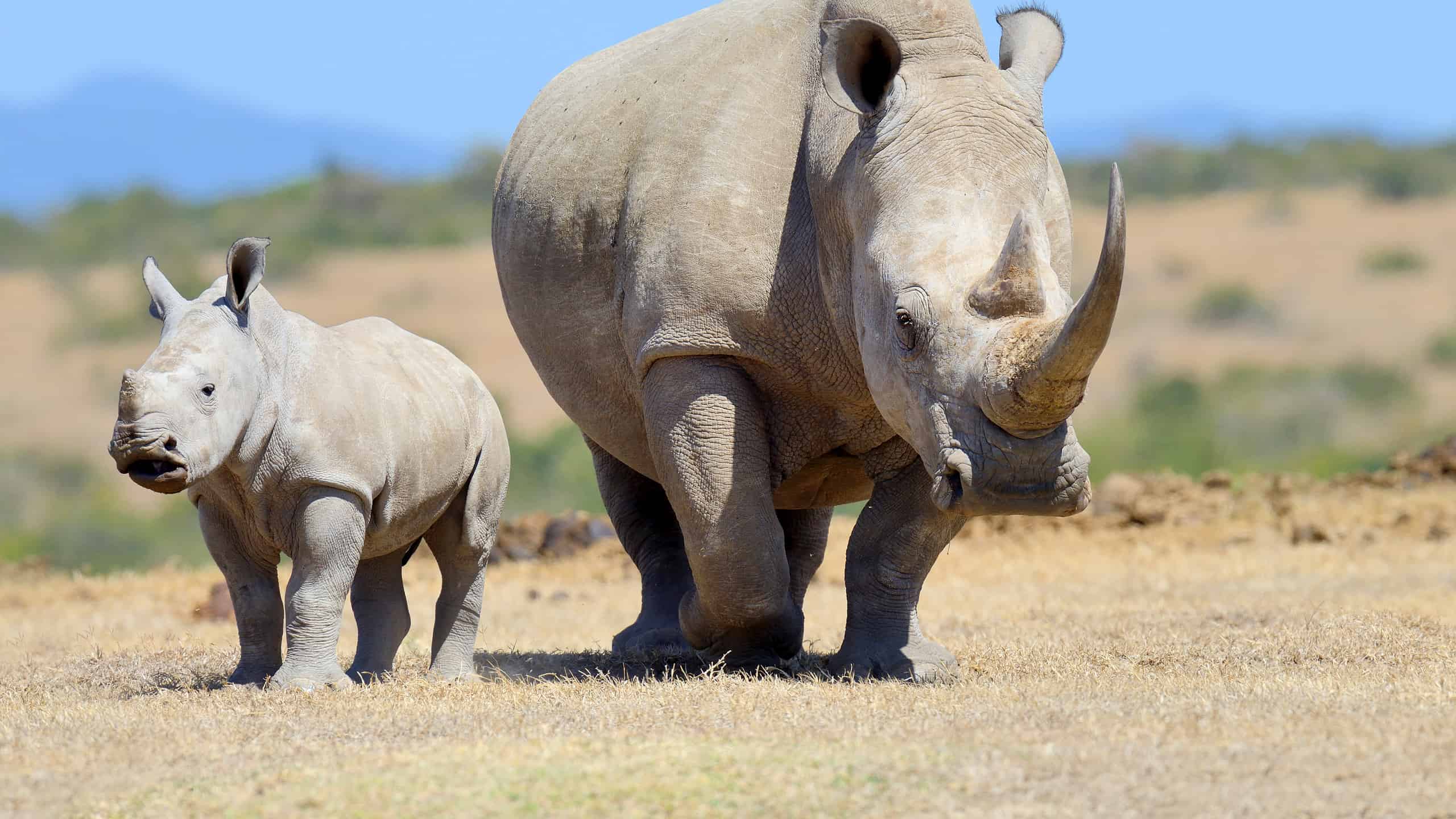
Unfortunately, the successes of the black and greater one-horned rhinos don’t carry over into all of the other species. Despite white rhinos having the greatest total population, which currently stands at an estimated 15,752 individuals, their population is actually declining.
White rhinos weren’t always the most populous species, though. They had dropped to less than 100 animals in the early 1900s, after the species was decimated by poaching. Conservation efforts saw the population reach a high of more than 20,000 by 2012, but they are once again being targeted by poachers.
There are two subspecies of white rhino – the northern white rhino and the southern white rhino – and the two have very different fates. Southern white rhinos make up almost all of the population, with just two northern white rhinos remaining. The pair are two related females, with the last male having died in 2018. This makes the population functionally extinct. Scientists are trying to create northern white embryos from genetic material to transplant into southern white rhino surrogates. However, the venture has been unsuccessful so far.
Why Are Sumatran and Javan Rhinos So Vulnerable?
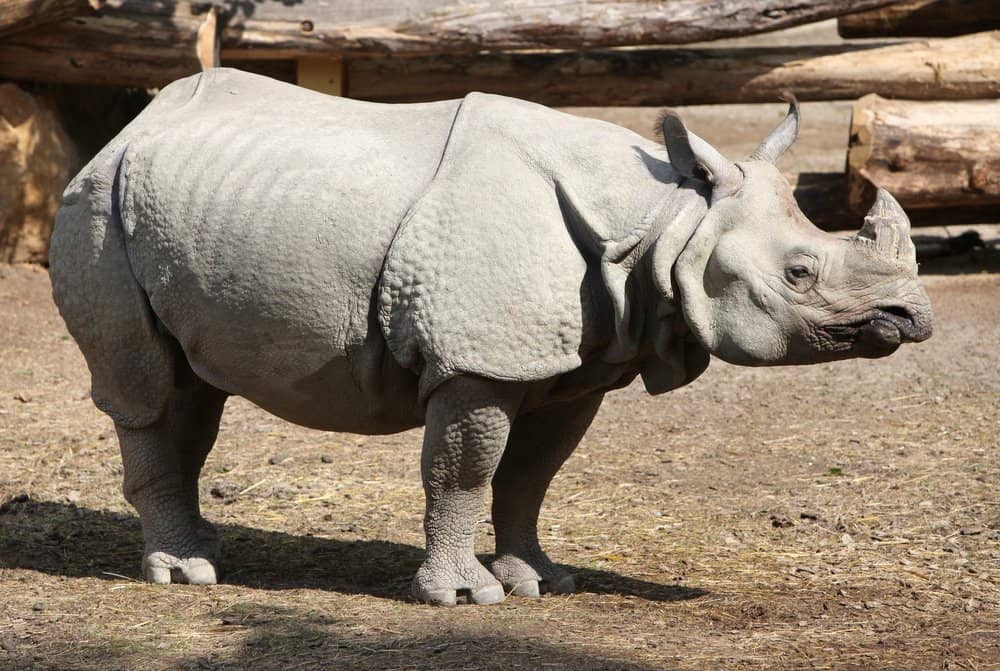
Javan rhinos could be extinct in fifty years.
©Reinhold Leitner/Shutterstock.com
Unfortunately, the two species of Asian rhinos with the smallest populations are in the worst position of all of the remaining rhino species. Sumatran and Javan rhinos are both classified as critically endangered by the IUCN. There are only around 34 to 47 Sumatran rhinos remaining. However, the population has become extremely fragmented. As a result, they live in four isolated populations across the islands of Sumatra and Kalimantan. Fragmentation is a serious concern for Sumatran rhinos because it means that there are fewer opportunities to find mates. Only one of these four populations is likely large enough to be viable long-term.
Javan rhinos are in a similar perilous position, with an estimated population of just 50 individuals. Javan rhinos live only in the Ujung Kulon National Park in Indonesia and face several threats. Poaching is again one of the most significant, with around 26 Javan rhinos killed between 2019 and 2023. The killings have resulted in fewer females than males, which makes reproduction difficult. Also, the population is now so small that it lacks genetic diversity. This raises the risk of health problems from inbred animals. As a result, it is estimated that Javan rhinos could become extinct within the next fifty years unless there are effective protection measures in place. Even then, it may not be enough to save them.
What Is Being Done to Save the Rhinos?
The latest global estimate puts the combined population of all five rhino species at 26,700. Although black rhinos have made good steps forward, the overall position of rhinos is still very much unstable. Rhinos face several different threats, meaning there is no single solution that will save them. However, poaching remains the greatest threat they collectively face. Increased anti-poaching patrols are one way that conservationists are trying to protect rhinos. However, another strategy is humane dehorning, which removes the incentive for the poachers to hunt and kill the rhinos. Rhino horns grow continually, though, so even when removed, they do eventually grow back.
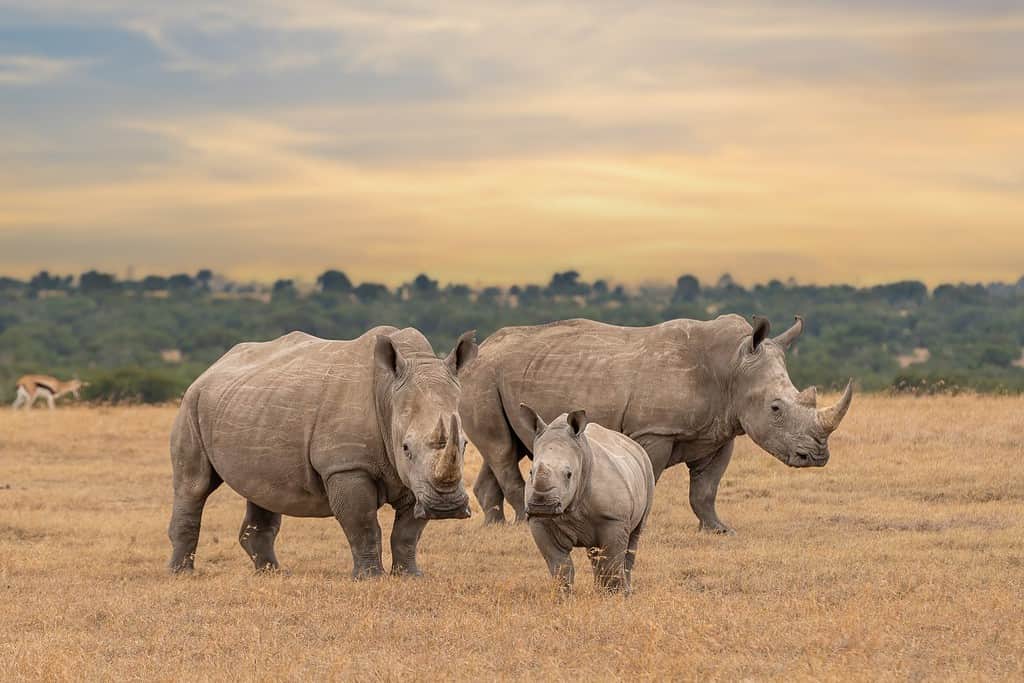
Translocation is just one method used to help rhino populations recover.
©Tomas Drahos/Shutterstock.com
Translocation is another method that is being used to help rhinos. Rhinos are absent from a lot of their historic ranges. However, translocation involves capturing rhinos from healthy populations and moving them to new locations where they used to exist. This allows them to breed and establish a population in the new area. Translocation has several benefits. It can help with fragmentation, especially if the population has become too large for the area that it is currently in. This is especially beneficial as rhinos are extremely territorial and can fight amongst themselves if they don’t have a large enough range.
Habitat restoration is also an important part of protecting the rhinos, as habitat loss is a major threat, particularly for the Asian rhinos. If their habitats continue to shrink, then the populations will be left with even less land to live on. Restoration may be just as important as protection, since new wildlife corridors can reconnect fragmented populations.