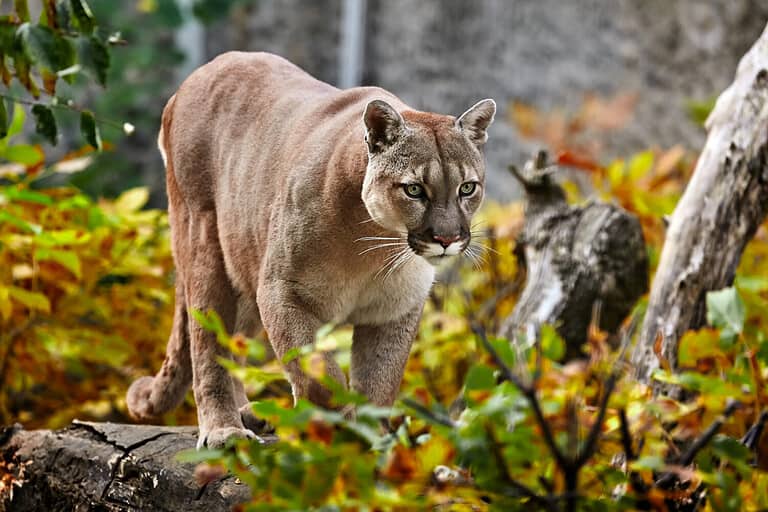

It’s sad to note that cougars‘ numbers in North America have decreased significantly from historic levels. Strong, lithe, and potentially ferocious, it is easy to understand that prior generations found the cougar an intimidating animal. Humans sought to reduce their numbers out of fear for their own lives or those of their livestock. As we seek to increase cougar numbers, there are now many places where the species is protected. However, their conservation was not as much of a priority back in 1979. That’s the year the largest cougar ever caught was hunted in British Columbia by a hunter named Douglas E. Schuk.
Cougars: Nearly the Biggest Big Cats in America
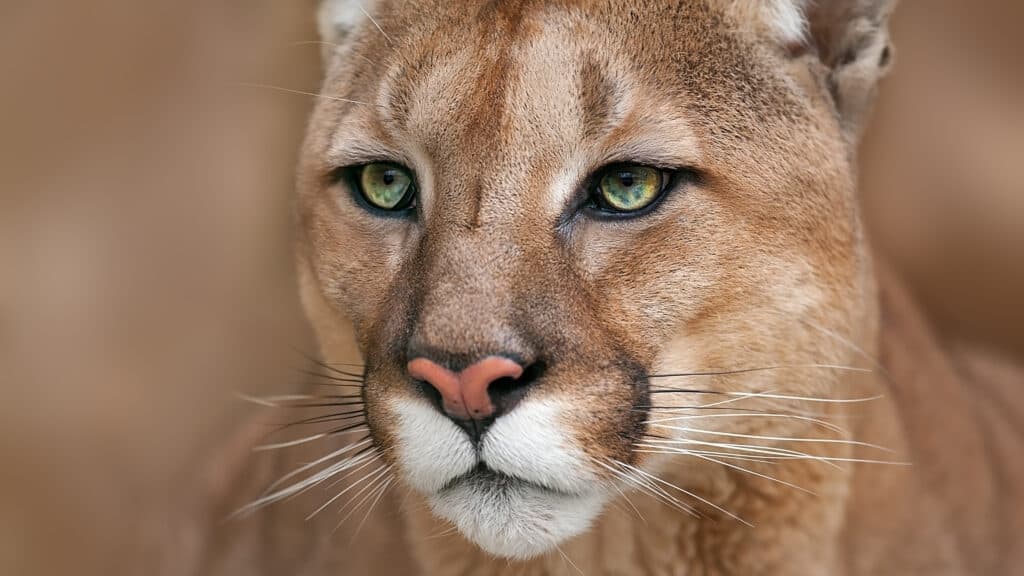
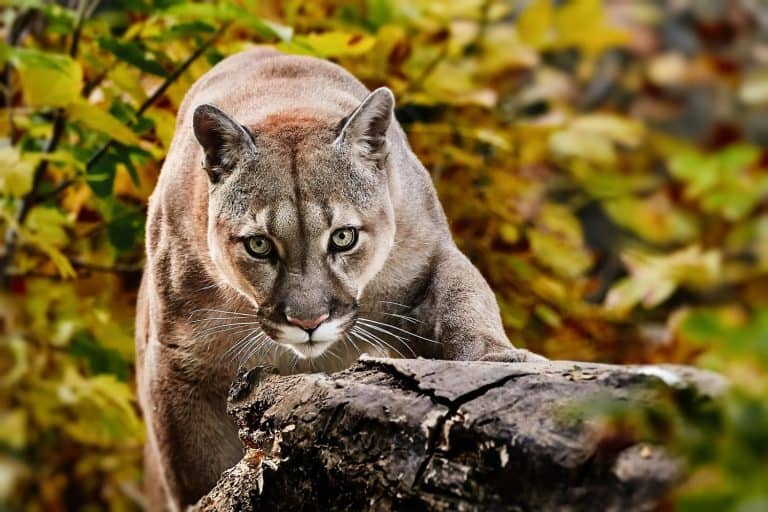
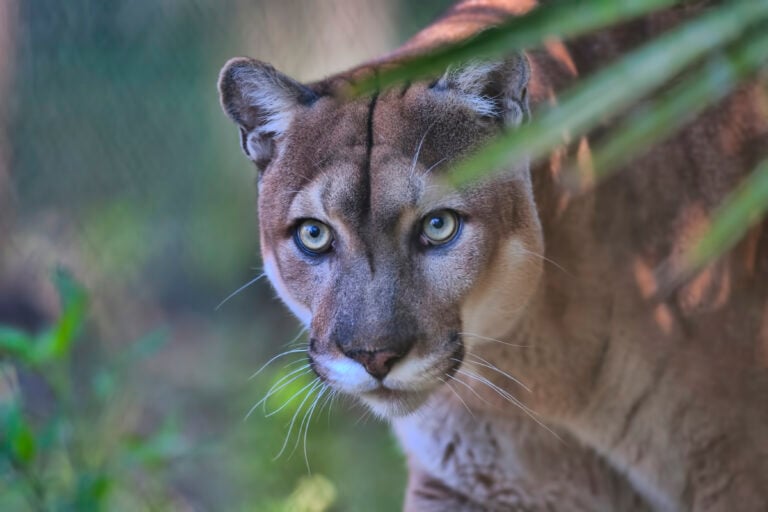
Cougars usually grow from 5 to 9 feet in length.
©iStock.com/Nemyrivskyi Viacheslav
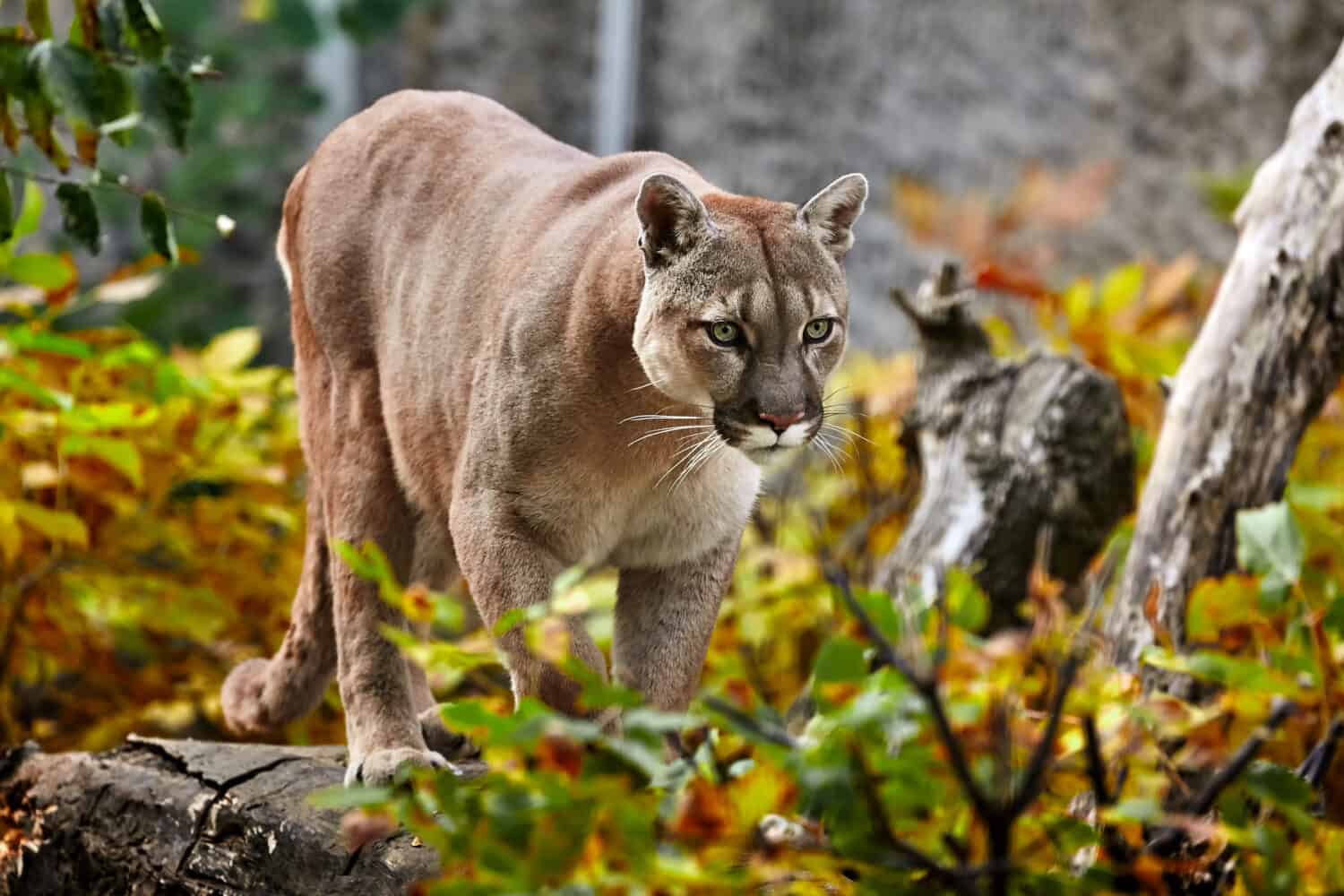
The cougar (Puma concolor) is the second-largest feline on the North American Continent. They’re second only to jaguars, which cross into the Southwestern U.S. every so often. Also known as mountain lions, pumas, panthers, and even catamounts, cougars are sleek, powerful, and hardy. They have been heavily hunted by humans throughout American history.
As with many rare animals, some cougars living in the expansive parks around Hollywood have become local celebrities. Like coyotes, these cougars roam into Hollywood neighborhoods at night and can be something of a nuisance. They can definitely be deadly to small or even mid-sized pets left unattended. However, Los Angeles expressed an outpouring of grief at the death of P-22, a cougar who had been tagged by scientists and whose movements residents followed with fascination.
The cougar is a large cat and a near-apex predator that, for centuries, has preyed on livestock and occasionally attacked humans who crossed its path. We have not always successfully coexisted with these big cats — to the detriment of their numbers. Yet there is a tradition of hunting and capturing cougars with an eye to self-preservation. The most intimidating such specimen was a cougar of record-setting size, captured all the way back in 1979.
The Typical Cougar’s Size
Adult male cougars can reach around 150 pounds, although some large individuals can weigh up to 180 pounds. They typically measure between 7 and 8 feet in length from the nose to the tip of the tail. They stand about 2.5 feet tall at the shoulder. Adult female cougars generally weigh around 100 pounds, rarely exceeding 110 pounds.
The Largest Cougar Ever Caught
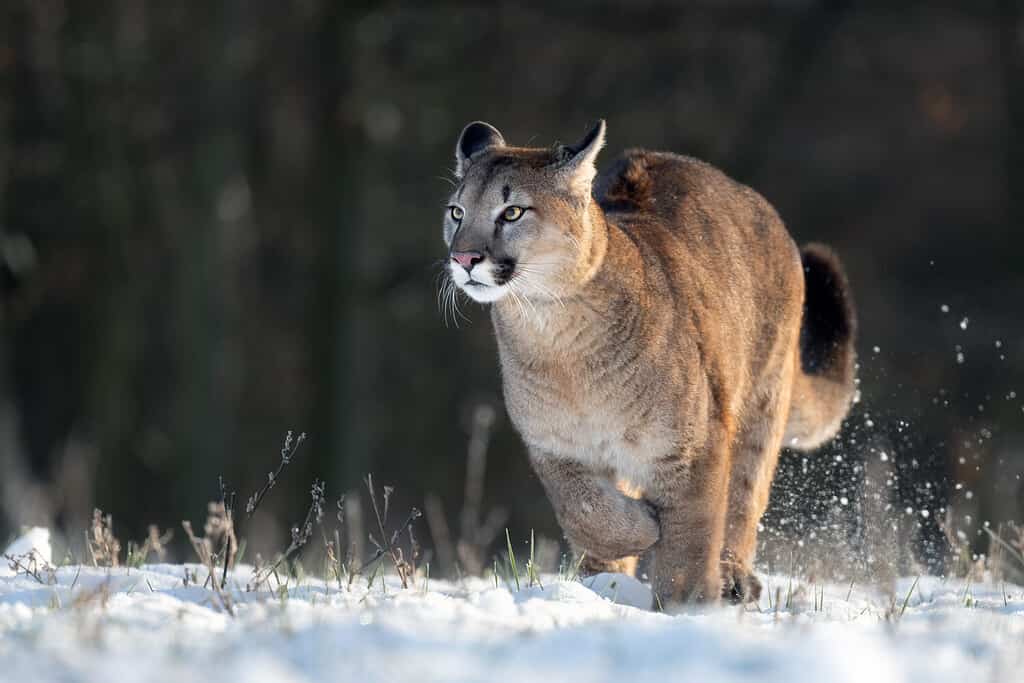
The heaviest cougar on record was said to have weighed 276 pounds.
©eumates/Shutterstock.com
Imagine veteran hunter Douglas E. Schuk’s shock when, hunting Tatlayoko Lake in the snowy British Columbian woods in the late ’70s, he encountered a large, adult cougar. Although he was hunting with a pack of well-trained dogs, Schuk noted that a cat of that size could easily kill one of his animals with a single swipe of his claw.
Schuk killed the record-setting cat with a .308 rifle in a single shot. He hunted with hounds that held the cat at bay. Once his quarry was weighed and measured by the Boone & Crockett Club, it was found to surpass the world-record mountain lion hunted the previous decade in Utah. The skulls of hunted animals are measured on a point system. While the Utah cougar’s skull scored 16, Schuk’s Canadian mountain lion’s skull scored 16 4/16.
Only the skull is measured by the Boone and Crockett Club when determining the world record, so the cat’s weight is unknown. The National Park Service states that the heaviest cougar ever caught weighed 276 pounds, but the date and location are not provided.
Other Record-Holding Cougars of Note
Schuk’s record was almost matched on a 1988 hunt in the Selway-Bitterroot Wilderness of Idaho. Gene R. Alford embarked on a hunt that saw him alone in these wilds for over a month. Although the cat Alford bagged missed Schuk’s record by one sixteenth of an inch, the Boone and Crockett Club gave Alford a special award — the Sagamore Hill Award — because his hunt had shown integrity, grit, and what hunters call “fair chase.”
The very first record-setting cougar was hunted by none other than President Theodore Roosevelt, the great outdoorsman and preservationist president. He was an avid hunter so associated with bears that the child’s Teddy Bear is literally named after him. Roosevelt took an immense cat outside of Meeker, Colorado in 1901. It scored 15 12/16 points, which is not so far from the current record set in 1979.
A Protected Species Today
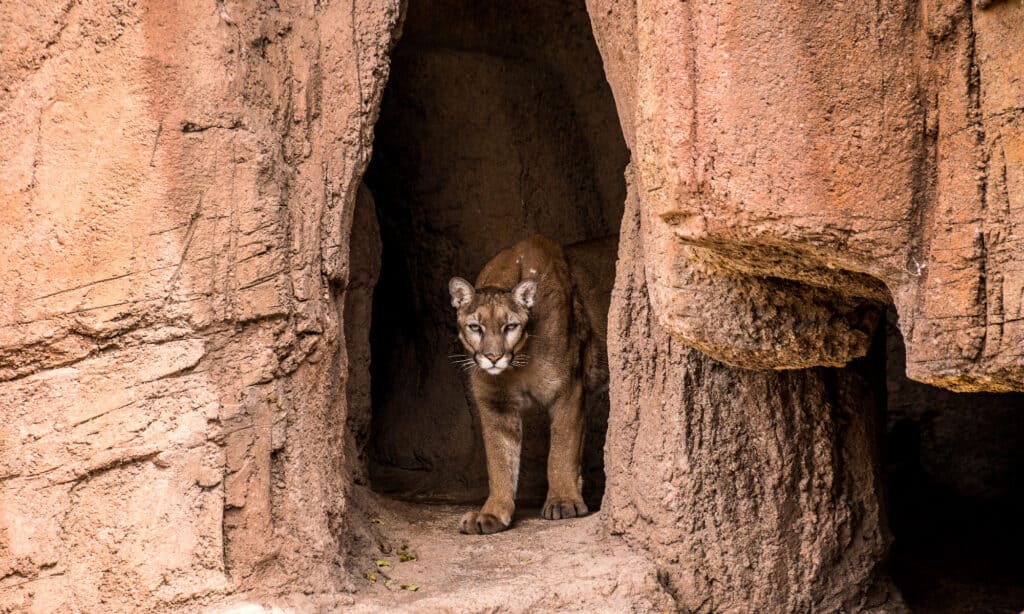
Cougar protections vary widely by state.
©Susan E. Viera/Shutterstock.com
Cougars were nearly wiped out in North America as human beings encroached further into their territory. Protections for mountain lions vary widely from state to state. While cougars are found in 15-17 states, only a few, such as California, offer full protection. In most states, they can still be legally hunted. Cougar populations in the U.S. are stable now, although they are obviously much lower than in the past. There are currently estimated to be between 20,000 and 40,000 cougars in the wild in the United States.
Cougars require a large habitat to roam, which can present a challenge to those attempting to preserve their way of life. They need 13 times the space to roam that a black bear would. The benefit of this is that mountain lions are considered an “umbrella species,” so protecting their habitat also safeguards countless other plants and animals.