
Quick Take
- Some of what cows eat comes straight from the candy aisle and the brewery, and this is completely intentional. Explore the surprising ingredients →
- Cows spend more time on one specific digestive behavior each day than most people spend at work. See how cud chewing works →
- A cow's saliva does something that directly affects how much milk or meat it produces, and most people have no idea about this. Discover saliva's role →
- Farmers deliberately mix every ingredient a cow eats into one meal, and skipping that step causes more problems than you'd expect. Learn about the TMR method →
Have you ever wondered what cows actually eat? Whether you’re curious about how they are raised or you want a better understanding of where your meat and dairy come from, a cow’s diet plays a bigger role than many people realize. Here’s what cows eat and how their diet impacts what they produce.
What Is in a Cow’s Diet?
Globally, 86% of livestock feed, including feed for cattle such as beef and dairy cows, is made up of materials humans don’t eat. This includes grasses, crop residue, and by-products from food processing. One major part of a cow’s diet is silage, which is grasses, alfalfa, or corn that has been fermented in silos. Cows also consume large amounts of hay, either dried grass or alfalfa. Another major component of their diet is pasture grasses, such as fescue, orchard grass, and bermuda grass.
Cows also eat byproduct feeds, which can include:
- Bakery waste from items such as stale bread and donuts
- Candy waste from sweets such as gummy candy and chocolate
- Corn gluten feed from the syrup in soda made of corn
- Soybean meal from cooking oil made of soybeans
- Brewers grains from beer (specifically barley and hops)
- Citrus pulp from the juice of fruits such as oranges, lemons, tangerines, and grapefruits
- Cottonseeds from the cotton used to make clothes
- Beet pulp from the sugar in sugar beets
The Biology of Cows
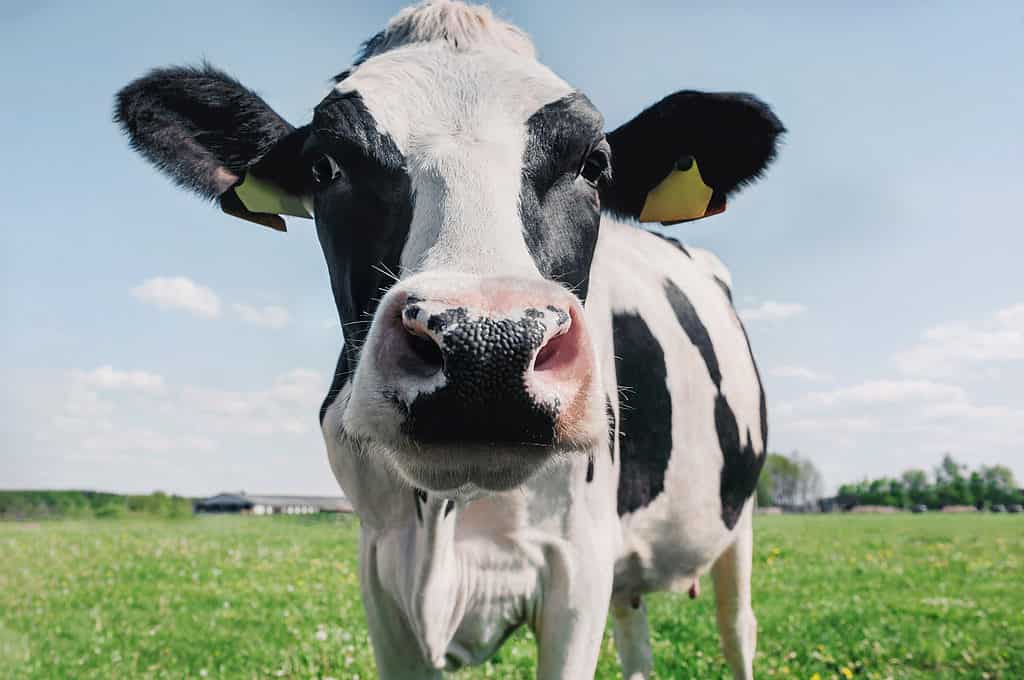
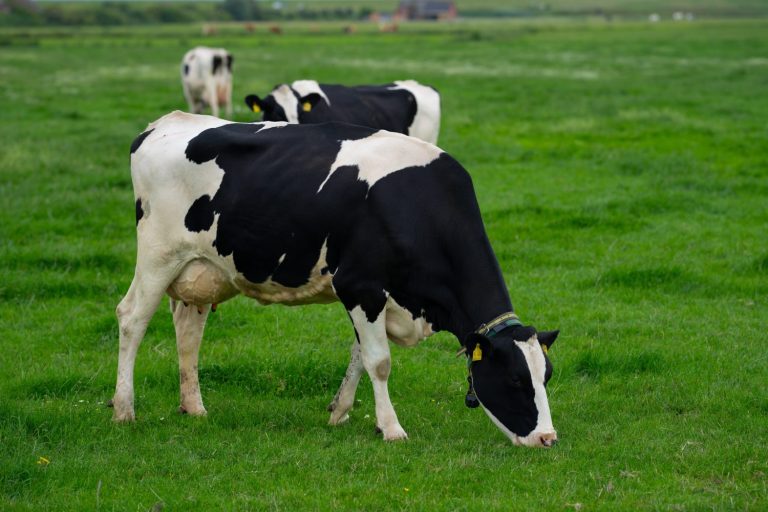
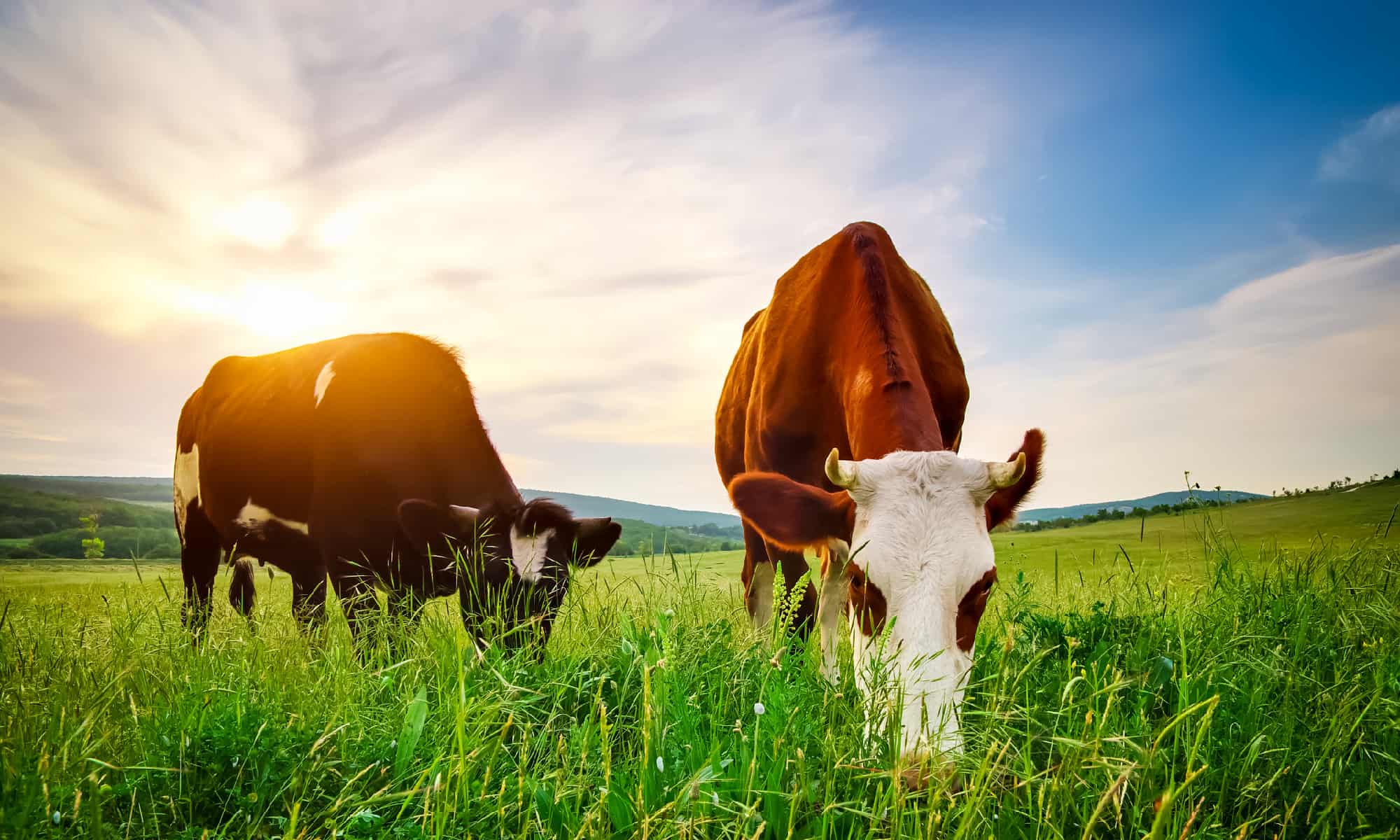
Cows graze most of the day and spend the evenings eating and digesting the food they ate during the day.
©Alena Demidyuk/Shutterstock.com
Cows have a rumen, which is the first of the four chambers of a cow’s stomach. Animals that have a rumen are called ruminants. Sheep, goats, and many other hooved animals are also ruminants. The rumen contains bacteria and other microorganisms that break down tough plant fibers so the cow can digest its food. First, the cow eats the feed, then it regurgitates the cud, which is food that has been partially digested and softened.
Cows re-chew the cud to more thoroughly break down the plant fibers. This helps them absorb more nutrients from their food during digestion. Cows spend nearly 8 hours a day chewing their cud. Researchers say cow saliva also contains a natural antacid that protects the rumen, allowing the cow to digest its feed better. This also helps cows eat more, which can help dairy cows produce more milk and beef cows extract the maximum energy for optimum growth. When a cow is chewing its cud, that is a sign that it has a healthy diet with plenty of fiber.
How Much Do Cows Eat?
According to the USDA, cows eat more than 100 pounds of feed every day. They also drink 30–50 gallons of water each day, which is roughly the equivalent of a full bathtub or a typical household water heater tank.
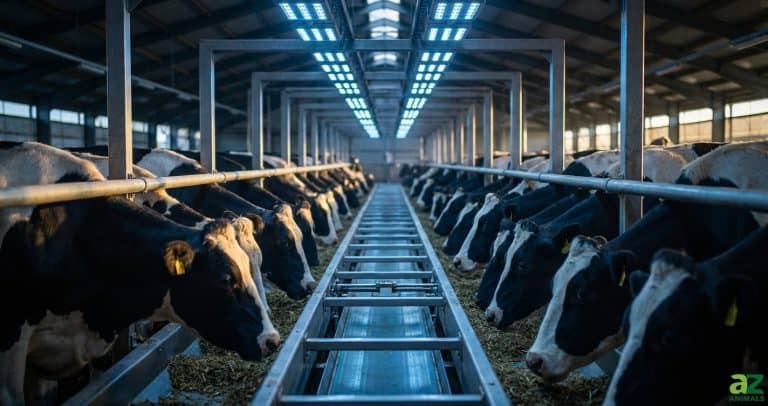
Cows often eat a meal that is called a total mixed ration (TMR). This is formulated to meet specific nutritional requirements and includes all the feed a cow needs, such as forages, grains, protein sources, vitamins, and minerals. TMR provides the nutrients cows need for growth, milk production, and reproduction.
Farmers use large mixers to blend all the feed together to ensure that each cow gets a balanced diet in every bite. It also lowers their risk of digestive issues, optimizing rumen feed digestion and stabilizing rumen pH. This method is also more efficient, as it maximizes feed use and eliminates waste.