
Quick Take
- Over 70 deer now walk into this man's garage on demand, yet wildlife experts say his good intentions may be doing serious harm. See the garage scene →
- Feeding deer corn seems harmless, but there's a specific biological reason it can turn deadly for them. Understand the digestive risks →
- The deer aren't becoming tame, and the distinction between what's actually happening to them matters more than most people realize. Habituation vs. tameness explained →
- There's a legal line Lynn Smith may be crossing, and it depends entirely on where exactly he lives. Check the legal restrictions →
Seeing wild animals calmly approach a person can feel like a rare connection. Still, appreciating animals also means recognizing when human feeding begins to change their natural behavior. The video above shows dozens of deer gathering around a neighborhood resident who has become a familiar source of food.
White-Tailed Deer Gather at a Texas Home
Texas resident Lynn Smith, known online as the “Deer Whisperer,” began encountering the animals with his wife during regular walks near their Lake Travis-area home early in the COVID-19 pandemic. Smith has said the deer moved a little closer each day, and he eventually began feeding them. By early 2022, he said more than 70 deer were visiting. On his YouTube channel, Deer Whisperer Lynn Smith, he shares videos of deer gathering around him, eating from his hand, and occasionally stepping inside the garage or house. The scenes are striking. The feeding itself is where things get complicated.
Herd of Deer Looking for Food
As the video begins, Smith is standing in his garage. Two deer have walked inside, while dozens more wait just beyond the opening.
Smith steps outside with a cup of feed and scatters it on the pavement. The herd responds immediately, showing how quickly wild animals can learn to associate a person and place with a predictable meal.
Is It Safe to Feed Deer?
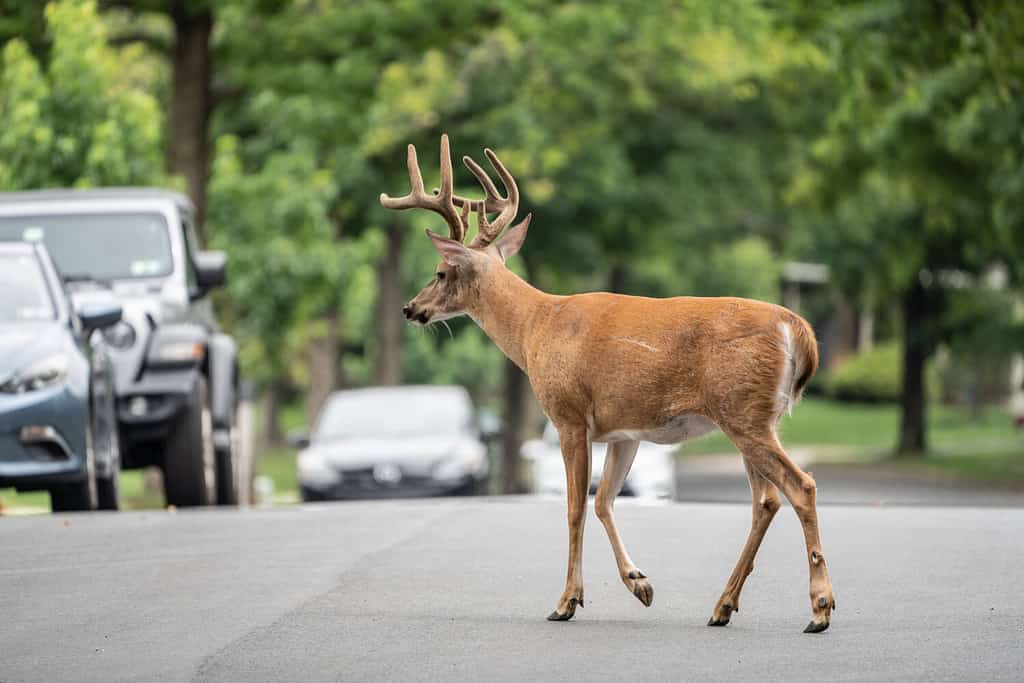
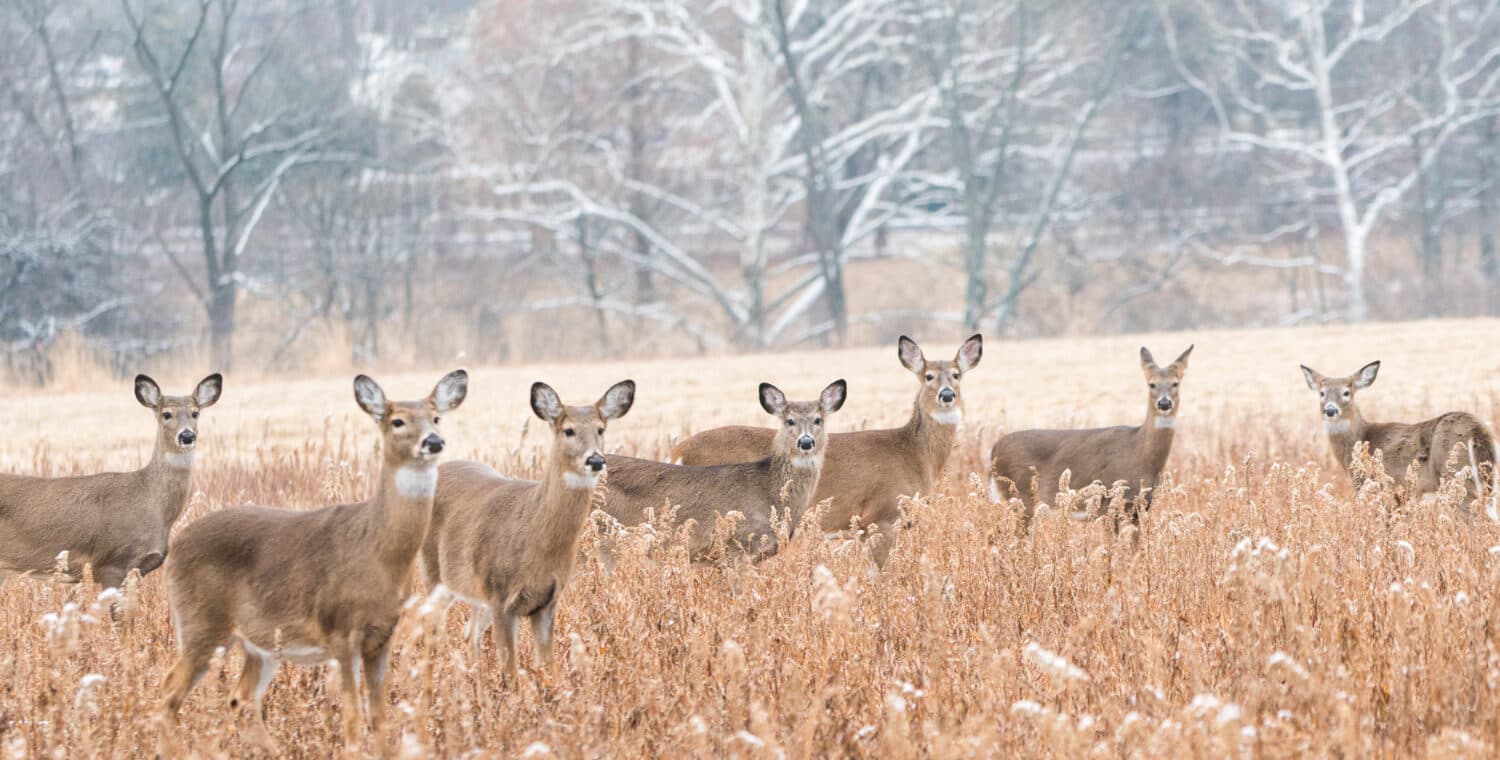
White-tailed deer can run up to 40 miles per hour.
©Amy Lutz/Shutterstock.com
Wildlife agencies generally advise people not to feed wild deer. The N.C. Wildlife Resources Commission warns that “Supplemental feeding of wild deer is harmful and can lead to bouts of severe diarrhea and dehydration, which could be deadly.” Large amounts of carbohydrate-rich, low-fiber foods such as corn can disrupt the microbes in a deer’s rumen. Feeding sites also concentrate animals in one place, increasing the risk of disease transmission and conflicts with people. The phrase supplemental feeding broadly refers to providing food in addition to a normal diet; in wildlife management, it means intentionally placing food for wild animals.
Smith clearly cares about the deer, but good intentions do not erase the risks. The animals have learned to approach him and enter human spaces for food, which is a sign of habituation rather than domestication. Wildlife officials warn that repeated feeding can reduce deer’s natural wariness, concentrate animals, spread disease, and create conflicts involving people, pets, landscaping, and traffic. Anyone in the area should also know that Austin prohibits intentional deer feeding within city limits; rules may differ outside the city.
White-tailed deer (Odocoileus virginianus) are herbivores and selective browsers. Their diet changes with the habitat and season, but it can include leaves, twigs, shoots, acorns, fruits, mushrooms, grasses, and broad-leaved plants. An adult deer may consume an estimated 6–8 percent of its body weight in forage each day. For a 150-pound deer, that works out to roughly 9–12 pounds of vegetation. The safest way to help these animals is to protect natural habitat and let them find their own food.