
Quick Take
- Owning a raven or crow sounds exotic, but a century-old federal law may already have made that decision for you. See the legal restrictions →
- A raven that bonds with its owner does not simply become a loyal companion. It becomes something far more dangerous. Understand the bonding risks →
- Ravens and crows are tool-using, future-planning animals, and their intelligence is exactly what makes captivity so problematic for them. See why captivity fails them →
- Their vocal repertoire goes far beyond simple 'caws', and living with that communication system is louder than most people expect. Explore their vocal repertoire →
Common ravens (Corvus corax) and American crows (Corvus brachyrhynchos) are among the most fascinating birds in the world, captivating people with their intelligence, adaptability, and striking black plumage. While they may look similar at first glance, these members of the corvid family differ in size, behavior, and social habits. Long celebrated in myths and folklore, ravens and crows continue to spark curiosity today, reminding us that these clever creatures are far more than ordinary backyard birds. However, is it legal to own ravens and crows, and if so, how are they as pets?
How Ravens and Crows Differ
It is not always easy to tell ravens and crows apart, but distribution is one way to determine whether you’re seeing a raven or a crow. Common ravens are typically found in the western half of the continent, as well as mountainous regions like the Appalachians. They may also be found in the northern Midwest and Northeast, and they favor wilder, less developed habitats. Crows can be found across the continental U.S., except for the desert regions of the Southwest.
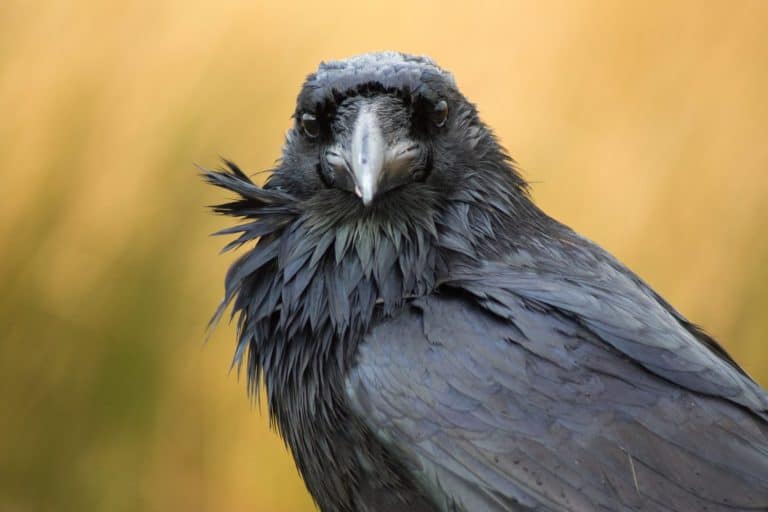
Common ravens are much larger than American crows. Ravens measure 22.1-27.2 inches, which is about the size of a red-tailed hawk. They have wingspans of about 3.8 feet and can weigh from 1.5 to 3.5 pounds. Common crows measure 15.8-20.9 inches, which is around the size of a chicken. They have wingspans of 2.8-3.3 feet and weigh roughly 0.70 pounds to 1.4 pounds. In flight, ravens have long, wedge- or diamond-shaped tails, while crows have shorter, fan- or square-shaped tails. Ravens also have wider, curvier beaks.
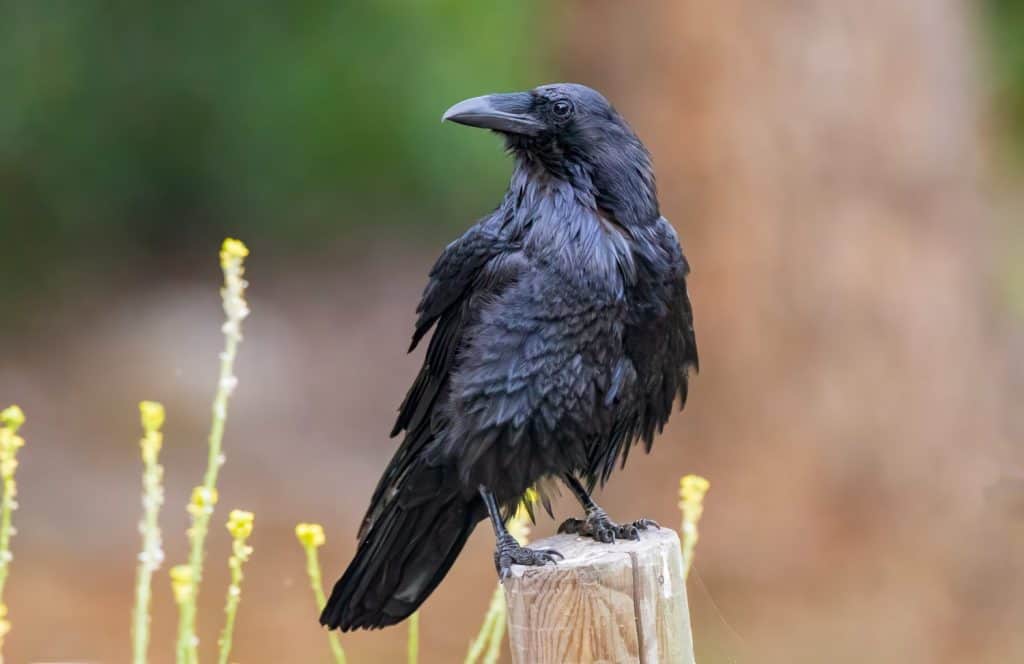
A raven is around the size of a red-tailed hawk, making it much larger than a crow.
©Matt Krofcheck/Shutterstock.com
Ravens are not as sociable as crows and are usually seen flying solo or with a partner, whereas crows like to gather in large flocks. Crows are often found in family groups, with older offspring helping parents raise young. Crows also come together in larger numbers to mob predators. Ravens may be found in lifelong mating pairs, and it is not unusual for ravens to gather around a carcass, but they do not have large, complex social flocks like crows. Both birds are among the most intelligent animals on Earth. Crows are known for their tool use, while ravens excel in future planning.
Rules and Regulations for Keeping Ravens and Crows as Pets
According to the Migratory Bird Treaty Act of 1918 (MBTA), all native raven and crow species in the family Corvidae are protected under federal law. The law prohibits “killing, capturing, selling, trading, and transport of protected migratory bird species without prior authorization by the Department of Interior U.S. Fish and Wildlife Service.”
All U.S. states must adhere to, and may even add to, federal restrictions regarding native wildlife. Even if a bird has been raised from a nestling and has “imprinted” on humans, legally, it cannot be kept in someone’s home as a pet and must be taken to a licensed wildlife facility. Although the Department of the Interior does provide permits, they are limited to licensed wildlife rehabilitators, scientific research institutions, or authorized educational facilities. There are no pet permits for private citizens.
There are also some exceptions to crows’ federally protected status for regulated hunting as nuisance wildlife. The federal government classifies crows as migratory non-game birds, but states can establish hunting seasons for crows under regulations set forth by the U.S. Fish and Wildlife Service. Pennsylvania, for example, has a dedicated season for hunting crows. As with nearly all hunting, a license or permit is required. Check with your state’s agency responsible for hunting for more information.

Native raven and crow species in the family Corvidae are protected under federal law.
©Tiffany Sims/Shutterstock.com
Why Ravens and Crows Don’t Make Good Pets
Even if it was not against federal law, ravens and crows are not the kinds of birds you would want to keep in your home. The following sections explore the reasons why ravens and crows do not make good pets.
They Need A Great Deal of Space
Ravens are highly territorial and require large tracts of land for feeding and nesting. Territories can range from 3 to 25 miles. While they can adapt to human presence, ravens prefer wilder areas. Crows require less space, but they still secure and defend their territories. Individual territories may span 10 acres in urban areas and much more than that in rural areas, depending on the availability of resources. Both crows and ravens may travel 40 miles a day or more in search of food.
They Require Socialization for Their Health
Both ravens and crows are highly intelligent and need emotional, intellectual, and physical interactions. However, they need these interactions with other birds, not with humans. If these birds can’t get their basic social needs met, they may become hostile, destructive, aggressive, and even depressed. They need to be with other birds in their natural environments, especially crows, which are extremely social. Additionally, if a raven who lives with a human chooses the human as its partner, it can become very territorial and may attack family or friends.

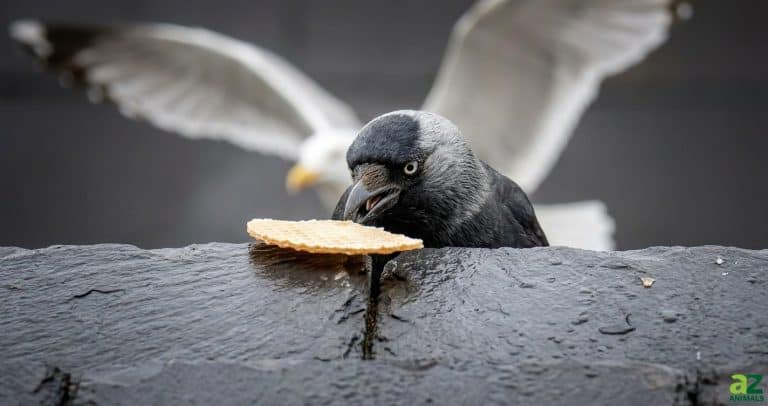
Crows are very social, gregarious birds and often gather in family groups.
©Elliotte Rusty Harold/Shutterstock.com
Their Beaks Are Not Harmless
Both ravens and crows have sharp, sturdy, pointed beaks. Birds that feel cornered or threatened will peck and bite in self-defense, even during play. Crows’ beaks are not strong enough to pierce the hide of a carcass, but they are sharp enough to cause injuries to humans, especially if directed toward the face. As mentioned above, ravens have even larger beaks than crows, so they can break the skin with their beaks (or talons) if they feel threatened.
They’re Loud
Many would say that corvids are a bit too loud with all of their harsh “caws,” and they might be right. However, vocal communication is crucial to these intelligent birds’ social structures and can also aid in their survival. When corvids spot a predator, repetitive calls alert the flock to the danger so they can mob the intruder. Their calls help establish territory and warn others away. They can even summon flock mates when they have located a food source. Ravens have over 30 distinct calls and crows have over 20 different calls, all of which can be very noisy.
They’re Meant to Live in the Wild
Crows and ravens are very creative when it comes to finding their favorite foods such as bits of meat and nuts. They are even capable of using tools like wooden sticks to retrieve food. Just as humans are accustomed to a certain lifestyle, so are crows and ravens. To be trapped and kept for the enjoyment of others would destroy their overall well-being, including their mental health. These beautiful black birds are meant to live in the wild, so it is best to enjoy them from a distance.
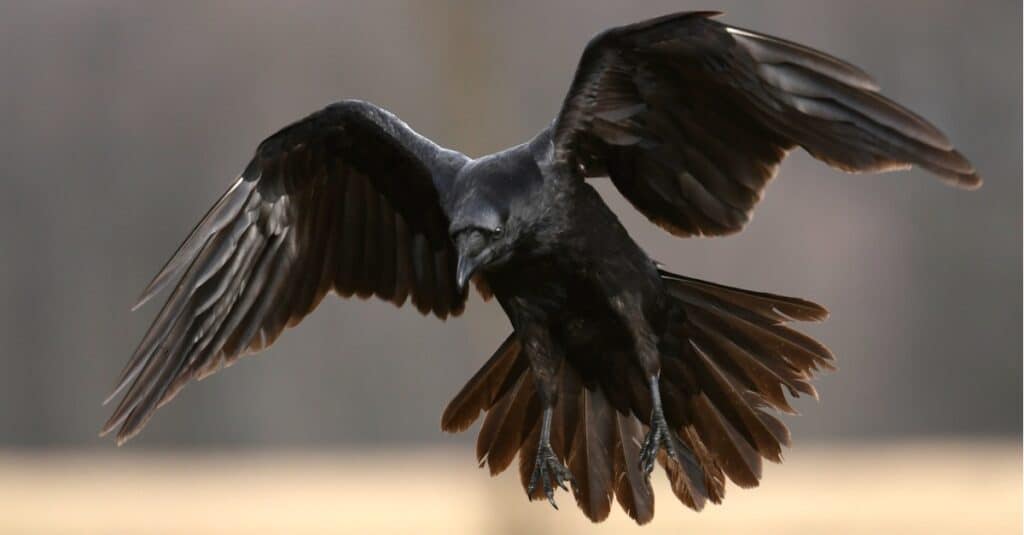
Ravens, like crows, are one of the few animals that regularly use tools to obtain food.
©iStock.com/Piotr Krzeslak