
Quick Take
- Being called a 'bird brain' might actually be a compliment, and scientists have the data to prove it. See the cognitive proof →
- Crows can recognize your face and remember it for years after seeing you just once. Discover face recognition research →
- There's a hard limit to how smart an animal can be before humans become its biggest threat. Crows are already testing that boundary. Explore intelligence's fatal edge →
- Crows have a peace ritual after conflicts that looks uncomfortably familiar to human behavior. See their conflict rituals →
Crows in the Spotlight: A Noisy Presence and a Puzzling Reputation
As dusk rolls in over Charlottetown, the sky above Victoria Park fills with thousands of crows. Their loud, chaotic chatter can rattle plenty of locals, who try all sorts of things to scare them off, though none of it really works. Meanwhile, lone ravens sweep across the province in smaller numbers, adding another layer to the whole strange spectacle.
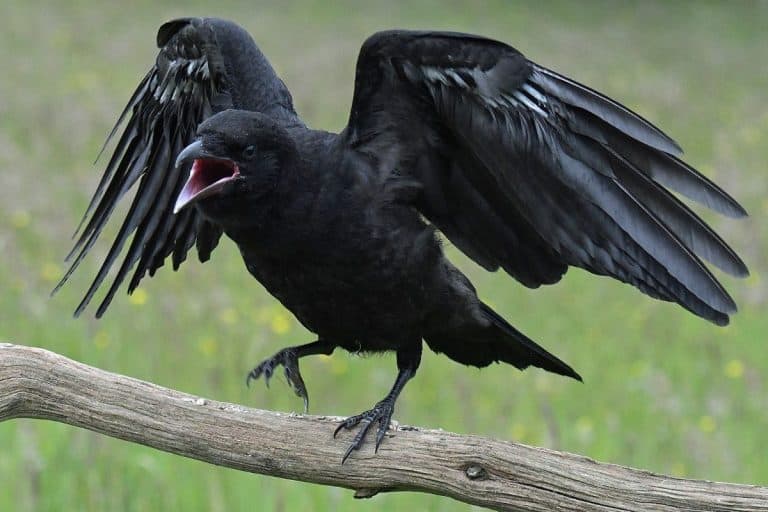
Even if their eerie calls make people uneasy, these birds aren’t just master survivors, they are easily some of the sharpest thinkers in the animal kingdom. Crows and their relatives have a pretty intense reputation, but when you look closely, they deserve a lot more respect than fear.
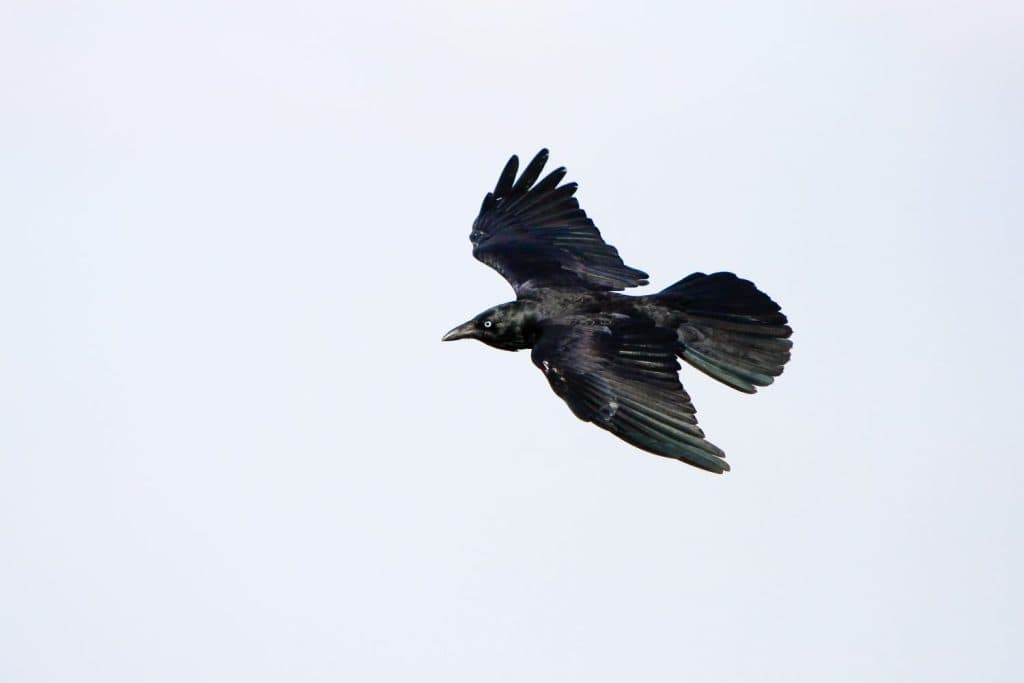
Crows are actually quite intelligent.
©G Tipene/Shutterstock.com
A Bird Brain But Not as We Know It
“These are the most intelligent birds we know,” says Pierre-Yves Daoust, professor emeritus at the Atlantic Veterinary College of the University of Prince Edward Island. Crows and ravens actually have some of the biggest brains relative to their size among all birds, and scientists link that directly to their mental power.
Louis Lefebvre, a professor in the biology department at McGill University in Montreal, points out some of their most impressive mental feats: they can plan ahead, figure out brand-new problems, and even craft and use tools with total precision. “These are skills you find in children between four and six years old,” Lefebvre explains.
So, honestly, if someone tells you that you have a “bird brain,” it might not be much of an insult after all—at least not if they’re comparing you to a crow.
Learning, Reasoning, and a Touch of Mathematics
Researchers have shown that crows don’t just act on impulse. They stop and weigh their options before making a move, use statistical reasoning, and can even tackle simple math. Look at Japan, for instance, where researchers watched crows intentionally drop hard-shelled nuts onto busy roads so passing cars would run over them and crack them open. That’s a serious display of problem-solving and cause-and-effect reasoning.
It doesn’t end there, either. Studies show crows are capable of abstract thought and can tell individual people apart just by looking at their face shapes. Even wilder? Their memories are so razor-sharp that they can recognize a specific human face years after seeing it just one time.
Social Lives and Emotional Bonds
When it comes to communication, crows and ravens are every bit as advanced as they are clever. They rely on a rich system of calls, body posture, and gestures. Crows will mimic the sounds of other animals, pick up objects to grab a neighbor’s attention, and even point with their beaks much like we point with a index finger.
Their memory for social connections is just as wild. Crows remember old friends even after years of being separated. And when things get tense, they’ll actually comfort one another after a fight—gently smoothing out a companion’s feathers or offering a bit of food as a peace offering.
“Crows and ravens demonstrate a high degree of awareness and tight social cohesion. We owe them a great deal of respect,” Daoust says.
Resilience and the Limits of Adaptation
Flexibility is another major hallmark of these birds. A typical crow lives about seven to eight years, though plenty manage to pull through past fifteen. You can find them thriving just about anywhere, from thick woodland forests to bustling cities and open farm fields. “They’re highly resilient to habitat destruction and can easily adapt their diet,” Lefebvre notes. Because they roll with the punches so well, their overall risk of extinction stays low.
That said, even their toughness has hard limits. Take the Hawaiian crow: despite being famous for its high intelligence and impressive tool-making skills, it was completely wiped out in the wild due to human changes to its habitat. Lefebvre urges caution here, reminding us that even the cleverest creatures on Earth can’t dodge relentless pressure on their environment.
The story of the crow is really about flexibility, brainpower, and deep social bonds. It pushes us to recognize smarts and awareness, even when they show up in packages we might not expect.