
Quick Take
- Crows don't just decide fast. They decide accurately, and the reason why is buried in how their neurons fire. See the neuron-firing data →
- Their secret advantage has nothing to do with brain size, and it puts great apes to shame. Explore dense neuron packing →
- Centuries of being called 'bird brains' may be one of the most embarrassing mistakes in animal intelligence history. Unpack the stereotyping history →
- There's a survival reason crows can't afford to hesitate, and understanding it reframes everything about how their minds evolved. See the survival pressure explained →
Not everyone is a strong decision-maker. Some of us even freeze when put on the spot. Crows, however, do not hesitate when it comes to making choices. In fact, these birds consistently beat humans and monkeys in rapid decision-making.
Crows Proven to Be Better Decision-Makers Than Humans or Monkeys
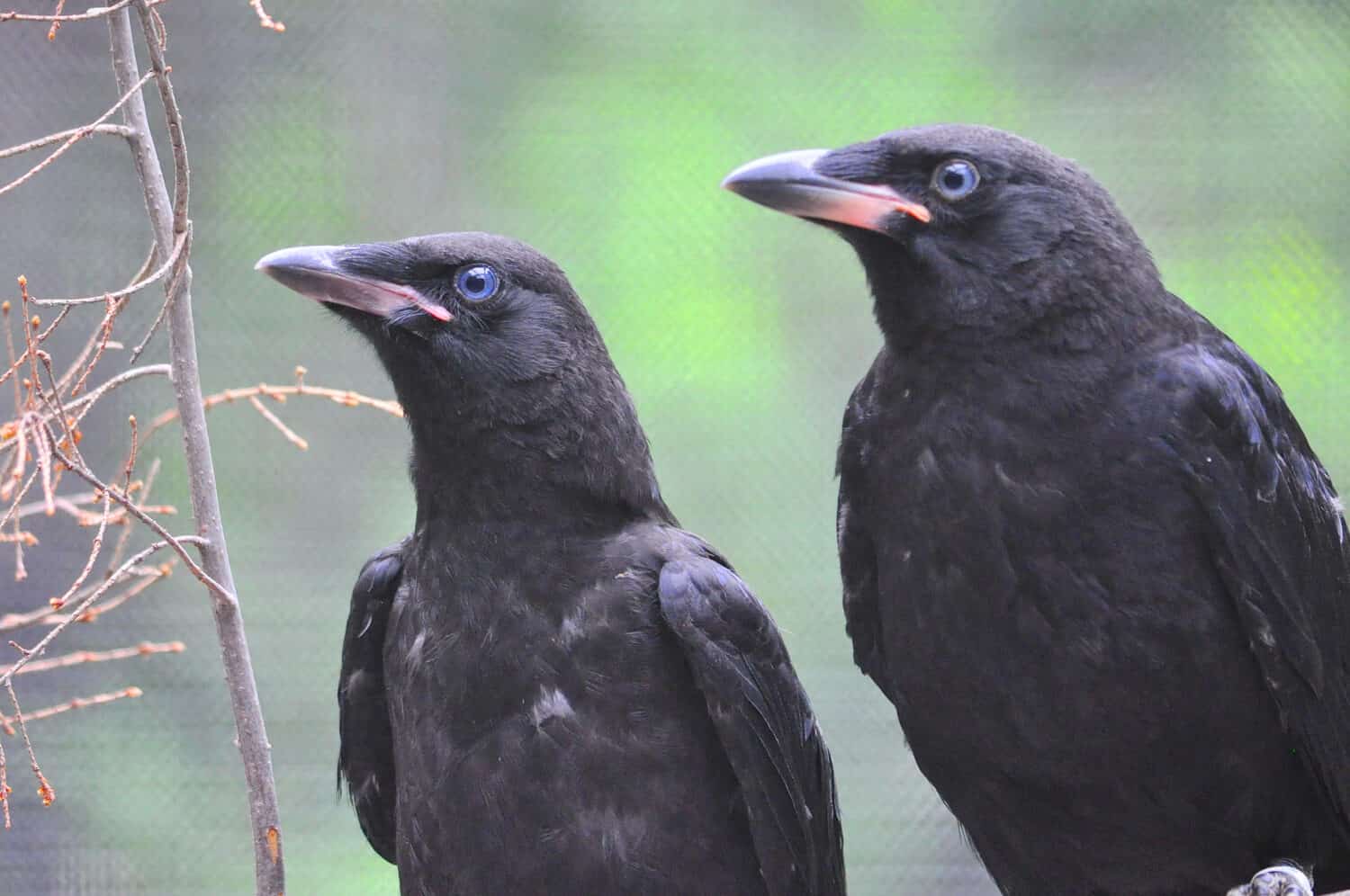
Crows are masters at quick decision-making. Their skills put humans and monkeys to shame, given how quickly they decide and how accurate their decisions are.
A new study published in Science shows that carrion crows make decisions twice as quickly as humans or monkeys do. Researchers Philipp Schmidbauer and Andreas Nieder from the Institute of Neurobiology of the University of Tübingen demonstrated the speed at which crows react by putting them in front of a touchscreen. The birds were supposed to choose which side of the screen a set of dots would move to.
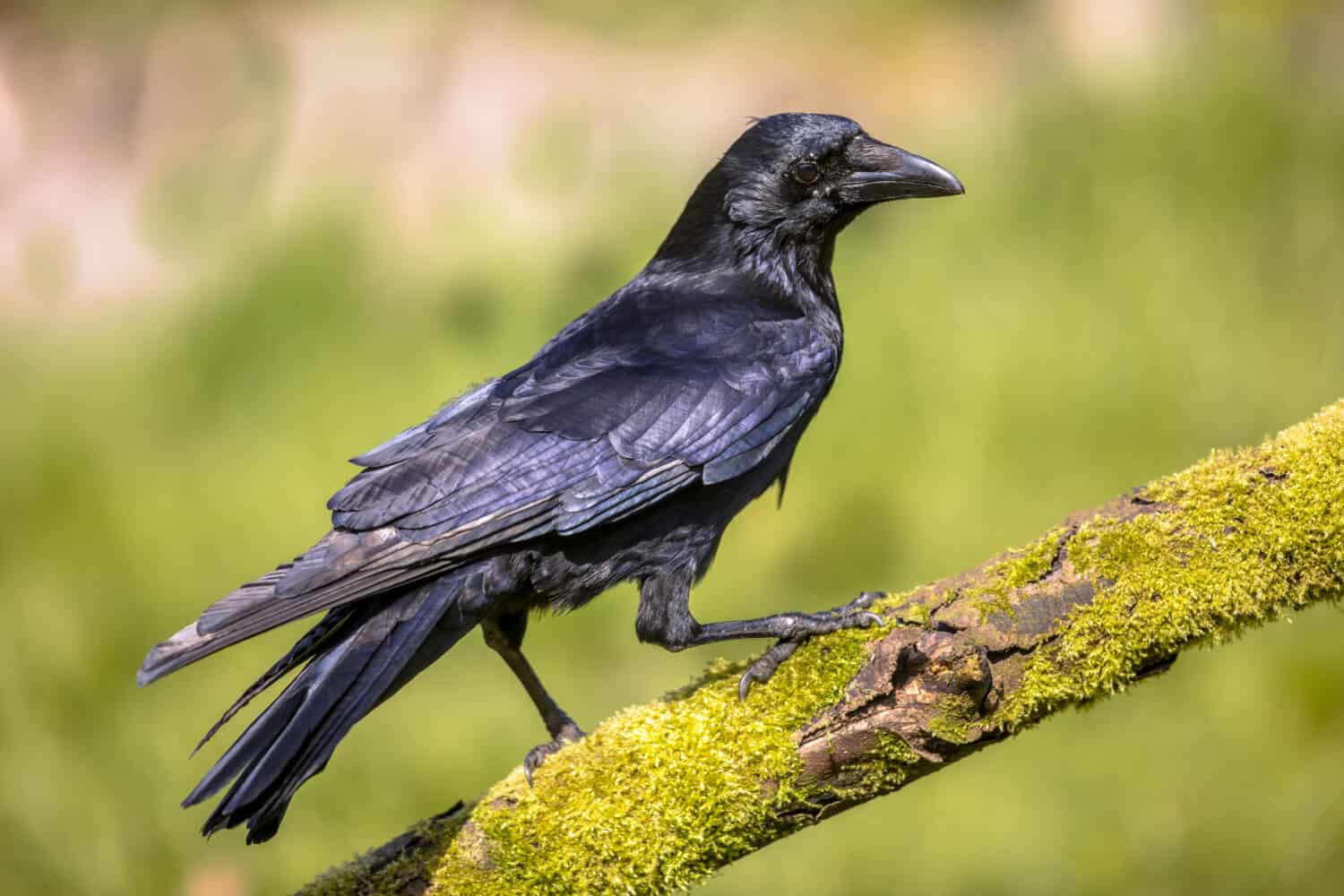
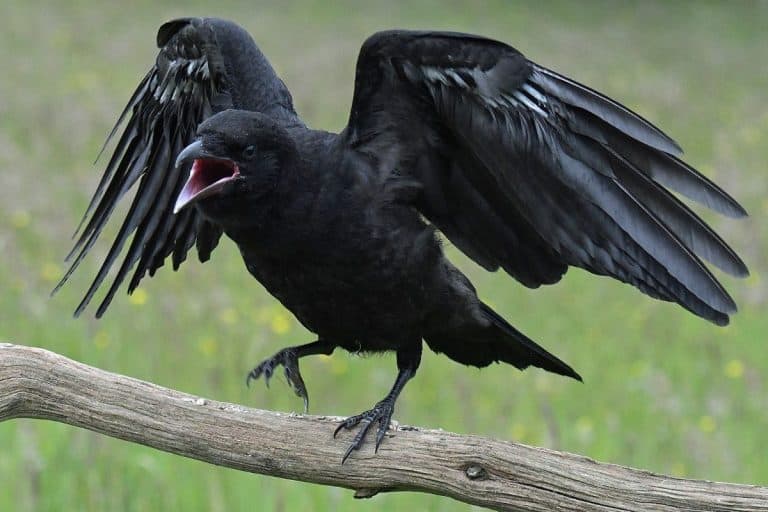
Carrion crows proved to make decisions twice as quickly as humans and monkeys.
©Rudmer Zwerver/Shutterstock.com
If the crows believed the dots would mostly move left, they would peck the left side of the screen. If they believed the dots would move right, they would peck the right side.
In every instance, the two crows did not hesitate in their decision-making. The average time to make a choice was 235 milliseconds, or the time it takes to blink twice rapidly.
More interestingly still, the decisions were not random. The crows used the information available to them with each set of dots and made well-thought-out choices, resulting in incredible accuracy during the test.
How Did the Crows Show Off Their Quick Decision Skills?
According to the study, quick decision-making with visual cues on screen may extend to making split-second decisions while in flight or escaping danger. During these tasks, there is no time to second-guess.
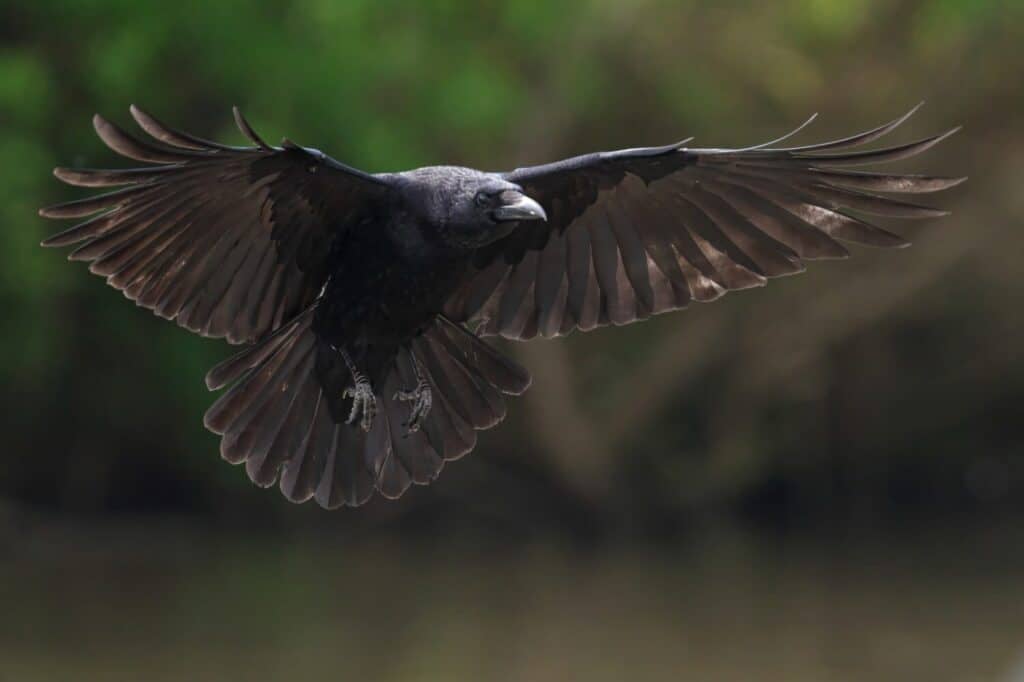
Carrion crows are believed to make quick decisions due to the need to make “rapid maneuvers during flight.”
©Wirestock Creators/Shutterstock.com
“Birds rely on their vision to carry out precise, rapid maneuvers during flight and to guide their beaks toward objects when foraging,” Nieder said in a press release.
This means that if crows spend too long weighing their options, it could harm their survival.
Crows Were Surprisingly Accurate
The movement of the dots on screen sometimes followed a pattern. Other times, it was random. In both instances, the crows were found to be incredibly accurate with their decision-making skills.
According to Schmidbauer, crows were clearly not making random choices. Each decision reflected real thought.
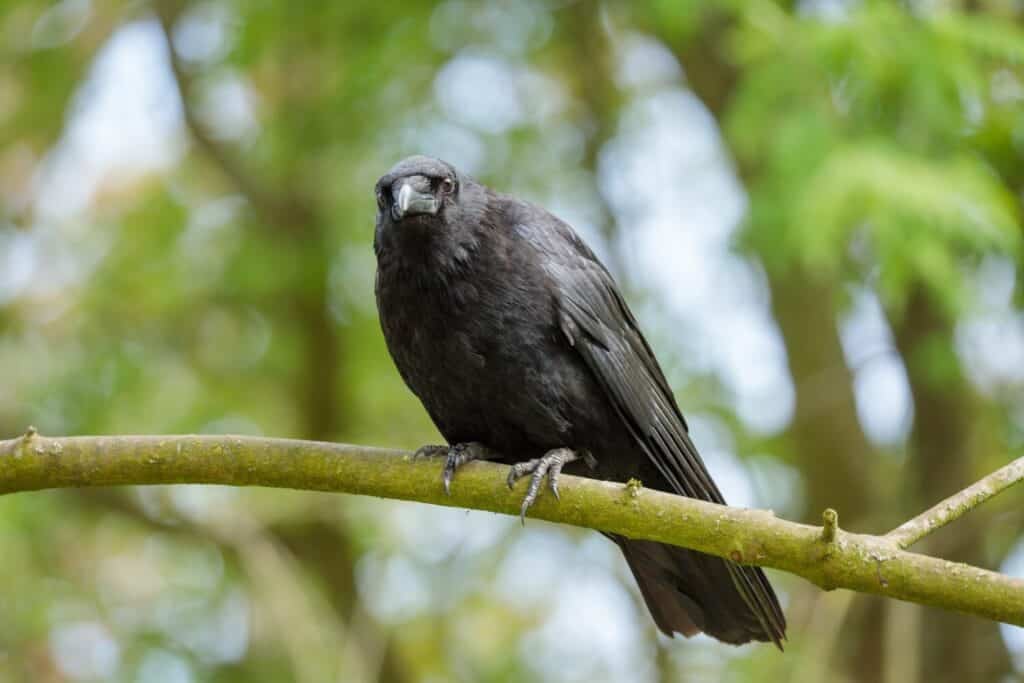
Carrion crows made accurate decisions during the study, even when clear patterns were unavailable.
©Ostrovskajah/Shutterstock.com
“Even when the patterns of motion were hard to recognize, the crows’ decisions were still better than random choices,” Schmidbauer explained in a press release, “and with clear signals, they achieved an accuracy of nearly 100%.”
To determine how this was possible, researchers observed how neurons fired in the crows’ brains. They found that as soon as the dots appeared on the screen, neurons began firing after only 70 nanoseconds, which was far too early for the crows to make a decision.
Only after the 235-millisecond threshold was met would the crows peck the screen. This is when the visual information on the screen was at its peak, allowing crows to make the most informed decision possible.
What is the Intelligence Level of Crows?
Crows may be small, but that does not limit their cognitive abilities. In fact, when their “body-to-brain mass ratio” is examined, they are on par with great apes’ intelligence levels.
Crows have massive intelligence despite their small brains because so many neurons pack into every inch of their pallium. The pallium is the equivalent of the prefrontal cortex in mammals. It controls decision-making, self-control, and higher-level thinking.
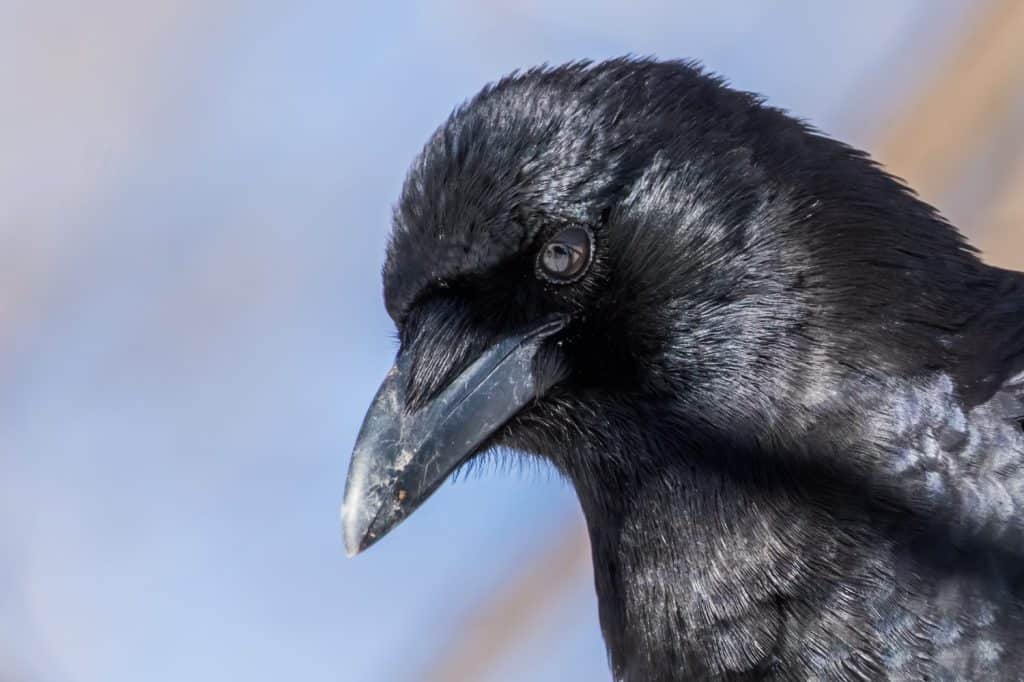
Crows have the intelligence of a seven- to 10-year-old child.
©KevinDTiptonPhotography/Shutterstock.com
This intelligence is evident in crows’ normal daily activities. Their cognitive abilities include:
- Tool use: Crows will create tools to help them hunt insects. They have been observed modifying these tools when the outcome is not what crows anticipated it to be.
- Social learning: By observing others in their flock, crows learn how to locate food, the meaning behind different dialects, and even which people are a threat, and which are not.
- Problem-solving: Crows will use trial-and-error methods to create a positive outcome. This shows up in manipulating objects as tools, working together toward a common goal, and understanding that when one method fails, another needs to be tried.
- Memory: Crows have an exceptional memory, remembering people’s faces or locations where food is abundant for years.
Crows have intelligence comparable to that of a seven- to 10-year-old child, according to the Institute for Environmental Research and Education. While humans have stronger cognitive abilities in some areas, crows excel in practical intelligence, cognitive flexibility, and adapting to ecological change. Crows are truly exceptional and should be celebrated for their high intelligence.
Why Crows Are Seen as Unintelligent
Human standards measure intelligence through mastery of language, abstract thought, and the ability to decipher symbolism. Crows’ intelligence does not include this way of thinking. Therefore, people often see them as less intelligent.
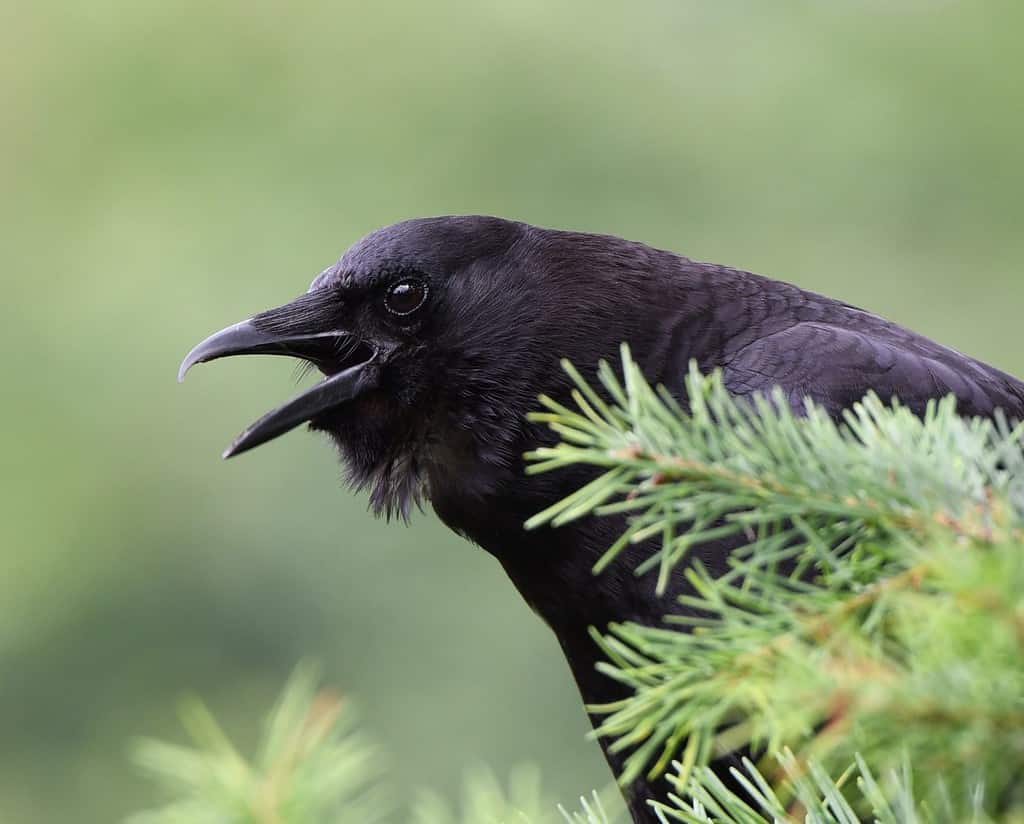
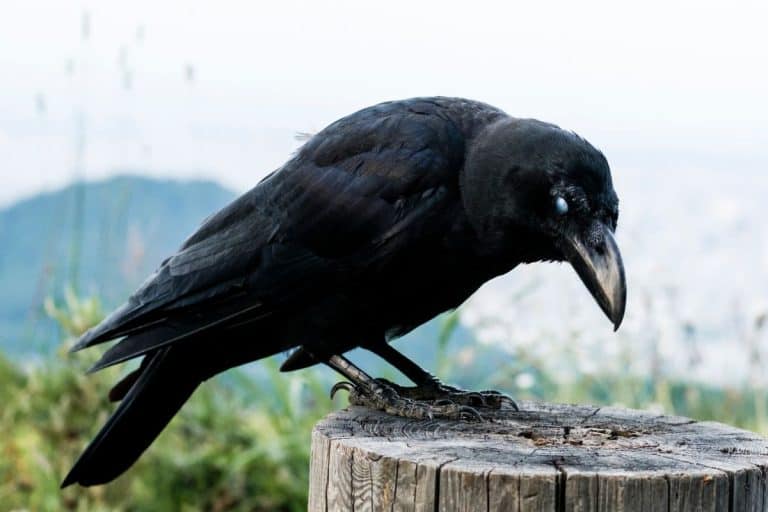
Crows are seen as unintelligent because of centuries of being cast in a poor light.
©Smileynulk/Shutterstock.com
In addition, crows have developed a bad reputation throughout history, often seen as bad omens or tricksters. They’re noisy nature leads some to view them as pests.
Studies like this reinforce crows’ superior cognitive abilities, showing that in some arenas, crows are indeed more effective than humans.