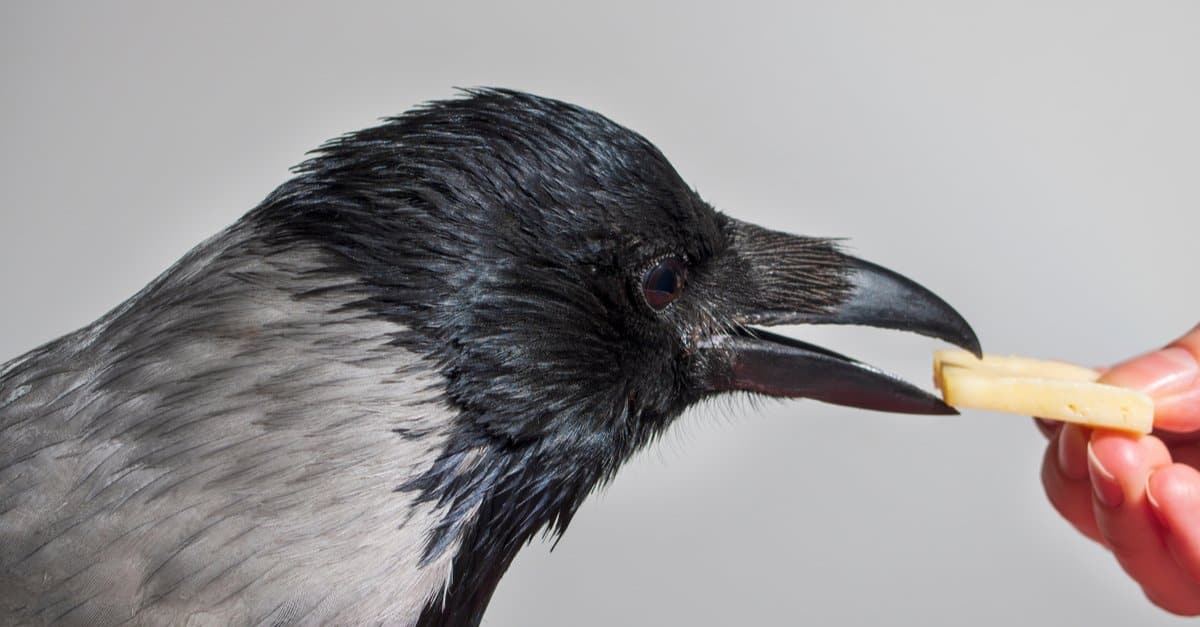

Quick Take
- Crows actually prefer meat over plants, yet their diet is over 70% something else entirely. Explore their full diet →
- A single crow family can wipe out a staggering number of farm pests in one season, and that is only the beginning of their ecological value.
- Crows have a surprising favorite food that you almost certainly have sitting in your kitchen right now. See their favorite foods →
- Crows use tools to hunt, but the way juvenile birds pick up this skill challenges what we thought we knew about animal intelligence. See how crows hunt →
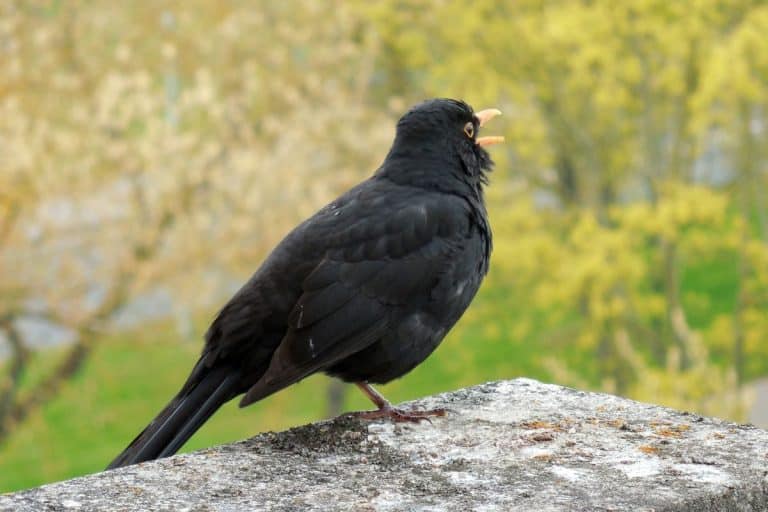
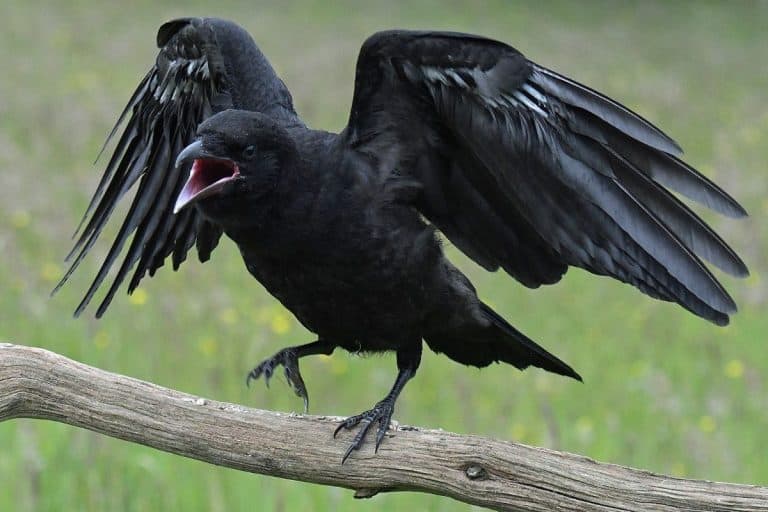
Crows are known to be some of the most intelligent and resourceful birds in the animal kingdom for good reason. These brilliant members of the Corvus genus know how to create and use primitive tools made from twigs and rocks, have complex means of communicating with one another, and can even remember where they store food over long periods of time.
There are about between 45-50 different species of crows, ravens, and rooks within the Corvus genus. They exist on every continent except Antarctica and they are largely absent from South America. They’re clever birds, to be sure, and their unusually high intelligence means they’ve adapted to learn how to hunt and enjoy a varied diet. But what exactly do crows eat? Let’s take an in-depth look at their diet, their favorite meals, and the ways in which they find and hunt for food.
15 Foods That Crows Like to Eat
With their highly efficient digestive systems, crows can eat a mixture of plant and animal matter. Over 70% of their diet consists of fruits and seeds, but crows tend to favor meat over plants and are often seen near gardens snacking on grubs and bugs rather than fruits and vegetables. However, they’re extremely opportunistic and adaptable.
Crows can be beneficial, as they consume a lot of waste each year, which helps to prevent the spread of diseases and bad odors. Their capacity to take care of pests and parasites from farms is a major advantage when compared to the little damage they cause to the vegetation. A large crow family can consume 40,000 grubs, armyworms, and caterpillars during nesting season. Additionally, they help with pollination by transferring pollen from one plant to another. They also consume carrion, which helps limit insect population growth.
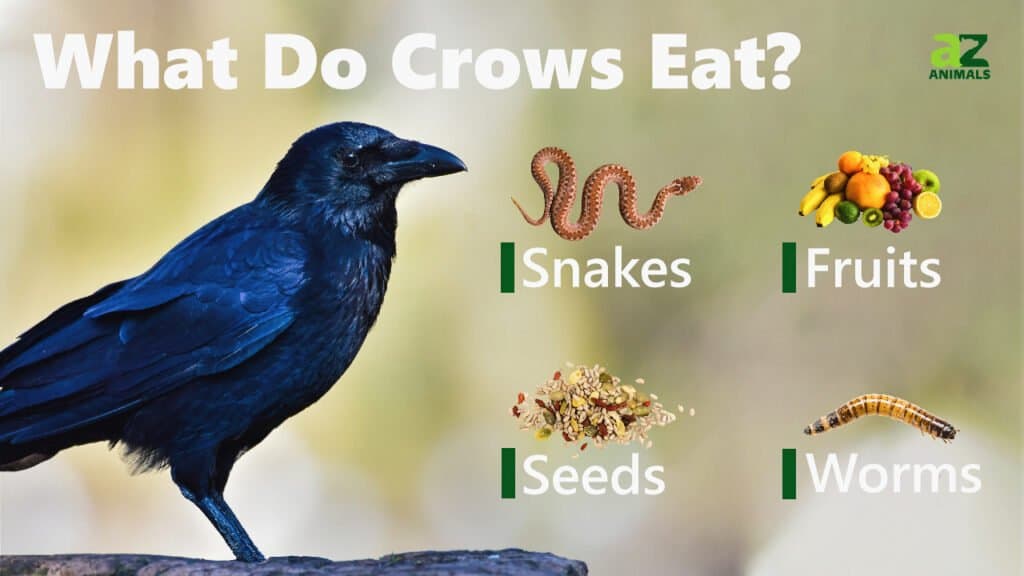
Most crows aren’t too picky and are more than happy to feed on a wide variety of different foods, such as:
- Various seeds and nuts
- Fruits, most commonly berries
- Grains
- Beetles and other insects
- Worms and other invertebrates
- Garden vegetable crops
- Rodents
- Carrion
- Mollusks
- Food scavenged from dumpsters and areas where humans congregate
- Lizards
- Small snakes
- Frogs and salamanders
- Eggs
- Small fish
As you can see, crows have learned to make use of just about any food source they manage to come across, which means they are able to quickly adapt to and thrive in a range of rural, suburban, and urban areas.
What Is a Crow’s Favorite Food?
While crows will happily eat just about anything to survive, they do have a few foods they tend to enjoy more than others. If you’ve befriended a crow in your yard recently and want to offer them something they’ll love, consider one of their favorites:
- Nuts, namely peanuts, walnuts, and almonds
- Eggs (raw, boiled, scrambled…it doesn’t matter to a crow)
- Meat scraps like chicken and fish
- Dry cat and dog kibble/pellet food (yes, really!)
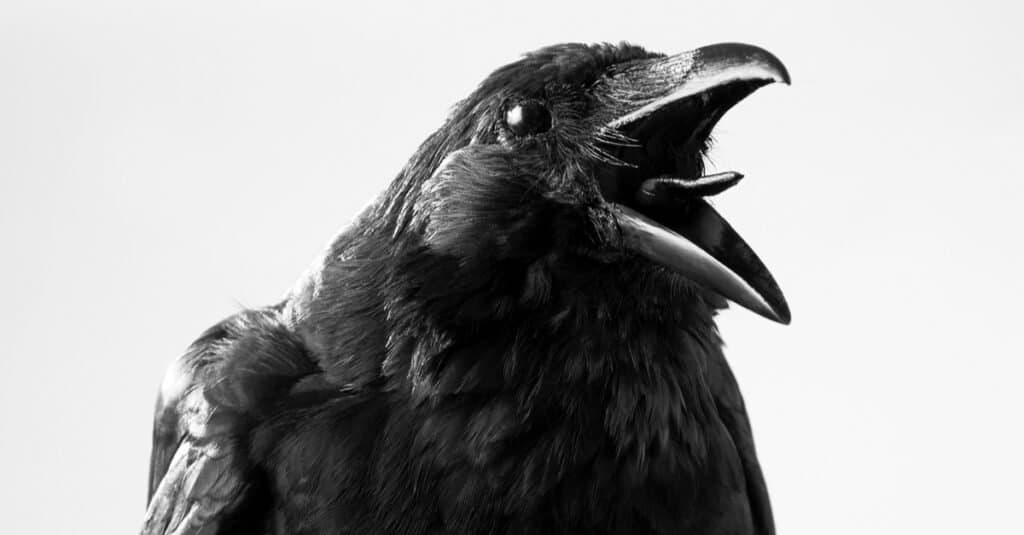
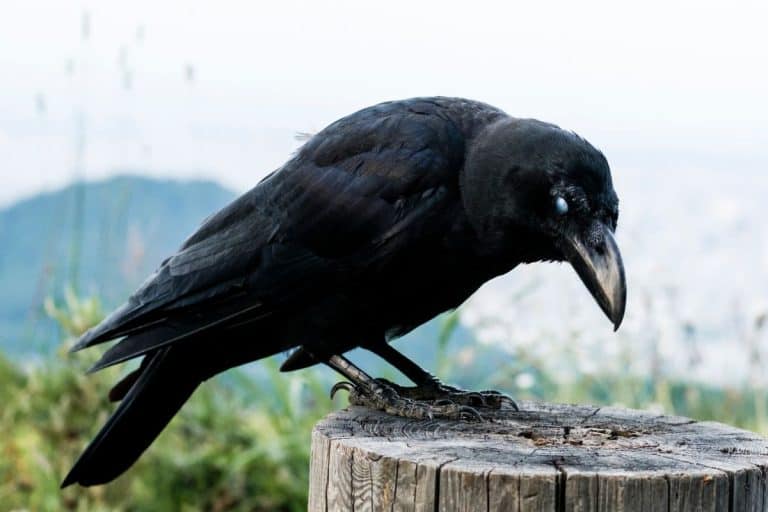
Crows are typically not picky eaters and will ingest just about anything.
©redpip1984/Shutterstock.com
How Do Crows Find Food?
Now that we’ve discussed what crows like to eat, it’s time to examine how these clever avians obtain their food. As social birds, crows tend to hunt and forage in family groups. These family groups usually consist of a breeding pair and their offspring from the past two to three years. They stick together for long periods of time and often work together in surprisingly complex ways to find and capture their various sources of food.
Amazingly, some crows have even learned how to use rudimentary tools to make catching prey and foraging even easier for them. A 2005 study showed how New Caledonian crows commonly use items like modified twigs, rocks, and other items to retrieve and tear into their food. Even juvenile birds were clever enough to quickly pick up on how to use these primitive tools. This is a pretty incredible discovery, considering very few animals are intelligent enough to understand how to use objects in this way. It is just one more reason crows rank among the brightest birds around.

Some crows have learned how to use rudimentary tools to make catching prey and foraging even easier.
©Vladimir Turkenich/Shutterstock.com
Where Do Crows Live?
Crows are found in many parts of the world, including Asia, Europe, and North America. They inhabit a wide range of habitats, such as urban areas, farmland, woodlands, grassland savannas, wetlands, and coastal marshes. They tend to prefer open spaces with access to water sources and plenty of trees for nesting materials. Crows can even be seen living near human settlements, where they scavenge food scraps from gardens and garbage cans. As opportunistic feeders, they often take advantage of whatever food is available in their habitat.
Crows build their nests in a wide variety of habitats, including woodlands, fields, urban areas, and wetlands. They prefer to nest in tall trees with dense foliage or on the edges of forests near open areas. Crows tend to make their nests in a V-shaped area close to the trunk of a tree, usually situated in the upper third or quarter of the tree. They prefer to build nests in conifer and evergreen trees but will settle for other trees if those are not available.
A breeding pair of crows work together to build the nest and usually have assistance from their children from the last season. Apparently, building a cozy nest is a family affair. This nest is usually composed of medium-sized twigs, with the interior being filled with materials such as pine needles, weeds, soft bark, or animal hair. Nest size varies considerably, typically ranging from 6 to 19 inches across and 4 to 15 inches deep.
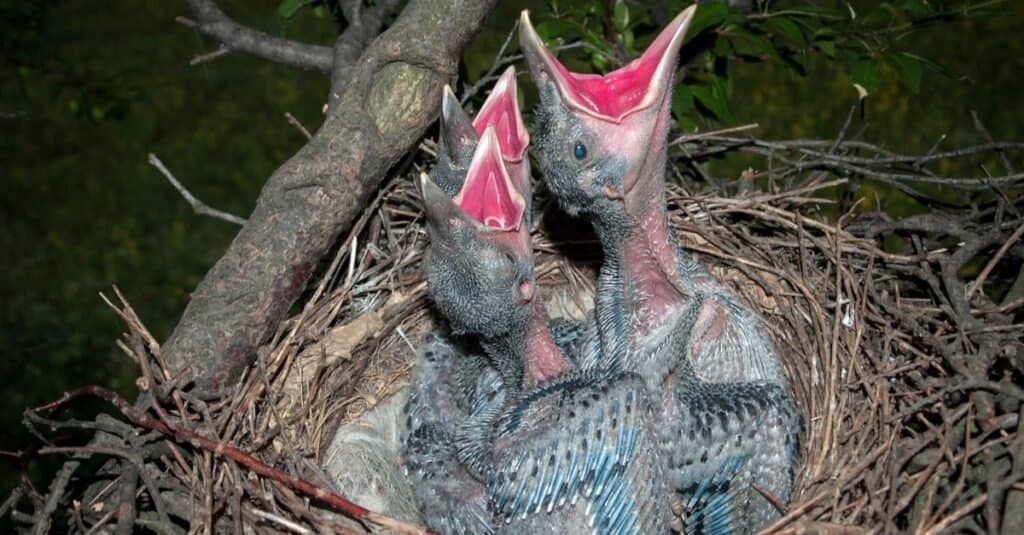
Building a nest is done as a couple, sometimes with the help of last year’s chicks.
©Moisieiev Igor/Shutterstock.com