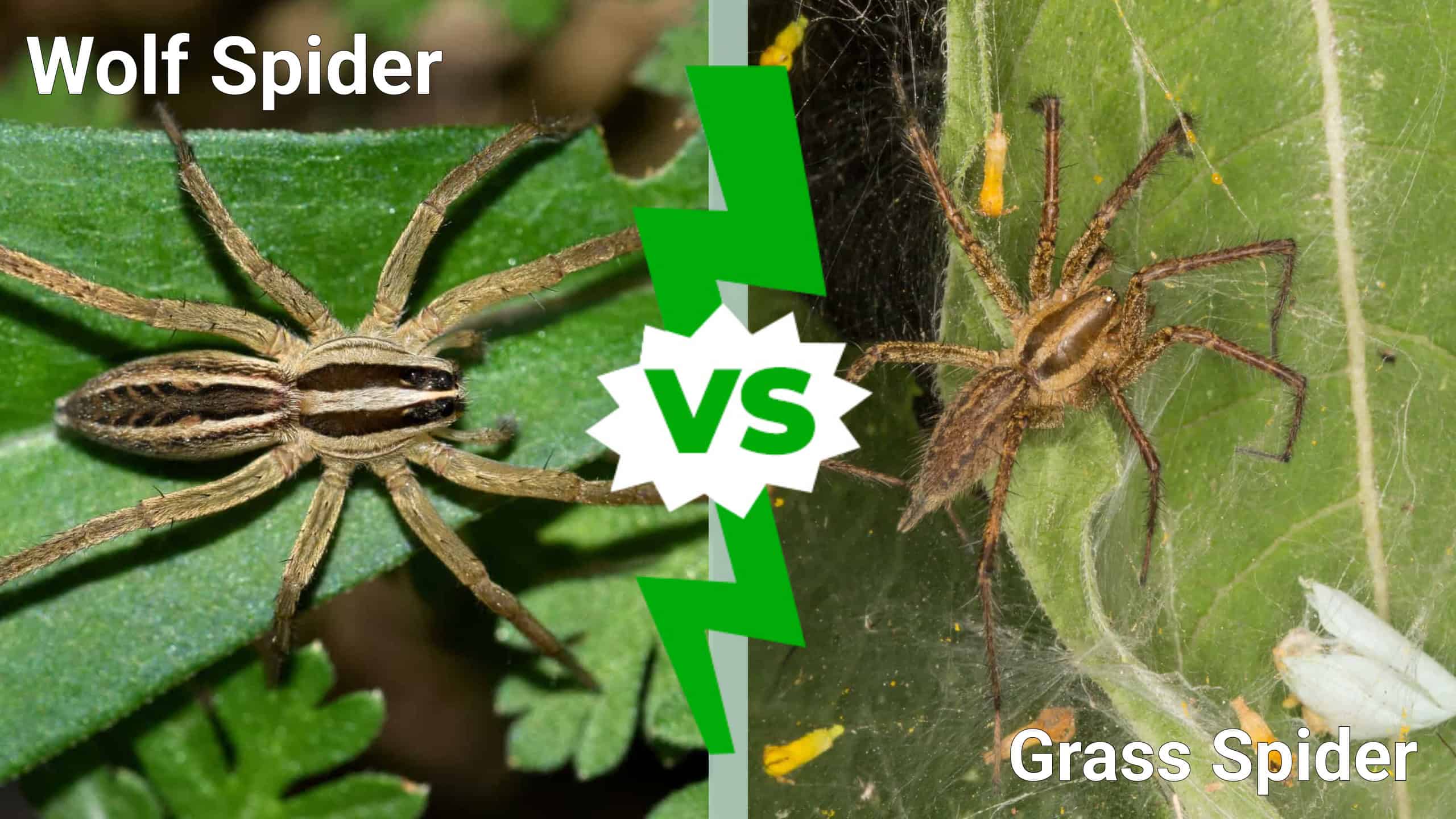

If you saw a brownish colored spider with dark markings crawling through the grass toward you, could you tell if it was a wolf spider or a grass spider? Many people struggle to identify the differences between these two common arachnids. Their ranges overlap, some species are similar in size, and they have comparable coloring and markings. However, if you know what to look for, you can spot the distinguishing features that separate them. Keep reading to discover 8 key differences between wolf spiders and grass spiders.
Comparing Wolf Spiders and Grass Spiders
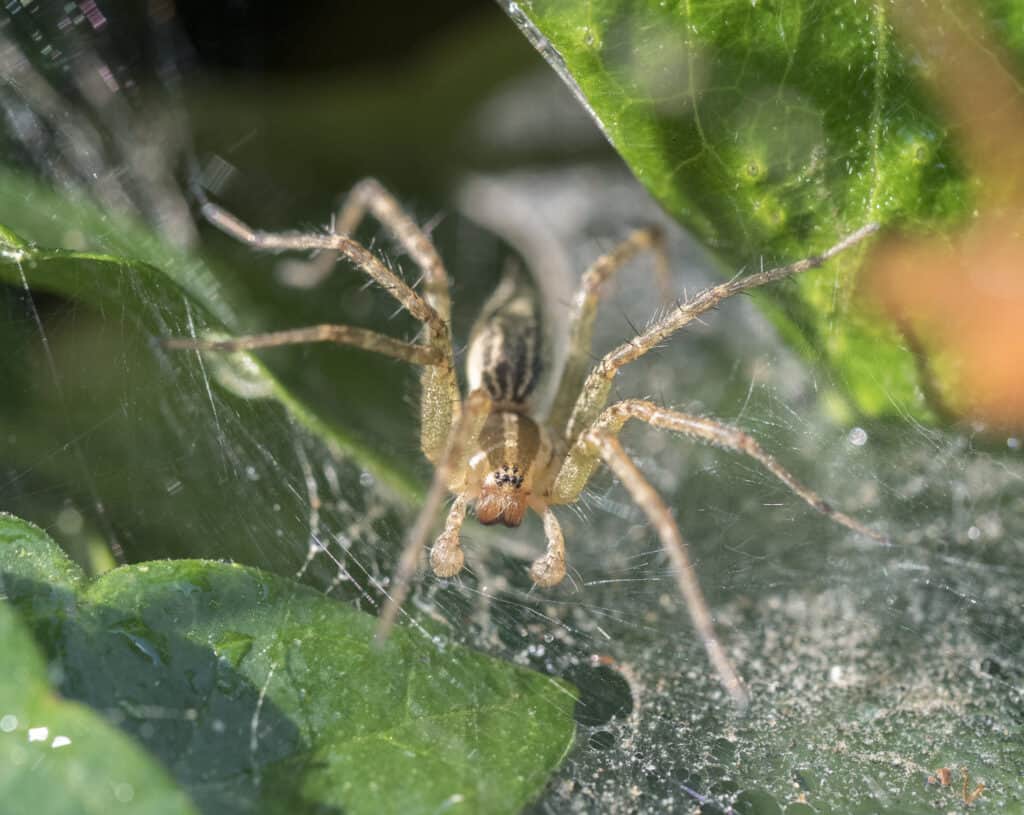
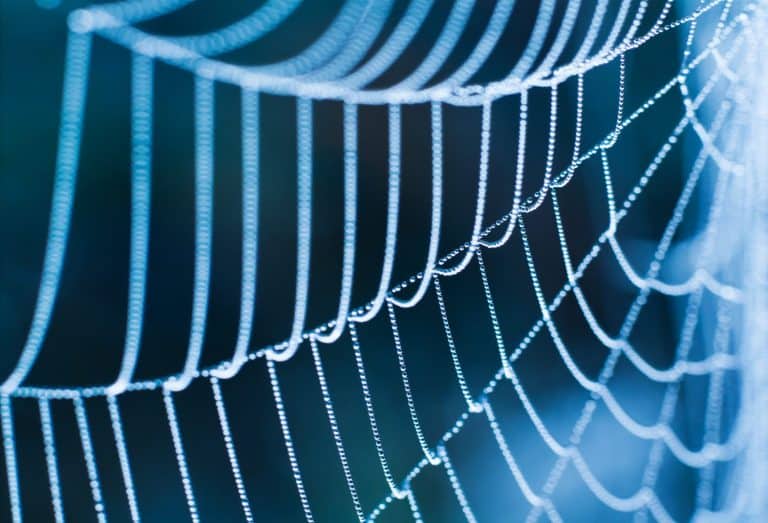
Funnel weaver spiders, also known as grass spiders, hide until they feel a vibration on their web, and then strike their prey.
©iStock.com/johnandersonphoto
Grass spiders belong to two genera: Agelenopsis, which is the American grass spider, and Agelena which is the Eurasian grass spider. Differences between the species vary slightly. In fact, they appear so similar that the name Agelenopsis in Greek translates to “having a similar look to Eurasian grass spiders.” For the purposes of this article, we will primarily focus on American grass spiders, referred to simply as “grass spiders.”
| Wolf Spider | American Grass Spider | |
|---|---|---|
| Taxonomy | Family Lycosidae; around 250 species in 21 genera in the U.S. and Canada | Family Agelenidae; in U.S. and Canada there are 14 species in genus Agelenopsis |
| Distribution and Habitat | Worldwide; grasslands, woods, mountaintops, deserts, wetlands; ground habitats | North America; grass and bushes near the ground; build nests in their webs |
| Size | Body length 0.25 to 1.5 inches; leg span of 0.63 to 5 inches | Body length 0.5-0.80; can reach 1.5 inches including legs |
| Appearance | Tan, brown, gray, black with dark brown to black markings, hairy, rounded, robust body with short spinnerets | Mostly brown with tan, gray, and black markings; lighter build with elongated body and long spinnerets |
| Eyes and Vision | Excellent eyesight; Two eyes larger than others; eyes in three rows, with two on top, two in middle, and four on bottom | Poor eyesight; eyes in three rows, with two on top, four in the middle, and two on the bottom |
| Hunting Style | Do not spin webs, actively hunt prey | Funnel webs, non-sticky |
| Mating Rituals | Unique to species and substrate; rhythmic tapping or drumming and waving legs in specific patterns | Males quiver their legs and sway their abdomens to release pheromones |
| Infant Care | Carry eggs on their spinnerets; care for infants several weeks after hatching | Females die before the eggs hatch |
The Key Differences Between Wolf Spiders and Grass Spiders
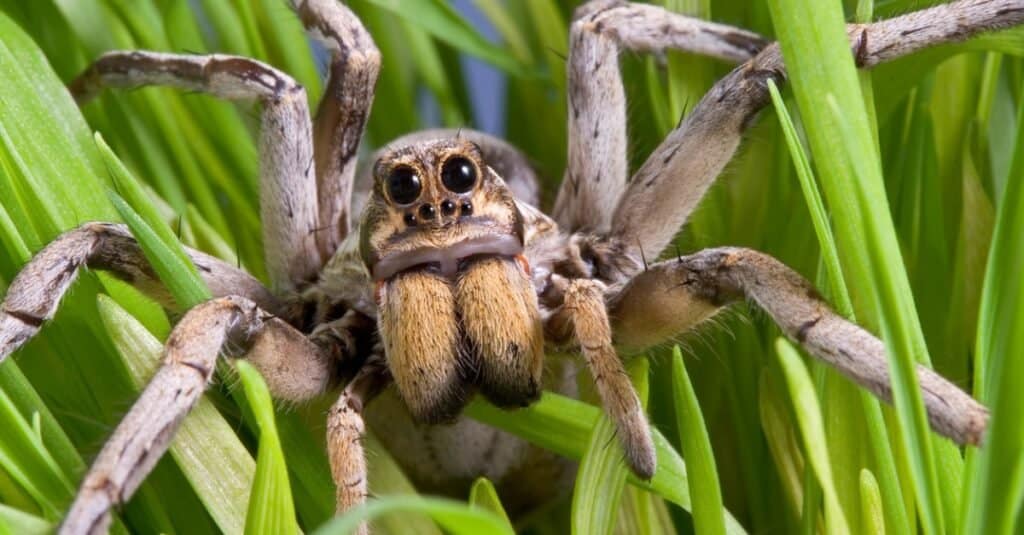
There are around 250 wolf spider species in North America.
©iStock.com/CathyKeifer
Taxonomy
While both wolf spiders and grass spiders belong to the Arachnida class, they come from different families. Wolf spiders belong to the family Lycosidae. Their name comes from the Ancient Greek word λύκος, meaning “wolf.” There are around 2,400 different species belonging to around 125 genera worldwide. In the U.S. and Canada alone, there are believed to be around 250 species in 21 genera.
Grass spiders belong to the family Agelenidae, which is the funnel weavers. Globally, there are over 1,300 species across at least 96 genera. In the U.S. and Canada, there are 14 species in the genus Agelenopsis, which are the American grass spiders.
Distribution and Habitat
Wolf spiders and grass spiders are commonly found in both natural and manmade habitats. They tend to prefer grasslands and forests but sometimes find their way inside peoples’ homes. While their ranges overlap, wolf spiders are more widely distributed. You can find wolf spiders on every continent except Antarctica. These spiders live in a variety of different ground habitats, including grasslands, woodlands, mountains, deserts, and wetlands.
American grass spiders live only in North America, but there are Eurasian grass spiders that inhabit Africa, Europe, and Asia. They prefer open, outdoor areas in grasslands and woodlands. These spiders are often found in grass, weeds, and ground cover in lawns and gardens.
Size
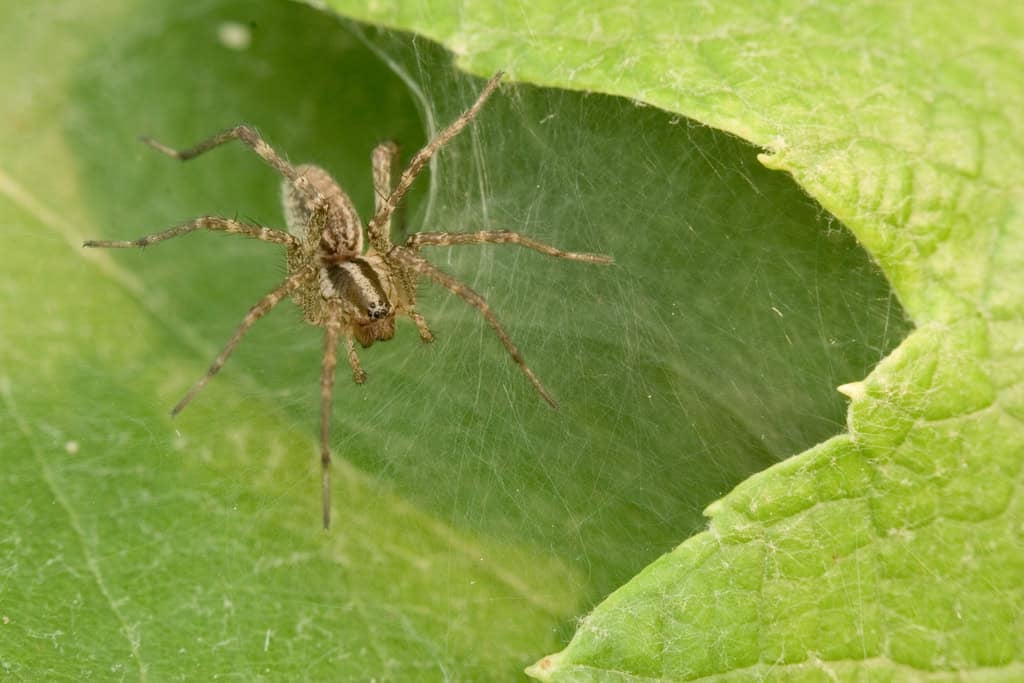
Grass spiders are smaller than wolf spiders on average.
Both wolf spiders and grass spiders vary in size depending on species, but wolf spiders are generally much larger than grass spiders. Wolf spiders have an average body length of 0.25 to 1.5 inches with a leg span of 0.63 to 5 inches. The largest wolf spider in the U.S. is the Carolina wolf spider (Hogna carolinensis), which has a body length of 1.5 inches and a leg span of up to 4 inches. Female wolf spiders are larger than males.
Grass spiders are lighter in build and typically measure 0.5-0.80 in body length and up to 1.5 inches including the legs. The largest grass spider in the U.S. is arguably Agelenopsis naevia, which reaches 0.8 inches in body length and 1.5 inches including its legs. Female grass spiders are also larger than the males.
Appearance
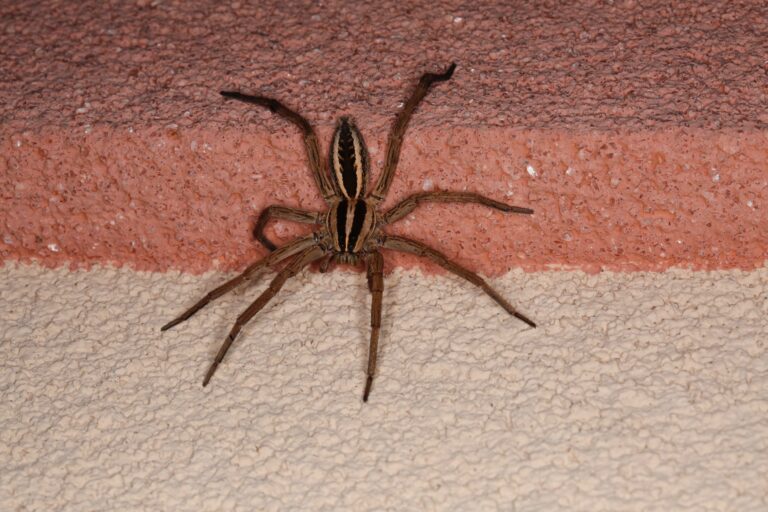
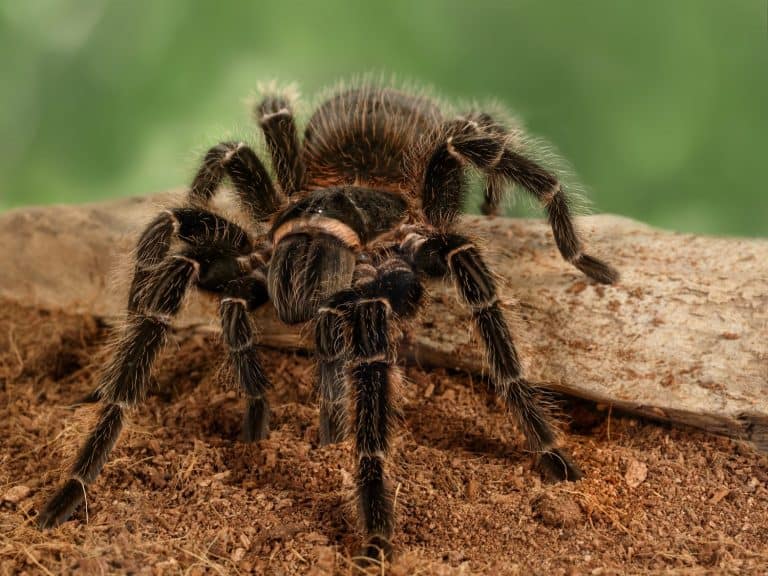
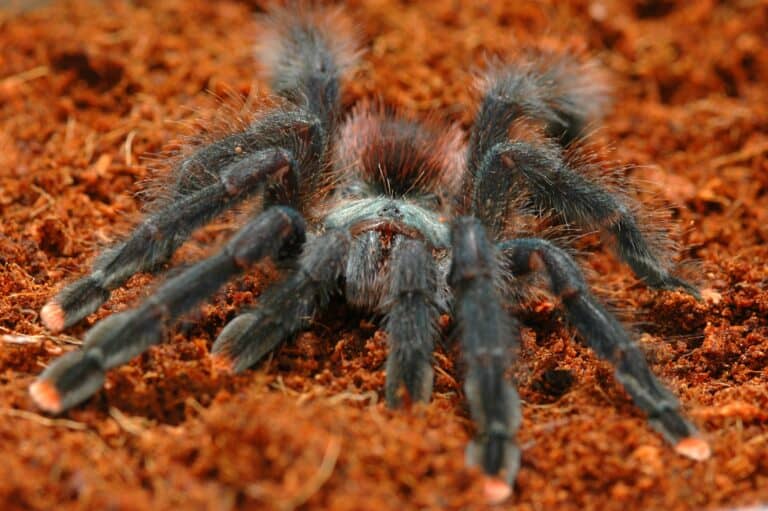
Wolf spiders and grass spiders both depend on camouflage to avoid predators and ambush prey. Given that they tend to reside in similar habitats, this means that they often exhibit a similar appearance. However, a discerning eye can spot several different features and markings unique to each spider. Both wolf spiders and grass spiders can be shades of brown, tan, black, and gray. For example, wolf spiders are generally hairier with more robust bodies. They frequently have a broad, dark stripe down their rounded abdomens. They have relatively short, stout legs, and their spinnerets are smaller than those of most other spiders.
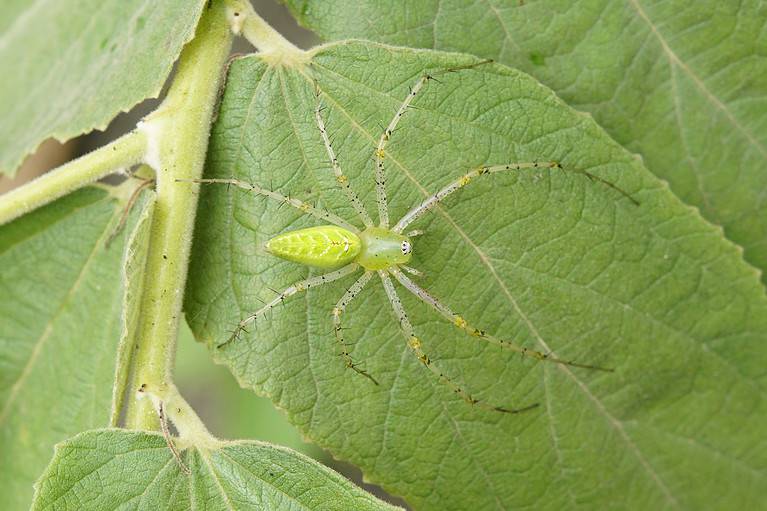
Grass spiders are lighter in build than wolf spiders, and they are not as hairy, except on their legs. Their legs are also thinner and longer relative to their bodies. Like wolf spiders, grass spiders have striped markings. They have parallel, dark brown stripes running vertically down their carapace. They also have a wide, zigzag marking on both sides of their oblong abdomens. Grass spiders have measurably longer spinnerets at the end of their abdomens.
Eyes and Vision

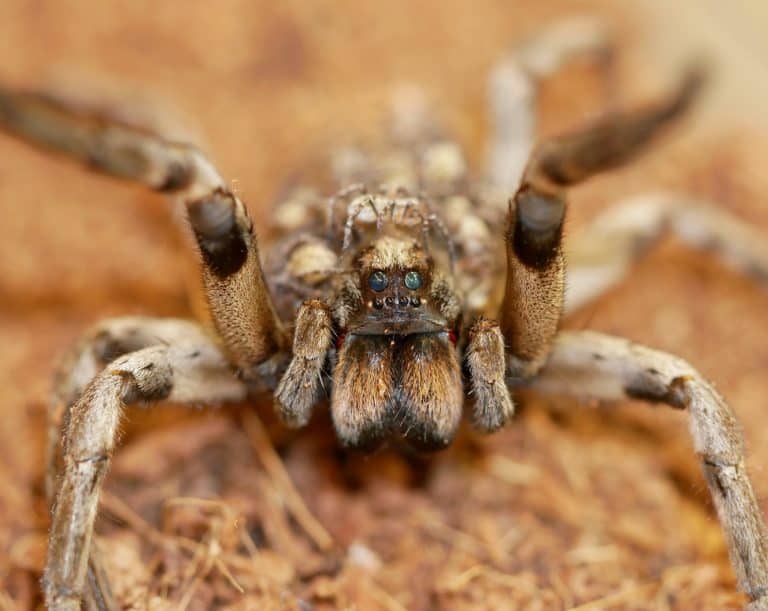
Wolf spiders have two eyes on the top row, two eyes in the middle row, and four eyes on the bottom row.
©Lukas Jonaitis/Shutterstock.com
Most spiders have eight eyes, but the distribution, size, and ability vary by species. Most spiders also have poor eyesight, but wolf spiders have excellent eyesight that enables them to locate and track prey. A wolf spider’s eyes are arranged in three rows, with two eyes on top, two eyes in the middle, and four eyes on the bottom. Additionally, their two middle eyes are much larger than their other eyes. Wolf spiders have a tapetum lucidum in four of their eyes, which is a reflective layer that helps them see to hunt in low-light conditions.
Like wolf spiders, grass spiders’ eyes are arranged in three rows. However, the first row has two eyes, the middle row has four eyes, and the bottom row has two eyes. Grass spiders have poor vision and lack a tapetum lucidum. Like most spiders that build webs, grass spiders rely on their sense of touch and their ability to detect vibrations and air currents in their webs.
Hunting Style
It’s a common belief that all spiders weave webs, but some species, like wolf spiders, do not. Instead, they tend to live in burrows in the ground, leaving their burrows at night to hunt for insects and other spiders. Wolf spiders typically ambush or chase down their prey. They kill by leaping onto their prey and sinking their fangs into their victims to immobilize them.
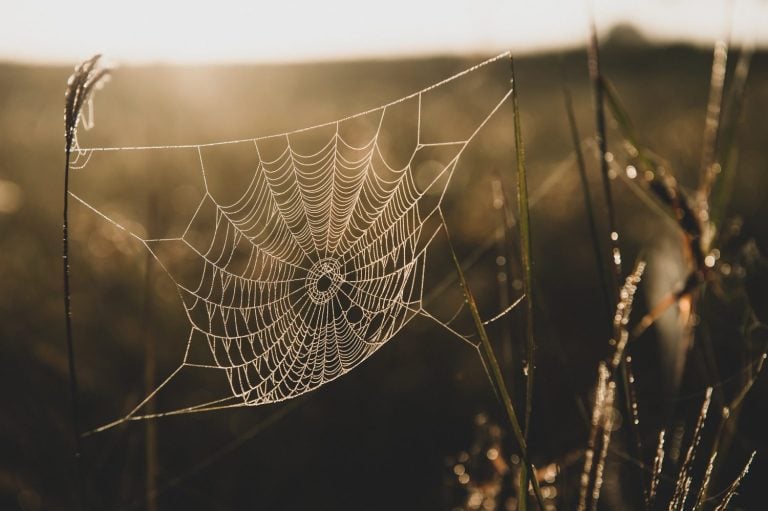
In contrast, grass spiders build webs for their nests and to aid in hunting. However, unlike most spider webs, grass spiders’ webs are not sticky. Their webs are like sheets with a funnel at the edge where the spider waits for prey to come in range. When prey wanders inside their webs, grass spiders will corner and leap onto their targets.
Mating Rituals
Many spider species take part in elaborate and unique mating rituals. In the case of wolf spiders, rituals vary depending on the species and habitat. Some male wolf spiders use their forelegs to visually signal females, waving their legs in patterns, sometimes bending them at a 90-degree angle. Male wolf spiders may also rhythmically tap or drum their legs on the substrate.
Male grass spiders sway their abdomens from side to side during their courtship ritual. These movements cause them to release pheromones in the hopes of attracting a mate. The males may also quiver their legs so the female can sense the movement in her web.
Infant Care
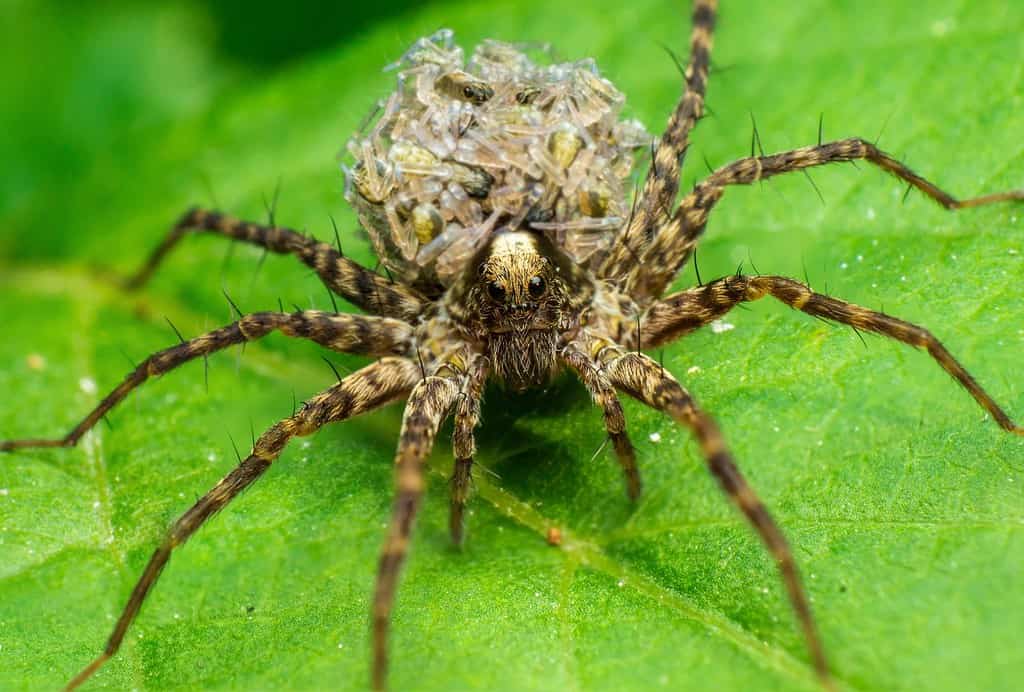
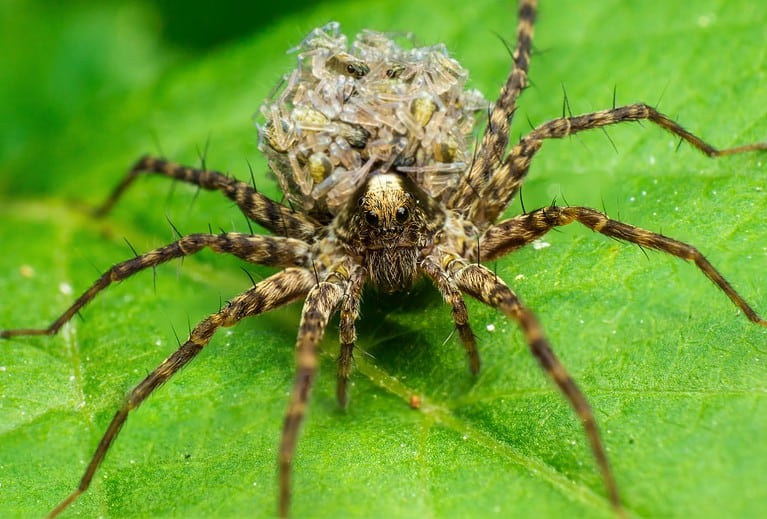
Female wolf spiders carry their babies on their backs until they are several weeks old.
©Alexey Wraith/Shutterstock.com
Adult spiders have earned a terrible reputation for poor care of their offspring. Male spiders almost never stick around to help rear children, and most female spiders lack a mothering instinct. However, wolf spiders differ from many of their kin. Females carry their eggs around on their spinnerets until they hatch. Then, they carry their spiderlings on their backs for several weeks, until the offspring can take care of themselves.
While wolf spiders buck the trend, grass spiders reinforce it. Female grass spiders deposit their eggs into a silk sac, which then overwinters. Generally, females die before the eggs hatch, and many die still attached to their egg sacs.