
Quick Take
- Brine shrimp need salt to survive, but the ocean would kill them. The reason reveals a surprisingly clever survival strategy. Explore their salt strategy →
- The very first thing a brine shrimp eats is something most people would never guess. See their first meal →
- Overfeeding your brine shrimp doesn't just waste food. It quietly sets off a chain reaction that can devastate the tank. Avoid the overfeeding trap →
- You've probably heard of Sea-Monkeys, but what they actually are will change how you think about brine shrimp entirely.
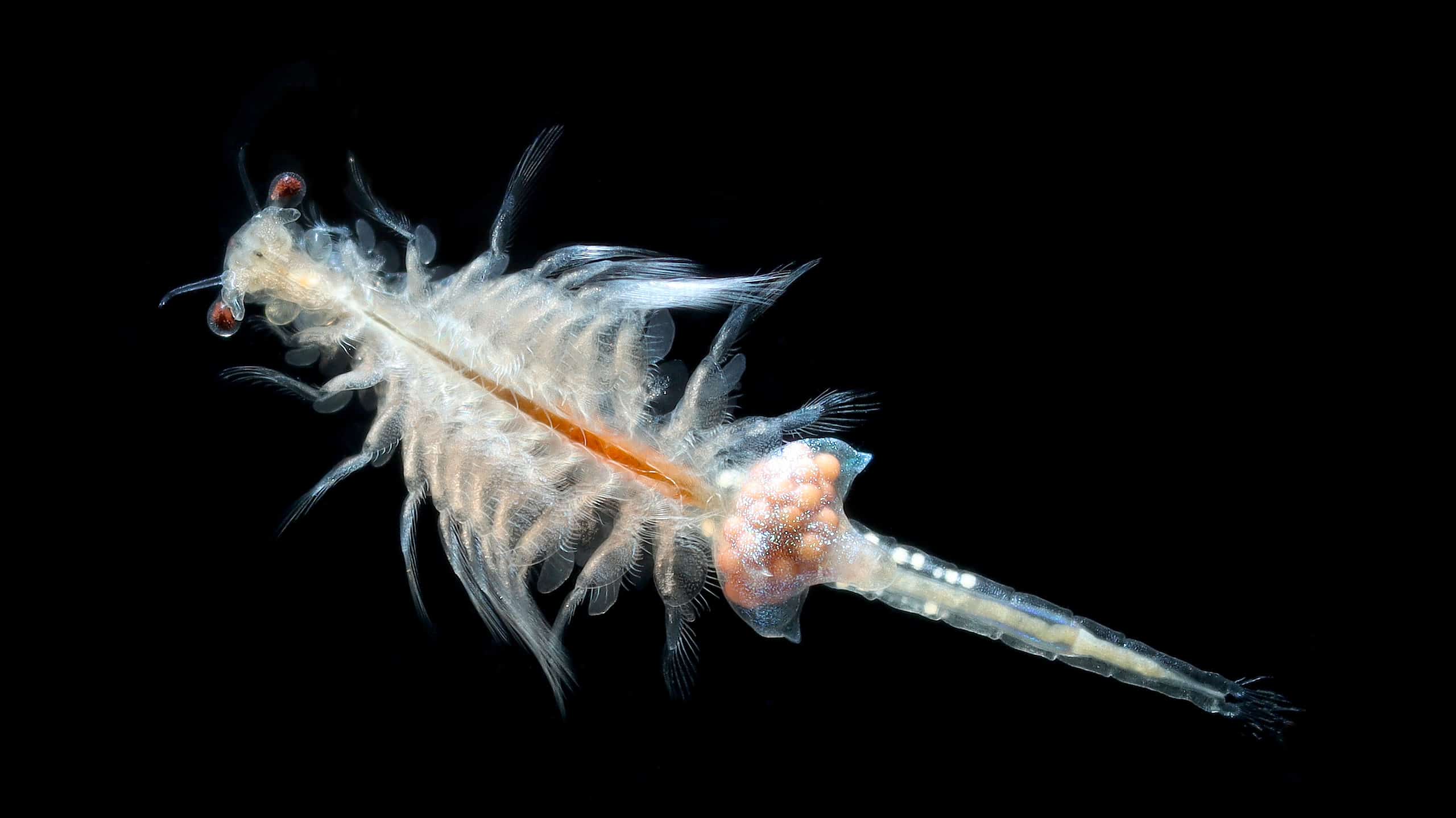
Brine shrimp belong to a genus of microscopic crustaceans, or zooplankton, that inhabit very salty water. The genus Artemia is the only genus in the family Artemiidae. These little creatures are technically not shrimp, although they belong to the same class of crustaceans as shrimp, crabs, and lobsters. You may have heard of Sea-Monkeys, which are a proprietary, hybrid breed of brine shrimp that are sold as pets. Although Sea-Monkeys are not found in the wild, brine shrimp can be found all over the world. Brine shrimp are eaten by fish, but what do brine shrimp eat?
Brine Shrimp Habitat
These little crustaceans have not needed to evolve for more than a hundred million years, as brine shrimp have remained well-adapted for survival. They are so adaptive that they can even spend more than 30 minutes in fresh water. Brine shrimp eggs can even endure going to space, being subjected to radiation, or drying out.
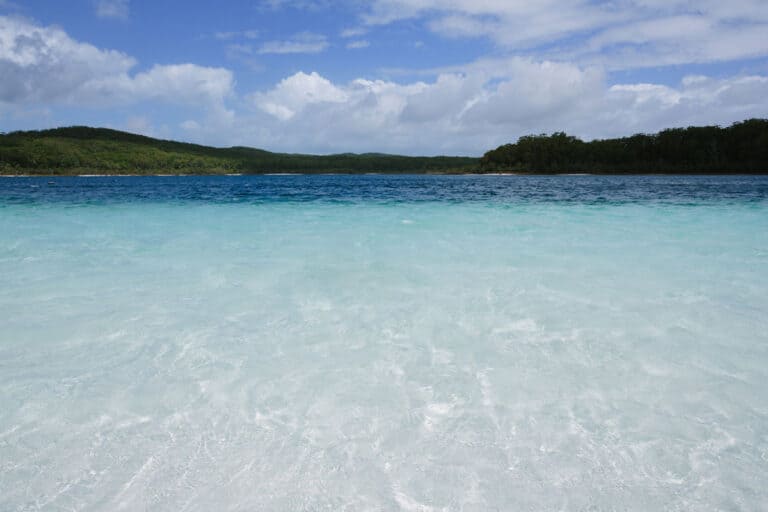
Brine shrimp are saltwater organisms, yet they can’t exist in the oceans; instead, they can only be found in inland saltwater lakes. This is because their main line of defense against potential predators is their capacity to survive in highly salinized water. Although the typical ocean salinity is approximately 3.5%, adult brine shrimp can thrive in water with a salinity of up to 25%. Brine shrimp inhabit water bodies such as the Great Salt Lake in Utah, Mono Lake in California, the salt ponds south of San Francisco, and the Caspian Sea.

Brine shrimp can only be found in inland saltwater lakes like the Great Salt Lake in Utah.
©iStock.com/rinriver0423
The Brine Shrimp Diet
As mentioned above, brine shrimp are zooplankton—tiny animals. These little animals swim upside down, sweeping tiny particles of food into their mouths.
In the wild, brine shrimp typically eat:
- Microscopic planktonic algae
- Cyanobacteria and archaea
- Diatoms
- Bacteria
- Organic detritus
What do these little animals eat in captivity? Because they are filter eaters, almost any organic substance can be used as food, as long as it’s given to them in small enough bits for absorption. Some of the most common brine shrimp foods include wheat flour, soybean powder, whey, powdered spirulina algae, and baker’s yeast. Despite not being plant-based, even egg yolks make an excellent brine shrimp food.
Brine shrimp actually rely on an internal yolk reserve from their own egg as soon as they are born. This can sustain them for up to 5 days without any additional feeding. However, if you are raising brine shrimp as feeders for fish, the best time for your fish to consume them is just after the brine shrimp hatch. Once they consume the egg yolk, their fat content increases noticeably.
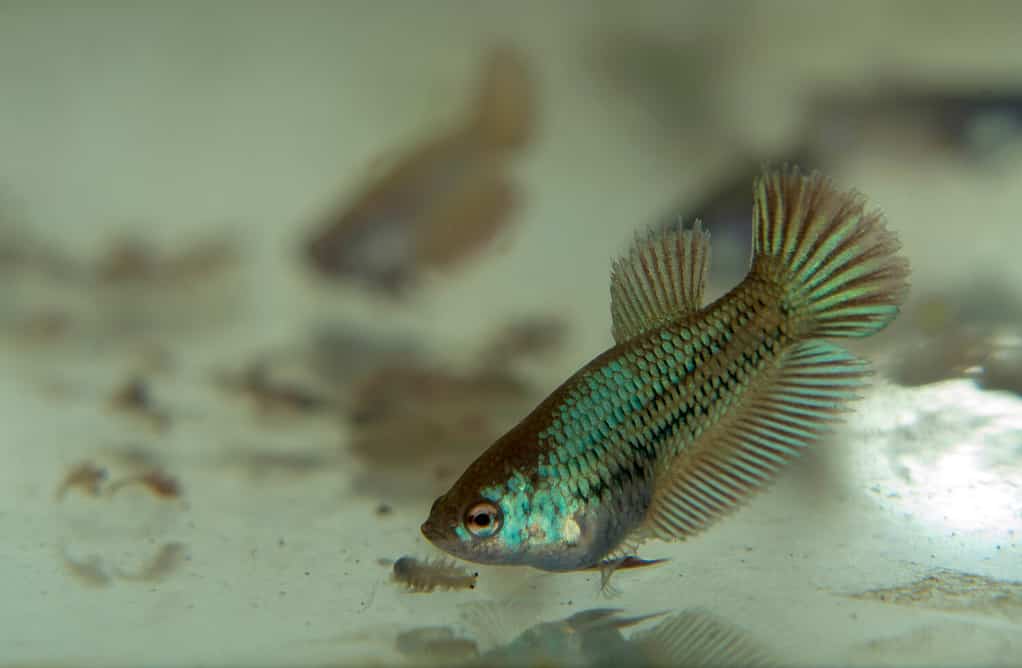
The best time for your fish to consume brine shrimp is just after the shrimp hatch.
©Pantherius/Shutterstock.com
Feeding Brine Shrimp
Brine shrimp should be fed sparingly. In order for these little animals to absorb the nutrients, drop tiny amounts of food into their tank repeatedly throughout the day. Yeast suspensions are an easy way to feed your brine shrimp. Prepare a salt solution that is the same salinity as your brine shrimp tank. Then, stir in baker’s yeast so the water has a milky appearance. This solution can be stored in the refrigerator. If you don’t want the hassle of manual feeding or spend little time at home, you can install a simple drip feeder.
You can also scatter spirulina flakes, wheat flour, soybean powder, crushed grains of dry baker’s yeast, or other particulate foods on top of the water. The water may be cloudy for a short period, but it should clear up within 15 minutes. Do not overfeed your brine shrimp, as overfeeding lowers water quality and reduces oxygen levels.
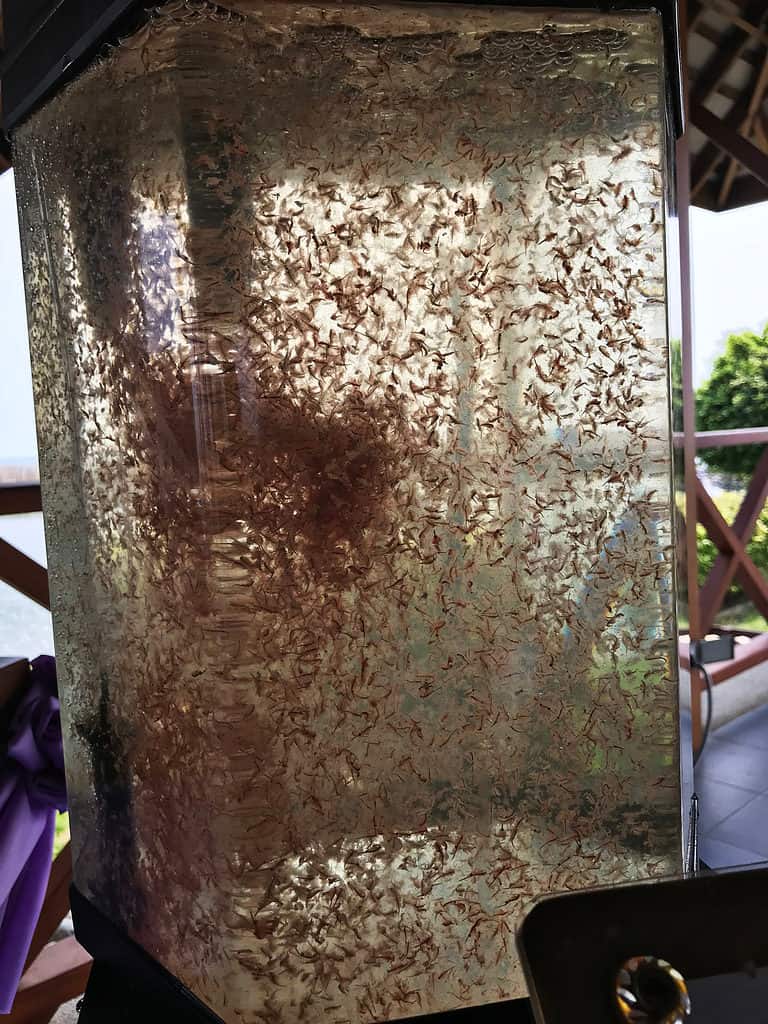
Do not overfeed your brine shrimp, as this can reduce the water quality and oxygen levels.
©Kendo Nice/Shutterstock.com