
Arizona is a gorgeous state, full of geological wonders and epic, breathtaking desert vistas. While many may think of the state as lacking in big game, the reality is anything but. From Mexican wolves to great horned owls, Arizona is chock-full of interesting wildlife. One of the most magnificent, however, is the mule deer. But what is a mule deer? And how big is the biggest mule deer ever harvested in Arizona? Keep reading to find out.
What Is a Mule Deer?

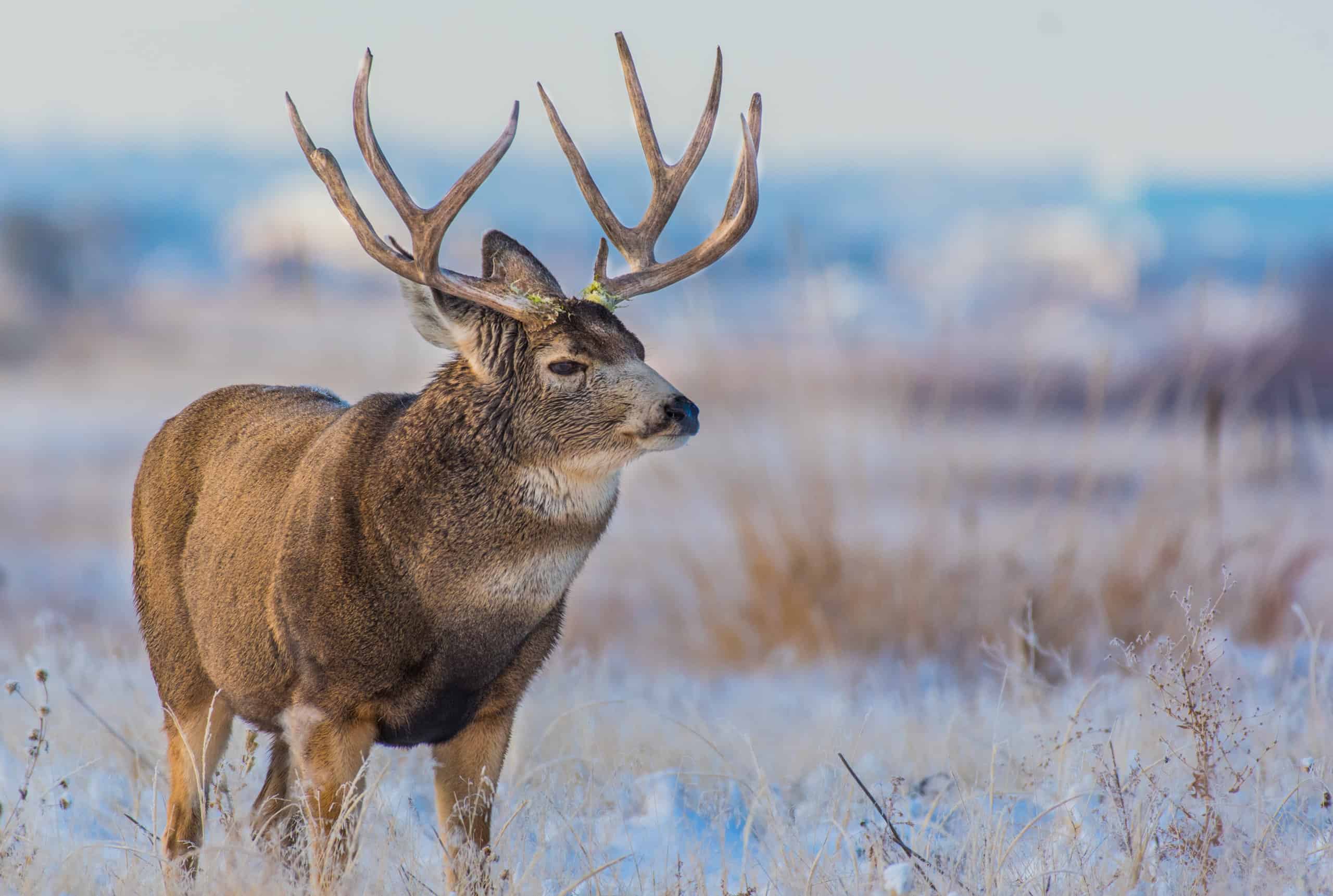
Mule deer are found throughout the western United States.
©Danita Delimont/Shutterstock.com
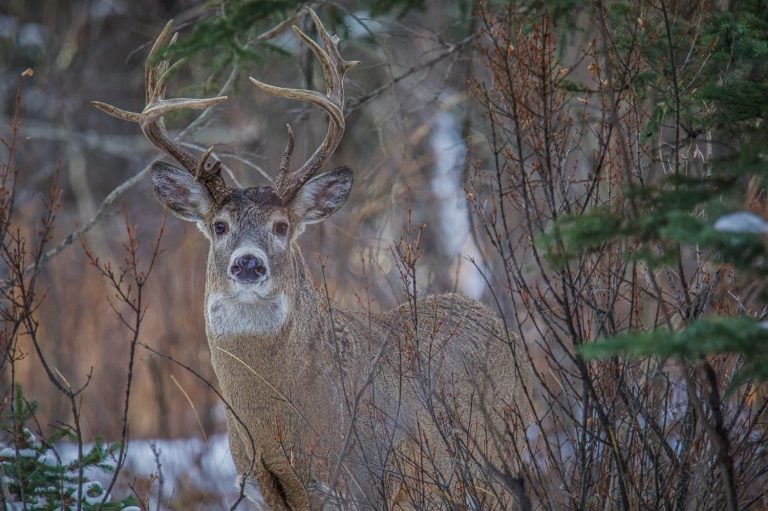
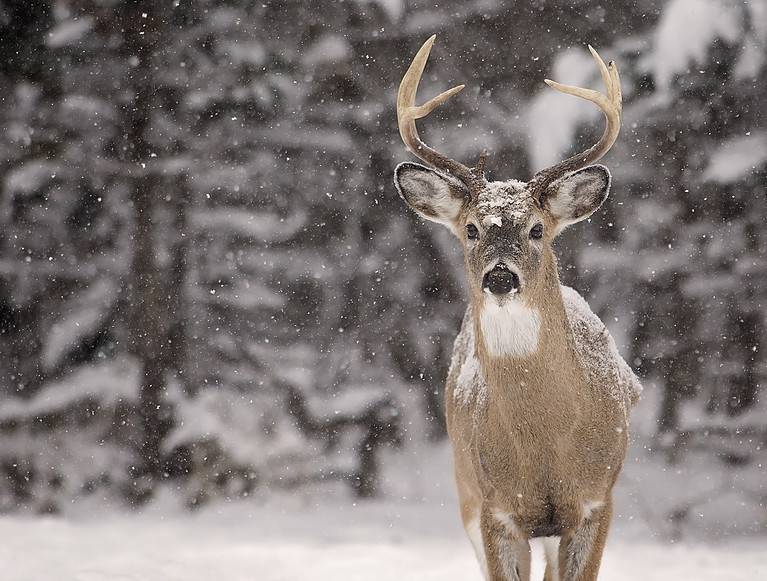
Native to North America, and often found in the western United States, the mule deer got its name from its large, mule-like ears. Though related to whitetail deer, mule deer are bigger, have a more stiff-legged gait when running, and are less aggressive when provoked. Mule deer are found throughout Arizona and are the most abundant deer species in the state.
Mule deer generally measure between 31 and 42 inches at the shoulder and range from 3.9 to 6.9 feet in length. Adult male mule deer can weigh as much as 300 pounds, whereas females typically weigh about 100 pounds. Males have forked antlers which they use to battle other males during the mating season. Bucks with the most impressive antlers usually gain breeding rights.
Deer Hunting Season in Arizona
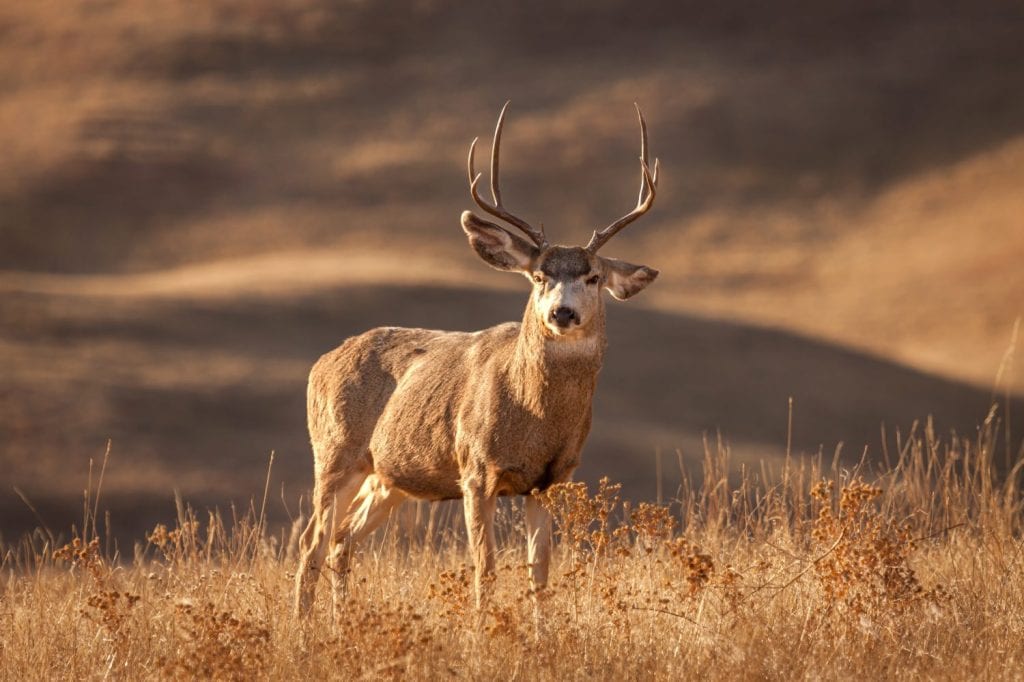
Mule deer are characterized by their large, mule-like ears and stiff-legged gait.
©Dennis Laughlin/Shutterstock.com
The mule deer hunting season for over-the-counter (OTC) archery hunts in Arizona generally runs from late August to mid-September, then again from mid-December through January. Draw-only rifle seasons typically occur in late October to early November for early rifle hunts. They occur again in late November for late rifle hunts, but exact dates vary by unit and year.
Hunters must have a valid Arizona hunting license. Permit-tags are required for draw hunts and must be obtained through the AZGFD lottery system. OTC archery tags can be purchased and have harvest limits. Some of the state’s most popular public hunting grounds include the Coconino National Forest, Santa Teresa Wilderness, Woolsey Park Wilderness, and Saguaro Lake. Visit the Arizona Game and Fish Department website for the most up-to-date information about hunting seasons and regulations.
How Are Scores for Mule Deer Records Calculated?
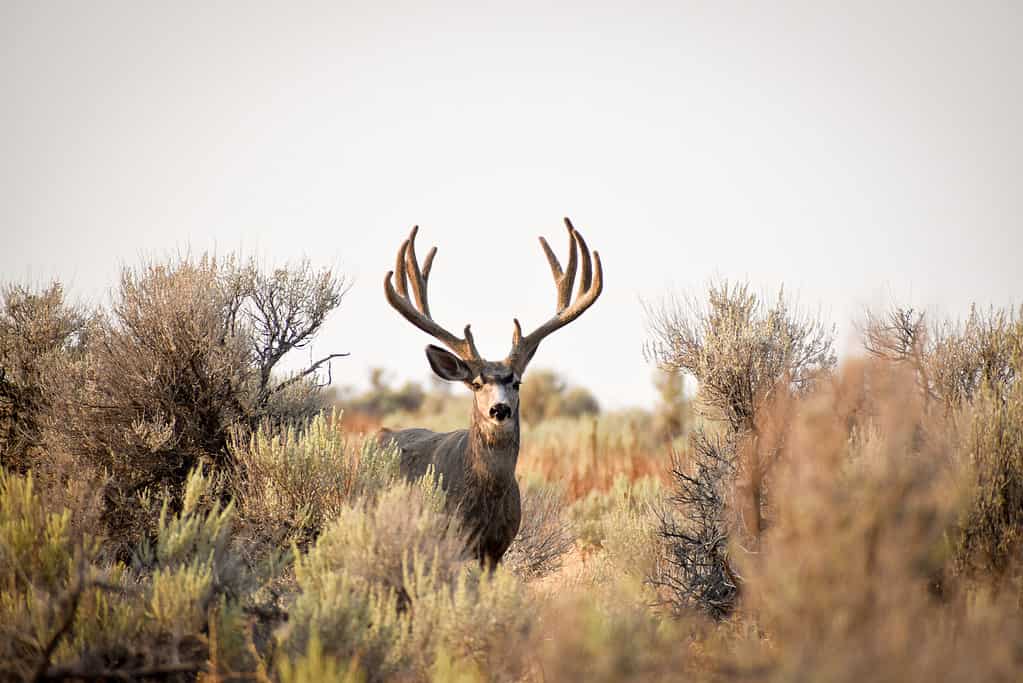
Mule deer antlers are scored in two categories: typical, as shown above, and non-typical.
©Chad J Stokes/iStock via Getty Images
As a big game animal, mule deer garner trophies for the complexity and size of their antlers, per guidelines set by the Boone and Crockett Club. This organization was founded in 1887 by Theodore Roosevelt and others for the purposes of conservation and wildlife management. The Boone and Crockett Club recognizes mule deer records in two categories: typical and non-typical. In the typical category, antlers follow a standard pattern, defined by symmetrical tines and evenly spaced points. Non-typical antlers deviate from the standard in unusual ways, often resulting in very high scores.
To calculate the score, measurements are taken of individual elements on the antlers. These include: the width of the main beam spread from tip to tip, the width of the greatest spread, the inside spread of the main beams, the total length of all abnormal points, the length of the main beam, the length of normal points, and the circumference between points. The measurements are then entered into the Boone and Crockett score chart to provide a final score. A score above 190 or higher qualifies a typical mule deer for the Boone and Crockett all-time record book, and a score of 230 or higher qualifies a non-typical mule deer.
The Biggest Mule Deer Ever Harvested in Arizona

Mule deer are scored by the complexity and size of their antlers.
©John Boland/Shutterstock.com
The record for largest non-typical mule deer ever harvested in Arizona belongs to hunter William L. Murphy who shot a mule buck in North Kaibab, Arizona, on November 14, 1943. Despite harvesting the largest non-typical mule deer in Arizona history, Murphy did not make the record books until three decades later. Murphy’s prize remained unknown until his son-in-law, William R. Karam, submitted the details to the Boone and Crockett Club. The buck’s antlers scored 324-1/8.
The world record score for this category is 355-2/8. Like the Arizona non-typical record, this world record was not entered into the record books until several decades after it was shot in 1926 by Ed Broder near Chip Lake, Alberta, Canada, and scored in 1960.
The Arizona record-setting antlers in the typical category with a score of 216-2/8 were found in 1994. Steve Stayner found the bones of a gigantic buck while searching for deer in Coconino County. Stayner went back to Phoenix to show his father, who happened to be an Official Measurer for Boone and Crocket. Only 10-2/8 points separate the Arizona mule deer typical record from the world record of 226-4/8, which was shot in 1972 by Doug Burris Jr. in Dolores County, Colorado.