











Quick Take
- Doxiepoos are marketed as hypoallergenic, but every allergy sufferer needs to know about an important catch before bringing one home. See the hypoallergenic catch →
- Their size can vary so wildly that two doxiepoos from different breeders might look like completely different breeds, and that variation has real implications for picking one. Explore the size variation →
- One common dog food ingredient may quietly put this breed's heart at risk, something most owners never think to check the label for. Check the ingredient warning →
- This breed's biggest personality flaw sounds exhausting, yet it comes with an unexpected silver lining that makes it surprisingly manageable. See the personality tradeoff →
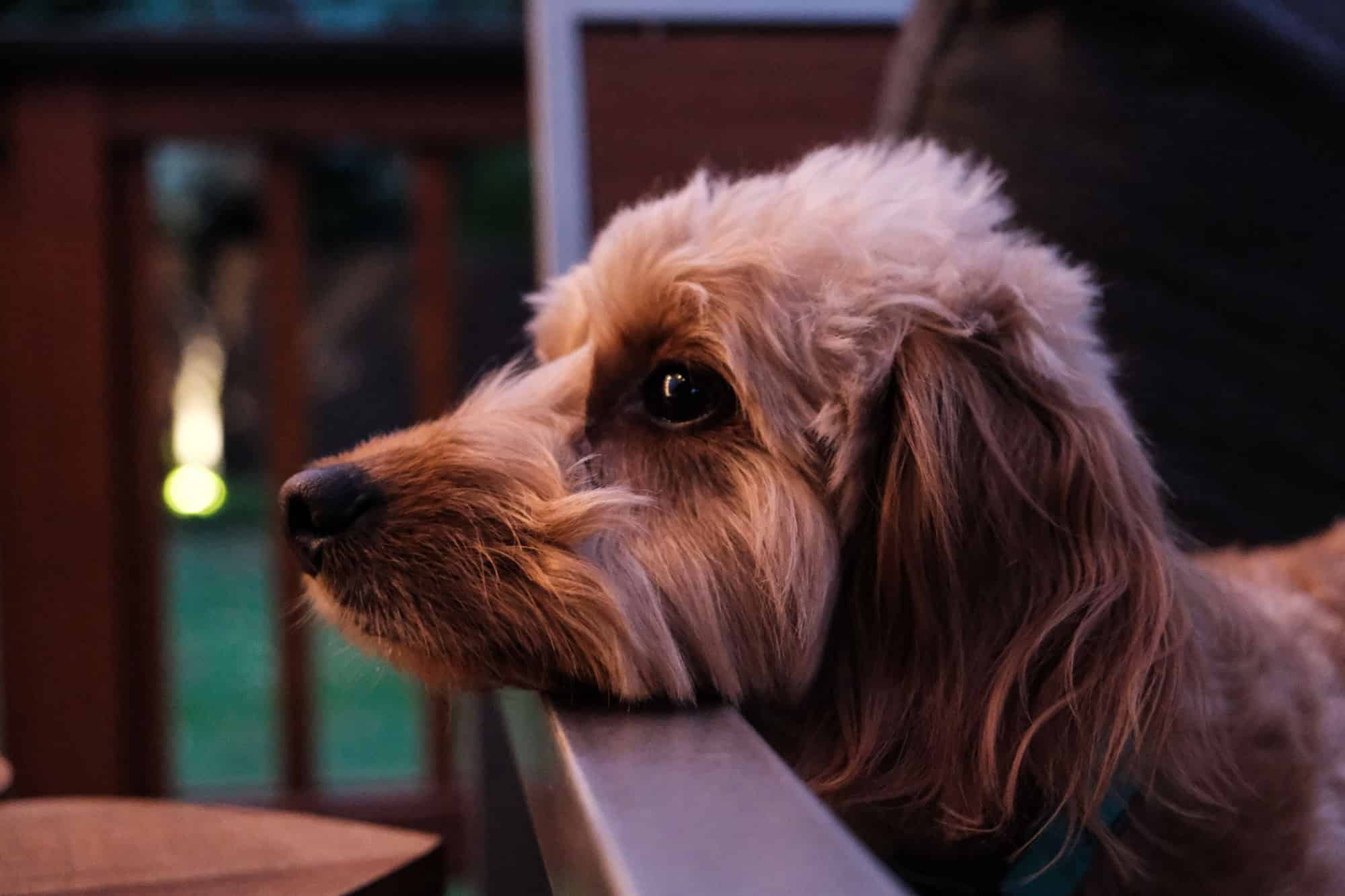
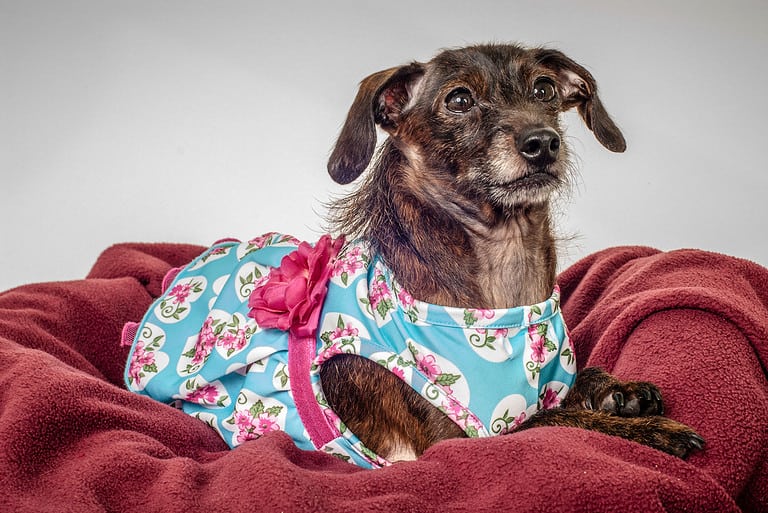
The doxiepoo is an adorable cross between a dachshund and a miniature poodle. This breed has been around since at least the 1990s, making it a relatively recent designer dog, though doxiepoos are now fairly common and can be found through breeders and rescues. Doxiepoos are also known as doxiedoodles, dachdoodles, or dachshundpoos.
One of the main features that breeders discovered in doxiedoodles is their variety of soft, curly, and uniquely attractive coats. Miniature poodles are popularly considered hypoallergenic due to their low-shedding coats, though no dog breed has been scientifically proven to be truly hypoallergenic, which means that while some doxiedoodles may be better tolerated by allergy sufferers, no guarantees can be made. With cute personalities and even cuter appearances, it’s no surprise that so many families are looking to adopt a doxiepoo of their own. If the price of a doxiepoo from a breeder is too high, consider looking for one at a rescue; these sweet pups do appear in shelters and breed-specific rescues from time to time.

3 Pros and Cons of Owning a Doxiepoo
| Pros | Cons |
|---|---|
| Low-shedding coat: Almost all doxiedoodles that inherit the poodle genetics have low-shedding, hypoallergenic coats. This makes them a great dog choice for families with allergies. | Separation anxiety: Doxiedoodles are incredibly attached dogs that cannot be left alone. Luckily, they are small enough to go everywhere you do! |
| Playful personality: Doxiedoodle puppies are some of the sweetest and most playful pups on the market. They’re very attached to their owners, and they love to hang out and spend time with their families. | Only pet: Most doxiedoodles don’t get along well with other animals, whether they’re other dogs, cats, or even cage pets. These dogs are a good choice for one-pet lifestyles. |
| Apartment size: Doxiedoodles are miniature dogs that fit in very well with an apartment lifestyle. As long as you take them out for a short walk two or three times a day, your doxiedoodle will be happy to run around the house as the primary form of exercise. | Extra grooming: They need to be brushed or combed every day to keep their fluffy fur from matting up. You should also take your Doodle to the groomer on a monthly or semi-monthly basis to keep their coat in check. |
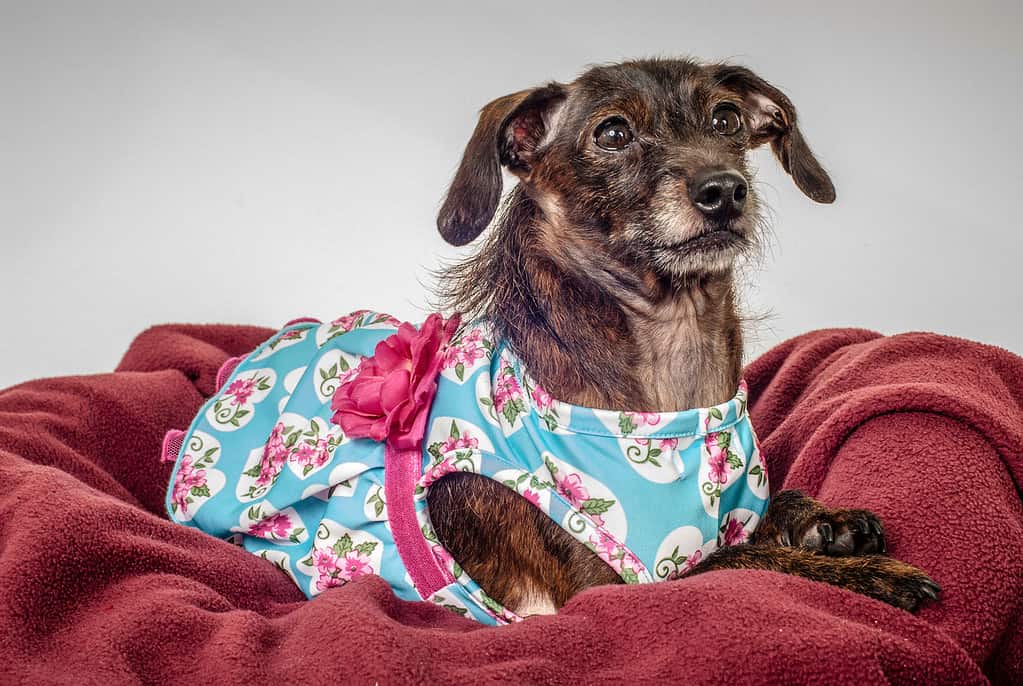
Almost all doxiedoodles that inherit the poodle genetics have low-shedding, hypoallergenic coats.
©PlanePete/Shutterstock.com
Size and Weight
Doxiepoos are small, fluffy dogs with long ears and curly hair. Because they are a cross between a dachshund and a miniature poodle, two breeds with a variety of possible appearances — it’s hard to tell what a doxiedoodle will look like when they are full-grown. Most doxiedoodles weigh between 5 and 30 pounds, and they typically stand between 5 and 21 inches tall. Although females are generally smaller than males from the same litter, the wide variation in size means that a female doxiedoodle from one breeder could be significantly larger than a male doxiedoodle from a different breeder.
Common Health Issues
Doxiedoodles are descended from two breeds with a variety of potential health issues. Although it’s difficult to guess which issues will crop up in a mixed-breed dog, you should have your vet check for retinal damage, joint dysplasia, diabetes, epilepsy, and other disorders that tend to crop up in either dachshunds or miniature poodles.
Temperament
Doxiepoos are known to be playful, attentive, sociable, and highly attached dogs. Depending on the way they are raised, a doxiedoodle can also display an incredibly stubborn or sensitive personality. The temperament of a doxiedoodle can vary as much as its appearance, so don’t be surprised if no two of these dogs are exactly alike.
Because they are highly prone to anxiety, untrained doxiedoodles are known to have behavior issues like barking, chewing, or even digging in the garden. These pups love to be the only pet in the family and don’t do particularly well with other animals. However, if you can get over some of the rough edges of their personalities, you’ll find that doxiepoos are incredibly loving and devoted pets.
How to Take Care of a Doxiepoo

Doxiedoodles are incredibly attached dogs that cannot be left alone. Luckily, they’re small enough to follow their owners everywhere.
©Ray Larabie from Nagoya, Japan, Japan / CC BY 2.0 – Original / License
Doxiedoodles are incredibly easy to care for, especially when fully grown. Make sure that your doxiedoodle gets plenty of attention and exercise, and they’ll be your best friend for the rest of your life.
The Best Dog Food
Doxiedoodles are small dogs that don’t need a lot of food to maintain their body weight. It’s up to you whether to feed your pet high-quality kibble or cook them food at home. Either way, make sure your pup is getting plenty of protein, fiber, and healthy fats. Some breeders may have specific recommendations for feeding doxiepoo puppies from their litter.
Since this breed can be prone to heart disease, Doxiepoo owners may want to consult their veterinarian about dog foods containing legumes. These foods have been identified in a majority of diets under FDA investigation for a potential link to canine dilated cardiomyopathy, though a definitive causal connection has not yet been established. Fortunately, there is a good selection of legume-free dog food out there.
Maintenance and Grooming
All dogs that are descended from poodles have special grooming needs. Although your doxiedoodle is likely hypoallergenic, it’ll still need to be brushed or combed every day to keep its fluffy fur from matting up. You should also take your Doodle to the groomer on a monthly or semi-monthly basis to keep their coat in check and to make sure that their nails are getting trimmed.
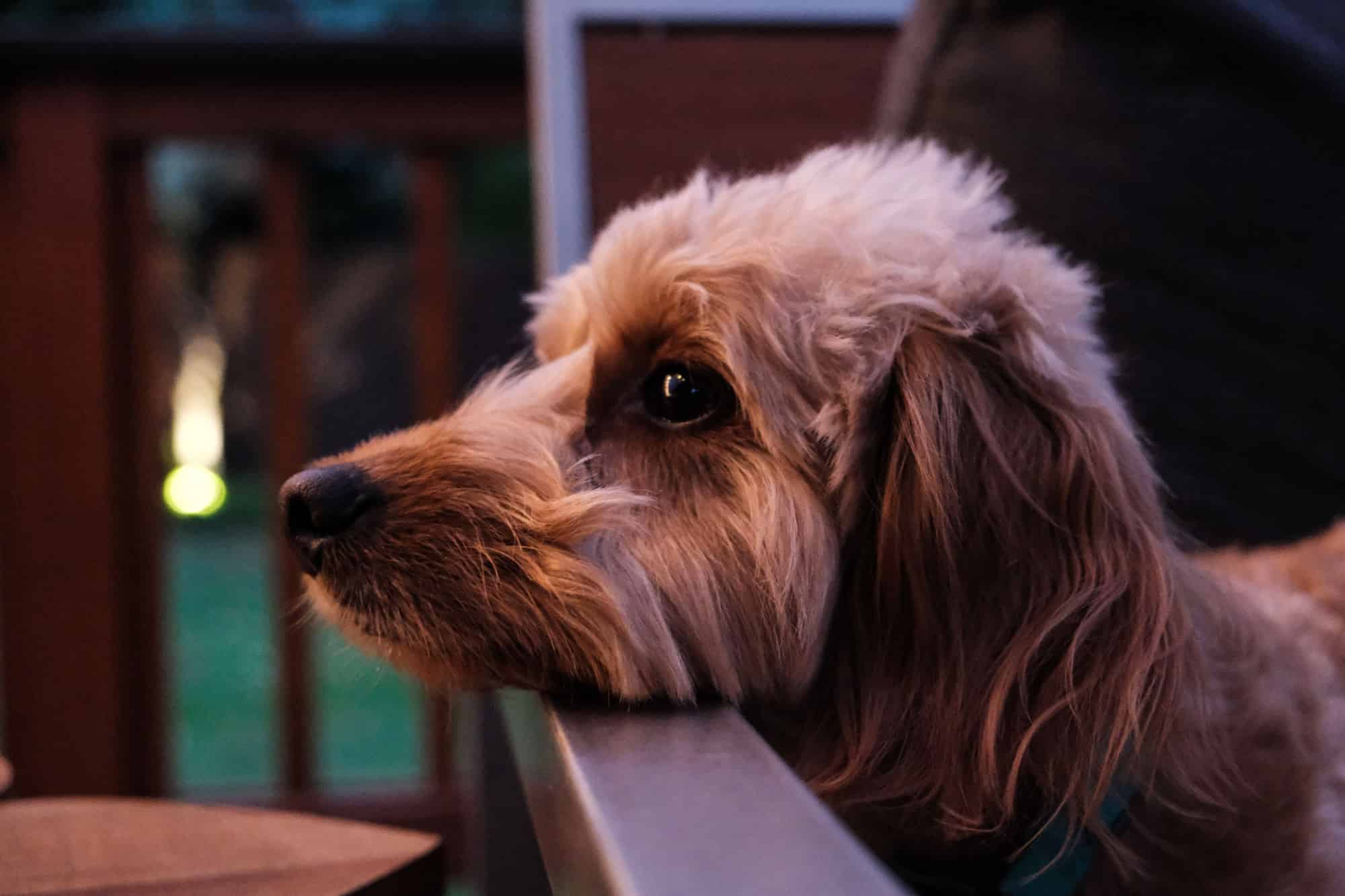
Doxiedoodles are small enough to get plenty of exercise by running around in the backyard.
©iStock.com/Wirestock
Training
Doxiedoodles are stubborn but intelligent dogs. If you start their training early, you should have no problem getting them to recognize and respond to basic commands. Keep the training up to make sure that they stay in the habit of obeying your voice. As long as you maintain a positive relationship with your pet, they will be happy to be obedient and good.
Exercise
Doxiedoodles are small dogs. Although they need a moderate to high amount of exercise, they can get much of it by running around their home or backyard. In addition, your doxiedoodle will need at least two half-hour walks a day. Depending on the type of personality your doxiepoo has, they may also appreciate playing fetch, tug-of-war, or similar puppy games.
Puppies
Doxiepoo puppies are typically incredibly small, and they can be born with a wide variety of different physical and personality traits. As soon as you get your doxiedoodle, take them to the vet for a checkup and a general checkup to make sure there are no major health issues. Remember to start training early and give plenty of attention to your eager and inquisitive little pup.
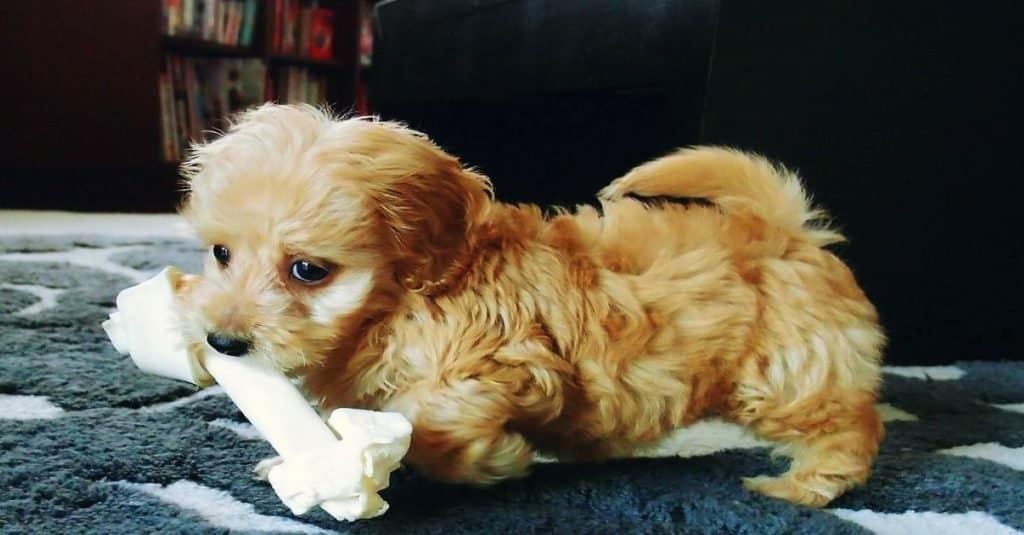
Doxiedoodle puppies are some of the sweetest and most playful pups on the market. They’re very attached to their owners, and they love to hang out and spend time with their families.
©Ray Larabie from Nagoya, Japan, Japan / CC BY 2.0 – Original / License
Children and Doxiepoos
Doxiedoodles are very small dogs with high amounts of anxiety. Although they are friendly and playful, these pups don’t do well when left alone with children. If you want to introduce a doxiedoodle to your family, make sure that the situation is well-supervised, and don’t leave them unsupervised near very young children who don’t know how to handle a dog. Remember that doxiedoodles don’t get along particularly well with other pets; to avoid tensions, don’t leave them alone with dogs that they don’t know.
Dogs Similar to Doxiepoos
The main features of the doxiedoodle are its small size, curly coat, and vibrant personality. You can find many of these traits in other Doodle breeds, such as the havapoo, the Maltipoo, and the Schnoodle.

Havapoos are high-energy dogs that love people. They are affectionate and love to play.
©Tryon Pics/Shutterstock.com
- Havapoo: A cross between a poodle and a Havanese, the havapoo is a low-energy dog with a sweet and confident personality.
- Maltipoo: Maltipoos are one of the most popular types of toy Doodles. Maltipoos are fluffy, playful, and surprisingly easy to take care of.
- Schnoodle: Schnoodles are a cross between poodles and schnauzers, which can include Miniature, Standard, or Giant schnauzer varieties. Both parent breeds have similar hypoallergenic coats, and many personality traits blend well in this excellent Doodle breed.
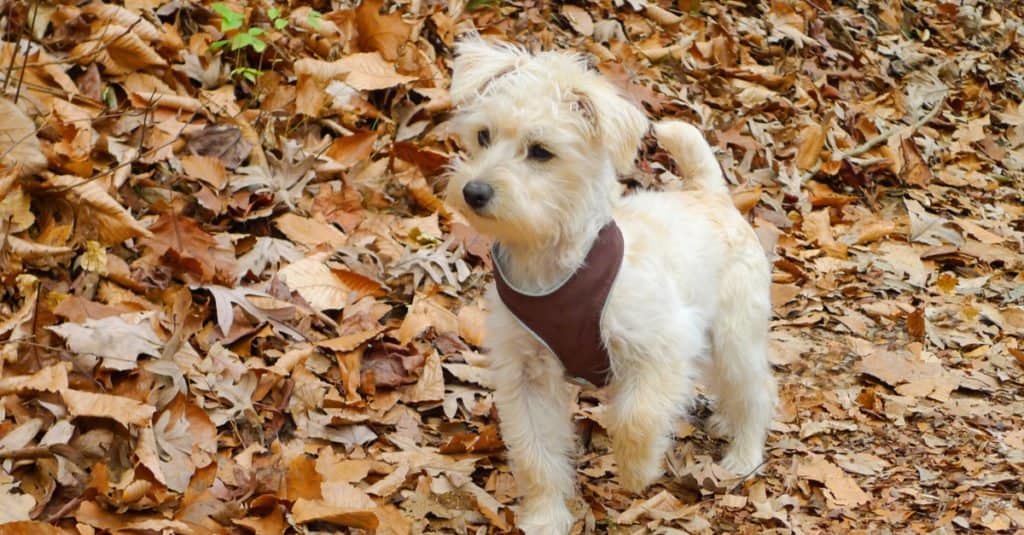
Schnoodles don’t shed very much and can be a good choice for individuals with allergies.
©Rena Schild/Shutterstock.com
Doxiepoo Pictures
View all of our Doxiepoo pictures in the gallery.

Sources
- Dog Time / Accessed March 3, 2021
- Dogell / Accessed March 3, 2021
- Vetstreet / Accessed March 3, 2021
- Dog Zone / Accessed March 3, 2021
- Teacup Dog Daily / Accessed March 3, 2021