




D
Species Profile

Doxle

Canis lupus familiaris

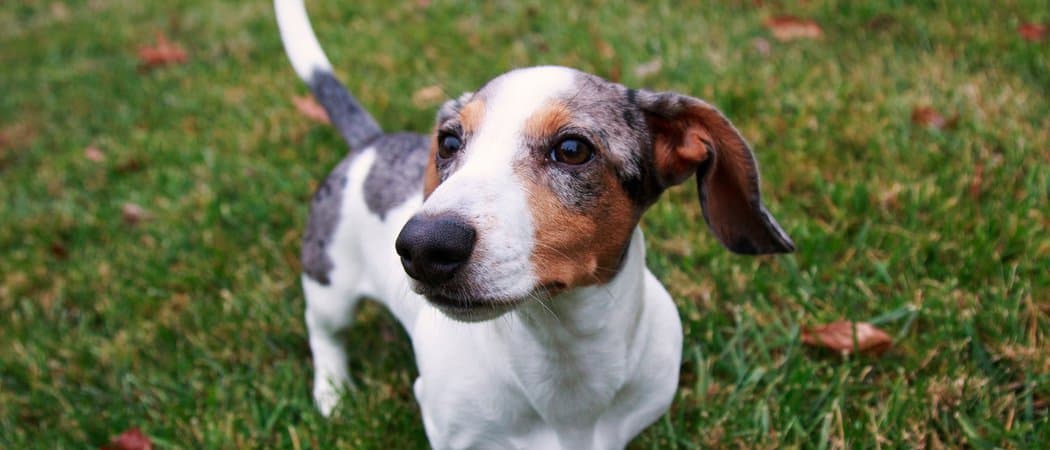
Big Nose, Brave Heart, Small Body
iStock.com/Denise Erickson

Doxle Distribution

Click a location to explore more animals from that region

Origin Location

This map shows the native origin of the Doxle. As a domesticated species, they are now found worldwide.

Loading map...

Found in 1 state/province

Size Comparison

Human 5'8"
Doxle 11 in

Doxle stands at 16% of average human height.

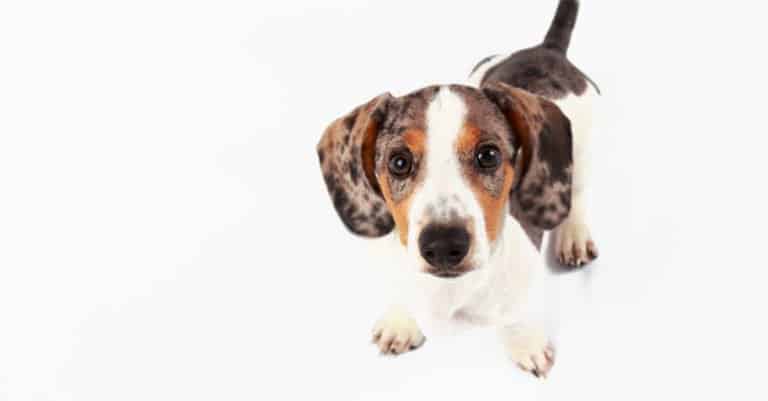
The Doxle Has Long Floppy Ears

At a Glance

Domesticated
Also Known As Beagle–Dachshund mix, Beagle/Dachshund cross, Beagle × Dachshund, Beagle-Dachshund cross, Beagleweenie, Beagle Doxie
Diet Omnivore
Activity Diurnal+
Lifespan 13 years
Weight 16 lbs
Status Not Evaluated
Did You Know?

It's a designer cross (Beagle × Dachshund), not a standardized kennel-club breed-so looks and temperament can vary a lot within the same litter.

Scientific Classification

The Doxle is a small-to-medium companion dog produced by crossing a Beagle with a Dachshund. Traits vary widely by individual, but they often combine the Beagle’s scent-hound tendencies with the Dachshund’s long-backed body shape and bold temperament.

Kingdom
Animalia
Phylum
Chordata
Class
Mammalia
Order
Carnivora
Family
Canidae
Genus
Canis
Species
Canis lupus

Distinguishing Features

  • Often long-bodied with relatively short legs (Dachshund influence), but can be more Beagle-proportioned
  • Strong scenting and tracking behavior is common (Beagle influence)
  • Typically drop ears; coat can be short and smooth to moderately dense
  • Color patterns frequently resemble Beagle (tri-color) or Dachshund variations

Physical Measurements

Males and females differ in size

Height
12 in (9 in – 1 ft 3 in)
11 in (8 in – 1 ft 2 in)
Length
2 ft 4 in (1 ft 10 in – 2 ft 11 in)
2 ft 5 in (1 ft 11 in – 2 ft 11 in)
Weight
26 lbs (18 lbs – 37 lbs)
22 lbs (13 lbs – 31 lbs)
Tail Length
7 in (6 in – 9 in)
7 in (6 in – 9 in)
Top Speed
20 mph
Short legs, quick runs

Appearance

Primary Colors
Secondary Colors
Skin Type Doxle skin is like most dogs. Coat varies: usually smooth, short, and close (Dachshund), sometimes denser short (Beagle), rarely longer or wiry. Skin is fairly sensitive; floppy-ear care needed.
Distinctive Features
  • Designer crossbreed (Beagle × Dachshund), not an officially standardized pure breed-appearance and size can vary widely even within a litter.
  • Often shows a long-backed, low-to-the-ground silhouette (Dachshund influence) combined with a broader hound head and expressive eyes (Beagle influence).
  • Floppy, hound-like ears are typical; ear leather may be long and can trap moisture, increasing risk of ear irritation/infections.
  • Deep chest and relatively short legs are common; overall build can range from more 'beagle-proportioned' to more 'dachshund-proportioned'.
  • Nose-led, scent-hound behavior is a hallmark (Beagle influence): strong tracking drive, frequent sniffing, and tendency to follow scents-often benefits from harness use and secure fencing/leashing.
  • Vocal tendencies may include baying/howling or persistent alert barking (hound influence), though intensity varies by individual.
  • Common health concerns: spinal disc disease (higher if long-backed), obesity, ear infections (floppy ears), dental crowding, patellar luxation, and possible Beagle-related hypothyroidism or epilepsy.
  • Because of their long body, Doxles should be kept lean, avoid repeated high jumps and many stairs, be lifted with one hand under chest and one under rear, and do careful core and neck exercises.
  • Exercise/mental needs: moderate daily activity plus scent work (sniff walks, tracking games, food puzzles) to prevent boredom-driven behaviors; recall can be unreliable when scenting, so training and management are key.
  • Grooming is usually low-to-moderate (especially in smooth coats): routine brushing, nail care, and regular ear cleaning/drying after baths or wet weather; monitor skin for irritation if frequently outdoors.

Sexual Dimorphism

Sexual dimorphism is generally mild and varies with the individual's size and which parent type they take after; differences are usually more about overall size and musculature than coat pattern.

  • Often slightly larger/heavier with broader head and thicker neck/forequarters; may appear more 'stocky' if Dachshund-like in build.
  • May develop a more pronounced chest/shoulder musculature with maturity.
  • Often slightly smaller/lighter with a finer head and narrower chest; may look more 'refined' while still retaining the long-backed/low build if inherited.
  • May carry less overall bulk, which can be advantageous for back/weight management when kept fit.

Did You Know?

It's a designer cross (Beagle × Dachshund), not a standardized kennel-club breed-so looks and temperament can vary a lot within the same litter.

Many inherit "nose-first" behavior: they'll choose a smell over a command unless training is consistent and rewarding.

Some Doxles bay like a Beagle, some bark like a Dachshund, and some do a little of both-vocal style depends on which parent they take after.

Their short legs and low body can make them excellent "ground-scent" trackers, keeping the nose close to odor trails.

Food motivation is common (a Beagle trait), which makes positive-reinforcement training easier-but also raises obesity risk if portions aren't managed.

Floppy ears can trap moisture and debris, so routine ear checks are especially important for scent-hounds that explore brush and grass.

They often love digging-part Dachshund "earth-dog" instinct, part scent-hound curiosity.

Unique Adaptations

  • Enhanced olfaction typical of domestic dogs (Canis lupus familiaris), often expressed strongly due to Beagle scent-hound lineage-great for nose work and tracking games.
  • Long-backed, short-limbed build in many individuals (chondrodystrophic traits from Dachshund ancestry), which can aid low-to-the-ground scenting but requires spine-protective handling.
  • High reward drive (often food-motivated), which can be channeled into training, scent sports, and enrichment.
  • Stamina for steady "working walks" at a sniffing pace-more endurance than many toy-sized companions, though still small-to-medium in scale.
  • Sensitive, expressive ears and facial cues (floppy-eared hound style), paired with strong social bonding typical of domesticated dogs selected for companionship.

Interesting Behaviors

  • Scent-locking: once they catch an interesting odor, they may "tune out" and follow it with surprising persistence.
  • Trail tracing on walks: zig-zagging with the nose down, pausing to "catalog" smells rather than moving briskly forward.
  • Baying/howling or alert barking when excited, bored, or when they detect wildlife scents.
  • Digging or "den-making," especially in soft ground, blankets, or couch cushions-an inherited burrowing instinct.
  • Food scouting and counter-surfing attempts in some individuals; puzzle feeders and clear boundaries help.
  • Selective hearing: they may respond quickly indoors but ignore cues outdoors unless recall is heavily reinforced.
  • Cuddling and burrowing under blankets (common in Dachshund-type bodies), often seeking warm, snug spots.

Cultural Significance

The Doxle (Beagle × Dachshund, Canis lupus familiaris) is a modern designer mix known for friendly ways and looks. With Beagle scent-hound and Dachshund badger-hunting roots, many thrive as pets and in nose work or tracking games.

Myths & Legends

In ancient Greece, Cerberus-the multi-headed hound-guarded the gates of the Underworld, embodying the dog as a vigilant boundary-keeper between worlds.

Welsh tradition tells of the Hounds of Annwn, spectral white hounds of the Otherworld whose cries were said to foretell supernatural happenings and nighttime processions.

In Mesoamerican belief (especially associated with the Aztec god Xolotl), a dog was thought to guide a soul across perilous passages in the afterlife-linking dogs with protection and spiritual passage.

A long-repeated English court tale claims Queen Elizabeth I kept tiny "Pocket Beagles" that could fit in a glove or pocket-an often-cited anecdote illustrating how Beagles became cultural icons of charming small hounds.

German lore and hunting tradition around the Dachshund's name (meaning 'badger dog') treats the little dog as a symbol of fearless determination-celebrating its readiness to confront larger animals underground.

Modern naming lore: "Doxle" itself is a portmanteau (Dachshund + Beagle), part of contemporary pet culture where mixes gain identity through shared stories, nicknames, and community reputation as 'big-nose' companions.

Conservation Status

NE Not Evaluated

Has not yet been evaluated against the criteria.

Population Stable

Life Cycle

Birth 4 pups
Lifespan 13 years

Lifespan

In the Wild
10–16 years
In Captivity
10–16 years

Reproduction

Mating System Polygynandry
Social Structure Managed Domestic
Breeding Pattern Transient
Fertilization Managed Selective
Birth Type Internal_fertilization

Domestic dogs often mate with many partners and females come into heat once or twice yearly. Doxles (Beagle × Dachshund) are usually bred by humans: people pick sire and dam, control timing, and pair bonds are brief.

Behavior & Ecology

Social Pack Group: 4
Activity Diurnal, Crepuscular, Cathemeral
Diet Omnivore meat-based, high-aroma foods (e.g., cooked chicken or liver treats)

Temperament

Affectionate companion; generally enjoys close contact and attention from familiar people (more companion-oriented than wild Canis lupus).
Scent-hound drive is common (Beagle influence): strong tracking/foraging motivation; may ignore recalls when on a scent-secure leash/fencing is important.
Bold, persistent, sometimes stubborn (often Dachshund influence); can be brave to the point of taking risks (e.g., rushing toward interesting stimuli).
Social with other dogs in many cases, but HUBS variation is wide: some are very friendly and playful; others are selective, especially around food, toys, or resting spots.
Moderate prey/chasiness and digging tendencies (both parent breeds can contribute); supervision around small pets and wildlife is advisable.
Trainability: intelligent and food-motivated, but can be independent; best outcomes with short sessions, positive reinforcement, and scent-based games.
Vocal tendency can be elevated (baying/howling from Beagle line; alert barking from Dachshund line); needs proactive noise management and enrichment.
Health/behavior-linked concerns: risk of obesity (food motivation + short legs) which can worsen orthopedic strain; possible intervertebral disc disease (IVDD) risk if long-backed; ear issues (floppy ears) and dental crowding can affect comfort and irritability.
Care requirements that shape social behavior: harness use is often preferable to reduce neck strain; limit repetitive jumping/stairs and maintain lean body condition; provide daily sniff-walks, tracking games, and structured play to reduce nuisance barking/digging.
May develop separation-related distress if under-exercised or under-enriched; gradual alone-time training and predictable routines help.

Communication

Bark Alerting/attention-seeking
Bay Hound-like vocalizing when excited or on scent
Howl Often in response to sounds or social stimulation
Whine Frustration/solicitation
Growl Warning/resource guarding or discomfort
Scent-based communication: intense sniffing/track-following; scent marking during walks
Body posture: forward lean/raised head when on scent; stiffening or freezing when uncertain
Tail signaling: wagging with broad sweeps when friendly; faster, higher wagging when aroused
Pawing/nudging to solicit interaction or food
Digging/scratching as displacement behavior or to investigate scents
Mouthy play/soft mouthing Varies by individual; redirect to toys
Eye contact: strong gaze to request help/attention; reduced gaze when overstimulated by scent

Habitat

Biomes:
Temperate Forest Temperate Grassland Mediterranean Desert Hot Desert Cold Boreal Forest (Taiga) Tundra Alpine Savanna Tropical Dry Forest Tropical Rainforest Wetland +6
Terrain:
Plains Hilly Mountainous Coastal Island
Elevation: Up to 16404 ft 3 in

Ecological Role

Human-associated companion canid; primarily a managed omnivore with limited ecological impact in responsible ownership, but capable of opportunistic predation/scavenging if free-roaming (mesopredator behavior influenced by scent-hound tracking).

companionship and human well-being support scent-driven activities (tracking, detection-style games) leveraging Beagle lineage localized rodent/pest deterrence or control when supervised education/social bonding role as a small-to-medium family dog motivates human physical activity through walking/enrichment routines

Diet Details

Main Prey:
Small rodents Rabbits and Hares Ground-nesting birds and eggs Lizards and other small reptiles Invertebrates
Other Foods:
grasses Berries and fallen fruit Starchy plant foods Vegetables Plant and fungal matter

Human Interaction

Domestication Status

Domesticated

Doxle (Beagle × Dachshund mix) (Canis lupus familiaris): A modern companion mixed breed, not a kennel-club breed. Often small-to-medium, they blend Beagle scent traits (strong nose, tracking, food interest, bark a lot) with Dachshund shape (long back, short legs) and a bold, sometimes stubborn nature. Mostly pets; good at nosework and tracking; risk of back problems if long-backed.

Danger Level

Low
  • Bite risk typical of small-to-medium dogs if under-socialized, in pain, or resource-guarding (especially around food/toys); children should be supervised.
  • High scent/prey drive in many individuals can lead to bolting or leash pulling, increasing risk of falls or traffic incidents if not managed.
  • Vocalization/alert barking may create neighborhood conflict but is not typically a direct safety threat.

As a Pet

Suitable as Pet

Legality: Generally legal as a pet wherever domestic dogs are permitted; subject to local dog licensing, leash laws, vaccination requirements, housing/HOA rules, and any local restrictions that apply to dogs broadly.

Care Level: Moderate

Purchase Cost: Up to $900
Lifetime Cost: $15,000 - $35,000

Economic Value

Uses:
Companion animal Pet services economy (veterinary, grooming, training, boarding) Working/sport potential (recreational nosework, tracking games)
Products:
  • sale/adoption fees for puppies or adult dogs
  • veterinary services (vaccines, spay/neuter, dental care, chronic condition management)
  • training services and equipment (harnesses, long lines, puzzle feeders)
  • pet insurance and preventive care products
  • grooming supplies (brushes, nail trims, ear-cleaning solutions)

Relationships

Ecological Equivalents 5

Animals that fill a similar ecological role in their ecosystem

Beagle
Beagle Canis lupus familiaris The Doxle (Beagle × Dachshund mix) is a scent hound with a strong nose, keen tracking ability, and a high food drive. Requires secure fencing and leash training; watch for ear infections (due to floppy ears), obesity, and some heart and endocrine (hormone) problems.
Dachshund
Dachshund Canis lupus familiaris Characterized by short legs, a long body, and a bold, determined nature. This conformation increases the risk of intervertebral disc disease (IVDD), especially in individuals with chondrodystrophic traits; requires strict weight control, use of a harness, and reduced jumping or stair use.
Basset Hound
Basset Hound Canis lupus familiaris Occupies a scent-hound niche with a slower, persistent tracking style. Like many scent hounds, they can be independent and nose-led; comparable care considerations include consistent recall training, enrichment via scent games, and vigilance for ear and skin issues and obesity.
American Cocker Spaniel
American Cocker Spaniel Canis lupus familiaris Not a close taxonomic relative beyond being a dog, but ecologically similar as a small-to-medium companion with pendulous ears that can require significant ear care and that benefits from routine grooming and hygiene. Useful comparison for owners regarding preventive ear management in a Doxle.
Jack Russell Terrier
Jack Russell Terrier Canis lupus familiaris Similar size and household niche but often with higher arousal and prey drive. Highlights the Doxle's potential for small-prey chasing and digging, and emphasizes the need for management such as a secure yard, supervised outdoor time, and structured exercise/enrichment.

The Doxle is a cross between a Beagle and a Dachshund. The Beagle was bred to hunt rabbits in England, then eventually imported to North America. The Dachshund was bred in Germany. They were used to hunt wild boar, weasels, and badgers.  

This breed has a high prey drive due to its ancestors being rabbit hunters. They have a reputation for being loving and loyal. They are suitable for single people or families and families with children as well. The Doxle is also great with seniors. 

Owning a Doxle: Pros and Cons

ProsCons
Get along with other pets easilyWill chase rabbits and other small animals
Friendly towards strangers or guestsBarks frequently
Easy to trainNeeds a lot of outdoor playtime, preferably one hour or more

Size and Weight

These are very small dogs. They can range in size, standing 9-11 inches in height. They average anywhere from 20-30 pounds. 

Height (Male)11 Inches
Height (Female)9 Inches
Weight (male)30 Pounds
Weight (female)20 Pounds

Origins

Tri-Colored Doxle Puppy

Doxles are descended from dachshunds and beagles, breeds with German and English origins.

The vocal, energetic canine known for being something of an independent thinker and for having a strong prey drive is actually a cross between a beagle and a dachshund. And although its origins are somewhat shrouded in mystery, it can be examined through the origins of both breeds.

The history of the former breed goes all the way back to 14th-century England. That said, its ancestry most likely stems from the 19th century, thanks to a special selection bred by Reverend Phillip Honeywood of Essex, England. 

The history of the latter breed, whose name is German for “badger dog,” goes all the way back to the 1600s. It is worth noting that earlier canines in this breed were actually larger than their current-day incarnations. The short-legged scent hound earned its keep hunting badgers, boar, foxes, and rabbits.

Common Health Issues
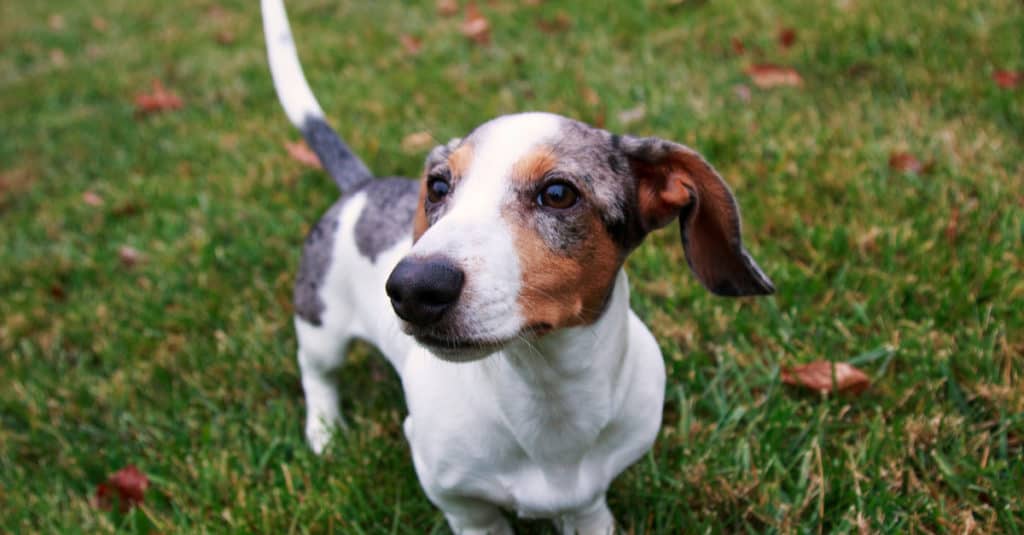
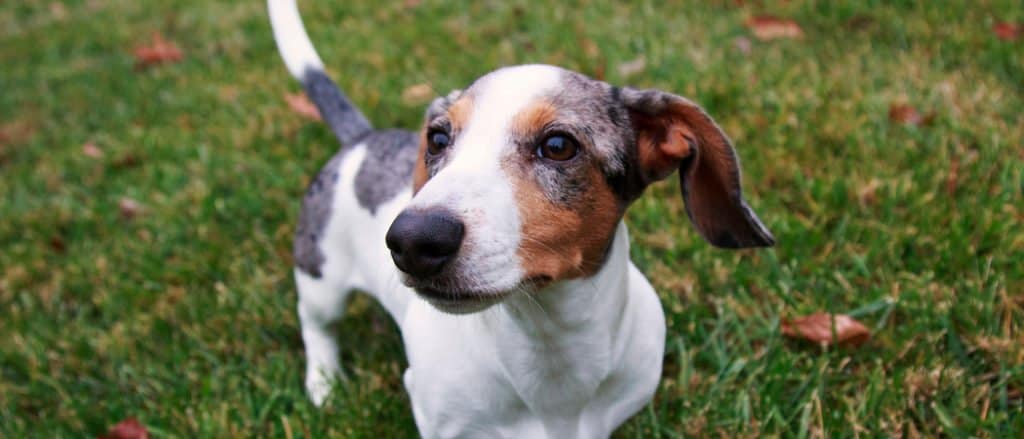
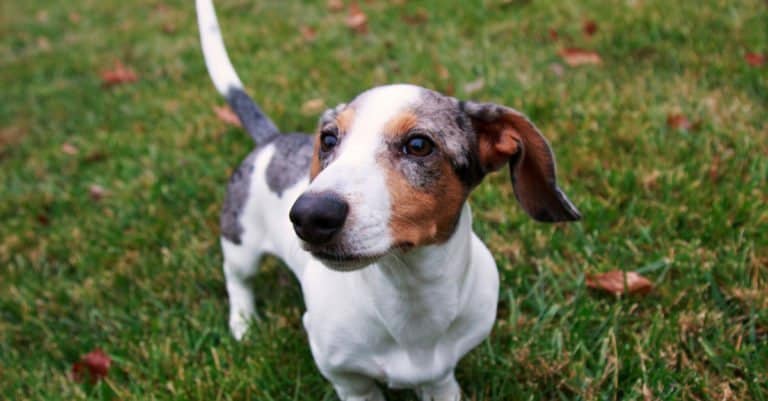
This Doxle Has A Black, Brown, and White Coat

Doxles are prone to conditions such as intervertebral disc disease and obesity.

This is a fairly healthy breed. They do, however, suffer from some ailments passed down from their ancestors. They live to be 12-14 years of age on average. First-generation crosses are less at risk of inheriting the ailments from their ancestors. 

Doxles are prone to developing intervertebral disc disease. This disease typically affects smaller dogs with long backs. They also have epilepsy issues. This is when the dog has excessive seizures. Be careful not to overfeed these dogs as they are prone to obesity. 

Doxle Temperament and Behavior
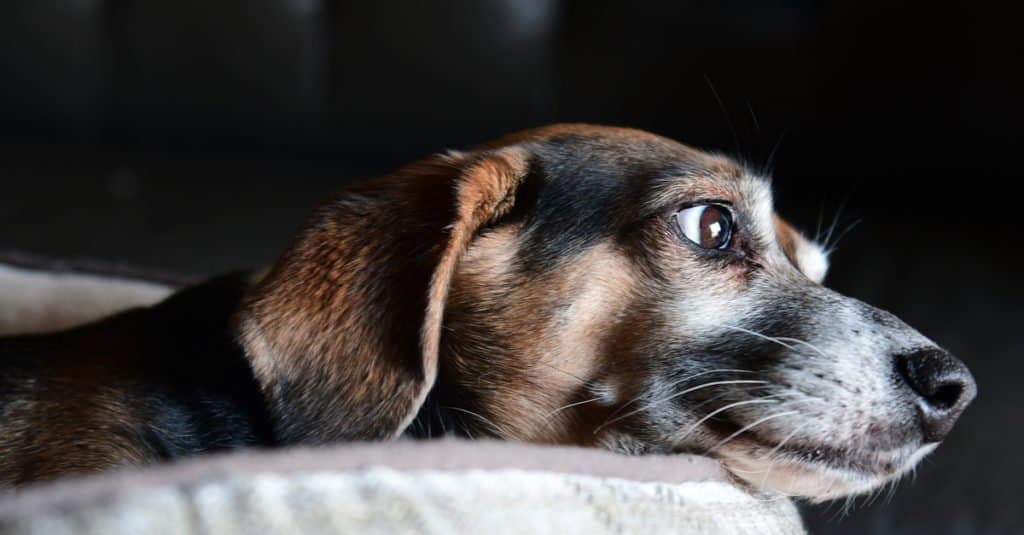
A Doxle is a Hybrid Dog Breed

Doxles are laidback, although they do have a strong prey drive.

Doxles are gentle, loving, and playful dogs. This breed of dog is an easygoing hybrid. They spend much time sniffing any and everything, as this shows the curiosity in their personality. Doxles are prone to chewing and like to dig. They are intelligent and eager to please, making them easy to train. 

This breed of dog is good around children. Doxles adapt to a wide variety of settings and family situations easily. Start training early and make sure to use a leash in public. 

Due to the hunting instincts of its ancestors, one must be careful letting this dog breed off the leash. These dogs are bred to hunt rabbits, so they have a high prey drive around smaller animals. Doxles are alert creatures and make good watchdogs. Sometimes their loud, noisy barking can be a problem. 

How To Take Care Of A Doxle 

Doxles prefer warm environments with temperatures not exceeding 90 degrees Fahrenheit. They need moderate maintenance to keep a presentable appearance. Doxle puppies should be dewormed starting at 2-3 weeks of age and then at regular intervals as recommended by a veterinarian. Don’t exercise puppies too much if they are under 8 months of age. If left in the yard alone, they need to be in a fenced-in yard.

The Best Dog Food for Doxles

At two months old, the Doxle needs to be introduced to solid food. Between 8 and 9 months old is when the dog can be fully transitioned to adult dog food. As an adult, this canine needs to be fed 2 to 3 meals a day. When transitioning from a different brand of dog food, it must be done slowly and gradually. This will help prevent any digestive issues. This breed benefits from probiotics for the digestive system. Their bodies require calcium and phosphorus to aid in growth.

Doxle puppy food: At two months old, they are ready to be separated from their mothers and gradually introduced to solid food. They need to be fed multiple times a day according to the following schedule: 2-4 months, 4 meals daily. From 4-8 months old, 3 meals daily. After 8 months old, 2 healthily portioned hearty meals will be sufficient. A regular feeding time consistently is beneficial. Do not leave food out for this breed of dog to freely eat. This dog is prone to obesity and will overeat. 

Doxle adult food: Doxles require a brand of food high in protein. Treats help aid in training; however, watch how much you feed the eager eater to prevent overeating. Probiotics, antioxidants, and omega fats help strengthen the immune system. Carbohydrates are also a staple in the Doxles’ dietary needs. If you spread out the dog meals, you will help the digestive system and reduce anal gland issues.

Maintenance And Grooming

A Doxle requires regular maintenance to stay looking good. They need to be brushed three times a week. Doxles shed very little, and brushing will remove any loose hair and keep the skin healthy. This breed does not need to be bathed often unless necessary. Doxles are prone to ear infections, so be sure to check their ears often and clean them.  

Training

Many find joy in training this breed. This is an intelligent breed that enjoys pleasing people. They will not require a lot of repetition as they are fast learners. This breed has hunting in its genetics, so it would be easy to make a hunting dog. Early socialization is important with Doxles. It is important to be firm and use treats as positive reinforcements. Be careful not to overfeed. 

Exercise Regimen

The Doxle is a small dog that can be exercised in a small space, such as an apartment or small family home. Toys are good for mental stimulation while exercising. If you have a yard, it is beneficial to make sure it is fenced in because this dog likes to pick up scents easily and hunt smaller prey. They need a minimum of 30 minutes of exercise daily. 

Puppies

Doxle Puppy Eating Dinner

Doxle puppies need small kibble bites.

A Doxle puppy will cost between $300 and $700. Miscellaneous items such as a collar, leash, crate, carrier, deworming, spaying, and blood test total out to $450. The annual cost for the dog comes out to between $500 and $1000. They come in black, white, brown, tan, and black & tan. They are prone to chewing, especially as puppies, during the teething stage. It is recommended to get your Doxle a chew toy. 

Doxles And Children

The Doxle is a very gentle and loving breed. They cohabitate with children very easily. When introducing your new Doxle and children, make sure to do it slowly and gradually to ensure they get to know each other well. 

Doxle And Other Similar Breeds
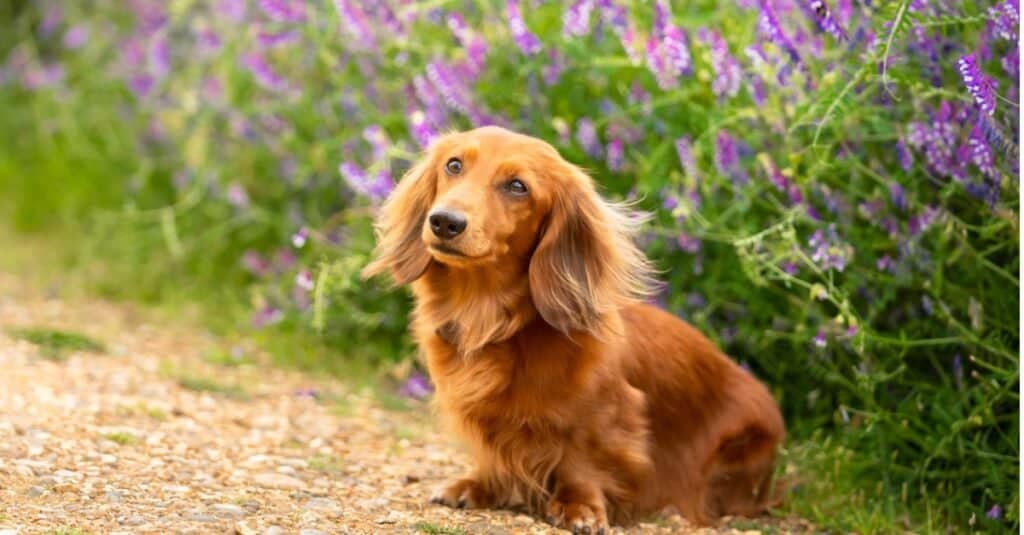
Dachshund sitting in front of purple flowers

Dachshunds are similar to doxles, which they are also related to.

The Beagle is a similar breed to the Doxle. This is its ancestor and is responsible for fifty percent of the Doxle’s lineage. The Dachshund is the other ancestor and a similar dog to the Doxle. The  Dachshund is known to have origins in Germany. Similar breeds include the Manchester Terrier. 

  • Beagle: This small canine breed is used to hunt rabbits and other small game animals. They were bred in England and eventually traded to North America. 
  • Dachshund: These dogs were bred in Germany. They are very good at digging badgers out of their dens.
  • Manchester Terrier: These dogs were first bred in Manchester, England. They were bred to hunt rats and rabbits. 

View all 450 animals that start with D

Sources

  1. VCA - Progressive Retinal Atrophy / Accessed April 24, 2021
Dana Mayor

About the Author

Dana Mayor

I love good books and the occasional cartoon. I am also endlessly intrigued with the beauty of nature and find hummingbirds, puppies, and marine wildlife to be the most magical creatures of all.
Connect:

Thank you for reading! Have some feedback for us?


Doxle FAQs (Frequently Asked Questions)

A puppy will run between $300 and $700. Annual costs come out between $500 and $1000.