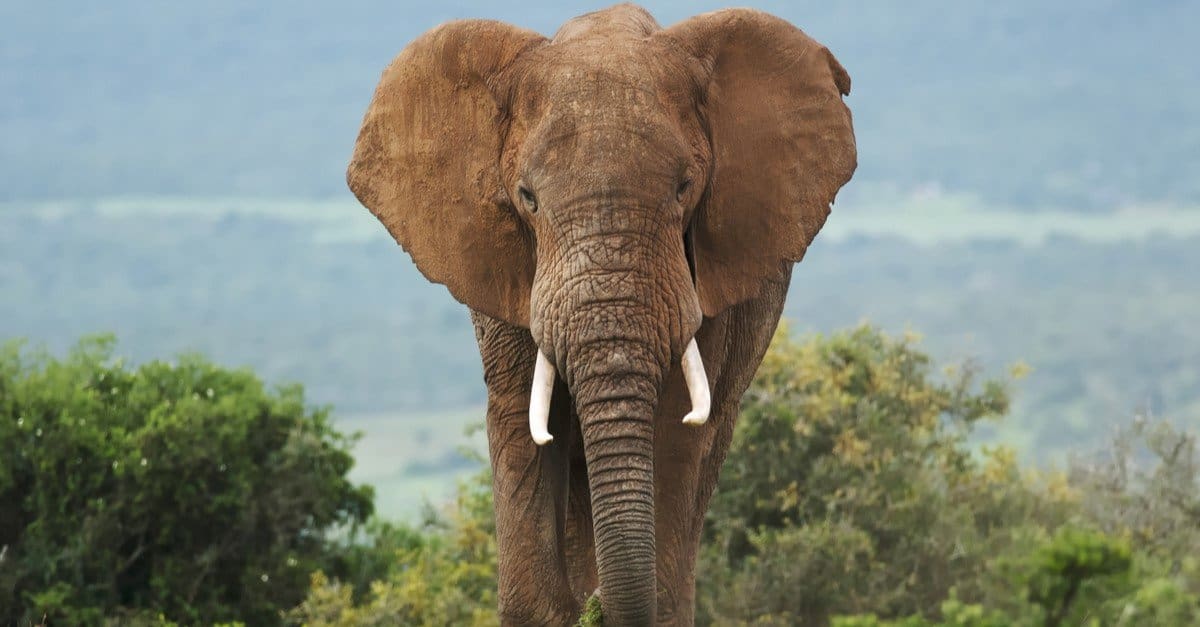

As a highly intelligent species, elephants can problem-solve and show emotions such as empathy and mourning. They will take care of others in their herd, nurturing their young and protecting the weak or injured. While female elephants remain with their herd as adults, males leave the herd when they reach adulthood. Elephants are vegetarians whose diet consists of grasses, fruits, leaves, bark, and roots. They forage for up to 18 hours a day, eating 300-350 pounds of food. There are three recognized species of elephants: the African savanna elephant (Loxodonta africana), the African forest elephant (L. cyclotis), and the Asian elephant (Elephas maximus). Continue reading to discover what makes each of these elephant species unique.
Asian Elephants
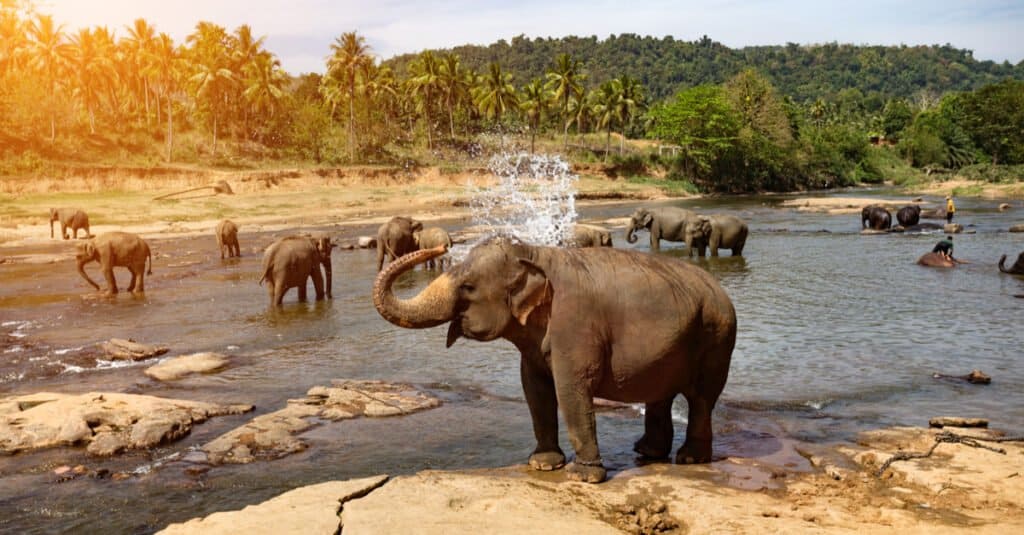
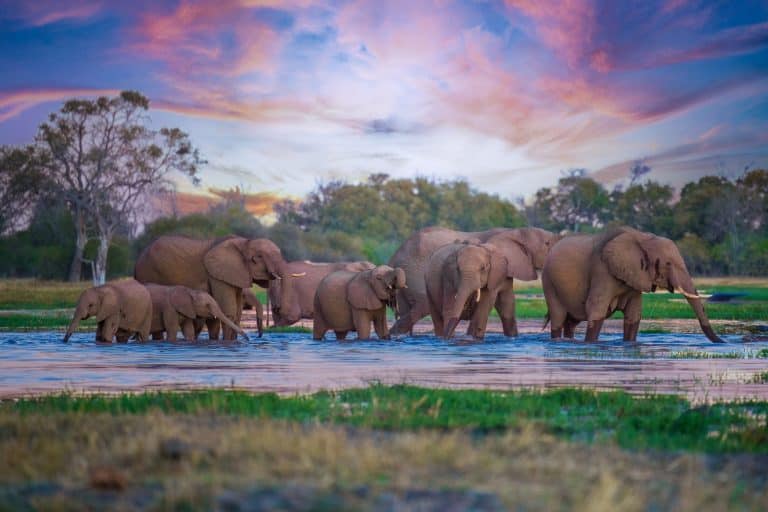
Elephants are incredibly intelligent and have been known to show emotion and use logic.
©Travel landscapes/Shutterstock.com
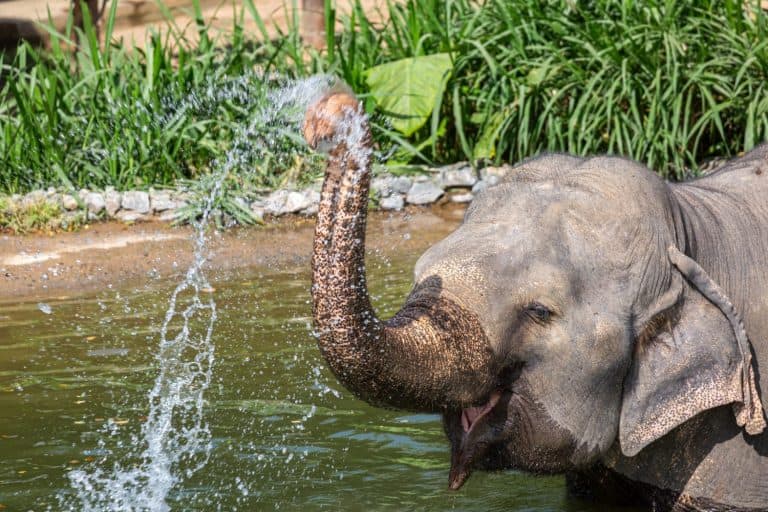
The adult Asian elephant grows between 6.6 and 9.8 feet tall, weighs in at 4,500 to 11,000 pounds. Asian elephants have a life span of 60 years. Asian elephants have smaller ears than African elephants. Elephant ear size is a distinguishing characteristic of these species.
Male elephants grow tusks of varying sizes. Tusks, which are elongated incisors, grow continuously throughout an elephant’s life. Asian female elephants do not grow tusks.
Elephants travel in matriarchal herds of six or seven females, with the eldest leading the herd. The matriarch or eldest female in the herd is in charge of remembering the best places for food, water, and shelter. She will also teach the younger elephants in the herd how to socialize.
The Asian elephant is an important cultural icon and is a symbol of wisdom, strength, and royalty. There are an estimated 30,000 to 50,000 Asian elephants remaining in the wild, and they are classified as an endangered species. There are three subspecies of Asian elephants: the Sumatran elephant (E. Maximus Sumatranus), the Indian elephant (E. maximus indicus), and the Sri Lankan elephant (E. maximus maximus).
Sumatran Elephant
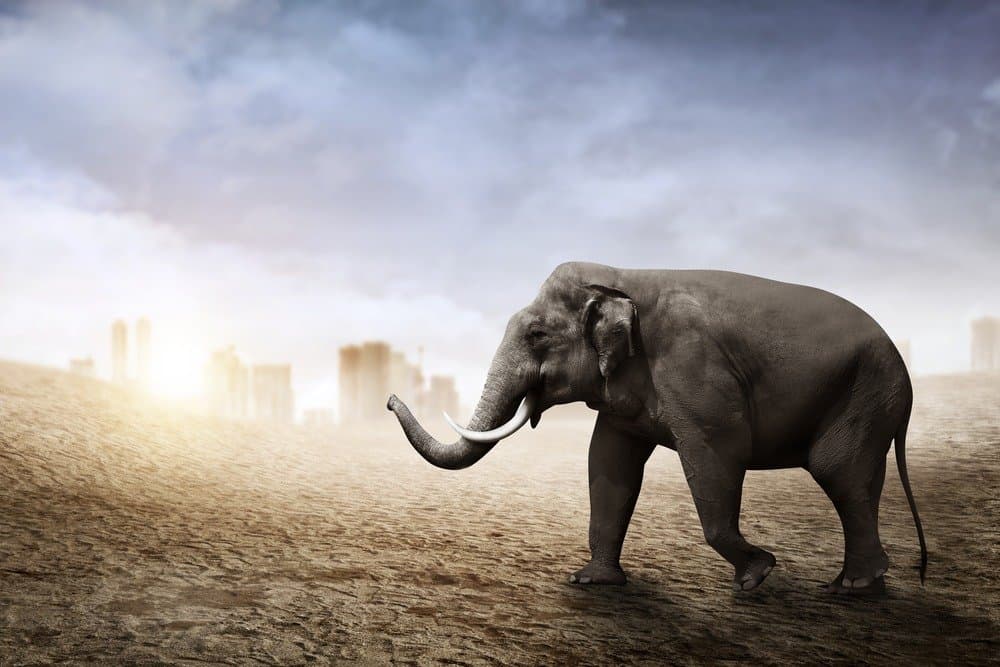
Elephants will use their tusks for digging, lifting, gathering food, and defense. In the same way, humans are right or left-handed, elephants have a dominant side. You can tell this by looking at the tusks. The dominant side will show wear in the tusk.
©leolintang/Shutterstock.com
The Sumatran elephant typically has brighter skin with fewer unpigmented spots. Male elephants of the Sumatran subspecies grow shorter tusks, and the female tusks are barely visible. They live on the island of Sumatra, Indonesia.
Possibly the most social of the elephant species, Sumatran elephants will form herds of 20-35 elephants. Like the other elephant species, males will leave the herd upon puberty, while females continue to stay with the herd. Young females will then take on a nanny role with the younger elephants.
Indian Elephant
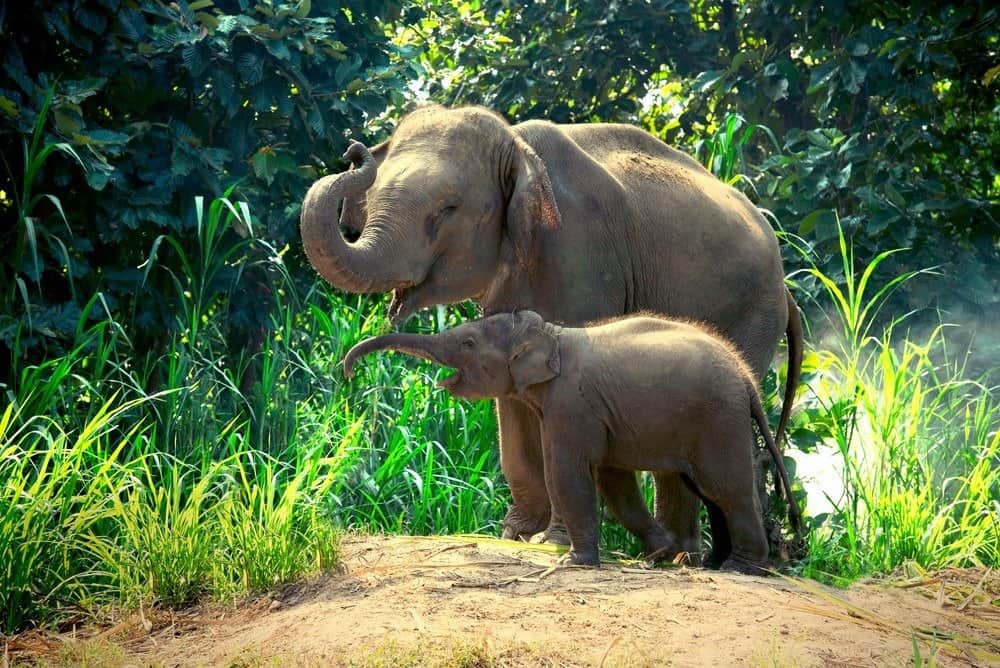
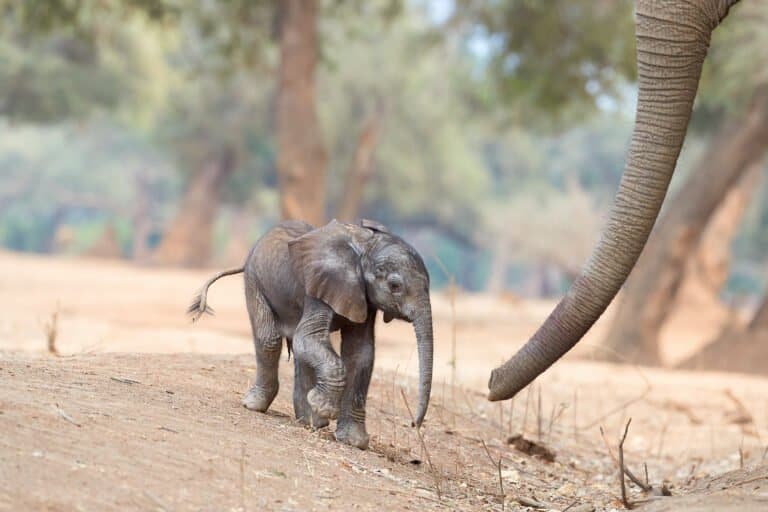
Calves are nursed for 4-6 years and continue to rely on their mothers for protection and guidance for an average of 16 years.
©Nuttaya Maneekhot/Shutterstock.com
The Indian elephant lives in the grasslands and forests of Asia. Nomadic, they move frequently.
Nonterritorial, they travel in herds of up to 20 elephants. Unlike some of the other species of elephants, males will join the herds.
Human activities and agricultural development have limited these elephants from previous seasonal migration patterns. Some have been known to raid farms, settlements, and plantations that were in their original range.
The Indian elephant has been semi-domesticated and is used in logging camps and the tourist industry. In the past, they were used as animals of war.
Sri Lankan Elephant

Sri Lankan elephants are the largest Asan elephants.
©Steve Evans from Bangalore, India, CC BY 2.0, via Wikimedia Commons – Original / License
The Sri Lankan elephant is the largest of the Asian species, with the largest individuals having reached past 12,000 pounds! One distinguishing feature of the Sri Lankan elephant is a lack of pigmentation on the elephant’s ears, face, trunk, and belly. The lack of pigmentation is a natural variation within the species
Human development has limited the migration habits of the elephant. They are found on the Island of Sri Lanka around the open grasslands, forested regions, open savannas, marshes, and lakeshores.
Sri Lankan elephants hold symbolic, cultural, and economic importance. They bring tourists to the national parks to see them in the wild, and they help support the logging industry.
African Elephants
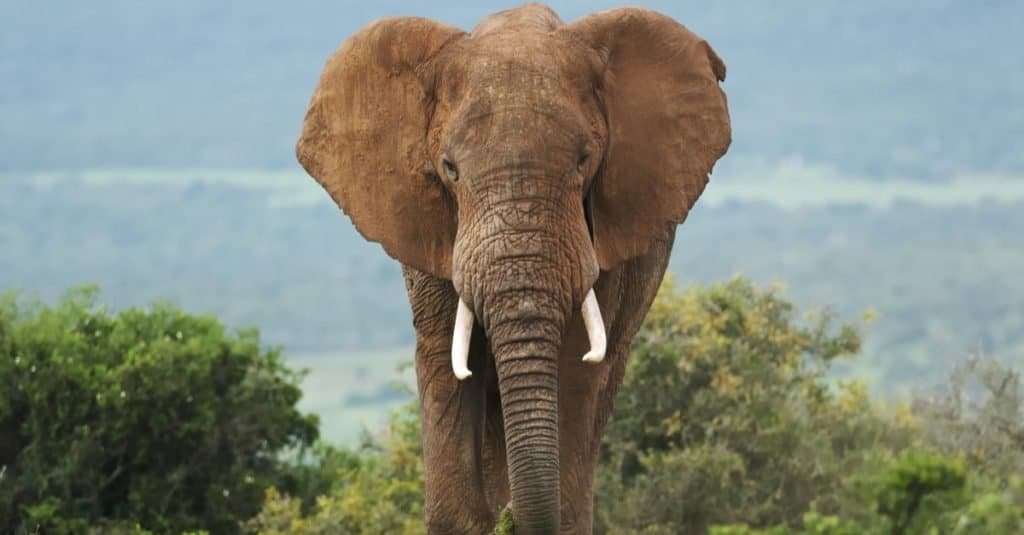
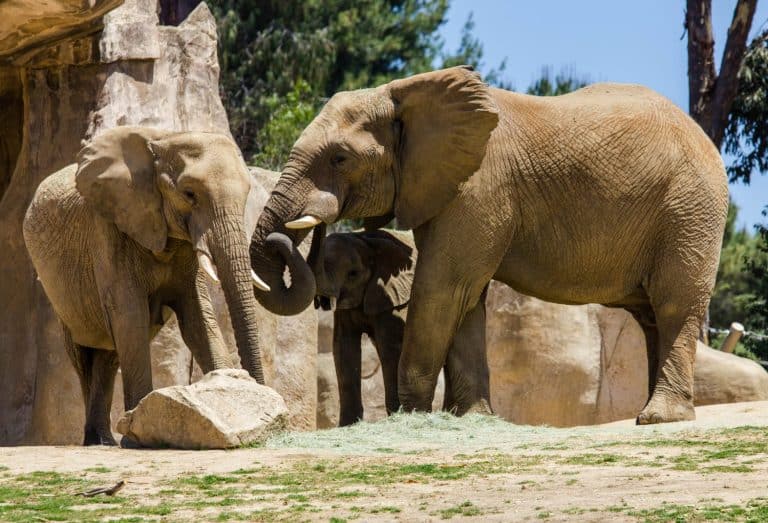
African elephants are the world’s largest land animals!
©Peter Fodor/Shutterstock.com
The African elephant is the largest animal on Earth. The adult African elephant grows between 8.2 and 13 feet tall, weighs in at 5,000 to 14,000 pounds, with a potential life span of up to 70 years. Large ears are a distinguishing feature of the African elephant. Both males and females grow large tusks, and like their Asian cousins, their tusks will continue to grow throughout their lives.
African elephants also travel in herds. Mothers and their young will stay together for many years in a herd. Male African elephants prefer a solitary lifestyle. African elephants are classified as endangered due to poaching for ivory and habitat loss. There are currently about 415,000 African elephants left in existence. There are two subspieces of African elephants: the forest elephant (Loxodonta cyclotis) and the savanna or bush elephant (L. africana)
Forest Elephant
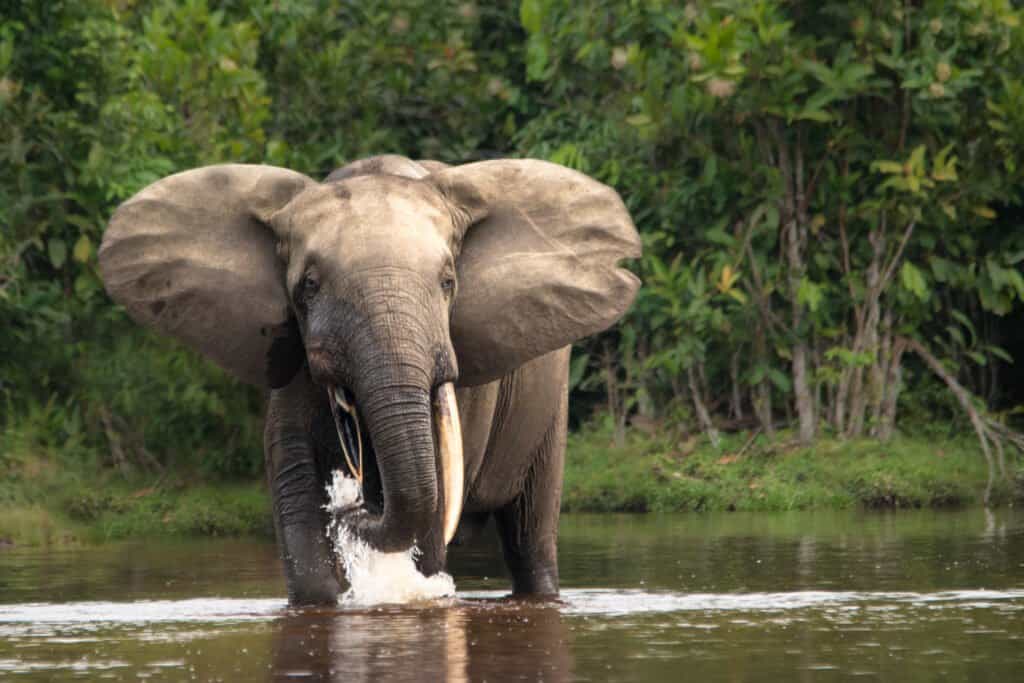
The Forest subspecies of the African elephant is the smaller of the two subspecies. They have slightly smaller, oval-shaped ears, and their tusks are straighter and point downward.
©Michal Varga/Shutterstock.com
Forest elephants are 8-10 feet tall and weigh between 4,000-10,000 pounds. 2-5 tons. These elephants make their home in the dense forests of Gabon, the Democratic Republic of Congo (DRC), Cameroon, and the Central African Republic in Central Africa, and Côte d’Ivoire, Liberia, and Ghana in West Africa.
This subspecies is considered critically endangered, with populations having declined by over 86% in the last 31 years, primarily due to poaching for ivory.
Because forest elephants aren’t sexually mature until they are 23 years old, it is difficult for the species to reproduce fast enough to compensate for this population loss. Research suggests that it would take nearly 100 years for forest elephant populations to recover from current losses, even if poaching stopped now.
Savanna or Bush Elephant
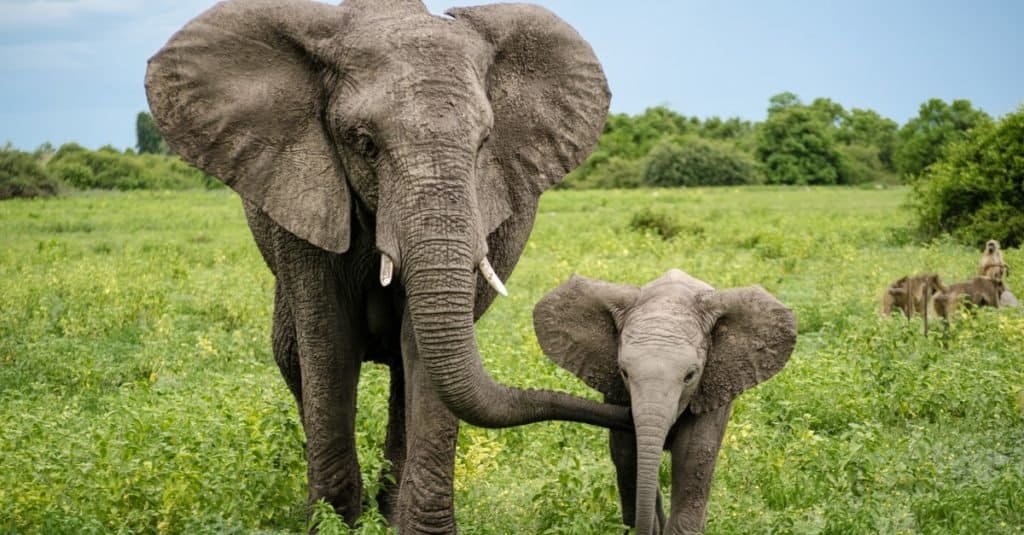
With their characteristic long noses, trunks, large floppy ears, and wide, thick legs, elephants are unique.
©Aelice/Shutterstock.com
The larger of the two subspecies of African elephants is the savanna elephant. Their larger ears and legs are their defining characteristics. The front legs of a savanna elephant are longer than their back legs.
The savanna elephant calls Eastern and Southern Africa home, specifically Botswana, Tanzania, Zimbabwe, Kenya, Namibia, Mozambique, and South Africa.
They travel in family herds, with an average of 10 mothers and their young. The males follow along only during the mating season. Occasionally, the herds will join together in larger clans of several hundred members.
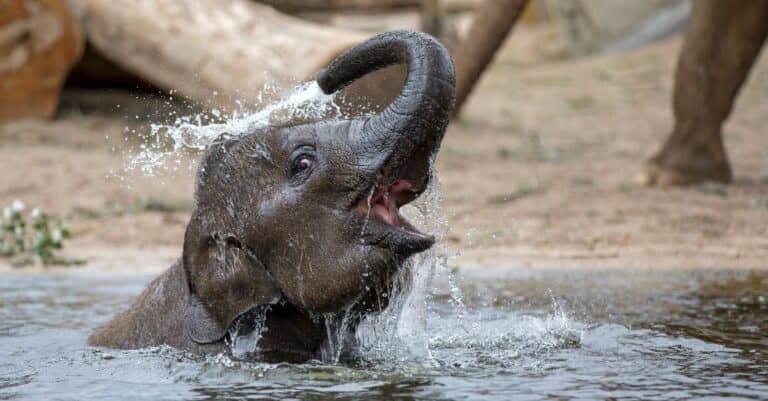
The savanna elephant has 40,000-120,000 muscles and tendons in its trunk, which can lift up to 400 pounds. They will use their trunks to lift objects or suck water into the trunk, then blow it into their mouths to drink, or blow it on their backs to cool off.
Male elephants will use their tusks for sparring with other males for mating rights, and males with the largest tusks tend to sire more offspring.
Bonus: The Largest Elephant on Record
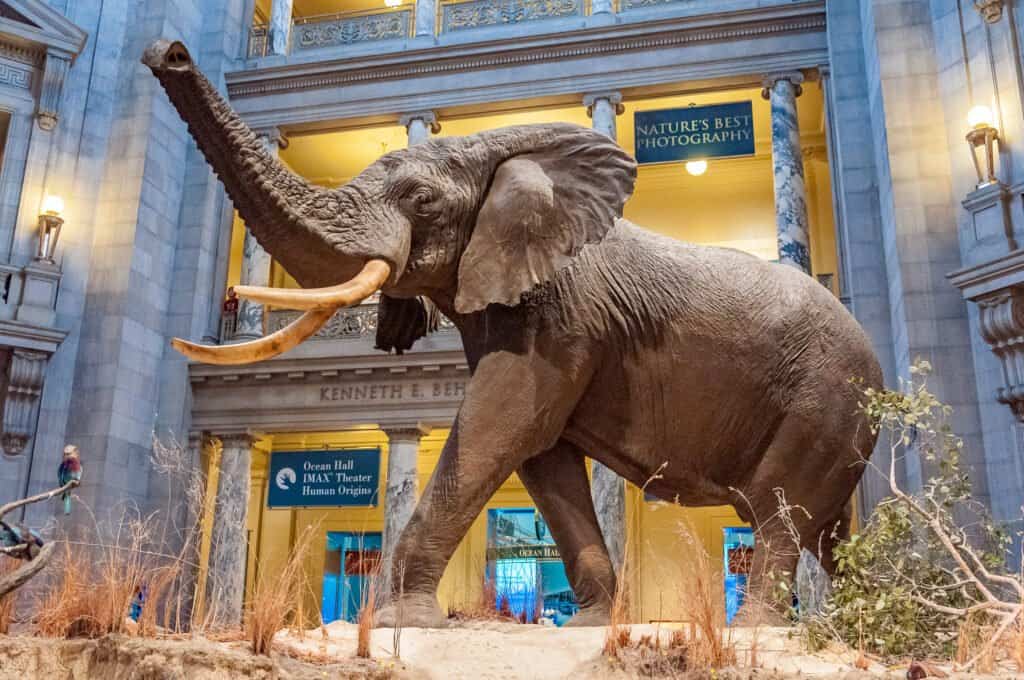
“Henry” on display at the Smithsonian Natural History Museum
©NaughtyNut/Shutterstock.com
The largest elephant ever recorded is seen by millions of tourists annually. That’s because the specimen is in the rotunda of the Smithsonian’s Museum of Natural History!
The elephant is named Henry and stands 13 feet tall. He was shot in 1956 in Angola and given to the Smithsonian Institute in 1959. With a weight of 24,000 pounds, Henry is the largest elephant ever recorded.