




















Quick Take
- Mastering the 1600s foxhunt standard required a Greyhound hybrid build to achieve peak athletic performance.
- Maintaining 75 pounds of mass triggers hip dysplasia if genetic clearances are not strictly verified.
- Their friendly temperament is ironic because their scent drive fundamentally compromises their role as pets.
- Completing the 6-month feeding stage is necessary to prevent metabolic imbalances in active puppies.
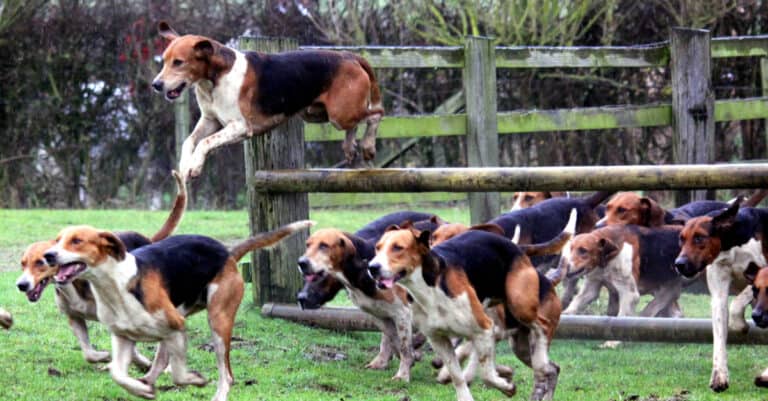
The English Foxhound was bred in the 1600s as a hunting dog for British foxhunts. This canine was bred by mixing Greyhound-type hounds and large stag-hunting hounds. This mix resulted in a large, athletic dog. English Foxhounds are scent hounds, meaning they find prey by scent. They are very energetic and can be quite friendly. However, since they are so driven by scent, they typically do best as a hunting dog rather than a family dog. They may thrive with some very active families who have a large enough backyard where the dog can get plenty of exercise.
English Foxhounds are one of the four different foxhound breeds. The other three breeds include the American Foxhound, Welsh Foxhound, and Dumfriesshire Black and Tan Foxhound (extinct).

Owning an English Foxhound: 3 Pros and Cons
| Pros | Cons |
|---|---|
| Easy to groom: This breed is easy to groom. Their coat only requires weekly brushing. | High exercise needs: This canine has a high daily exercise need. They do best as hunting dogs or with very active families. |
| Friendly: When this breed’s activity needs are met, they are very friendly and gentle. | Can be stubborn: This breed can be stubborn and independent. This can make it challenging to train them. |
| Good with other dogs and children: These canines were bred to work as a pack. They generally do very well with other dogs. | Likely to wander: An English Foxhound has a high wanderlust potential. They are more likely to run off than other breeds. |
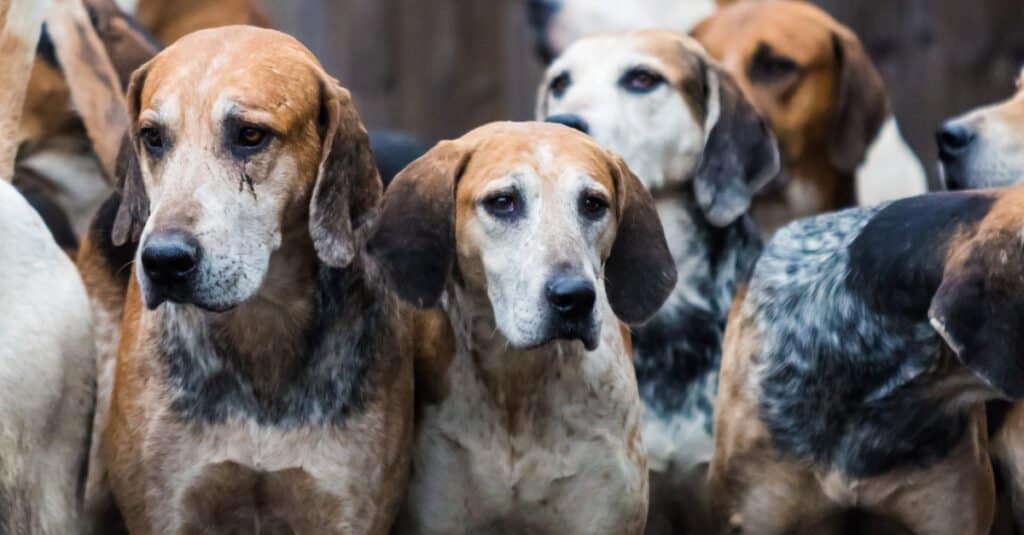
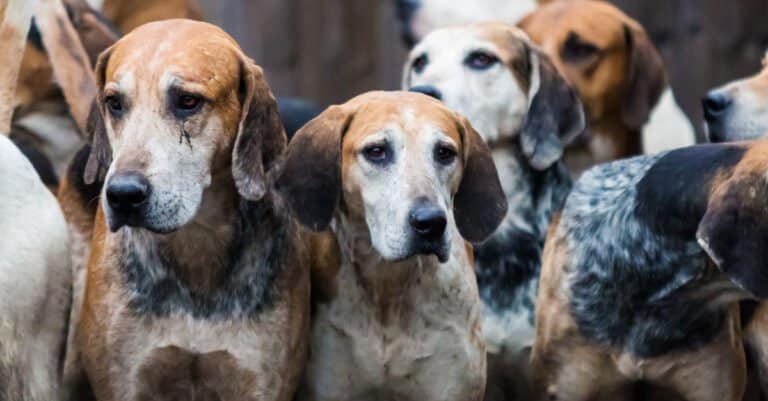
English Foxhounds are happiest when they are with other dogs.
©Derek Hunter/Shutterstock.com
Size and Weight
English Foxhounds are medium- to large-breed dogs. Males and females are typically around the same size. Most weigh between 55 and 75 pounds and stand between 25 and 27 inches tall.
Common Health Issues
The English Foxhound is a generally healthy breed. However, there are still a few potential health concerns to be aware of. Before purchasing a puppy from a breeder, be sure to see the health clearances of both parents, since many of the potential health concerns for this breed are genetic conditions.
Hip dysplasia is one potential health concern to be aware of. This is a genetic condition where a dog’s hip joint doesn’t develop properly and becomes weakened. It can cause a lot of pain and may require surgery to fix.
Some English Foxhounds may also suffer from epilepsy. This is a seizure disorder that can thankfully be controlled with medications. If you are worried that your dog is having or has had a seizure, be sure to contact your veterinarian right away.
A third health condition to be aware of with this breed is renal disease. Renal disease, which is also called kidney disease, is a condition where the kidneys cannot clear creatinine, urea, and other toxins from the blood. Your vet should be able to help you manage this condition.
Temperament and Behavior
English Foxhounds have a very friendly personality. They are very social and enjoy spending time with people, children, and other animals. This breed was bred to be a pack hound, so they especially enjoy the company of other dogs. The English Foxhound is a very active breed. They do best when used as a hunting dog, but at a minimum, will require a very active family who can make sure they get the exercise they need.
Without sufficient activity, English Foxhounds may engage in less-than-desirable behaviors, so make sure you only adopt this breed if you’re able to meet their exercise needs. English Foxhounds can also be independent and may exhibit stubborn traits. Proper training and socialization from a young age are very important with this breed.
How to Take Care of an English Foxhound
Since every dog breed is unique, you’ll need to keep the English Foxhound’s temperament, exercise needs, dietary needs, training requirements, and other information in mind as you prepare to care for your new dog.
The Best Dog Food
Most English Foxhounds will need to be fed between 2.5 and 3 cups of food each day. This breed typically does best when its daily food allotment is portioned into two meals. However, it is important to keep in mind that every dog’s needs are slightly different, and a dog’s age, metabolism, health, activity level, and other factors can all impact how much they should be fed. If you are not sure how much to feed your English Foxhound, consult with their veterinarian. Also, stay in touch with the vet about your dog’s general health and diet. If your English Foxhound develops renal disease, the vet may point you in the direction of low-phosphorus dog food.
Since English Foxhound puppies have a smaller stomach than adults, they need to be fed smaller meals more frequently throughout the day. Look for high-quality puppy food formulated for active breeds and divide their daily amount of food into three or four servings until the puppies are at least six months old.
Maintenance and Grooming
This dog breed is relatively easy to groom. They have a very short and dense coat that should be brushed about once a week using a hound glove or soft bristle brush. This will help keep their coat clean and free of debris. They may also need to be bathed now and then if they get dirty or begin to smell.
Be sure to also keep your English Foxhound’s ears cleaned, teeth brushed, and nails trimmed down to keep him healthy and comfortable.
Training
Training an English Foxhound is not always very easy. This breed is known for being independent and can also be stubborn. When training your English Foxhound, be very patient and consistent. This breed does best with positive training methods but also needs a firm leader. Be sure to also socialize your English Foxhound from an early age. This is a very social breed, but your dog will need to know how to interact with different people and animals and in different situations.
Exercise
This breed has a high need for daily activity. They do best when used as a hunting dog or adopted by a very active family. This breed is not well-suited for apartment life since they need a lot of space to run around and play. To exercise your English Foxhound, take them for long walks, runs, or hikes. You can also give them playtime in a fenced-in backyard.
Puppies
As we shared above, begin training and socializing your new puppy from a very early age. This will help ensure they’re clear on expectations and learn how to obey commands.
Puppies will need a safe space in the home that is free of anything potentially hazardous. Before bringing home your new English Foxhound puppy, remove things that could harm a puppy, as well as any personal items you wouldn’t want to get chewed up by a puppy. You should also purchase a crate, food, toys, a dog bed, and other supplies your new puppy will need before bringing it home with you.

Four English Foxhound Puppies congregate in the grass.
©Angela Lock/Shutterstock.com
English Foxhounds and Children
This breed is very friendly and can be affectionate. They are also very energetic and can make a good playmate for an older child. Since they are so excitable, however, they are typically not recommended for homes with smaller children. It would be too easy for this breed to accidentally injure a small child.
Dogs that are similar to the English Foxhound
American Foxhounds, Beagles, and Harriers are three breeds that are similar to the English Foxhound.
- American Foxhound: Both of these breeds are hunting dogs, weigh around 70 pounds, and are around 23 inches tall. Both breeds also require a lot of daily exercise. English Foxhounds can be friendlier and more accepting of strangers than American Foxhounds.
- Beagle: Beagles are another hunting dog breed. Both breeds have dense fur that is easy to groom. They are also both very friendly breeds. However, Beagles are much smaller. The average weight of an English Foxhound is 67.5 pounds, while the average weight of a Beagle is 23.5 pounds.
- Harrier: The Harrier is another hunting breed that has similar coloring. Both breeds are very social, do well with children, and are prey-driven. Harriers are a bit smaller, with an average weight of 50 pounds compared to the 67.5-pound average weight of an English Foxhound.
English Foxhound Pictures
View all of our English Foxhound pictures in the gallery.

Mary Swift/Shutterstock.com
Sources
- American Kennel Club / Accessed August 1, 2021
- Dogtime / Accessed August 1, 2021
- Wikipedia / Accessed August 1, 2021
- Pet Finder / Accessed August 1, 2021
- Dog Breed List / Accessed August 1, 2021
- Wag Walking / Accessed August 1, 2021