
Quick Take
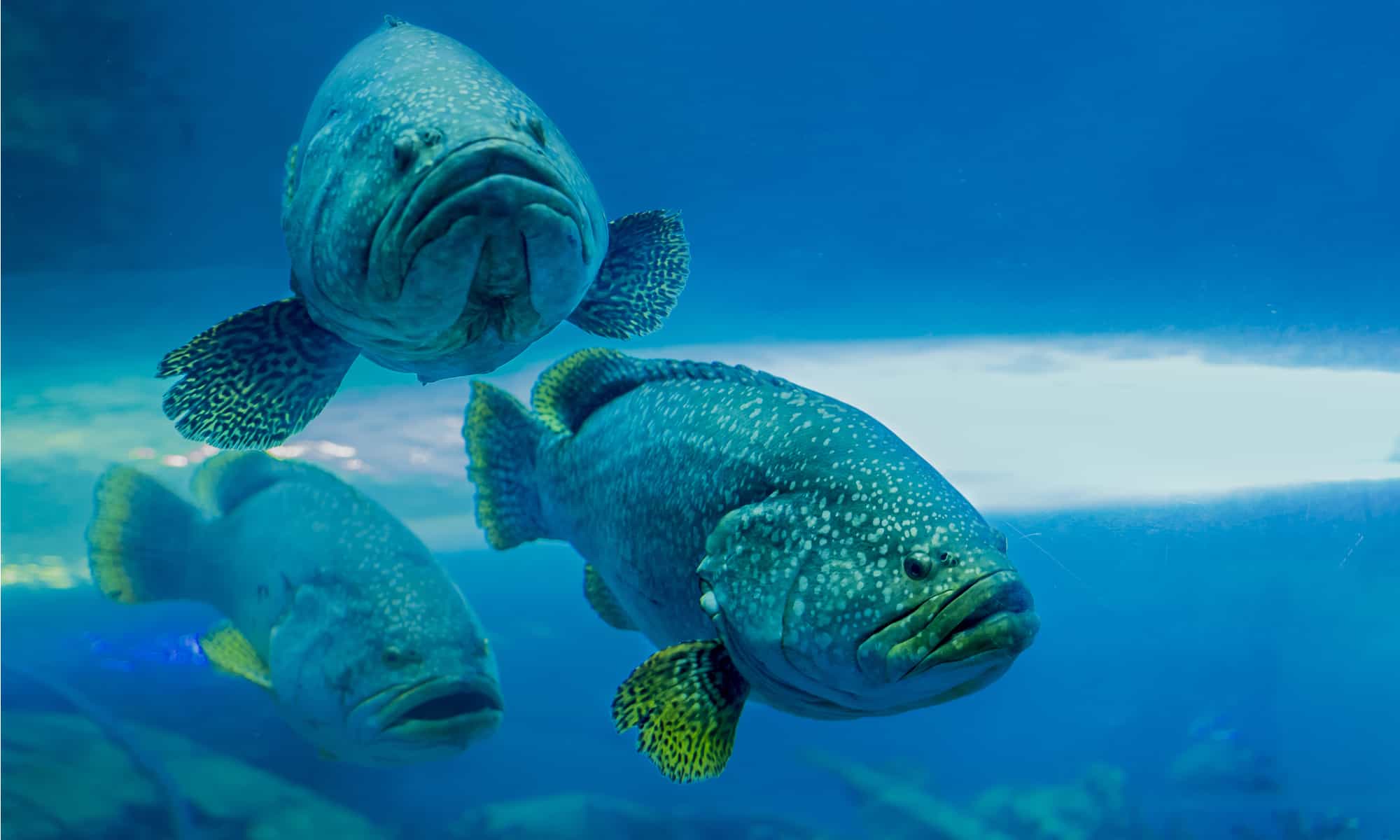
- The giant grouper, or Queensland grouper, is the largest grouper species in the world.
- Warsaw groupers can reach 7.5 feet and weigh up to 580 pounds.
- Atlantic Goliath groupers are the largest groupers in the Western Hemisphere.
- The potato grouper is also called the potato cod or the potato bass.
A grouper is a type of saltwater fish that belongs to the family Serranidae. Groupers are known for their large size, powerful bodies, and their reputation as delicious table fare. Remarkably, most groupers are protogynous hermaphrodites, meaning they begin life as females and transition to males as they grow larger. Grouper species vary greatly in size. Some smaller species are less than 12 inches long and weigh only a few pounds, while the largest can reach several feet in length and weigh over 800 pounds. Read on to discover the largest grouper fish in the world.
5. Black Grouper
The black grouper (Mycteroperca bonaci) lives in the western Atlantic Ocean and the Gulf of Mexico from Massachusetts south to Brazil. These fish can grow up to 5 feet long and weigh up to 180 pounds. These stocky fish have olive or grey bodies with dark, rectangular blotches and brassy-colored spots. They also have rounded cheeks and protruding lower jaws.
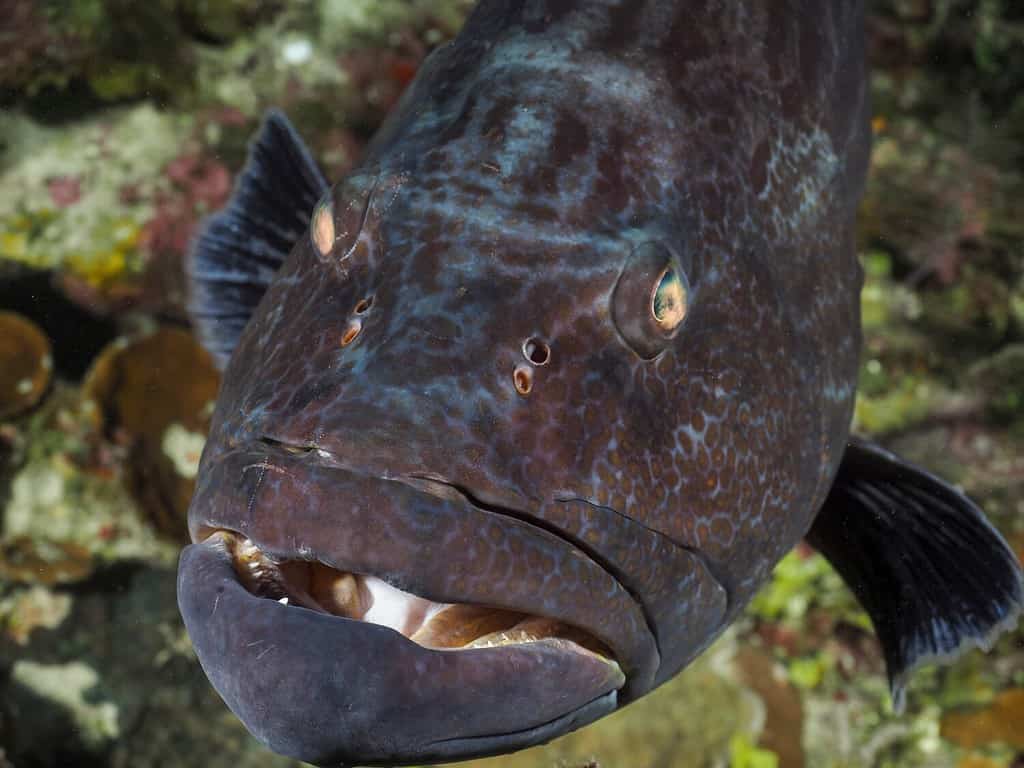
Black groupers have an olive or gray body with black blotches and brassy spots.
©Jesus Cobaleda/Shutterstock.com
Black groupers typically inhabit ledges, caves, and rocky reefs. These fish can generally be found at depths of 60 to 656 feet. Juveniles prefer inshore waters, but move to deeper waters as they age. Young black groupers eat crustaceans, especially shrimp. However, adults feed on other fish and squid. Black groupers use their large mouths and powerful jaws to suck in prey and swallow it whole.
4. Potato Grouper
The potato grouper (Epinephelus tukula) is also called the potato cod or the potato bass. These giants can reach 6.5 feet in length and weigh up to 240 pounds. They can be found in the Indo-West Pacific from East Africa to southern Japan and northeastern Australia. Potato groupers are pale, greyish-brown fish with large, dark blotches on their bodies that are said to resemble potatoes. They also have small, dark spots on their fins.
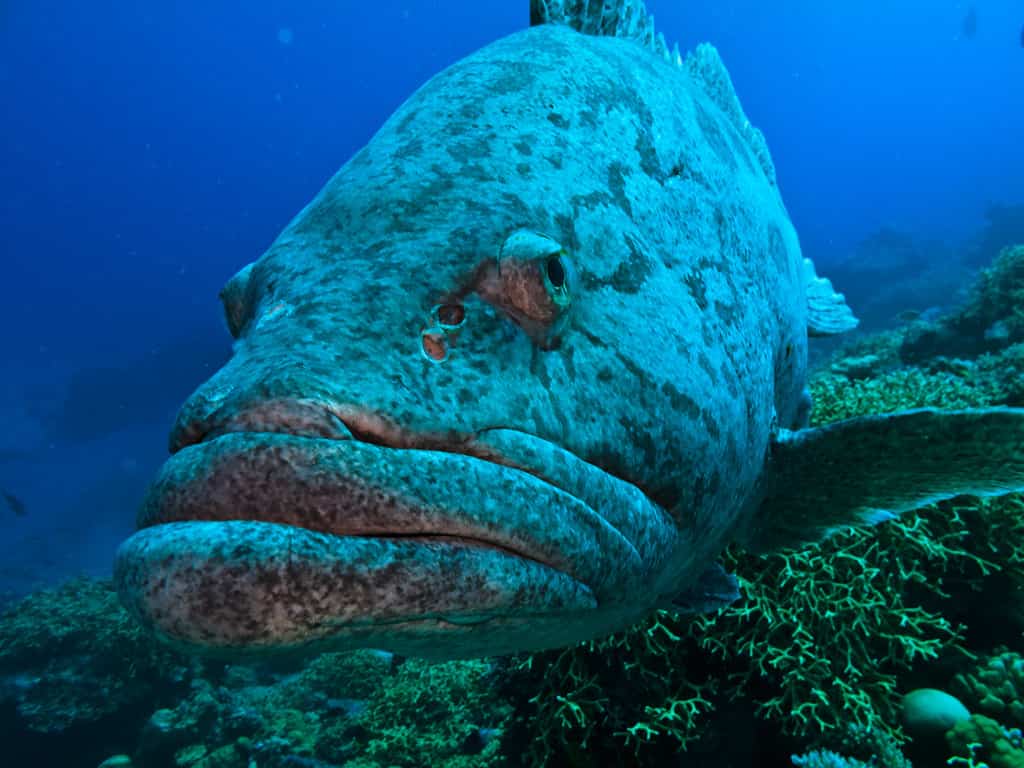
Potato groupers are covered in large, dark blotches that are said to resemble potatoes.
©pniesen/iStock / Getty Images Plus via Getty Images
Potato groupers inhabit coral reefs, particularly areas where there are strong currents. Juveniles prefer shallower water or reef tide pools, but adults are typically found at depths between 33 and 492 feet, 33 and 492 feet, searching the bottom of the reef for food. They are generally solitary and aggressively defend their territory. Potato groupers typically eat crabs, western rock lobsters, fish, small rays, squid, and octopuses. They hide among the coral to ambush their prey, sucking it down in one gulp.
3. Warsaw Grouper
The Warsaw grouper (Hyporthodus nigritus) is third on our list, capable of growing up to 7.5 feet in length and weighing up to 580 pounds. It is found in the western Atlantic Ocean from Massachusetts to Florida, the Gulf of Mexico, and south to Venezuela and Brazil. These fish prefer rocky bottoms and tend to favor water that is over 200 feet deep.
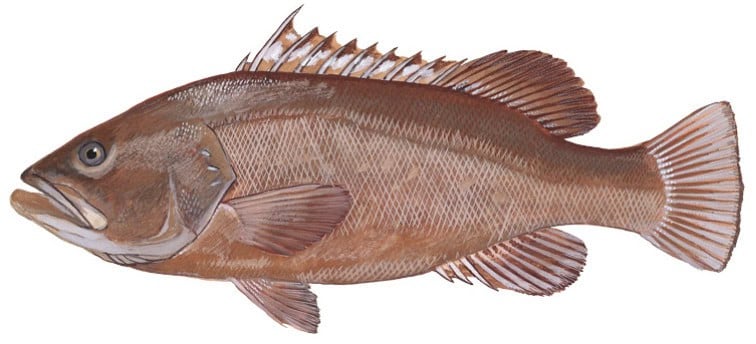
Warsaw groupers can reach up to 580 pounds.
This species has a uniform reddish-brown color with a lighter belly. It has a more square-shaped tail fin and the second spine on the dorsal fin is very high. Warsaw groupers are solitary and territorial. They are also ambush predators, waiting for their prey to swim by and using their giant mouths to engulf and swallow them whole. These groupers feed on a variety of fish and crustaceans.
2. Atlantic Goliath Grouper
The Atlantic Goliath grouper (Epinephelus itajara) is the largest grouper species in the Atlantic Ocean, weighing over 800 pounds and measuring more than 8 feet long. This grouper inhabits the waters of the Western Atlantic Ocean from Florida to Brazil, including the Caribbean and the Gulf of Mexico. They favor areas with rocky, muddy, or coral bottoms. They are one of the few species that can be found in brackish waters. The Goliath grouper helps maintain balance in coral reefs, keeping the ecosystem healthy as a top predator. They use their giant mouths to suck in prey and swallow it whole. Their preferred food is crustaceans, such as lobsters and crabs, but they also consume fish, octopuses, and juvenile sea turtles.
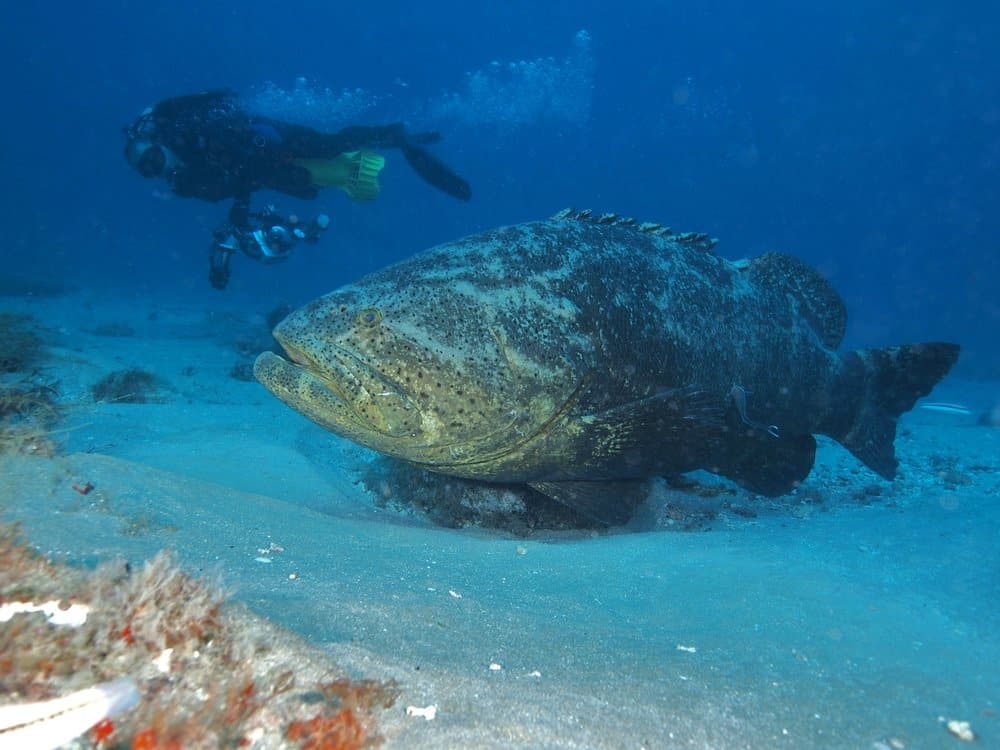
The Goliath grouper weighs over 800 pounds and measures over 8 feet.
©Jonathan Churchill/Shutterstock.com
The Goliath grouper is a robust species with an elongated body and a large, broad head. Its coloration can vary from dark brown to olive green, with a mottled pattern and small white spots on the body and fins. Juvenile Atlantic Goliath groupers often display more vivid patterns. These groupers also have dorsal spines that are all the same height. Goliath groupers are territorial and defend hiding places such as caves and wrecks by opening their mouths aggressively and making a low rumbling sound. Scientists are unsure whether goliath groupers are protogynous hermaphrodites.
1. Giant or Queensland Grouper
The giant grouper (Epinephelus lanceolatus), also known as the Queensland grouper, can grow up to 9 feet long and weigh over 880 pounds. However, some Australian sources state these fish can reach as large as 1,300 pounds. On average, these fish weigh up to 440 pounds and measure around 6 feet in length. They are widely distributed across the Indo-West Pacific, including the waters of Australia’s Great Barrier Reef. This is one of the largest reef-dwelling bony fish on the planet. They can also be found in shipwrecks, caves, lagoons, and estuaries.
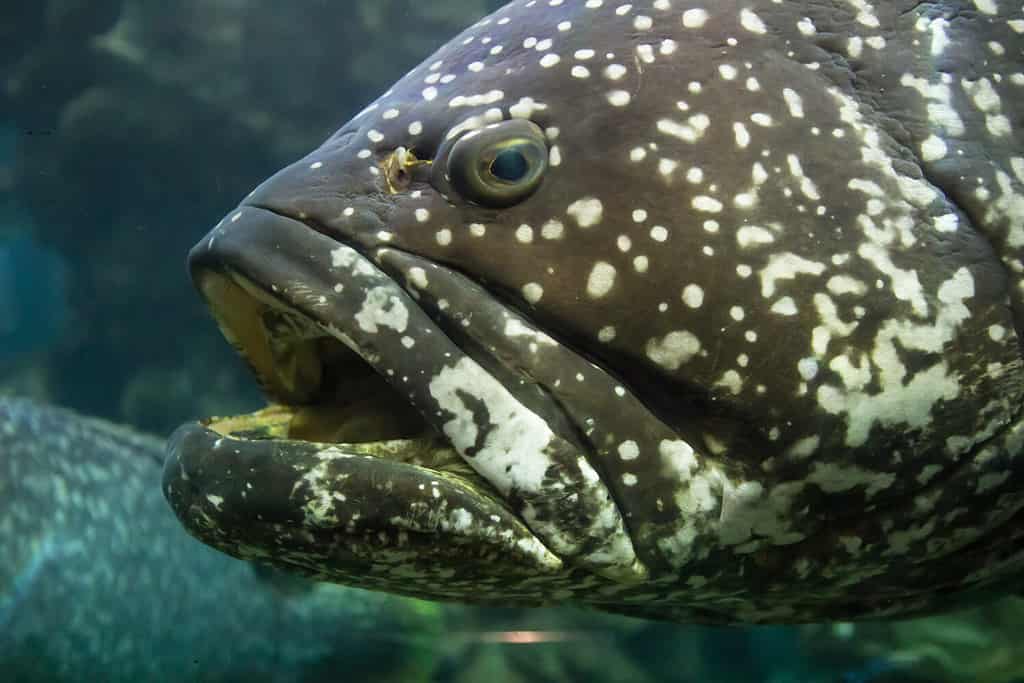
You can find the giant grouper around coral reefs or in shipwrecks and caves.
©Papamoon/Shutterstock.com
Adults are mottled brown to dark gray in color with pale spots on their bodies and numerous black spots on their fins. Juvenile fish have irregular yellow and black markings. The giant grouper has a stocky body with a rounded tail. Like most groupers, it has a large mouth and fleshy lips. The dorsal fin spines of mature individuals increase in size from front to back. Giant groupers are solitary ambush hunters that eat a wide variety of fish species and even small sharks.