
Quick Take
- One of these budget fish harbors contaminant levels that make it a riskier choice than its price tag suggests, yet most shoppers have no idea. Check contaminant risks →
- These fish may share a price point and mild flavor, but their protein quality tells a completely different story. Compare protein quality →
- Tilapia feeds using a body mechanism so unusual it makes most other fish look primitive by comparison. See tilapia's feeding method →
- The fish you recognize by one name at a restaurant may be legally prohibited from carrying that label, and you've probably ordered it without realizing. Spot the difference →
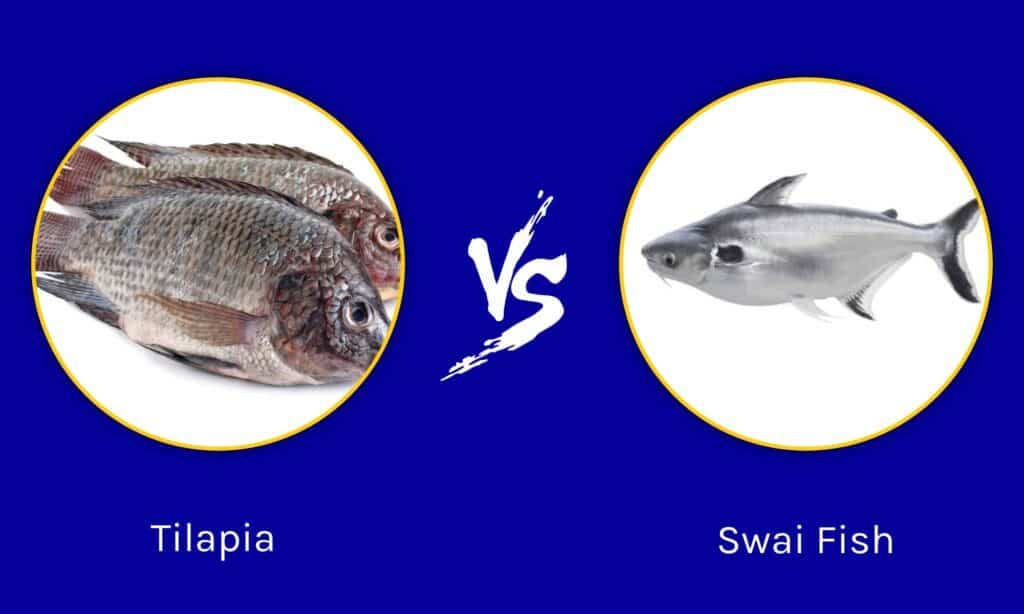
Swai fish (Pangasianodon hypophthalmus) are close relatives of catfish, but only fish from the North American Ictaluridae family can be legally marketed or sold as “catfish” in the U.S. Tilapia can refer to around a hundred species of freshwater cichlids native to Africa and the Middle East. However, in this article, we will be focusing on Nile tilapia (Oreochromis niloticus), as it is the most widely cultured tilapia species. Swai fish and tilapia are popular table fare because they are inexpensive and have a mild flavor, but what sets these fish apart? Read on to learn the differences between swai and tilapia.
Comparing Swai Fish vs. Tilapia
| Swai Fish | Tilapia | |
|---|---|---|
| Distribution and habitat | Freshwater fish native to the large tropical river systems and other waterways of Southeast Asia | Mostly freshwater, but can tolerate low-salinity brackish water; native to tropical Africa, including the Nile River system |
| Diet | Omnivores that eat plants, algae, smaller fish, and crustaceans | Omnivores; young fish eat zooplankton and insects for protein; adults eat algae, aquatic plants, and detritus |
| Appearance | Weighs 50-100 pounds; can grow to be 4 feet long; silver scales, light beige skin; short barbels; iridescent, glowing dorsal fin | Deep-bodied and thin; bronze to brownish-gray bodies with pale undersides; up to 24 inches long and 11+ pounds; Males change color during breeding |
| Nutrition | Offers selenium, niacin, and B12; low calorie; high but poor-quality protein; can contain high levels of antibiotics and chemicals | Lean protein; more selenium and vitamin B12 per serving; slightly higher omega-3 fatty acid levels; low contaminant levels |
Key Differences Between Swai Fish vs. Tilapia
The key differences between swai fish and tilapia include natural distribution and habitat, diet, appearance, and nutrition. Read on for an in-depth look at each.
Distribution and Habitat
Swai are freshwater fish that are native to the large tropical river systems and other waterways of Southeast Asia. Unfortunately, wild populations have dropped due to overfishing, habitat loss, and large dam construction that blocks migration routes. Most swai bought in stores and eaten in restaurants are farm-raised on huge farms in the Mekong Delta in Vietnam.
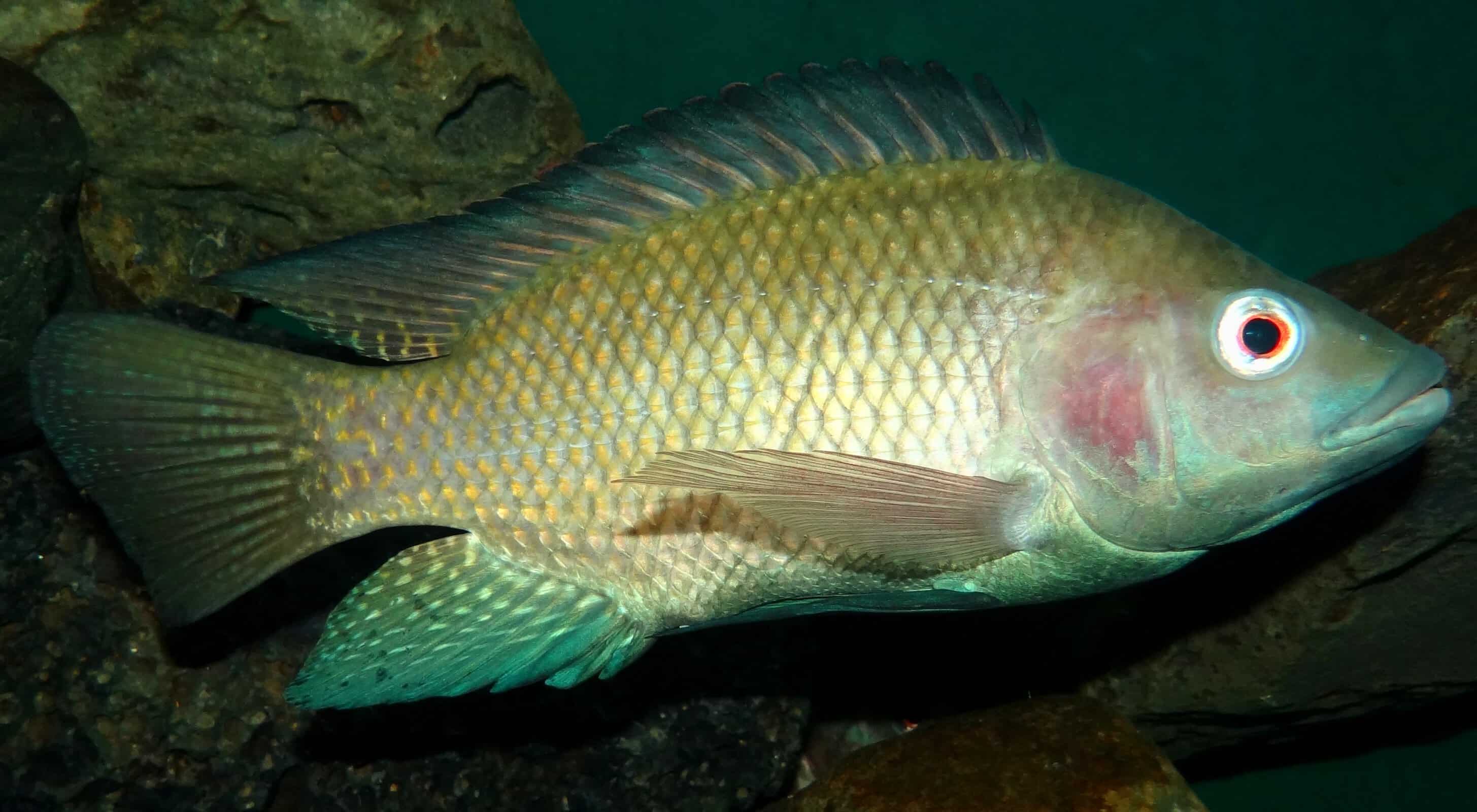
Tilapia are native to the Nile River system in Africa, but they have been introduced to other regions, including Asia, Europe, and South America. They are mostly freshwater fish, but they can tolerate low-salinity brackish water. Nile tilapia is the most popular and economically important farmed fish species in the world. China, Indonesia, and Egypt are the top producers of farm-raised tilapia.
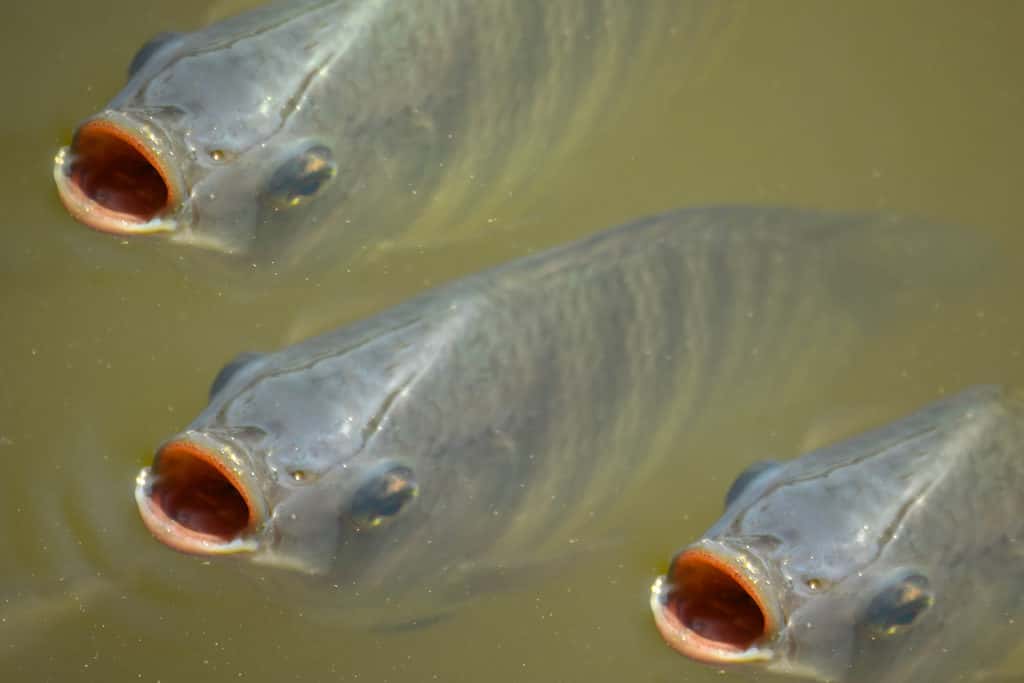
Nile tilapia are native to the Nile River system in Africa.
©neenawat khenyothaa/Shutterstock.com
Diet
Swai fish are omnivores, with a diet consisting of both animals and plants. A swai fish is happy to dine on crustaceans, small fish, algae, and all sorts of aquatic vegetation. In the wild, these omnivorous fish are bottom feeders that forage and hunt for their food along the substrate.
Tilapia are also omnivores. Young fish eat zooplankton and insects for protein, but adults eat algae, aquatic plants, and detritus. Tilapia have special mucus secreted by their gills that traps the plankton in place. This method of feeding makes tilapia suspension feeders. The fish then swallow the plankton-rich mucus and digest and assimilate the plant material along the length of their intestines. Tilapia have long intestines that are around two and a half times the length of the entire fish.
Appearance
Swai fish are stout fish covered in silver scales. They also have light beige skin and short barbels like other members of the catfish family. You may also hear swai fish referred to as iridescent sharks. They’ve earned this name due to their large size and shark-like dorsal fin. The dorsal fin has a slight iridescent glow, which makes these fish a fan favorite in aquariums. A swai fish is much larger than a tilapia, weighing up to around 100 pounds and growing up to 4 feet long.
Nile tilapia are deep-bodied and thin fish. They have bronze to brownish-grey bodies with pale undersides. Females often have faint vertical bars on their sides. During the breeding season, males tend to have grey or pink pigmentation on their throats, bellies, and fins. These fish can reach about 24 inches long and weigh 11 pounds or more.
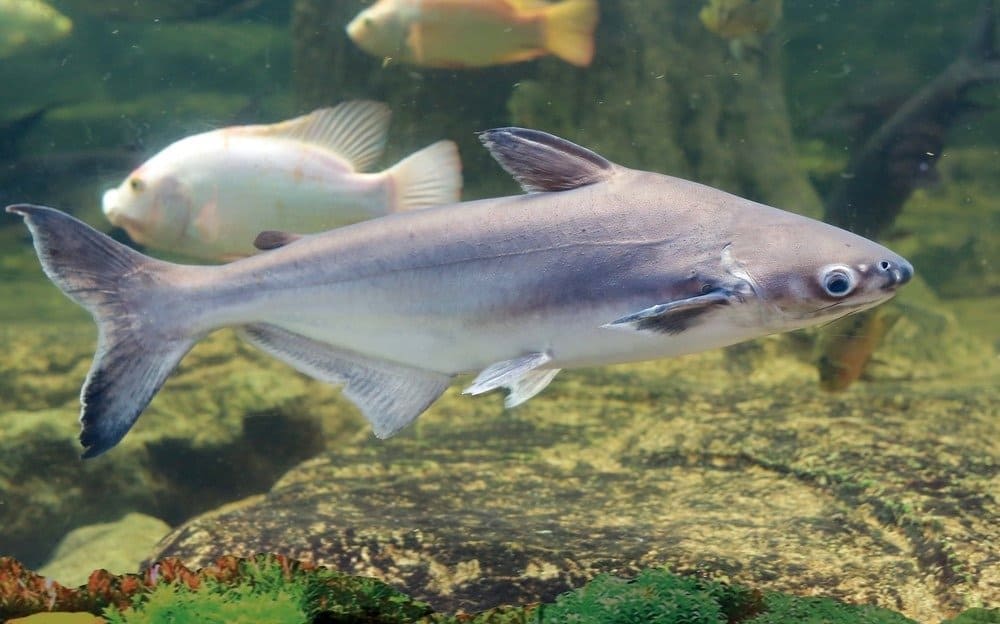
Swai fish are sometimes referred to as iridescent sharks.
©GOLFX/Shutterstock.com
Nutrition
Swai fish are budget-friendly and have a mild, neutral flavor. Swai also offer selenium, niacin, and B12. They are low in calories and have no carbs. Although they are high in protein, there are concerns about the protein quality. Swai fish contain very few heart-healthy omega-3 fatty acids compared to other fish. Poorly regulated farming practices have also resulted in high levels of antibiotics, chemicals, and heavy metals.
Nile tilapia is also inexpensive and has a mild flavor profile. However, it is generally considered a safer and higher-quality choice than swai. Tilapia is a leaner protein with more selenium and vitamin B12 per serving. It also has slightly higher omega-3 fatty acid levels. It is very low in calories and has zero carbohydrates. Most importantly, Nile tilapia has low contaminant levels.