
Thousands of gecko species live all over the world, making their home on every continent except Antarctica. These unique and often colorful creatures are exceptional climbers, and many have sticky pads on their toes that help them scale vertical surfaces with ease. Geckos vary greatly in color and size, ranging from tiny species less than an inch long to others that grow over a foot in length. With so many different types of geckos, which one is the largest in the world?
The World’s Largest Gecko
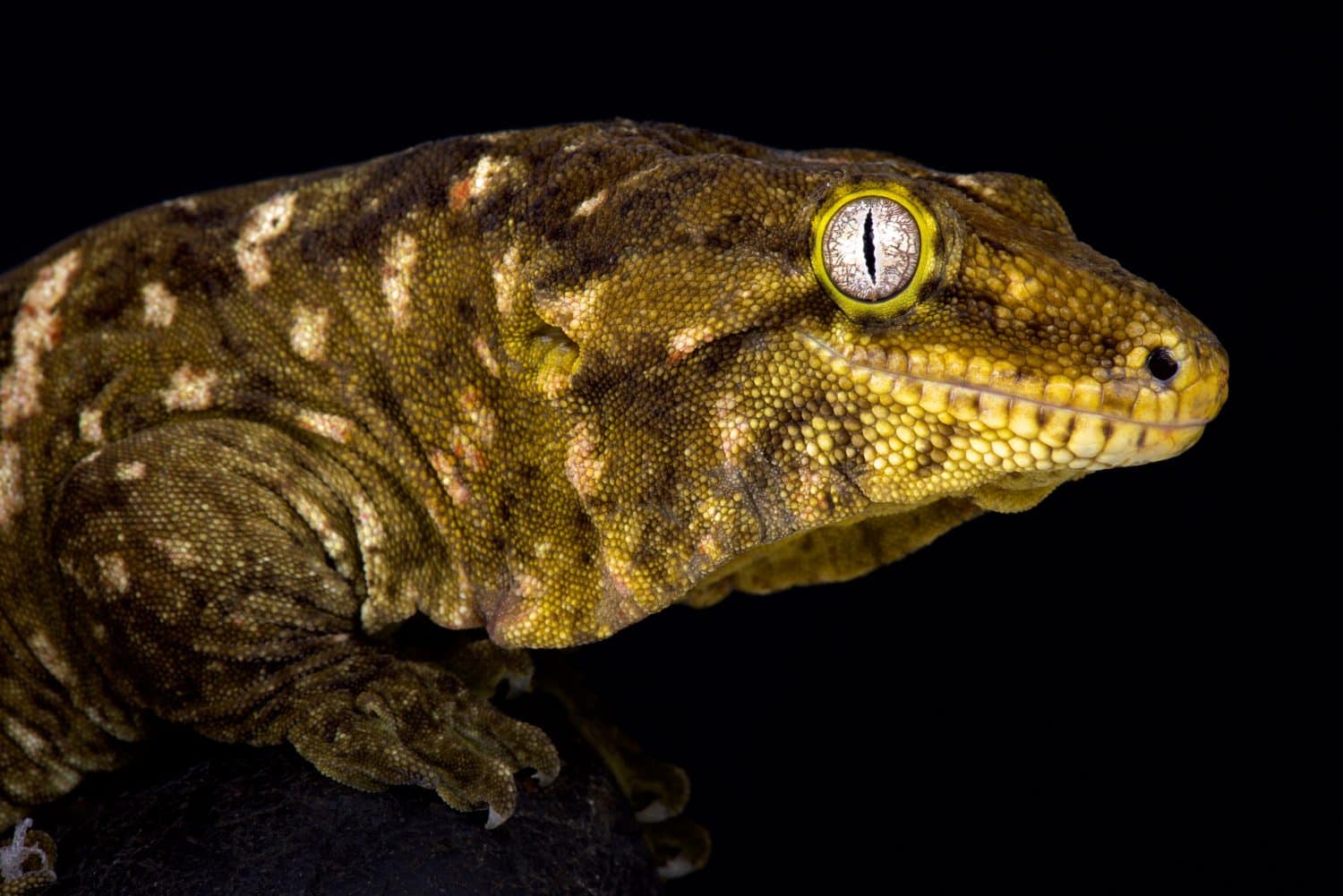
The baggy, oversized skin of the New Caledonian giant gecko helps protect it from scratches and rough surfaces.
©Lauren Suryanata/Shutterstock.com
The New Caledonian giant gecko (Rhacodactylus leachianus), or “Leachie,” holds the title for the world’s largest living gecko. This massive reptile can stretch up to 14 inches long — longer than a standard ruler. These giant geckos typically weigh between 8 to 14 ounces, although some larger individuals may weigh more. Their loose, baggy-looking skin comes in a variety of colors, including brown, tan, green, orange, pink, white, gray, and yellow. Their skin contains specialized pigment cells called chromatophores, which allow the geckos to change color in response to sunlight.
Despite their impressive length, these giant geckos have a stocky build with surprisingly short tails and large heads. Their snouts are fairly short, and their eyes are large and round. Like many other gecko species, New Caledonian giant geckos are excellent climbers. They have adhesive toe pads that function like Velcro. These pads allow them to grip branches, and their strong claws provide extra support.
Where Do New Caledonian Giant Geckos Live?
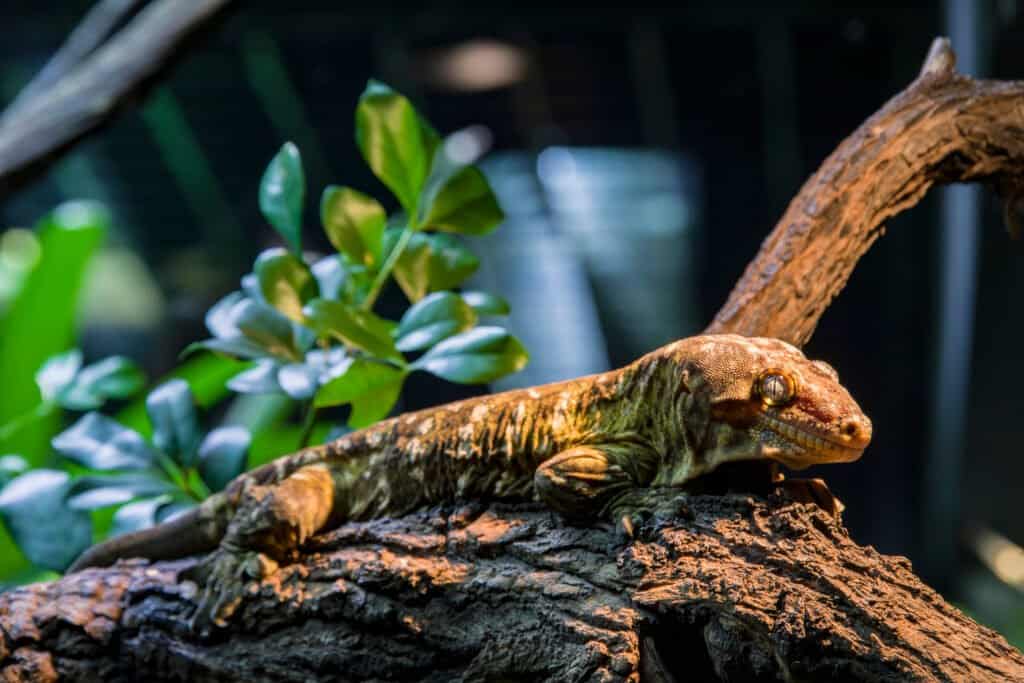
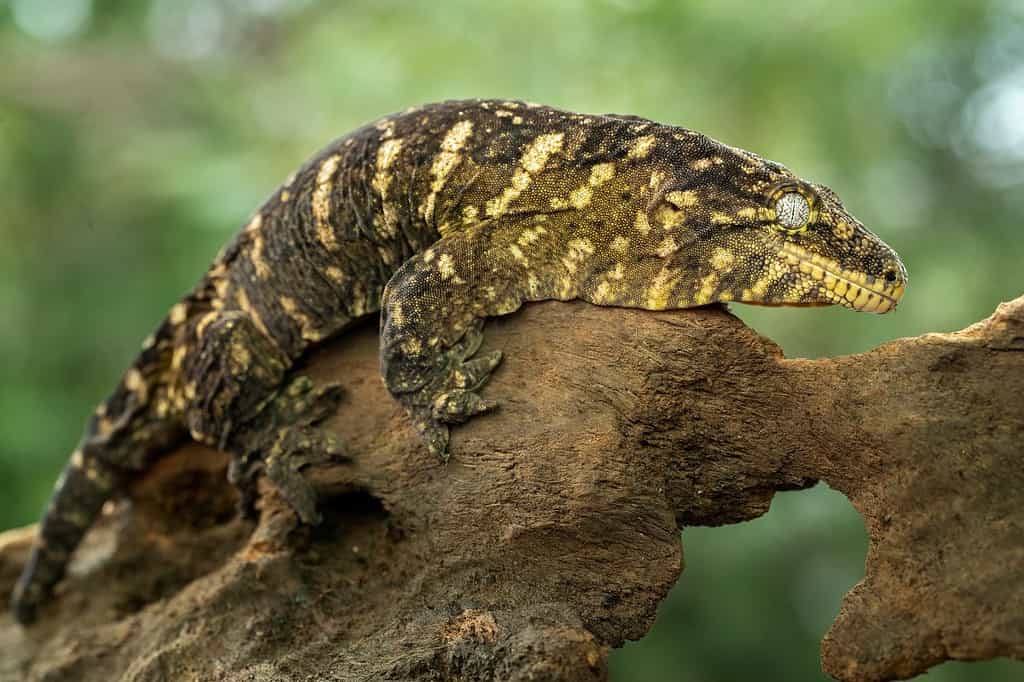
The New Caledonian giant gecko mostly lives high up in rainforest canopies.
©Danny Ye/Shutterstock.com
New Caledonian giant geckos are endemic to the islands of New Caledonia, meaning they live there and nowhere else on Earth. Specifically, you can find them on the main island, Grande Terre, and a few of the smaller islands nearby. Their large size is due to island gigantism, an evolutionary phenomenon that occurs when species become isolated on islands. These isolated animals have fewer predators and less competition for resources, allowing them to grow much larger than their relatives on the mainland.
Surprisingly long-lived, New Caledonian giant geckos can survive 20 years or more in human care. Their lifespan in the wild is less well-documented. However, wild geckos likely live shorter lives due to predation and environmental pressures.
The New Caledonian Giant Gecko Diet
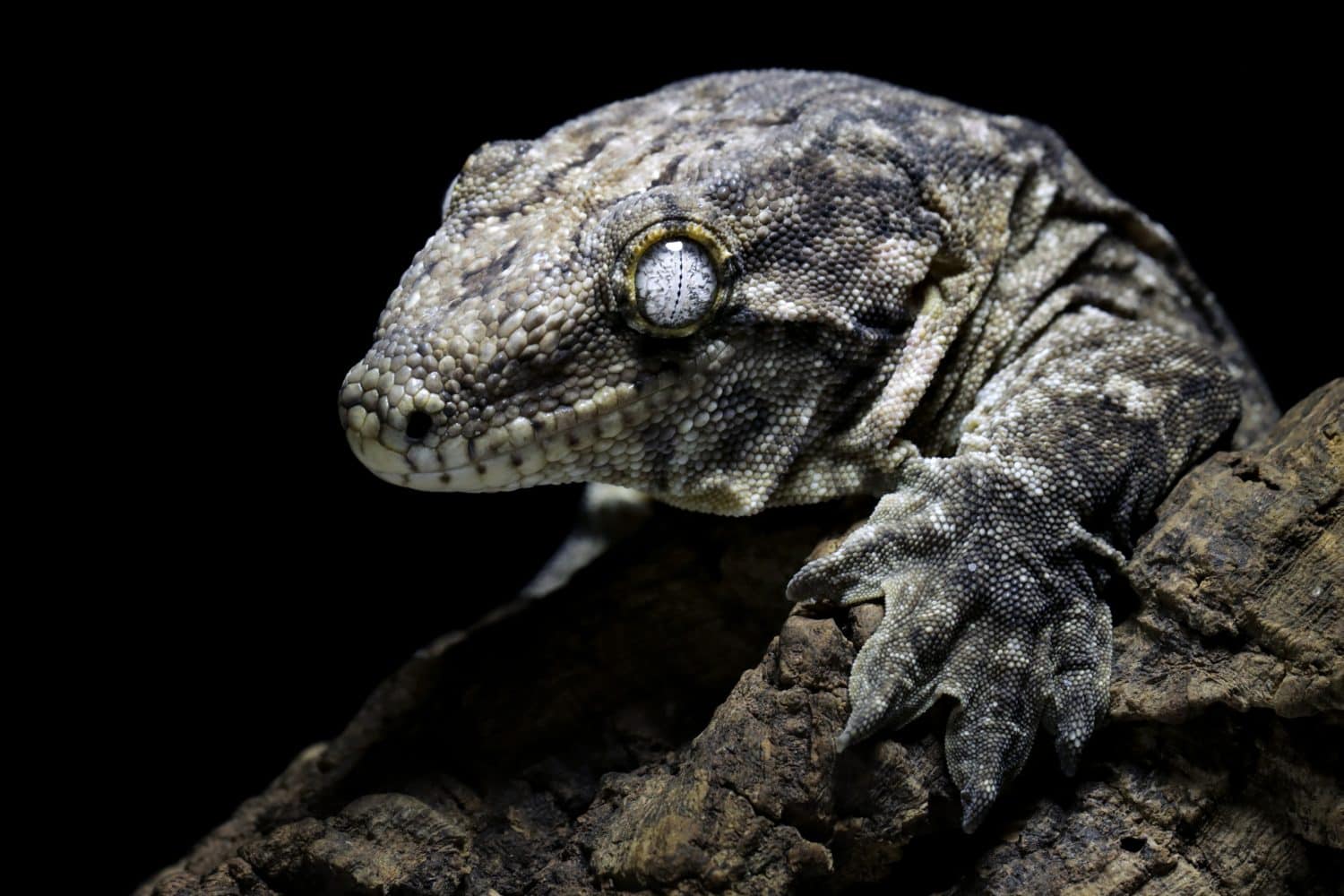
During the day, New Caledonian giant geckos remain tucked away high in the rainforest canopy.
©Kurit afshen/Shutterstock.com
New Caledonian giant geckos are nocturnal. During the day, they stay tucked away in the safety of tree crevices and holes high in the rainforest canopy. At night, they forage for food, mainly eating fruit and small invertebrates, but they have also been observed hunting newborn mice and smaller lizards.
In addition to their impressive size and unusual appearance, New Caledonian giant geckos also play an important role in their native ecosystem. By feeding on fruit, they help disperse seeds throughout the rainforest, contributing to the growth and renewal of native plant life. Their diet of insects and small invertebrates also helps keep their ecosystem balanced and healthy.
The Eerie Sounds of a New Caledonian Gecko
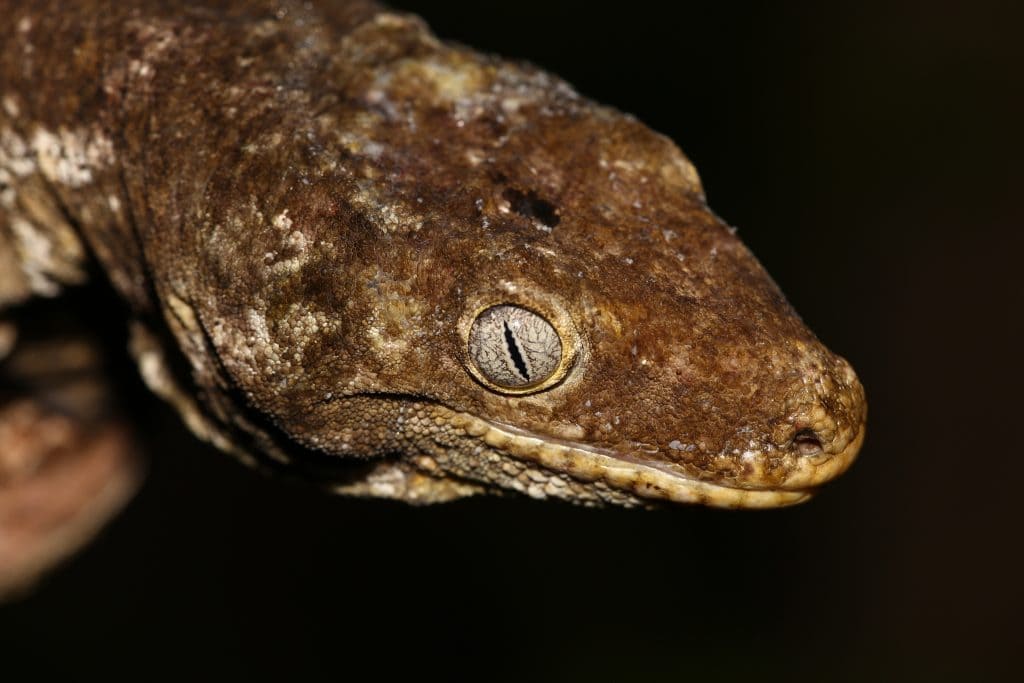
New Caledonian giant geckos have a wide range of vocalizations.
The New Caledonian giant gecko is known for its wide range of vocalizations. These surprisingly noisy reptiles use hissing, whistling, chirping, clucking, and growling to communicate. These sounds are so loud and intense that they can startle people who hear them at night. This has led to local folklore referring to them as the “devil in the trees.” According to legends from the Kanak people of New Caledonia, these massive reptiles are believed to cling to people and suck out their souls.
The World’s Largest Gecko’s Greatest Threats
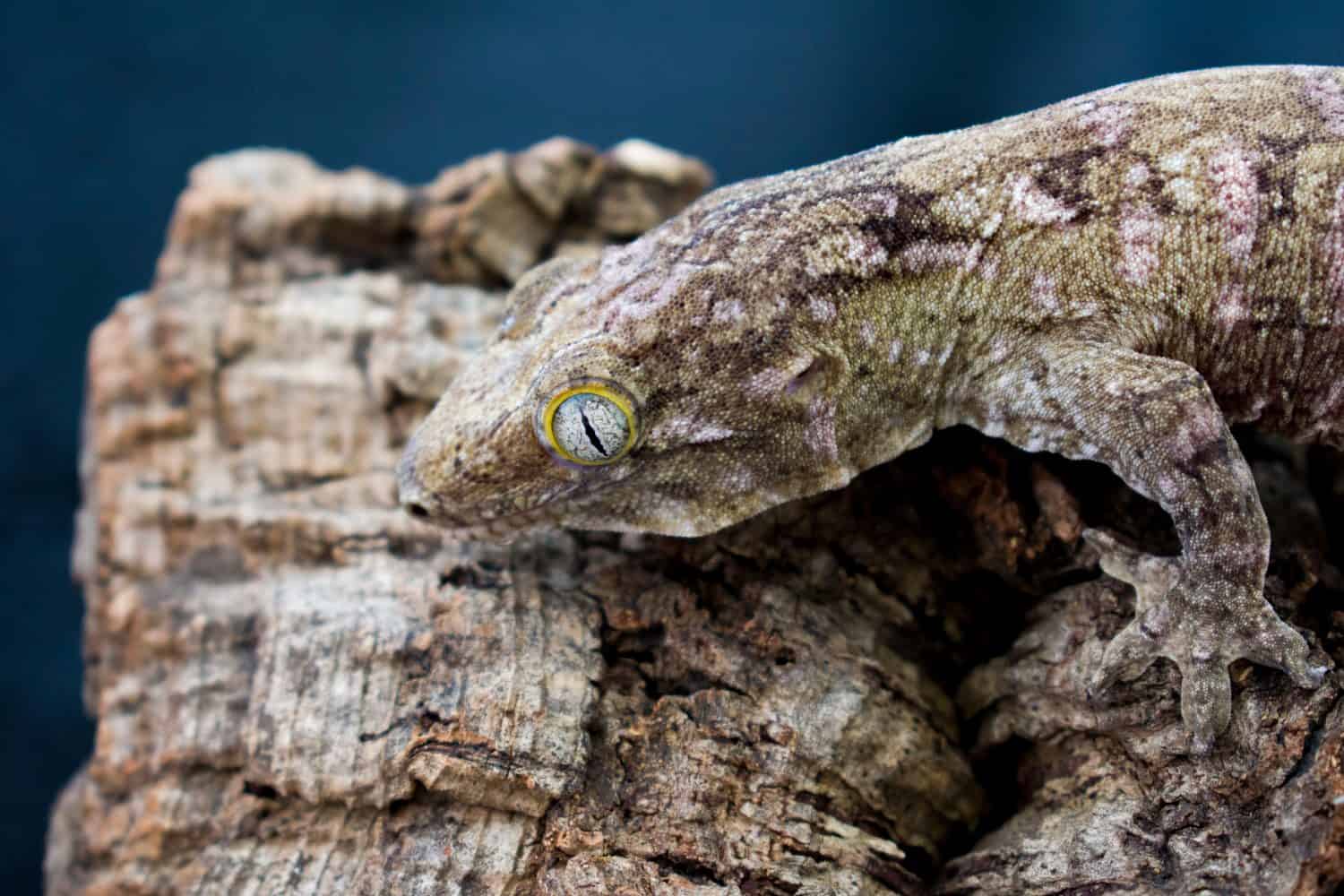
New Caledonian giant geckos have amazing camouflage to keep them out of sight.
©Julia Novelo/Shutterstock.com
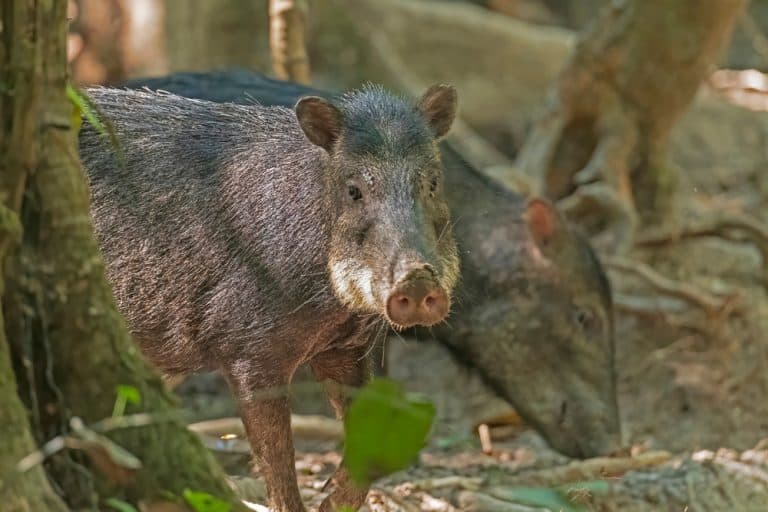
As mentioned above, their isolated island environment has resulted in less competition for resources and less predation compared to geckos on the mainland. However, they still face several threats. The main predators of the New Caledonian giant gecko are non-native species introduced to the islands, including dogs, cats, rats, and pigs.
To protect themselves, the geckos use their natural camouflage, changing their skin color to blend into their surroundings. When directly threatened, they can hiss or growl loudly and may even detach their tails as a defense mechanism. The discarded, wiggling tail distracts predators, allowing the gecko to escape and eventually regrow its tail.
Besides animal predators, these giant reptiles also face habitat loss and destruction as a result of human development. Because of their unique appearance and large size, they are highly sought after by reptile enthusiasts and are often illegally collected for the exotic pet trade.