The red panda, with its coppery coat and mischievous face, is one of the most captivating animals of the Himalayas. Yet, despite its charm, this small mammal is endangered, with fewer than 10,000 estimated to be left in the wild. Conservation groups are working tirelessly to protect it, and one of their most creative efforts has been the launch of International Red Panda Day, celebrated in 2025 on Saturday, Sept. 20. Since its creation 15 years ago, this annual event has become a vital tool for education and fundraising, growing into a global campaign that unites zoos, schools, and communities in the effort to save a species that could otherwise slip quietly into extinction.
An Endearing Species
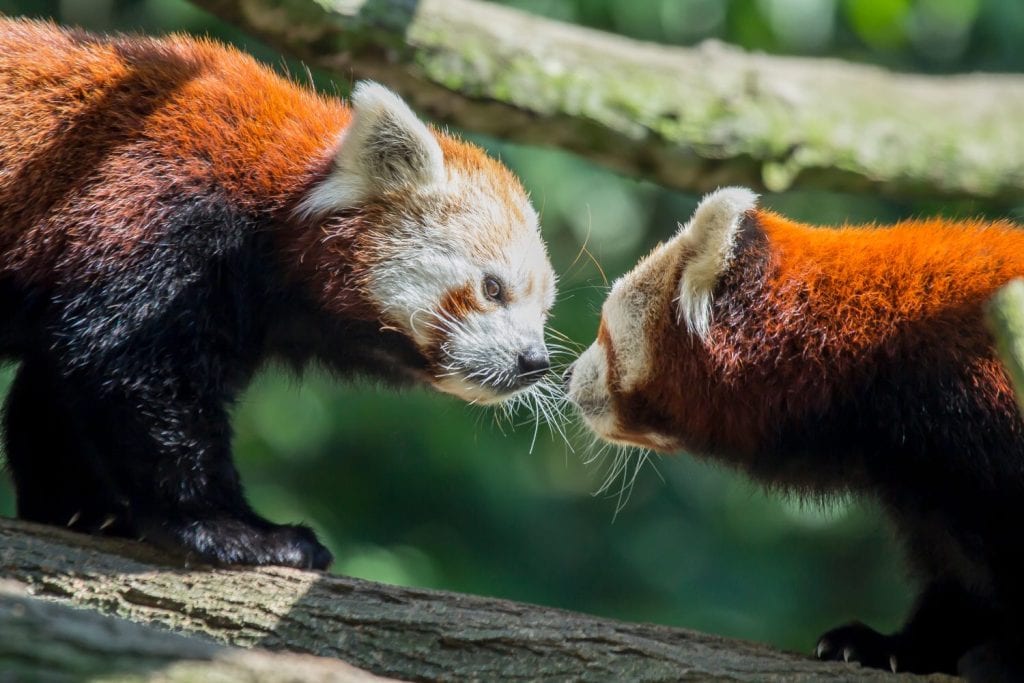
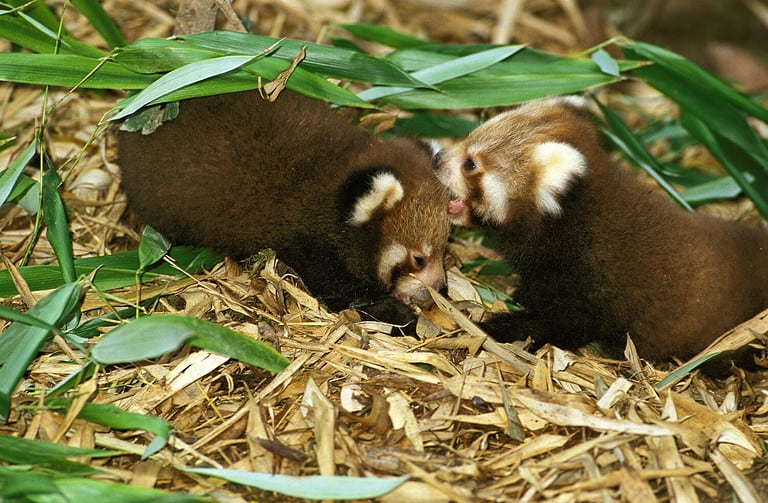
During courtship, red pandas “kiss” one another.
©Zoo_freeride/Shutterstock.com
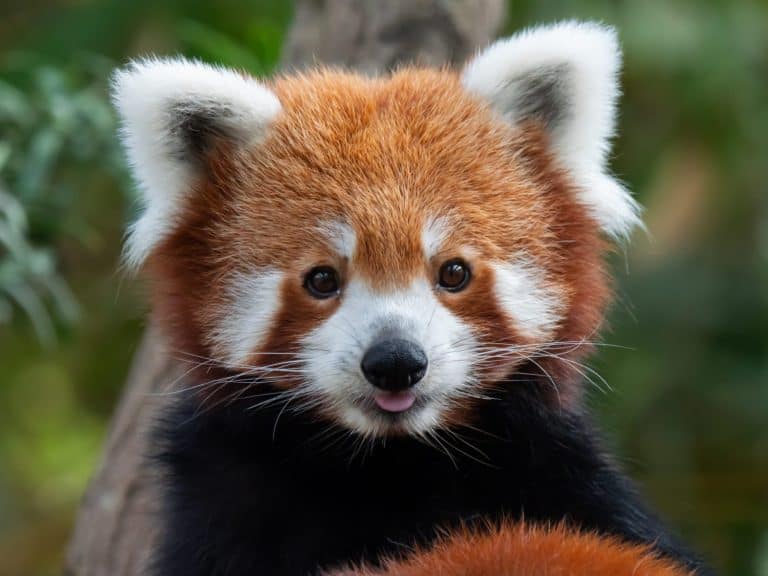
With rich brownish-red fur, white tear markings, and a foxlike face, the red panda is one of the Himalayas’ most adorable-looking animals. It is about the size of a house cat but has a long striped tail for balance and lives high in the mountain forests of Nepal, India, Bhutan, Myanmar, and China. It eats almost exclusively bamboo but occasionally supplements its diet with fruit, berries, eggs, and insects.
Shy and solitary, it spends its days in the treetops and comes out at night to forage. Its mating rituals are some of its most endearing behaviors. During breeding season, males and females approach one another cautiously, circling, sniffing, and sitting quietly near each other. They may nuzzle or exchange delicate licks around the face and nose, resembling shy kisses. These quiet rituals add poignancy and urgency to the efforts to save these gentle creatures from extinction.
The Original Panda, and Original Firefox

Mozilla Firefox logo 2004-2005.
©Mozilla Corporation / Wikimedia Commons – Original / License
First described in 1825, decades before the giant panda, the red panda was the original “panda.” Despite their shared name and bamboo diet, the two species are not close relatives. The red panda belongs to its own family, Ailuridae, with closer ties to raccoons and weasels. Because it is smaller than the giant panda, the red panda is sometimes called the “lesser panda.”
In China, one of its traditional names is the “firefox” (huǒhú). That nickname was the inspiration for the Mozilla Firefox browser’s name, though the company logo more closely resembles a curled-up fox than a panda. Still, the connection has helped bring the animal into popular awareness far beyond the Himalayas.
Why Red Panda Awareness Matters

A red panda “splooting” comfortably on a tree branch.
©Adam Brinkmann/Shutterstock.com
Despite their appeal, red pandas face serious threats. The global population is estimated at only 2,500–10,000 individuals and has declined by half in just two decades. The biggest threats are habitat loss and fragmentation, poaching for fur and parts used in traditional medicine, and the illegal exotic pet trade. Slow reproduction—small litters and long intervals between births—makes recovery even harder.
This is why awareness campaigns are not trivial. Awareness is the spark that spreads knowledge of this crisis, fuels donations for conservation efforts, and creates the global pressure and support needed to fund conservation in the Himalayas. Without international attention, local conservation programs could collapse. With international support, however, communities can recognize that this rare animal brings in foreign resources and is far more valuable alive than dead.
The Birth of Red Panda Day
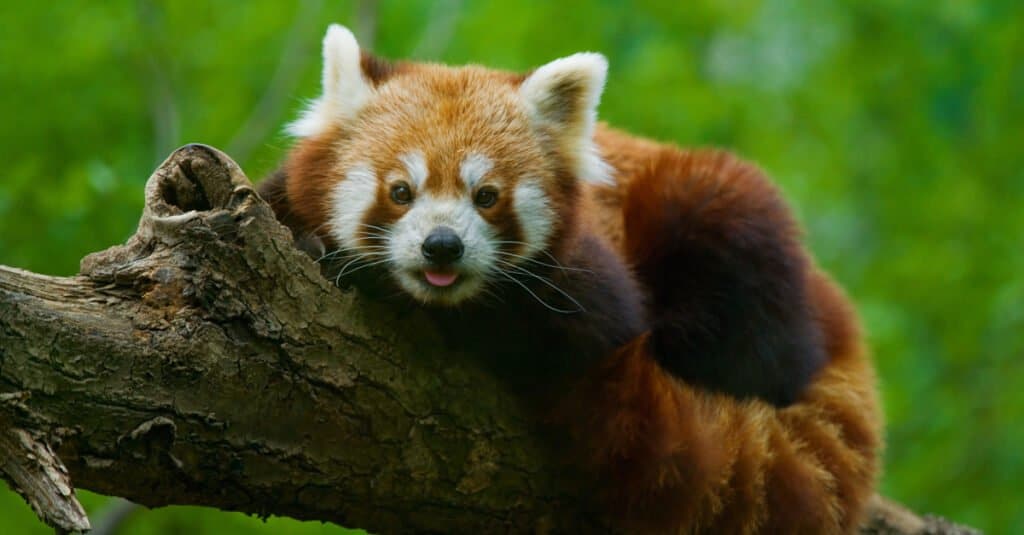
Red pandas use their long tails for balance and warmth.
©dean bertoncelj/Shutterstock.com
International Red Panda Day was first celebrated in 2010. It was launched by the Red Panda Network, a nonprofit conservation group based in Nepal. The goal was straightforward: to dedicate one day each year to focus the world’s attention on this endangered species. And more than that, to turn that attention into action. Zoos and schools quickly adopted the idea, hosting events, games, and fundraisers. Families joined by donating, sharing facts online, or teaching their children about the species. Over time, participation spread across continents, from Nepal and India to North America and Europe, making it a global event.
Turning Celebration Into Conservation

Red pandas nest and rest in the branches of deciduous trees and evergreens. They eat bamboo that grows in thickets below and nearby.
©PHOTOZON/Shutterstock.com
International Red Panda Day has not just remained a symbolic “feel-good” event; it has fueled measurable change. Through donations and awareness, the Red Panda Network has built a conservation model that combines global support with local action in the animals’ native range. Their achievements include:
- Over 100 Forest Guardians are trained and employed to patrol and protect dozens of community forests.
- Hundreds of hectares of habitat have been restored, with over 150,000 native trees and bamboo seedlings planted by 2025.
- Wildlife waterholes and reforestation projects that benefit numerous mountain species.
- Creation of the Puwamajhuwa Community Red Panda Conservation Area in eastern Nepal in 2024, a locally managed sanctuary spanning 116 hectares where red pandas can thrive
Each of these achievements can be traced back to the visibility created by Red Panda Day, which acts as a bridge by capturing global attention, converting it into funding, and channeling that funding into on-the-ground conservation work.
What “Awareness” Really Means
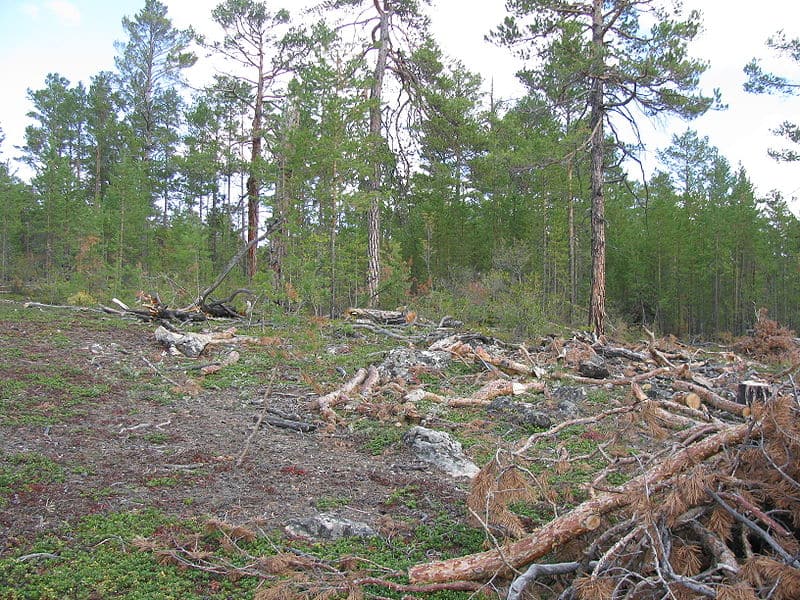
Deforestation is one of the main threats to Himalayan species.
The Red Panda Network makes clear that awareness is more than liking a cute photo online. They want people to understand four essential truths:
- Red pandas are endangered — half the population has been lost in just 20 years.
- The threats are human-driven — deforestation, development, poaching, and pet trade.
- Solutions exist — forest restoration, anti-poaching patrols, and community-based conservation are already making a difference.
- Everyone can help — from donations and memberships to spreading the word and teaching children.
Their campaigns put these truths into practice. The “No Panda Pets” initiative, for example, educates people on how keeping these pandas as pets fuels an exotic animal trade that threatens the whole species. In Nepal, anti-poaching patrols have significantly reduced the number of traps and snares in key areas. School programs have reached more than 23,000 students. This shapes a generation that grows up seeing this animal as part of their national heritage, not merely as an expendable natural resource.
A Global Classroom

Educating the next generation to value wildlife and understand the issues around its protection is a crucial part of long-term conservation efforts.
©Artem Zakharov/iStock via Getty Images
One of the strengths of International Red Panda Day is its focus on education. Teachers and students are central to the campaign, with resources that make learning interactive. Here are some sites that offer free educational resources related to the day:
- International Red Panda Day Activity Book — games, puzzles, coloring pages, and information for children.
- Twinkl.com — a rich variety of activities, coloring pages, teaching packs, and student projects.
- Lesson Planet – Handouts and lesson plans for teachers.
Knoxville, Tennessee: Red Panda Capital of the U.S.
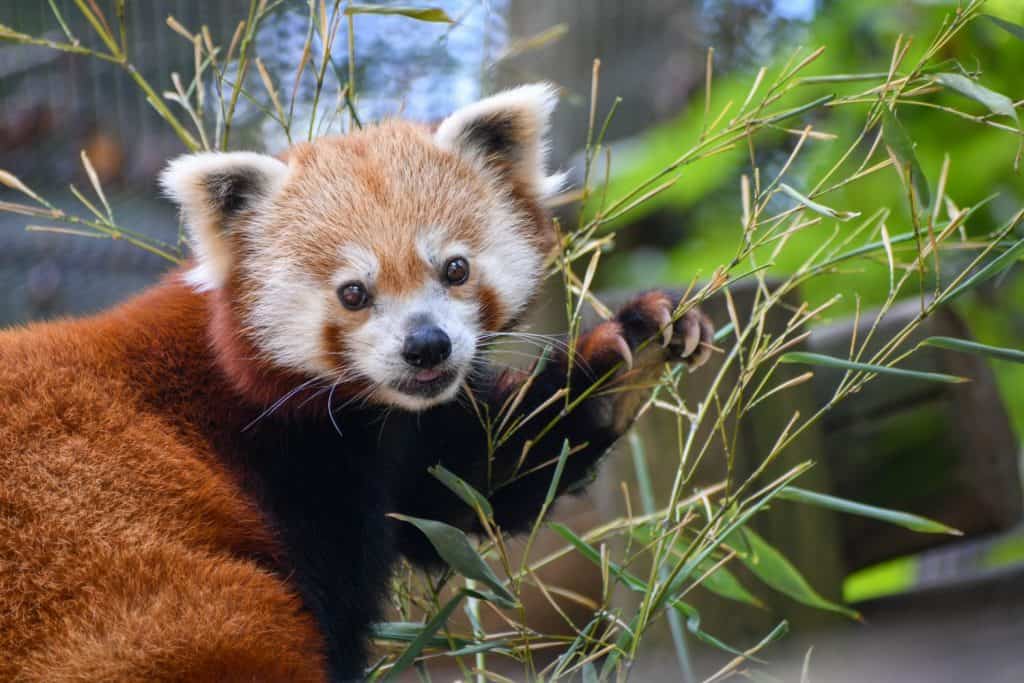
This is one of the red pandas in the Knoxville Zoo, a worldwide leader in breeding and conservation of the species.
©Lisa Crawford/Shutterstock.com
Knoxville Zoo (rebranded Zoo Knoxville in 2016) is often called the “Red Panda Capital of the U.S.” because of the leading role it plays in protecting this endangered species. Since 1978, the zoo has successfully bred over 110 cubs, more than any other zoo in the United States.
A curator at Zoo Knoxville has served as the coordinator of the North American Red Panda Species Survival Plan (SSP) for over 15 years. This helps ensure genetic diversity and long-term population health for the species in human care. Beyond breeding, Knoxville Zoo partners with groups like the Red Panda Network through the SAFE (Saving Animals From Extinction) program. They help connect local visitors with global conservation efforts through these organizations.
How You Can Help

Sponsoring or “adopting” an animal through a donation can be a meaningful way to contribute to conservation.
©atiger/Shutterstock.com
International Red Panda Day isn’t just for classrooms and zoos—anyone can play a part. Here’s how one person can make a real difference:
Donate
Consider giving small regular contributions to groups like the Red Panda Network that power critical conservation actions—funding Forest Guardians, tree planting, anti-snaring patrols, and more. Alternatively, you can “adopt” a real red panda through the Red Panda Network. For around $60, you’ll receive a certificate and often a small gift, while your funds go directly to habitat protection and community programs in Nepal. Consider this for a memorable gift idea for someone in your life who loves animals and just doesn’t need any more “stuff.” You could also make a donation in their honor to the Knoxville Zoo to sponsor red panda upkeep. It’s an organization with a well-earned reputation for conserving the species.
Educate
Raise awareness in your community by posting on social media, sharing interesting facts about red pandas in conversations with family and friends, or offering to speak at local venues such as schools, retirement homes, or any place seeking an engaging guest speaker. Just speak from your heart and share what you’ve learned, some cute pictures, and how people can help.
Volunteer
Link up with nearby zoos or wildlife centers that feature red pandas—many hold educational events tied to International Red Panda Day and need volunteers for visitor engagement or outreach.
Buy Mindfully
Educate yourself about which products are exported from deforested red panda habitats and avoid purchasing them. At the same time, seek out products that are produced sustainably and do not contribute to deforestation, and support those businesses. This is especially important for people living on the Indian subcontinent, who are most likely to buy these products, but it is also relevant for global consumers elsewhere. From symbolic adoptions to sharing a red panda fact on Facebook, every small action builds toward bigger protections for this shy, gentle species.