G
Species Profile

Gerberian Shepsky

Canis lupus familiaris

Two working legends, one tireless dog.
Ovidiu Constantin Moraru/Shutterstock.com

Gerberian Shepsky Distribution

Click a location to explore more animals from that region

Origin Location

This map shows the native origin of the Gerberian Shepsky. As a domesticated species, they are now found worldwide.

Loading map...

Found in 1 state/province

Size Comparison

Human 5'8"
Gerberian Shepsky 1 ft 11 in

Gerberian Shepsky stands at 34% of average human height.

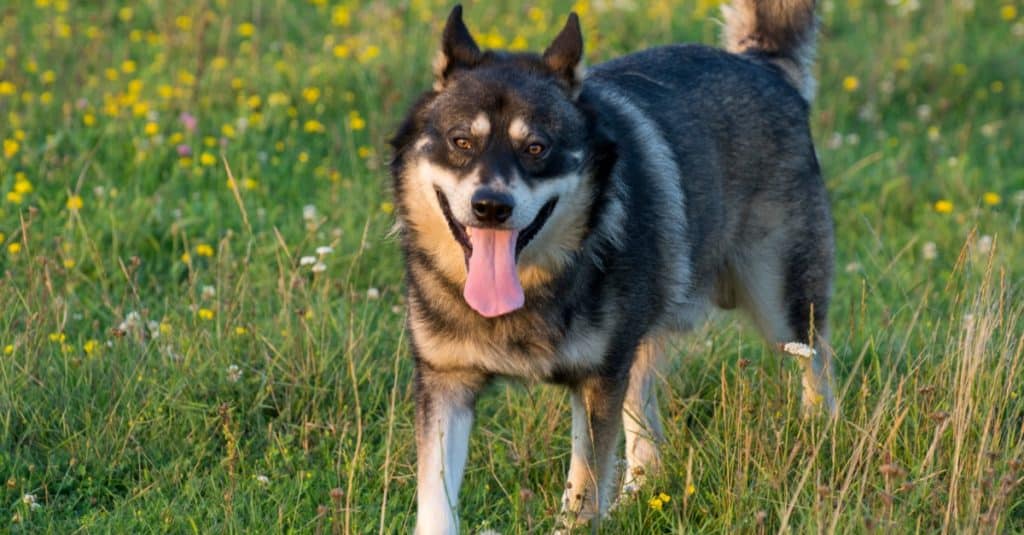
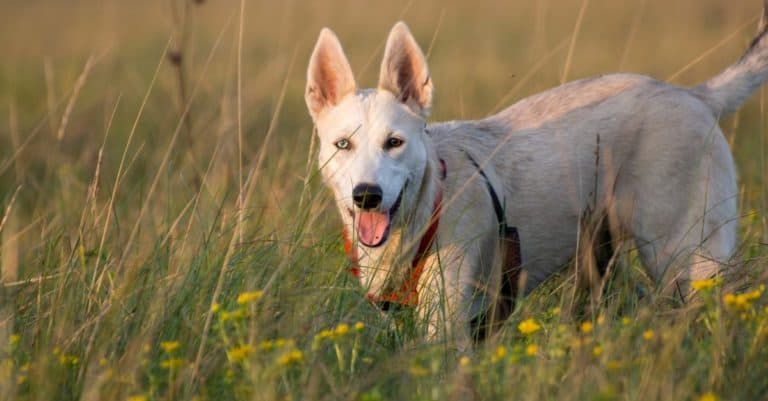
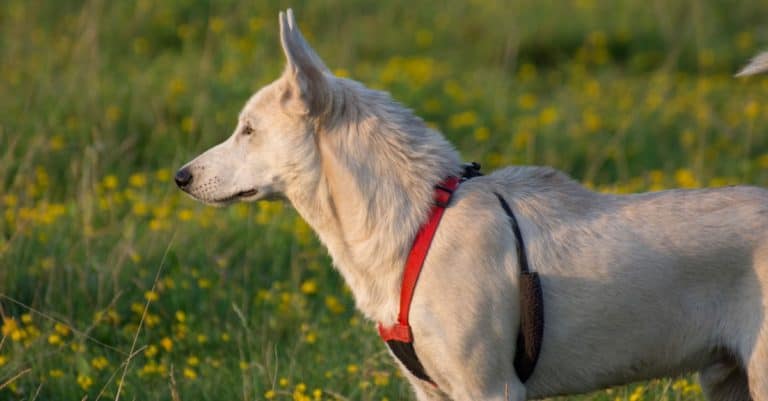
Gerberian Shepsky in a field

At a Glance

Domesticated
Also Known As Shepsky, Gerberian
Diet Omnivore
Activity Diurnal+
Lifespan 6 years
Weight 40 lbs
Status Not Evaluated
Did You Know?

Not a standardized pure breed: most major kennel clubs (e.g., AKC/FCI) don't recognize it as a distinct breed.

Scientific Classification

A domestic dog mix combining traits of the German Shepherd Dog and Siberian Husky; typically medium-to-large, athletic, intelligent, and high-energy. Not a standardized pure breed in major kennel clubs.

Kingdom
Animalia
Phylum
Chordata
Class
Mammalia
Order
Carnivora
Family
Canidae
Genus
Canis
Species
Canis lupus

Distinguishing Features

  • Medium-to-large, athletic build; often wolf-like profile
  • Dense double coat; coat colors may include black/tan, sable, gray/white, or mixed patterns
  • Erect or semi-erect ears are common
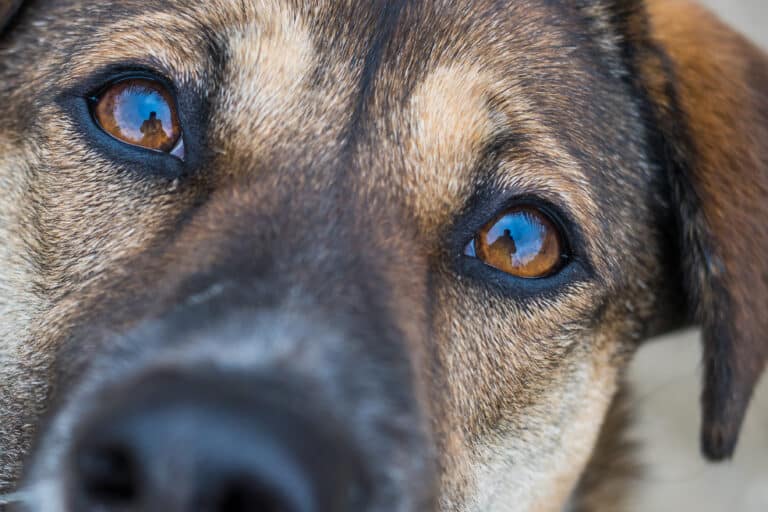
  • Eye color may be brown, blue, or heterochromatic (husky-associated trait)
  • High stamina and strong drive for exercise/engagement

Physical Measurements

Males and females differ in size

Height
2 ft (1 ft 10 in – 2 ft 2 in)
1 ft 10 in (1 ft 7 in – 2 ft)
Length
3 ft 10 in (3 ft 5 in – 4 ft 3 in)
3 ft 11 in (3 ft 3 in – 4 ft 5 in)
Weight
71 lbs (55 lbs – 90 lbs)
55 lbs (40 lbs – 71 lbs)
Tail Length
1 ft 3 in (1 ft 1 in – 1 ft 6 in)
1 ft 3 in (12 in – 1 ft 6 in)
Top Speed
31 mph
sprint speed varies

Appearance

Primary Colors
Secondary Colors
Skin Type Gerberian Shepsky (Canis lupus familiaris) has a dense double coat: soft undercoat and rougher guard hairs. They shed seasonally. Skin can get dry or irritated from over-bathing, allergies, or ear infections.
Distinctive Features
  • Mixed-breed domestic dog (German Shepherd x Siberian Husky), not a distinct wild taxon or standardized kennel-club breed; appearance and temperament can vary widely by individual.
  • Medium-to-large, athletic, working-dog build; deep chest, strong shoulders, and efficient trot suited to endurance activity.
  • Coat usually thick and weather-resistant; heavy seasonal shedding is common; grooming demands are often higher than many companion breeds.
  • Ears often upright/erect and triangular; some individuals may have semi-erect ears depending on inheritance.
  • Head and muzzle vary from shepherd-like (longer muzzle, defined stop) to more husky-like (broader head, moderate stop).
  • Eyes can be brown, amber, or blue, including heterochromia (more common with husky ancestry); eye color itself is variable and not guaranteed.
  • Tail often bushy and may curve/sickle like a husky's or hang more like a shepherd's; carriage changes with arousal and activity.
  • Typical movement is energetic and driven; many individuals show strong prey drive/chase instinct and high environmental curiosity (variable).
  • Variable, not certain health risks: hip and elbow dysplasia (common in large working lines), degenerative myelopathy (seen in some shepherd lines), eye issues like cataracts and progressive retinal atrophy, epilepsy, and skin and allergy problems.
  • Care requirements typical of active working mixes: daily vigorous exercise plus mental enrichment (structured training, scentwork, fetch, canicross/hiking), early and ongoing socialization, and consistent reward-based training to prevent boredom-related behaviors.
  • Grooming/care notes: frequent brushing during shedding seasons, routine nail/teeth care, and ear checks (especially if prone to ear infections); avoid shaving the double coat as it can impair thermal regulation and coat regrowth.

Sexual Dimorphism

As with most domestic dogs, sex-related differences are generally moderate and influenced by genetics, neuter status, and conditioning rather than a fixed breed standard. Males often appear more robust; females may be slightly lighter-framed.

  • Often larger overall with broader head/neck and heavier bone in some individuals.
  • May develop more pronounced ruff/neck fur and a more 'blocky' silhouette depending on coat and lineage.
  • Muscle mass can be more apparent if intact and well-conditioned (variable).
  • Often slightly smaller with a more streamlined frame and finer head/neck (variable).
  • May appear more lightly built while retaining athletic endurance; coat fullness varies by individual and season.
  • Heat cycles (if intact) can temporarily affect coat, appetite, and behavior; spay status influences these factors.

Did You Know?

Not a standardized pure breed: most major kennel clubs (e.g., AKC/FCI) don't recognize it as a distinct breed.

Combines two working lineages: herding/utility (German Shepherd Dog) and endurance sled work (Siberian Husky).

Often inherits a dense double coat and "seasonal blow," shedding heavily once or twice a year.

Eye color can vary widely; some individuals inherit pale eyes or heterochromia more common in Huskies.

Many show strong problem-solving skills-sometimes expressed as escape artistry if under-exercised.

Temperament is less predictable than in established breeds because traits can lean more Shepherd, more Husky, or a blend.

Commonly medium-to-large and athletic, but size and coat length vary depending on parental genetics.

Unique Adaptations

  • Double coat insulation: guard hairs plus undercoat help regulate temperature, with many individuals tolerating cold better than heat (provide shade/water and avoid hard exercise in hot weather).
  • Endurance engine: many inherit efficient gait and high aerobic capacity from both parent breeds' working histories.
  • High trainability potential: Shepherd lineage often boosts handler focus; Husky lineage can add independent decision-making-best results with consistent, reward-based training.
  • Strong sensory toolkit: excellent hearing and scenting ability typical of domestic dogs, supporting alerting, tracking games, and enrichment work.
  • Athletic build and jumping ability: suited to sports (canicross, skijoring, bikejoring, agility) when joints are protected and training is progressive.

Interesting Behaviors

  • High drive to move: long trots, pacing, and "patrol" loops are common, reflecting working-dog stamina (species context: dogs are cursorial mammals built for endurance locomotion).
  • Vocal range: some are "talkers" and may howl more (Husky influence) while others bark/alert more (Shepherd influence).
  • Shadowing/velcro tendencies: may follow a handler closely and watch for cues, aligning with German Shepherd attentiveness.
  • Prey-chase behaviors: may fixate on squirrels/cats; strong recall training and management are often needed.
  • Digging and denning: can dig cool spots or create "nests," a common canine comfort behavior that can be amplified by boredom.
  • Mouthy play and grabbing: adolescent Shepskies can be nippy or mouthy; appropriate outlets (tug rules, chew items) and impulse control help.
  • Escape and roaming attempts: jumping, climbing, pushing gates, or slipping collars can occur-secure fencing and harness fit matter.

Cultural Significance

Gerberian Shepsky (Canis lupus familiaris) is a modern mixed-breed that mixes German Shepherds (police and service work) and Siberian Huskies (sled teams). Not a formal kennel club breed. Popular in active homes and dog sports.

Myths & Legends

Fenrir, the immense wolf of Norse mythology, is foretold to break his bonds at Ragnarok, embodying the awe and fear wolves inspired in northern cultures.

In the Roman foundation legend, Romulus and Remus are nursed by a she-wolf, casting the wolf as both protector and powerful emblem of origins.

Inuit traditions include Amarok, a great wolf-like being who punishes those who hunt alone at night, reflecting respect for the dangers and rules of the Arctic landscape.

The 1925 "serum run" to Nome-often told in heroic popular lore through sled-dog figures like Balto and Togo-helped cement northern sled dogs in cultural memory as life-saving partners.

Early 20th-century fame of German Shepherd icons like Rin Tin Tin and Strongheart shaped a lasting legend of the Shepherd as the quintessential intelligent, loyal working dog.

The name "Gerberian Shepsky" itself is a modern naming tale-an internet-era portmanteau that spread through breeders, rescues, and social media to describe this German Shepherd × Siberian Husky cross.

Conservation Status

NE Not Evaluated

Has not yet been evaluated against the criteria.

Population Stable

Life Cycle

Birth 6 pups
Lifespan 6 years

Lifespan

In the Wild
3–10 years
In Captivity
10–14 years

Reproduction

Mating System Polygynandry
Social Structure Managed Domestic
Breeding Pattern Serial
Fertilization Managed Selective
Birth Type Managed_selective

Gerberian Shepsky (Canis lupus familiaris): species-level mating is polygynandry with internal fertilization. In practice breeding is human-managed (planned pairings, timing, heat monitoring). Bonds are short-term, not lifelong; cooperative helpers are uncommon.

Behavior & Ecology

Social Pack Group: 4
Activity Diurnal, Crepuscular, Cathemeral
Diet Omnivore Meat-forward, high-protein meals (commonly chicken or fish-based formulas)

Temperament

High-energy, athletic, and endurance-oriented; needs substantial daily exercise (often 60-120+ minutes plus enrichment) to prevent frustration behaviors.
Highly intelligent and fast-learning; thrives with structured positive reinforcement, clear boundaries, and ongoing training-can become manipulative or "selectively compliant" if inconsistently handled (often more husky-leaning).
Socially engaged and people-oriented in many lines, but can be aloof with strangers; shepherd influence may add watchfulness/protectiveness-requires early socialization to reduce fear-based reactivity.
Moderate-to-high prey drive and chase behavior (husky influence), which can complicate off-leash reliability; secure fencing and recall training are key care requirements.
Vocal, expressive, and sometimes "talkative"; may use howling/whining more than typical GSDs-important for apartment/close-neighbor considerations.
Can be mouthy and exuberant in play; benefits from impulse-control work (settle, leave-it, polite greetings) and appropriate chew outlets.
Potential for dog-selective behavior or same-sex tension in some individuals; best outcomes with early neutrality training, controlled introductions, and adequate exercise.
Most Gerberian Shepskies show a blend of husky independence and vocalization with German Shepherd trainability and guarding tendencies. Individual expression ranges from highly handler-focused working style to more free-thinking, roam-prone temperament.
Parent breeds may have hip and elbow dysplasia, degenerative myelopathy (GSD-linked), eye problems like cataracts or progressive retinal atrophy (PRA), hypothyroidism, allergies/skin issues; deep-chested dogs risk bloat/GDV, so feed and watch closely.
Care requirements often include heavy-shedding double-coat management (seasonal "blow"); regular brushing, nail/ear care, and heat management in warm climates (husky coat + high activity can increase overheating risk).

Communication

Barking Often alert/territorial; shepherd-leaning
Howling Husky-leaning; can be triggered by sirens, separation, or excitement
Whining/whimpering Attention-seeking, frustration, or anxiety
Growling Warning, play-growls, resource guarding signals
"Talking"/woo-woo vocalizations Social excitement, engagement
Body posture and facial expressions Stiffening, freezing, lip-licking, yawning as stress signals
Ear and tail signaling Upright/forward attention vs. tucked/low fear; tail carriage varies by individual and parent-trait influence
Direct eye contact or avoidance Can indicate confidence, challenge, or appeasement depending on context
Scent marking and sniffing routines Territory information; heightened outdoor engagement
Play bows, pawing, leaning, and physical contact Affiliative behavior; some are "leaners" like GSDs
Escape/roam attempts as communication of unmet needs (often boredom/excess energy); addressed via enrichment, secure containment, and training

Habitat

Biomes:
Temperate Forest Boreal Forest (Taiga) Tundra Alpine Temperate Grassland Mediterranean Desert Hot Desert Cold Savanna Tropical Dry Forest Tropical Rainforest Wetland Freshwater +7
Terrain:
Plains Hilly Mountainous Valley Coastal
Elevation: Up to 13123 ft 4 in

Ecological Role

Domestic companion/working dog (human-associated omnivore) rather than a natural ecosystem predator; functions as a subsidized consumer in human environments.

Companionship and social support to humans Working roles (guarding, herding/utility tasks, sled/endurance-style activities, service/assistance) Search-and-rescue/scent detection depending on training Deterrence of some nuisance wildlife via presence (context-dependent)

Diet Details

Main Prey:
Poultry Cattle Lamb/mutton Fish Small mammals
Other Foods:
Cooked grains and starches Vegetables Fruits Fiber sources

Human Interaction

Domestication Status

Domesticated

Domestic dogs (Canis lupus familiaris) come from gray wolves (Canis lupus) through long human selection. The Gerberian Shepsky is a modern designer mix (German Shepherd × Siberian Husky), not a kennel-club recognized pure breed. Bred to blend GSD guarding instincts and Husky endurance/looks, they are active companions or working dogs and can be given up if needs are not understood.

Danger Level

Moderate
  • Size/strength and high arousal can cause accidental injuries (knocking down, leash pulling).
  • Poor socialization or inadequate management can lead to fear-based or territorial aggression (more likely when strong guarding traits from GSD lines combine with high drive).
  • High prey drive in some individuals can pose risk to small animals and may redirect during excitement if not trained.
  • Escape/roaming risk due to Husky-like wandering tendencies can create public-safety hazards (traffic incidents, dog-dog conflicts).

As a Pet

Suitable as Pet

Legality: Generally legal where domestic dogs are permitted; subject to standard local dog ordinances (licensing, leash laws, vaccination) and may be restricted by housing/insurance breed policies that sometimes target 'shepherd-type' dogs or large working breeds even when mixed.

Care Level: Experienced

Purchase Cost: Up to $2,500
Lifetime Cost: $15,000 - $45,000

Economic Value

Uses:
Companion animal ownership Pet services (training, daycare, grooming, boarding) Working and sport participation Adoption/rescue ecosystem Veterinary care and preventative medicine
Products:
  • professional training (obedience, reactivity management, recall, leash skills)
  • high-durability enrichment items (puzzle feeders, chews, tug toys)
  • sport/working gear (harnesses, long lines, canicross/bikejoring equipment)
  • seasonal grooming supplies (undercoat rakes, deshedding tools)
  • preventatives and veterinary diagnostics (hip/elbow imaging, eye exams when indicated)

Relationships

With fluffy fur, bright eyes, and incredibly alert senses, the Gerberian Shepsky is one of the most majestic designer dog breeds on the market. These gorgeous and loyal dogs are made by mixing a German Shepherd with a Siberian Husky in the hopes of getting the best traits from both breeds. The result is a dog that’s hardworking, obedient, energetic, and always excited to be part of the action. Gerberian Shepskies need a lot of attention from their owners and aren’t suited for apartment living. However, if you spend time training them and give them plenty of exercise, you’ll find that these dogs are some of the best companions that you’ll ever have.

Owning a Gerberian Shepsky: 3 Pros and Cons

ProsCons
Loyal and Attentive. Gerberian Shepskies are smart dogs that love to follow their owner’s commands. Expect your dog to always be on the alert and waiting for your next directive.Lots of shedding. Like the Siberian Husky, the Gerberian Shepsky is known for having a thick, fluffy coat that sheds when the seasons change. Expect to brush your dog regularly, and use a vacuum to keep the household fur levels under control.
Hardworking Employee. Gerberian Shepskies can inherit hardworking traits from their parent breeds.Separation anxiety. Both of the Gerberian Shepsky’s parent breeds suffer from high levels of separation anxiety. These dogs do best if there’s always a human at home; if you must leave them alone, consider kenneling them to avoid destructive behaviors.
Extremely Attached. Gerberian Shepskies love their families and will spend all of their time curled up at their owner’s feet.Needs a yard. Gerberian Shepskies are big dogs who need room to run around. This breed is not adapted for apartment living and is a better choice for families with large yards and active lifestyles.
Gerberian Shepsky playing in a field

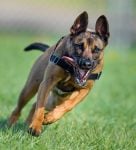
Gerberian Shepskies are always alert and waiting for your next directive.

Evolution and Origins

The exact origins of the Gerberian Shepsky are unknown, although it’s likely this breed was developed in the U.S. in the 1990s, when designer dogs, or hybrids, became popular.

Most designer dogs aren’t used as working dogs. However, because the Gerberian Shepsky is descended from two hardworking breeds, these pups are often used for police work and search and rescue missions like their parents.

The Gerberian Shepsky’s parent breed, the German Shepherd, originated in Germany, dating back to the 1890s, and was used as a herding dog due to its agility, intelligence, and strength. These qualities also made this breed a very effective working dog, especially for law enforcement. The American Kennel Club recognized the German Shepherd in 1912.

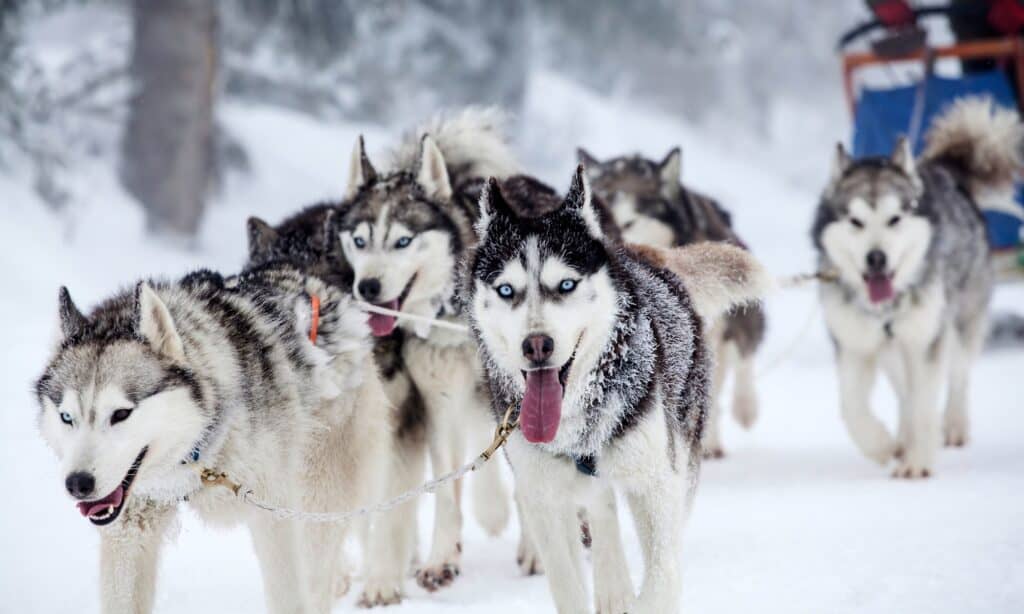
The other parent breed, the Siberian Husky, came from northeast Asia and can trace its lineage back around 4,000 years. The Chukchi people kept these huskies as family pets and working sled dogs, hauling freight in arctic conditions, as well as herding reindeer and acting as watchdogs. The Siberian Husky was recognized by the American Kennel Club in 1930.
Why do Siberian Huskies have blue eyes

The Gerberian Shepsky’s parent breed, the Siberian Husky, is used to pull sleds.

Size and Weight

Gerberian Shepskies are medium to large-sized dogs with thick coats of fluffy fur. Depending on which parent breed they take after, your Gerberian Shepsky might have tan, brown, grey, or white fur with various patterns and patches. Most of them have either light gold or stunning blue eyes. These dogs typically weigh between 50 and 100 pounds, with females weighing slightly less (45 – 90 lbs) than males from the same litter. Gerberian Shepskies grow quickly when they are puppies; if you start a growth chart, you’ll notice that they can get up to 20 to 25 inches tall at the shoulder by the time they are 2 years old.

Common Health Issues

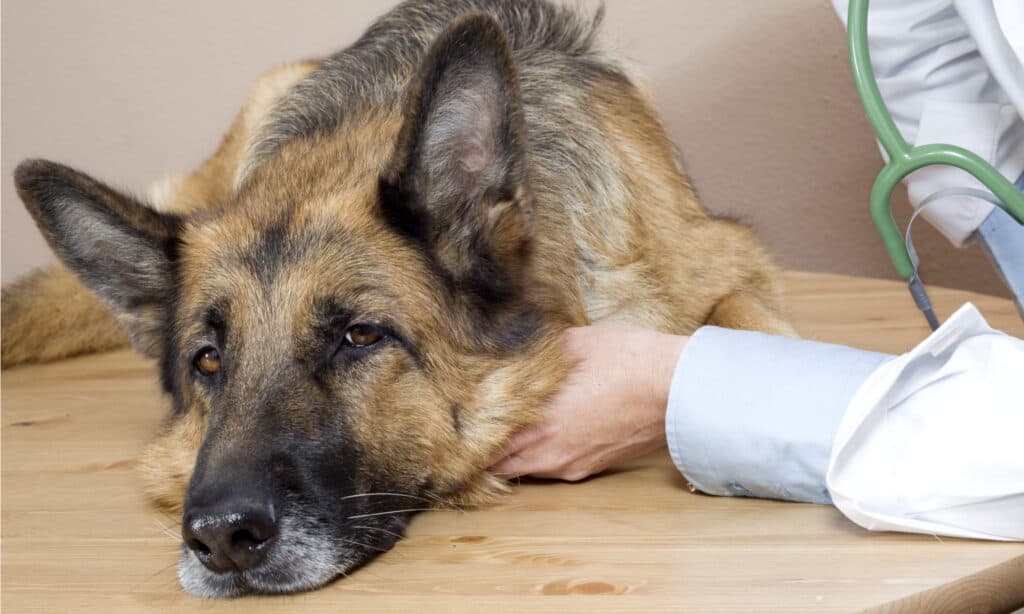
Gerberian Shepskies are fairly healthy dogs that tend to share the same potential genetic conditions as their parent breeds. Possible concerns include joint dysplasia, retinal problems, patellar luxation, and canine epilepsy. Bring your dog to the vet for a checkup as soon as you adopt it from the breeder.
Dog Food for Liver Disease

Like its parent breed, the German Shepherd, the Gerberian Shepsky is prone to joint dysplasia.

Temperament

Gerberian Shepskies are sweet and loving dogs with loyal, attentive, and endearing personalities. Because they are descended from two working breeds, they have high energy levels and display many herding and guarding behaviors. These dogs prefer active and involving lives and love to follow their owners to the job site.

When they’re not working, they are playful pets that adore their primary owners. Expect to find your dog curled up under your feet, lounging underneath the windowsill, or bringing you toys in the hopes that you’ll play a round of fetch. Start building your bond with your dog early, and you’ll enjoy a close relationship for the rest of their life.
Gerberian Shepsky playing in a field

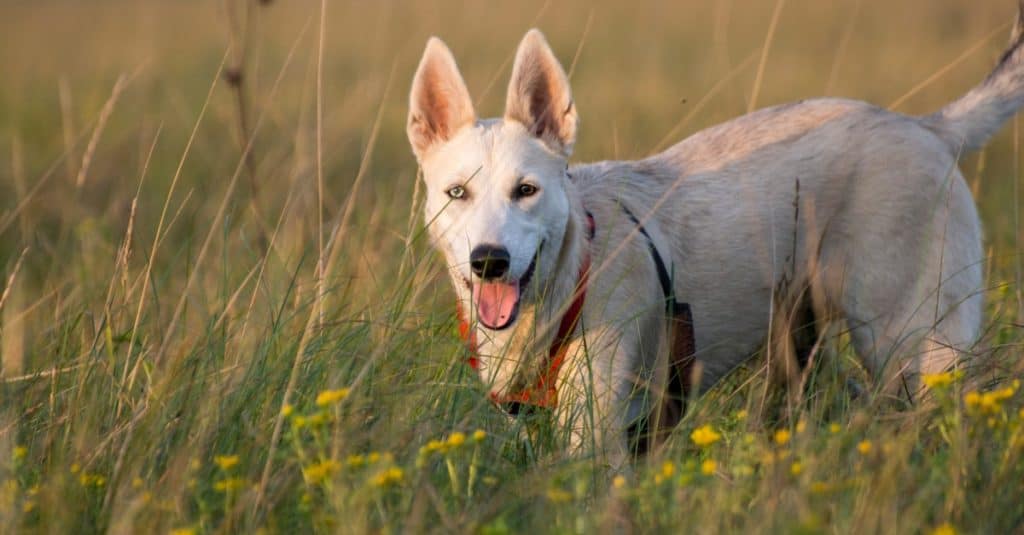
Gerberian Shepskies are sweet, loyal, and have high energy levels.

How to Take Care of a Gerberian Shepsky

Gerberian Shepskies are large dogs that need plenty of exercise. In addition to owning a yard, you should also take your dog for at least one or two hour-long walks every day. These dogs love attention and suffer from separation anxiety, so prepare to keep your dog right by your side.

The Best Dog Food for Gerberian Shepskies

Because they’re large and energetic dogs, they tend to burn a lot of calories. Look for high-protein and/or high-energy dog food made with healthy ingredients. Alternatively, you can cook homemade food with lean meats, green vegetables, and whole grains. These dogs need slightly larger portions than most pups; however, if you notice a steady stream of nervous or destructive behavior, it might be a sign that your dog is eating too much for the amount of exercise that they are getting.

Maintenance and Grooming

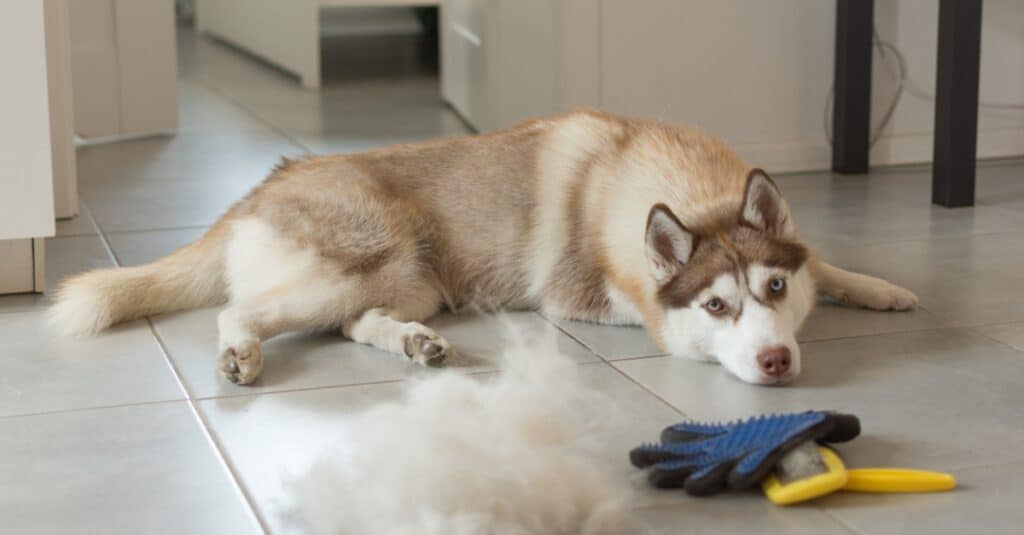
Like its parent breed, the Siberian Husky, the Gerberian Shepsky is a heavy shedder that should be brushed at least twice a week. When the weather starts to warm up, take your dog to the groomer; a summer haircut will do a lot to keep your canine cool and comfortable. You should also trim your dog’s nails and brush their teeth every month. Finally, don’t forget to inspect your dog’s ears and clean them regularly to prevent infections.
Siberian Husky laying on floor after being brushed

The Gerberian Shepsky is a heavy shedder like its parent breed, the Siberian Husky.

Training

Gerberian Shepskies are loyal dogs that love to follow their owner’s commands. However, because these dogs tend to become hyper-focused, you may have to spend extra time training them to respond to your voice instead of to outside distractions. Start working with your dog as soon as you bring them home. Be careful to make sure that you only issue commands if your dog is capable of following through on them, and build habits of quick recall and immediate obedience. With a little time and patience, your dog will quickly respond to every command.
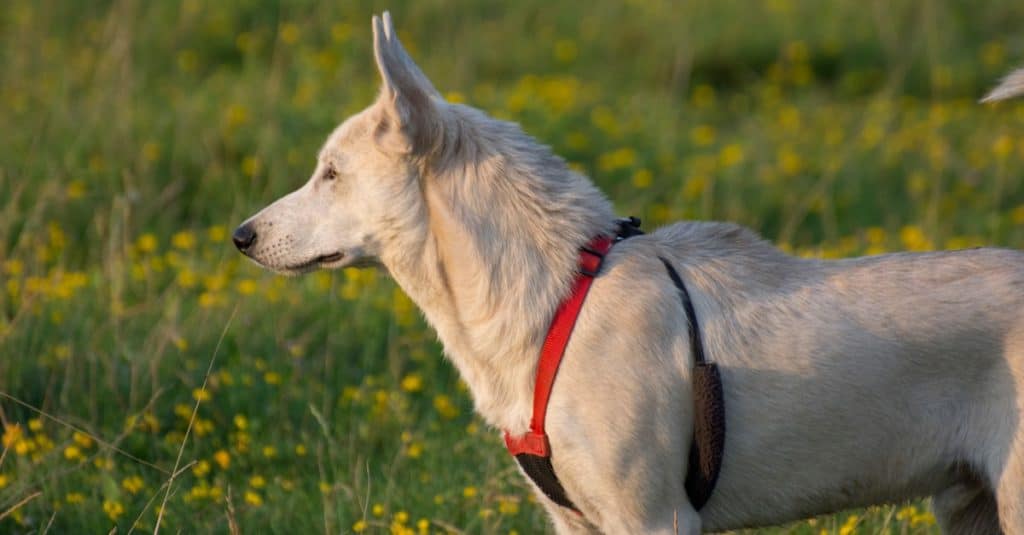
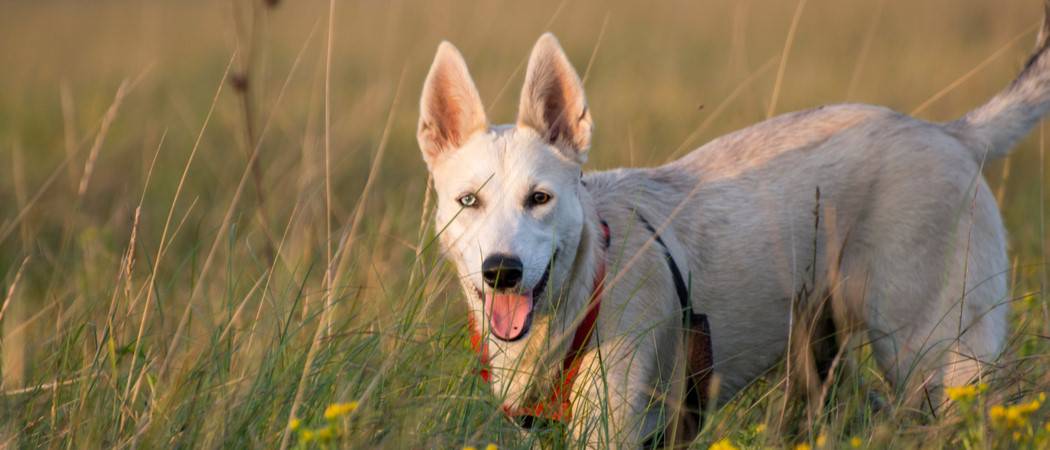
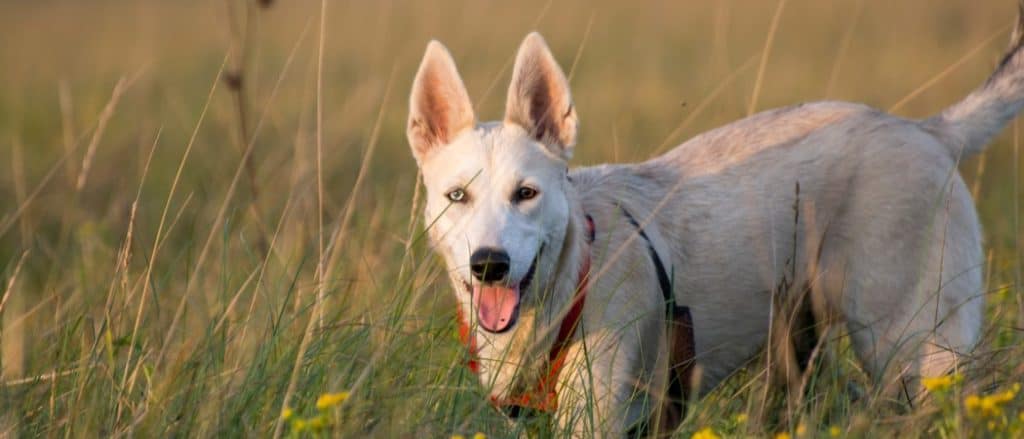
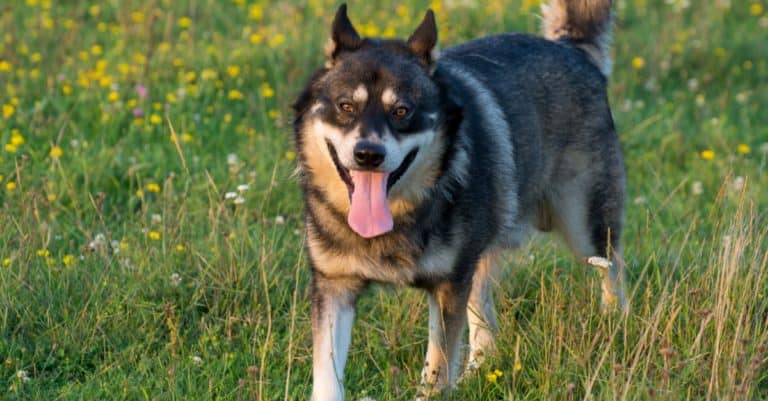
Gerberian Shepsky standing in field with flowers

It may take some time to train a Gerberian Shepsky to respond to your voice and ignore outside distractions.

Exercise

These dogs are far too active to live in apartments. Make sure your dog has a large yard where it can run around and play. In addition, you should take your dog on one or two hour-long walks every day. Don’t forget to provide plenty of ropes, balls, and other chew toys. Dog toys are a great way to help active pets burn off steam and prevent them from engaging in destructive behaviors.
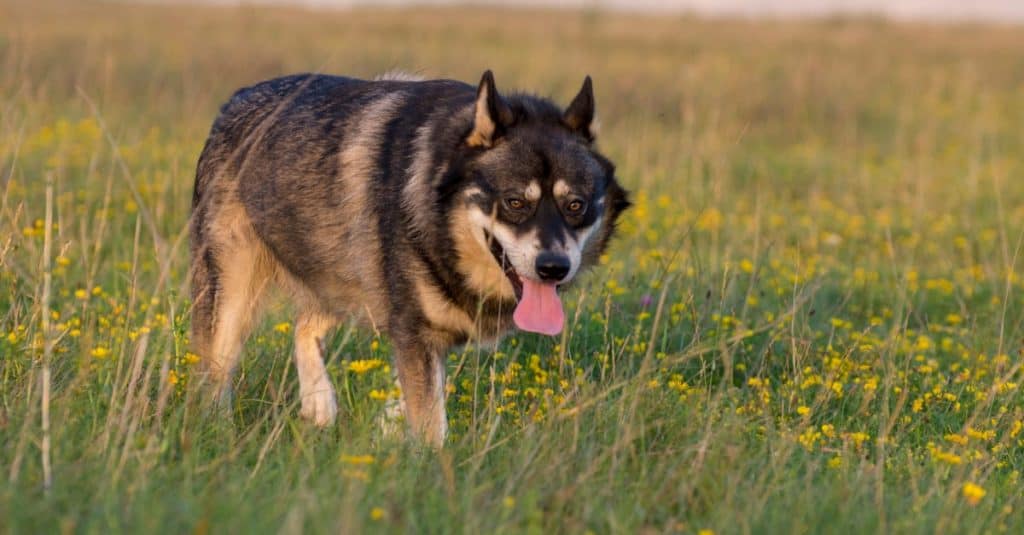
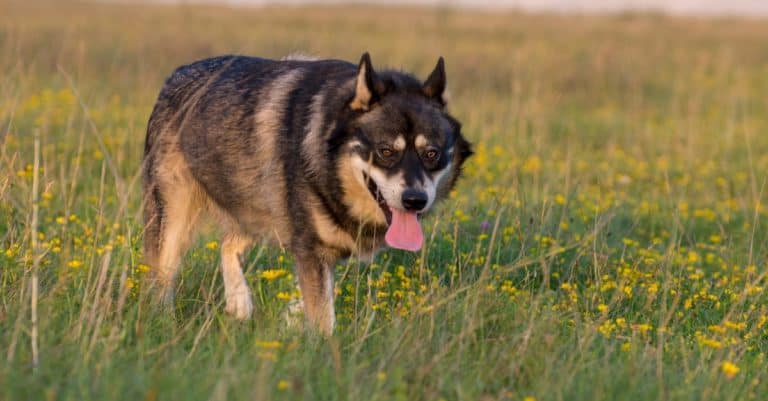
Gerberian Shepsky standing in a field

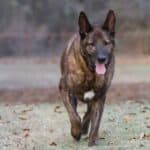
Gerberian Shepskies need a large yard or space where they can run around and play.

Puppies

The puppies are adventurous and energetic. Keep an eye on yours to make sure they don’t get into trouble. You should also start working on basic commands and quick recall early on to get your puppy used to responding to your voice. These dogs get big fast; if you want to get the most out of their puppy days, consider starting a growth chart.
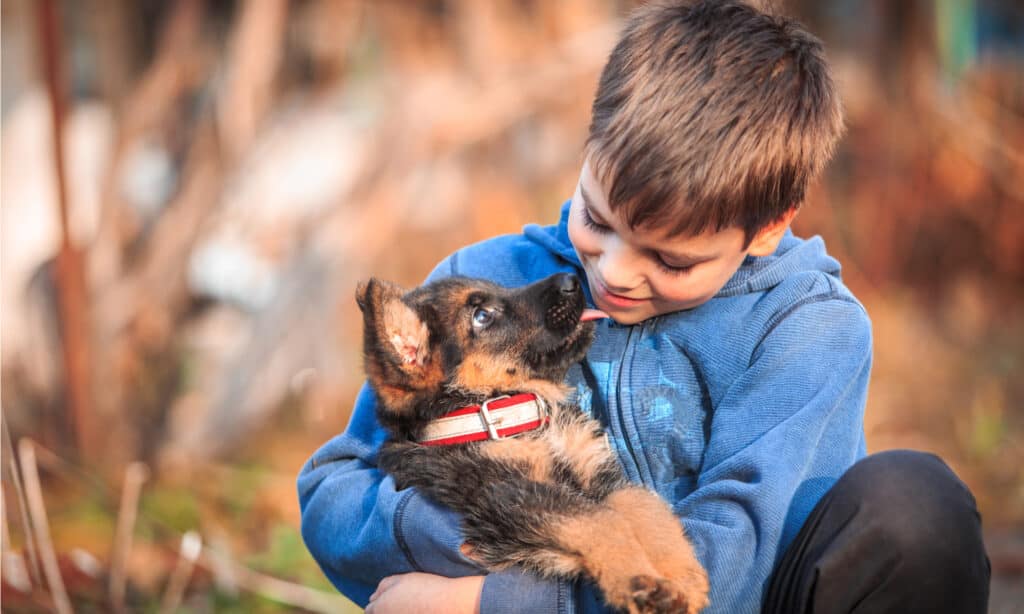
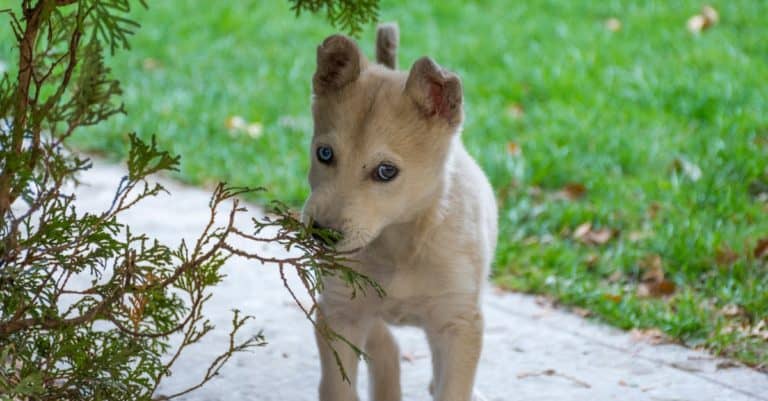
how much does a dog cost

Keep an eye on your puppy to make sure it doesn’t get into trouble.

Gerberian Shepskies and Children

Gerberian Shepskies are sweet and playful dogs, but they are far too large and energetic to interact with small children. Only let your kids play with these dogs if they are comfortable with large animals and know how to respect a dog’s boundaries.

Dogs Similar to Gerberian Shepskies

The Gerberian Shepsky is a rare designer hybrid with many desirable traits. If you’re looking for something similar, try adopting one of the parent breeds or another herding dog like the Australian Shepherd.

  • German Shepherd: A classic working breed, the German Shepherd is a beloved part of families across the world.
  • Australian Shepherd: The Australian Shepherd is slightly smaller than the German Shepherd and has a playful and jovial personality.
  • Siberian Husky: With fluffy white fur and big blue eyes, the Siberian Husky is one of the most impressive and loyal dogs on the market.
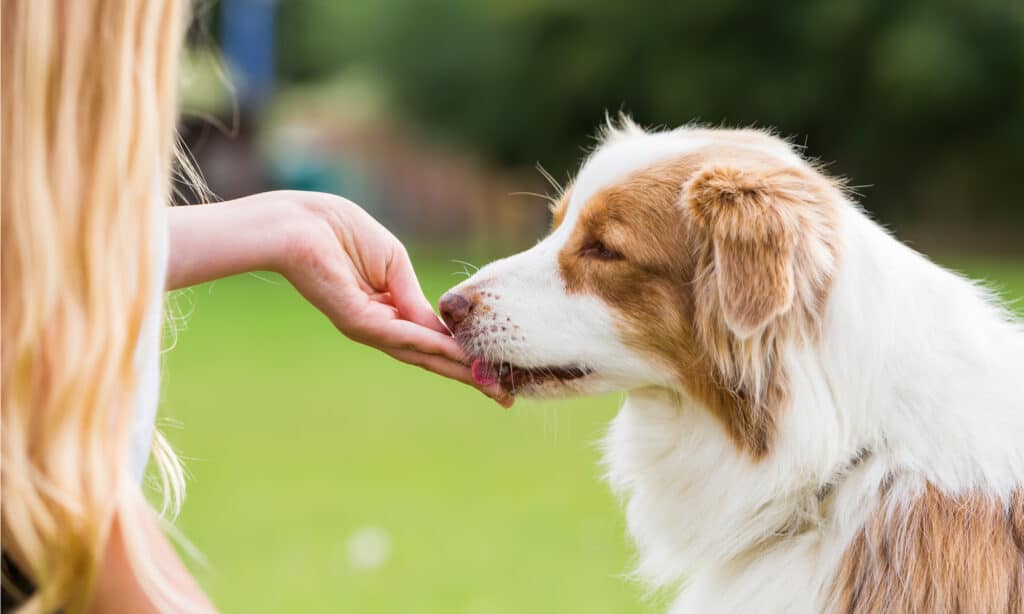
Osiris Beef Flavored Dog Chews

Australian Shepherds are a little smaller than German Shepherds.

View all 261 animals that start with G

Sources

  1. Dog Time / Accessed April 14, 2021
  2. Gerberian Shepsky / Accessed April 14, 2021
  3. Pet Guide / Accessed April 14, 2021
  4. Shepherd Sense / Accessed April 14, 2021
  5. Wag Walking / Accessed April 14, 2021

Catherine Gin

About the Author

Catherine Gin

Catherine Gin has more than 15 years of experience working as an editor for digital, print and social media. She grew up in Australia with an alphabet of interesting animals, from echidnas and funnel-web spiders to kookaburras and quokkas, as well as beautiful native plants including bottlebrushes and gum trees. Being based in the U.S. for a decade has expanded Catherine's knowledge of flora and fauna, and she and her husband hope to have a hobby farm and vegetable garden in future.

Thank you for reading! Have some feedback for us?


Gerberian Shepsky FAQs (Frequently Asked Questions)

A Gerberian Shepsky is a designer dog breed created by crossing a German Shepherd with a Siberian Husky. These dogs are large and fluffy with brown, white, or grey fur, and they usually have the husky’s signature golden or blue eyes. Most breeders sell Gerberian Shepskies with relatively predictable traits based on the parent’s pedigrees; if you like previous puppies from a set of parents, there’s a good chance you’ll also like the Gerberian Shepsky that you get to bring home.