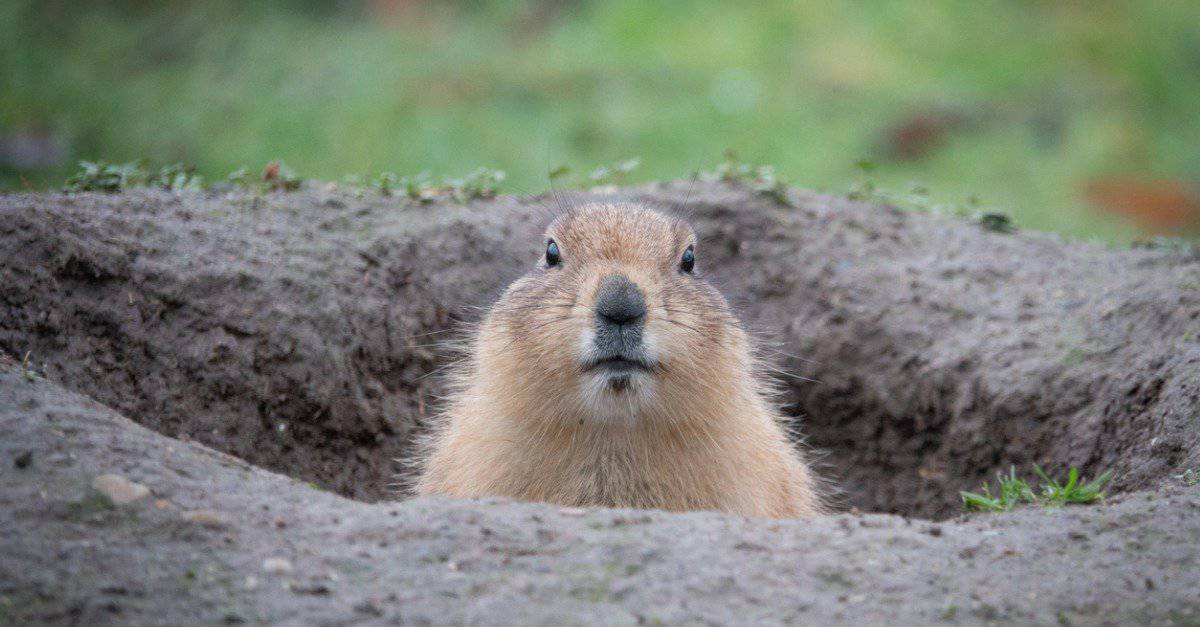

People often associate groundhogs with Groundhog Day. On February 2nd, if the groundhog sees its shadow, that means there will be six more weeks of winter. If the groundhog does not see its shadow, that means an early spring. Also known as the woodchuck, the groundhog is a burrowing rodent in the marmot family, Sciuridae. These cuddly-looking critters live throughout the United States and Canada and can wreak havoc on a garden or commercial crops. But what exactly do groundhogs eat? Keep reading to find out.
The Groundhog’s Diet
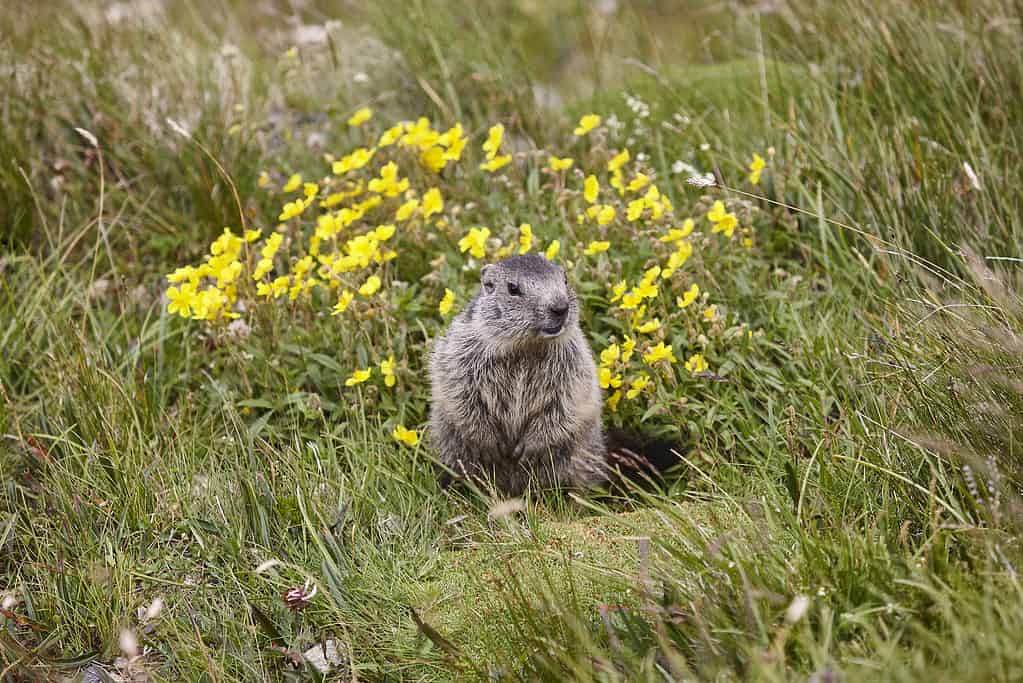
Groundhogs forage for plants that they can easily find in their environment.
©ABBPhoto/iStock via Getty Images
Like most other rodents, groundhogs are primarily herbivorous, meaning they eat mostly plant matter. Groundhogs eat a wide variety of vegetation, most of which is available in the wild. However, they also like to eat cultivated crops and vegetables, which can incur the wrath of farmers and gardeners.
While vegetables, green plants, and fruits make up the bulk of a groundhog’s diet, they will also eat other foods. For example, they will also eat insects and insect larvae, bird eggs, and other small invertebrates. While they are technically omnivorous, they primarily follow a herbivorous diet and only rarely consume animal matter. Groundhogs prefer to forage for plants that are easily found in their habitat.
Here are some of the most common foods that groundhogs eat:
- Grasses
- Vegetables, including lettuce, corn, carrots, peas, beans, squash, and celery
- Clover
- Sorrel
- Alfalfa
- Leaves
- Dandelions
- Fruit such as berries, apples, pears, and cherries
- Insects
- Small invertebrates like grubs and snails
- Bird eggs
- Bark and buds of trees
How Do Groundhogs Forage For Food?
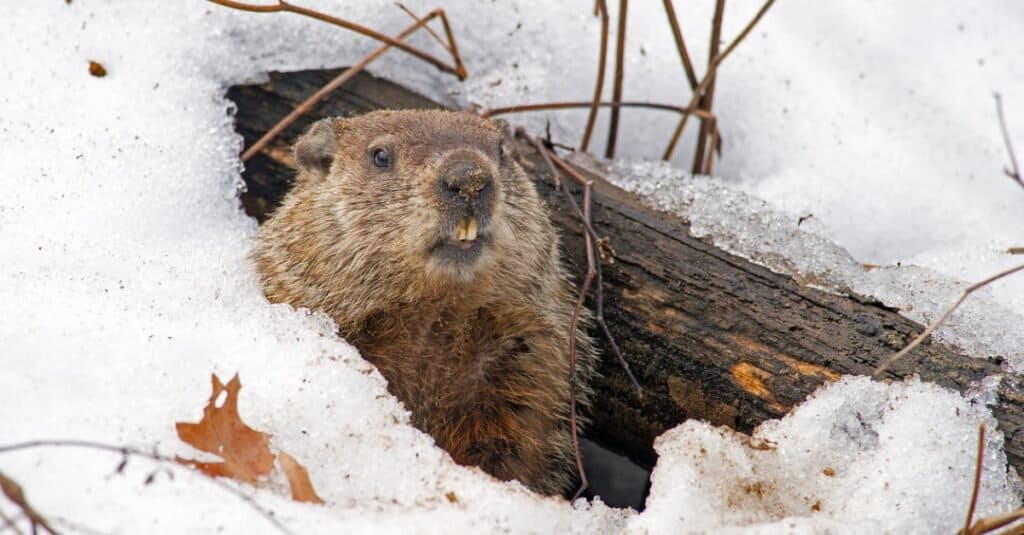
Groundhogs can eat up to a pound of food per day.
©iStock.com/BrianEKushner
Groundhogs rely on their keen senses to help them survive in the wild and locate food. In particular, a groundhog relies most on its senses of sight, smell, and hearing. They can hear a wide range of frequencies, particularly lower frequencies, which helps them detect the movement of predators via sounds that travel underground. Groundhogs also possess good vision and can spot moving objects from far away. Upon emerging from their burrows, groundhogs will use their eyes and noses to locate food. Their noses are quite sensitive and help them to locate ripe vegetables. However, their sensitivity is also their downfall, as gardeners who want to deter groundhogs put out odorous substances that groundhogs find repellent.
On average, the range of a groundhog is only around 2 to 3 acres. Within that range, groundhogs spend most of their time either underground resting or burrowing, or above ground foraging. Groundhogs tend to construct their burrows in areas where food is plentiful and readily available. They are diurnal, which means they are most active during the day, usually in the early morning or the late afternoon when they emerge to feed. An adult groundhog can eat more than a pound of food per day. Groundhogs eat more in the summer and early fall so they can develop the fat reserves they need for winter hibernation. Groundhogs typically hibernate for about three to five months out of the year, depending on their location.
What Do Baby Groundhogs Eat?
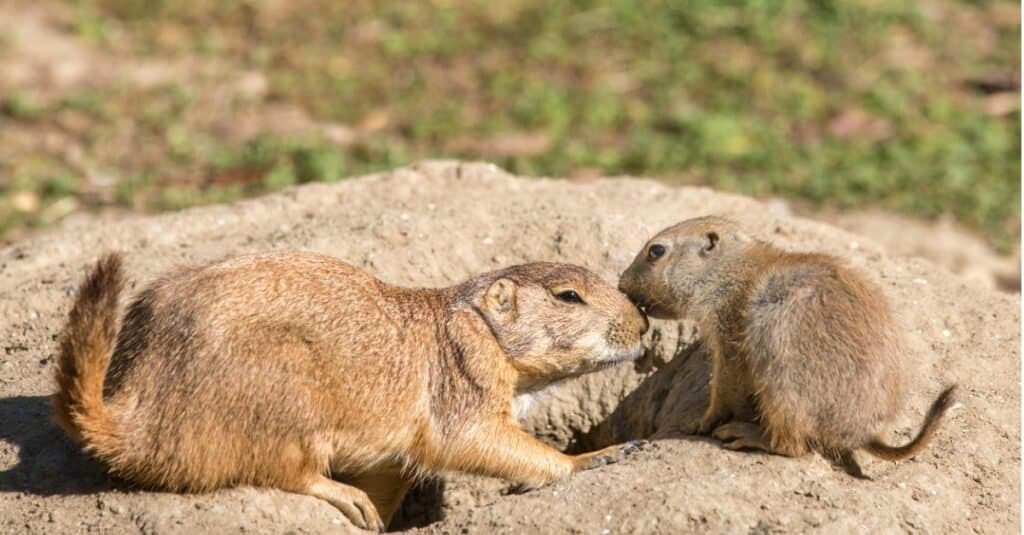
Baby groundhogs live with their mothers until they’re around 2 months old.
©iStock.com/Natalia SERDYUK
Also known as pups or kits, baby groundhogs are born from April to early June. Newborns are blind and almost completely hairless. They only measure about 3 inches long and weigh around 1.5 ounces.
The mother nurses the baby groundhogs for about 6 weeks. Then, they begin to eat soft flowers and grasses. By the time they leave their mothers to find their own territory at 9 to 11 weeks old, they can eat the same foods as adult groundhogs.