
When you picture a group of guinea pigs (Cavia porcellus), they are probably running around, squeaking, playing, chewing, or all of the above. But do you ever picture these little creatures sleeping? Do guinea pigs ever sleep? Of course they do! Continue reading to discover when and where these little animals sleep, along with other interesting facts about these sweet rodents.
Guinea Pigs Do Sleep
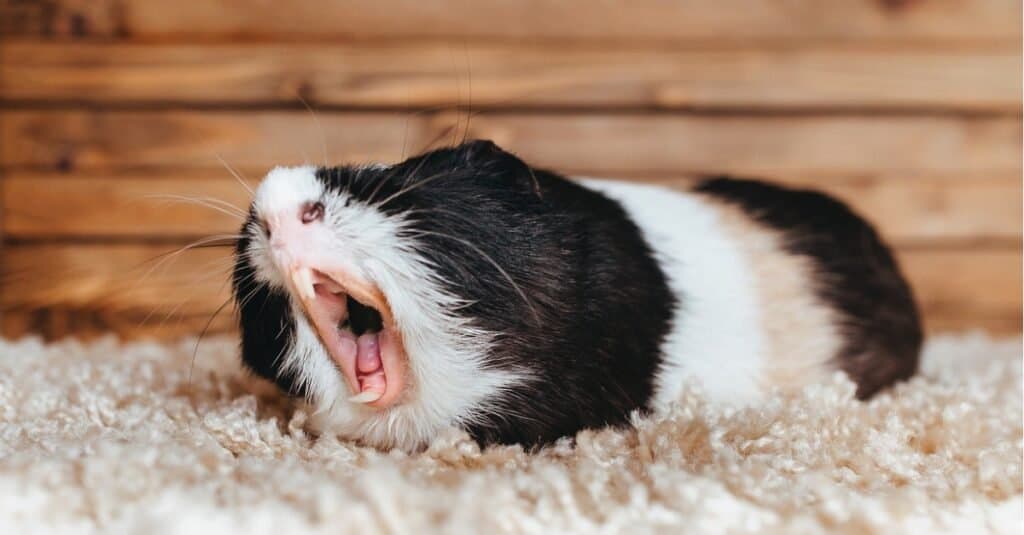
A tired Guinea pig yawns, displaying its teeth.
©iStock.com/Oleksandr Shchus
Guinea pigs must get sleep to maintain good health. Guinea pigs typically sleep between four and six hours a day, taking many short naps throughout the day and night. Active and vocal, guinea pigs always seem to have something to chew on. Guinea pigs chew rapidly and frequently throughout the day to help wear down their continuously growing teeth.
The active nature of guinea pigs requires them to replenish their energy throughout the day and night. Sleeping gives them the energy they need to carry on with their busy lives. Guinea pigs are often described as crepuscular, meaning they tend to be more active at dawn and dusk, but recent studies show their activity is spread throughout the day and night with intermittent periods of increased activity. This lighting provides enough visibility for guinea pigs to see well, while still being dim enough for them to move about undetected by predators. The new owner of a guinea pig may expect to see their pet disappear into a huge pile of shavings to snooze for several hours. After all, this is what hamsters, gerbils, and other rodents do. But it turns out that guinea pigs sleep in a completely different way.
The Ultimate Nappers
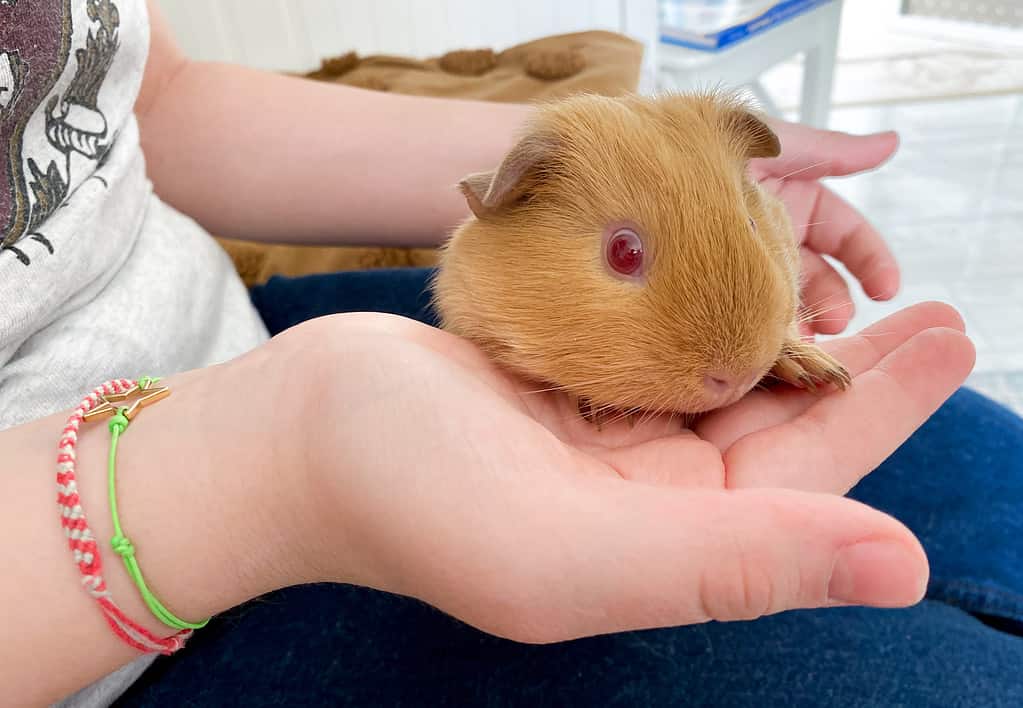
Absent predators, pet guinea pigs may adapt to their human family’s sleep schedule.
©Goroda/iStock via Getty Images
Guinea pigs don’t have a set sleep schedule. They sleep for short periods throughout the day and night. A nap can last from ten to 30 minutes. Guinea pigs sleep for very short amounts of time because, in the wild, they are near the bottom of the food chain with lots of predators. Consequently, they rest for short periods while maintaining a steady awareness of their surroundings. If they slept for long periods, they would be incredibly vulnerable to predators. Of course, a domesticated guinea pig living in a cage in a family’s home doesn’t have to risk its life looking for food. But pet guinea pigs still share these natural instincts with their wild relatives.
Where Guinea Pigs Sleep
Wild guinea pigs live in underground burrows abandoned by other animals and rarely dig their own burrows. Domesticated guinea pigs with no available burrow still enjoy napping under the protection of a shelter.
An old cardboard shoebox, tissue box, or other small box can serve as a makeshift burrow. This inexpensive and environmentally friendly option will need to be replaced regularly, however, because guinea pigs love nothing more than to chew on cardboard.
Other options include a small house, a tunnel, or a hut made from non-toxic materials, which are available in most pet shops and pet supply stores. This type of shelter requires a small investment but is more durable than a cardboard box.
Guinea Pigs Sleep with Their Eyes Open

A pet Guinea pig sitting in a basket.
©iStock.com/5second
Yes, Guinea pigs often sleep with their eyes open, especially when they are alert to their surroundings. However, when a guinea pig feels safe and relaxed, it may close its eyes and enter deeper sleep, especially when it has been with its guardian family for years.
Ways to Help Guinea Pigs Sleep Better

A pair of guinea pigs will typically sleep next to each other.
©Rita_Kochmarjova/Shutterstock.com
Getting enough sleep is essential to the good health of a guinea pig. Sleeping gives them a chance to digest their food and absorb the nutrients they consume each day.
Though everyone in the family wants to enjoy the pet, it’s best to keep guinea pigs in a quiet room. A guinea pig that lives in a noisy area with dogs barking, dishes clattering, and people talking is unlikely to have a healthy sleep schedule.
If the pet must be kept in a high-traffic area, covering the cage with a blanket from time to time can help muffle the noise. Placing a piece of soft material in the cage is another way to help a guinea pig get adequate rest. A small piece of fleece or cotton cloth gives the guinea pig something soft to snuggle against or push into its shelter.
A pair of guinea pigs can serve as company for one another, keeping each other calm. Bonded guinea pigs may sometimes rest or nap near each other, which can help them feel more secure, but this behavior varies between individuals.
How to Keep a Guinea Pig From Ruining YOUR Sleep
Whether it’s running on its exercise wheel, squeaking with its friends, pushing its toys around, or rearranging its shavings, guinea pigs have the power to keep their owners up at night. Fortunately, there are a few ways to prevent an active guinea pig from keeping you up at night.
Before going to bed, remove any noisy toys from the cage and replace them with soft toys that make very little noise. Return the noisier items to the cage in the morning. Secure items that create noise when they are moved around or are manipulated by a guinea pig.
If you have a pair of guinea pigs that chat with one another at night, try putting a lightweight blanket over their cage. If the cover doesn’t encourage them to sleep, it will at least muffle their sounds so you can get your rest.