
Recognizing when a hedgehog is unhappy is critical for their health, well-being, and longevity. These animals are solitary by nature, sensitive to their surroundings, and super skilled at hiding discomfort. For caretakers, this means that paying attention to subtle cues is just as important as noticing the obvious ones. Understanding their body language, daily behavior, and environmental needs allows owners to build a life that is safe and happy for these fascinating little mammals.
Hedgehogs as Pets

These little animals are cute and unique pets. Huggable though? Not so much.
©Pixel-Shot/Shutterstock.com
Hedgehogs can make interesting pets for the right owner, but they aren’t ideal for everyone. They are small, nocturnal, quiet, and generally low-maintenance, and have simple diets and minimal space requirements. However, they tend to be shy and moody and need regular socialization to stay tame. They are also most active at night, which is typically when their owners are winding down for the day. And while their quills aren’t as needle-sharp as those of a porcupine, they’re still stiff and pointy enough to make cuddling uncomfortable compared to cats, dogs, or even guinea pigs. Nonetheless, for dedicated keepers willing to meet their unique needs, hedgehogs can be rewarding companions. However, it’s important to learn how hedgehogs express themselves so you can tell whether they are happy living with you or just tolerating their situation.
Get to Know Your Hedgehog

Your hedgehog’s temperament is unique. You’ll need to get familiar with it to get a good read on its emotional state.
©luamduan/iStock via Getty Images
There are 16 different species of hedgehogs, but even within a species, no two hedgehogs are alike. Some are naturally calm and easygoing, while others are more energetic, shy, or defensive. The best way to recognize when something is wrong is to first understand what “normal” looks like for your individual little spiny guy. Knowing their usual habits and temperament makes it much easier to spot signs of stress or illness. Spending a few minutes observing your hedgehog each evening—when they are naturally most active—can be very helpful. Changes in their normal behavior are a clue that they aren’t feeling well.
Common Stressors in Domestic Life

Handling a hedgehog too much can stress it out.
©Viorel Sima/Shutterstock.com
In the wild, hedgehogs spend their nights alone, foraging, exploring, and retreating into safe, dark shelters. Captivity doesn’t always let them live out these instincts, and stress often follows when their environment doesn’t meet their needs. Bright lights, loud or busy households, sudden temperature shifts, and a lack of hiding spots can all unsettle them. The presence of other pets, especially dogs or cats, may also be intimidating, even if the larger animals show no aggression, because hedgehogs instinctively view them as potential predators. Moving to a new place, rearranging their cage, introducing loud guests, or adding unfamiliar smells and sounds are all stressors for hedgehogs. Handling is another major stressor. While some hedgehogs grow comfortable with gentle interaction, overhandling often causes distress.
Defensive Postures and Sounds

Rolling up into a defensive ball is one sign your hedgehog is not loving life right now.
©moryachka7/Shutterstock.com
Hedgehogs will tell you something’s wrong through their behavior, using both body language and sounds to show how they feel. Common defensive signals include rolling into a tight ball, raising their quills, or making sharp noises like hissing, huffing, popping, or loud chirping. These reactions are normal in new or unfamiliar situations, but if they happen often or don’t settle down, it usually points to ongoing stress or fear. A hedgehog that’s extra prickly—refusing to relax, bristling at the slightest touch, or staying balled up for a long time—is telling you it doesn’t feel safe.
Aggressive Behavior

Baby hedgehogs have soft quills that they lose between 4-8 weeks, replacing them with harder adult quills.
©Best dog photo/Shutterstock.com
Biting is another clear way hedgehogs communicate. Some may nip if they’re woken too early or handled roughly, but biting is especially common during quilling. Quilling is a natural growth stage—similar to teething in babies—when young hedgehogs shed their softer baby quills and grow in sturdier adult ones. This process can be uncomfortable or even painful, making them more sensitive to touch. It’s important to remember that consistent biting is never just “their personality.” It’s a message that their boundaries are being crossed. Other stress signals can include headbutting objects or cage mates, jumping suddenly, or flattening themselves against the ground.
Withdrawal and Avoidance

Like people, hedgehogs sometimes react to stress by withdrawing and sleeping a lot.
©Greens and Blues/Shutterstock.com
When hedgehogs are unhappy, they often retreat from interaction altogether. Instead of coming out during their normal active hours, they may spend nearly all of their time hiding in dark corners or sleeping. Some owners notice their hedgehogs won’t unball in front of people, waiting until the house is quiet to venture out. While hiding is a natural instinct, chronic avoidance like this is a strong sign the hedgehog does not feel secure in its environment. It’s also worth remembering that what looks like calm stillness during handling may not be relaxation at all but quiet fear.
Appetite and Weight Changes

A change in your hedgehog’s eating habits is one of the surest signs it is under stress.
©Serenity Images23/Shutterstock.com
A hedgehog’s eating habits are one of the clearest clues to how it’s feeling. If it suddenly stops eating, that’s often a sign of stress or illness. Weight changes can also point to trouble—hedgehogs that hide away and stop exercising may put on extra weight, while those that refuse food can quickly lose it. An easy way to keep track is with weekly weigh-ins using a small kitchen scale. If your hedgehog ever loses more than ten percent of its body weight, seek immediate veterinary attention.
Change in Activity Level

If your little spinosaurus is acting more lethargic or more hyper than usual, either of those could be signs of discontent.
©Zita Ile/Shutterstock.com
Because hedgehogs are naturally nocturnal, most of their energy should come alive at night. If your hedgehog is unusually still in the evening—sleeping in short, restless bursts, waking and dozing repeatedly, or staying sluggish when they would normally explore—it can be a sign of unhappiness or even illness. Lethargy is one of the easiest warning signs to spot: less movement, little curiosity, and a generally “dull” demeanor.
Stress can also push some hedgehogs in the opposite direction. Instead of slowing down, they may become restless and hyperactive—pacing, trying to escape their enclosure, or constantly burrowing for new hiding places. This kind of behavior often points to an environment that isn’t meeting their needs, whether it’s space, enrichment, or comfort.
Physical Clues of Stress

Trouble walking or breathing is a sign of serious problems that require veterinary care.
©Vishnevskiy Vasily/Shutterstock.com
Stress doesn’t just change how a hedgehog acts—it can also show up in their body. Dull or brittle quills, losing more than just the occasional quill as an adult, or dry, flaky skin may be signs of trouble. Stressed or run-down hedgehogs are also more prone to skin problems like open wounds or mites. Some issues are much more serious and need fast action. If your hedgehog has trouble walking, holds its body in an odd posture, or shows breathing problems (like wheezing, constant clicking with each breath, or labored breathing), get veterinary care right away.
Helping an Unhappy Hedgehog

Creating a calm, relaxing environment is good for your pet and you.
©Tatiana Fox/Shutterstock.com
A happier hedgehog starts with a comfortable environment. Take a good look at their setup: Is the enclosure roomy enough? Are there cozy hiding spots, tunnels to explore, and toys or enrichment to keep them busy? The temperature should stay steady and within their comfort zone. Loud noises, bright lights, or too much exposure to other pets can overwhelm them, but a calm, dim, and safe space helps them relax. Routine also makes a big difference. Feeding, cleaning, and rest times should happen on a predictable schedule. Sudden changes, irregular light cycles, or a bare, unstimulating habitat can quickly create stress.
When to See a Vet
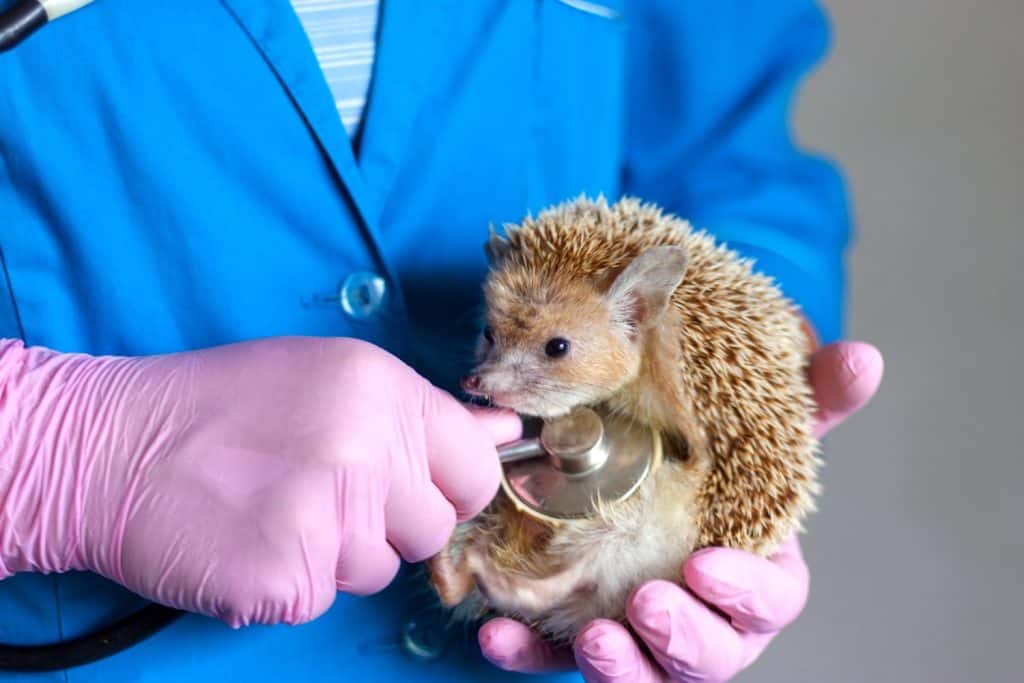
Your vet will be familiar with the common illnesses that afflict hedgehogs.
©ALIAKSANDR PALCHEUSKI/Shutterstock.com
If your hedgehog doesn’t improve with environmental changes, or if new behaviors are paired with physical symptoms, it’s time to consult a veterinarian who specializes in exotic pets. Watch for red flags such as loss of appetite, difficulty moving, odd posture, or breathing problems. These aren’t just signs of a bad mood—they may point to underlying medical issues. Hedgehogs are especially prone to certain health problems, including:
- Mites or skin issues — quill loss, flaky skin, or sores
- Respiratory infections — wheezing, sneezing, or clicking sounds when breathing
- Digestive trouble — diarrhea, constipation, or bloody/unusual droppings
- Obesity or dental disease — difficulty eating, weight changes, or drooling
- Wobbly Hedgehog Syndrome — progressive wobbling, weakness, or paralysis (an incurable, degenerative condition)
- Tumors or cancer — lumps, sores, or unexplained weight loss
- Eye or limb injuries — swelling, discharge, or limping
- Urinary or fecal changes — strong odor, unusual color, frequency shifts, or abnormal droppings (green, runny, bloody, or foul-smelling)
If you spot any of these warning signs, don’t wait. Quick veterinary care can make a big difference in your hedgehog’s health and comfort.
Observation Is Key
Animals can’t speak, but they do communicate their feelings to us through body language. By getting to know your hedgehog and observing it regularly, you’ll be able to understand its needs and help ensure it has a happier, healthier life.