
Guinea pigs are popular pets worldwide. They are gentle, social, and affectionate. Their care is relatively easy, but their dietary routine is very specific. Guinea pigs are natural herbivores. While this species does not exist in the wild, owners should aim to replicate a “natural” diet as much as possible. This handy guide will provide all the information you need to know about what to feed your guinea pig. A well-fed guinea pig is also a happy and healthy guinea pig. With a good diet and proper veterinary care, these animals may live 5-8 years on average, with some individuals reaching 10 years with exceptional care.
What to Feed Your Guinea Pig
A well-balanced guinea pig diet should feature a combination of fresh hay, vitamin C-fortified pellets, and fruits and vegetables. Like us, guinea pigs have food preferences and do not adapt well to sudden changes. Any dietary modifications must be gradual, or your guinea pig may refuse to eat.
Hay
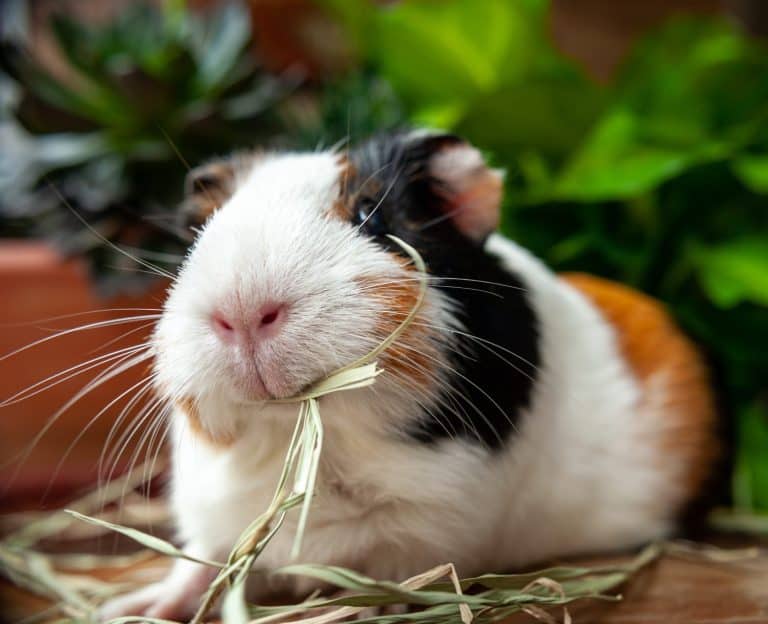
Guinea pigs must have access to unlimited hay, such as timothy hay, orchard grass, meadow grass, or oat hay. This will help reduce digestive issues and keep their teeth filed down. Your guinea pig’s diet should be around 80% hay. The hay should be kept in a rack or basket above the floor of the cage to prevent it from mixing with waste.
Vitamin C-Fortified Pellets and Supplements
Like humans, guinea pigs are unable to make their own vitamin C. So it’s important to provide your guinea pig with vitamin C-fortified pellets. Experts recommend about 1/8th of a cup of grain-free, vitamin C fortified pellets per day.
Pellets probably won’t be enough vitamin C on their own, however. Guinea pigs require 10-50mg per day, depending on their age and condition. Your veterinarian can tell you how much your specific pet needs. They require vitamin C tablets or liquid, taken by mouth every day.
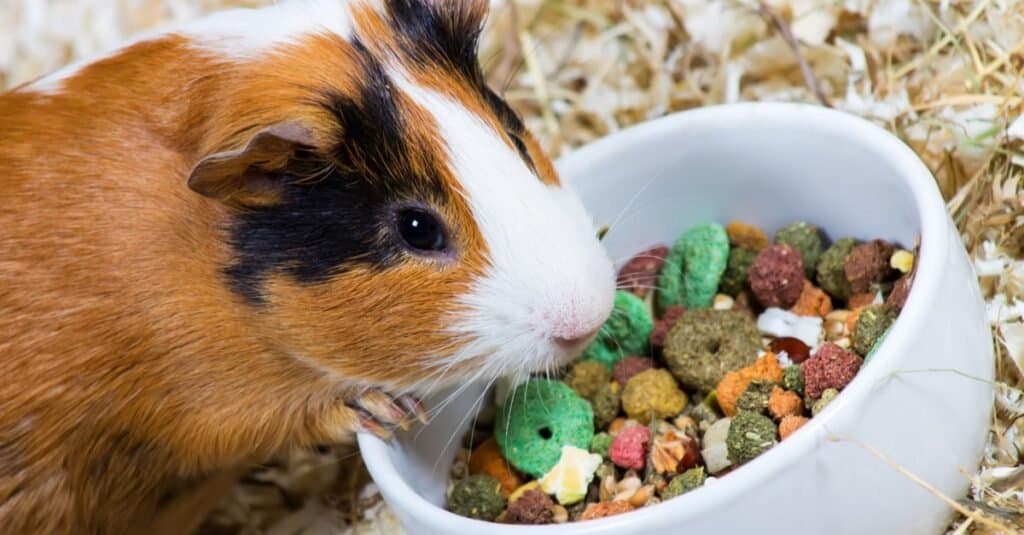
Guinea pigs need special pellets that are fortified with vitamin C.
©Alexander Mozymov/Shutterstock.com
Fresh Vegetables
Guinea pigs need between 1/2 and 1 cup total of fresh leafy green and colored vegetables per day. Vegetables such as Romaine lettuce, red and green leaf lettuces, kale, cilantro, mustard greens, turnip greens, and cabbage should form the bulk of its vegetable intake. Be careful to avoid too many dark leafy greens like spinach and kale, as these are high in calcium and may increase the risk of bladder stones.
Bell peppers, turnips, asparagus, and broccoli are high in vitamin C, so these are also good options for everyday feeding. Carrots, tomatoes, cucumber, celery, cauliflower, sweet potatoes, squash, and zucchini can also be added a few times a week to add variety to their diet.
Fruit
Freshly sliced fruits without seeds, including oranges, apples, pears, strawberries, blueberries, mango, pineapple, kiwi, and banana, should be given sparingly. Sugar intake, even in its natural form, should be limited. Strawberries, kiwi, and citrus fruits are high in vitamin C as well. However, strawberries are also high in calcium, so they should be a rare treat.
Commercial treats are unnecessary for a well-fed guinea pig. Many of them are full of artificial sweeteners and devoid of nutrition. Too much sugar can also cause diarrhea, which can be dangerous in such a small mammal.
Water Intake
In addition to food, your pet will need fresh, clean water at all times. Guinea pigs should drink between 2.7-3.4 fluid ounces per day. Both a water bottle and a small water bowl should be incorporated into the cage. Water bowls can be tricky because guinea pigs frequently soil their water. So, if the water looks dirty, it should be changed immediately.
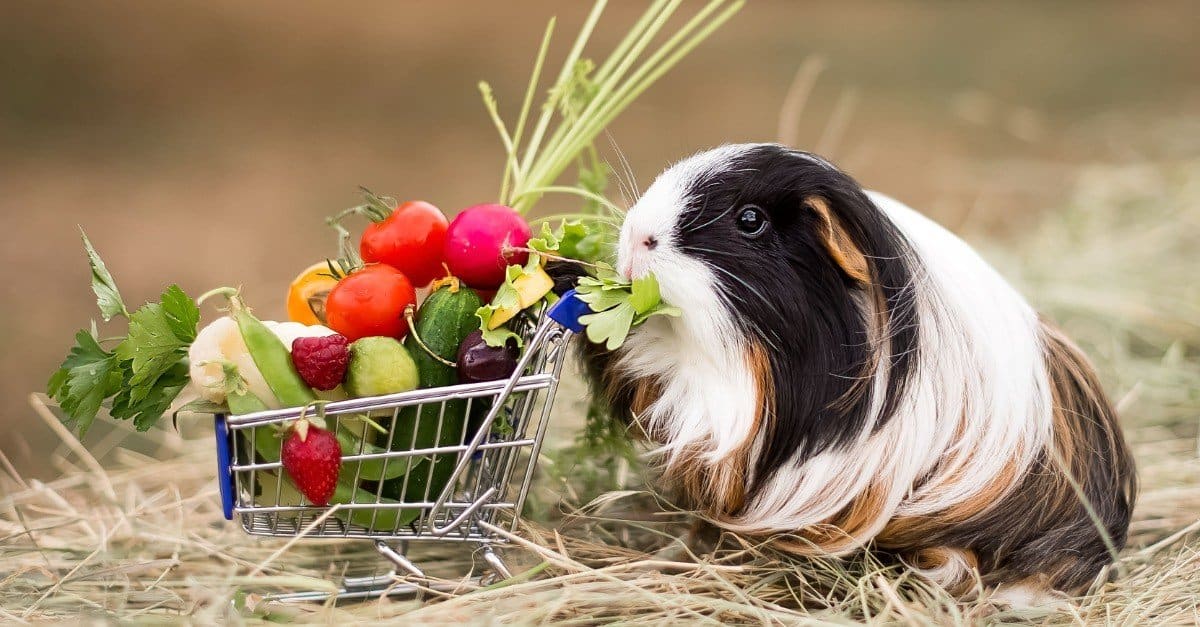
A guinea pig should eat a variety of foods, including fresh vegetables and fruit.
©Tomasz Stepien/Shutterstock.com
What Not to Feed Your Guinea Pig
Because of their specific herbivorous diet, guinea pigs have a long list of foods to avoid. Even some vegetables that might seem okay could cause digestive issues for your pet. Guinea pigs should never eat nuts, seeds, dried beans, corn, peas, avocados, onions, mushrooms, dairy products, meat, or human sweets. Some people feed their guinea pigs grains and cereals, but these can be high in carbohydrates and fat, and should be avoided due to the potential for digestive issues. Iceberg lettuce should also be avoided, as it contains mostly water and offers little nutrition.
Alfalfa hay should not be fed to your guinea pig regularly, as it can cause bladder stones and obesity. However, its high calcium and protein content make it an excellent choice for pregnant pets and young guinea pigs under six months old. Ask your veterinarian for specific feeding recommendations for your pet.
Some pet stores sell salt wheels and multivitamin supplements specifically for guinea pigs, but if your pet is receiving enough nutrients in its diet, these products are unnecessary. Additional vitamins and minerals, especially salt, are not always beneficial. Supplements should only be used if prescribed by your vet as part of a treatment plan.
How Much Should My Guinea Pig Weigh?
The average guinea pig should weigh between 1.8 and 2.2 pounds, but males and some breeds, like Abyssinians, may be larger. As long as you stick to your feeding routine and don’t overindulge your pet with tasty treats, you shouldn’t worry too much about your guinea pig overeating.
However, food and hygiene are closely connected. Owners should keep close track of how long food has been sitting out and remove any uneaten bits to ensure food stays fresh. If your guinea pig consistently leaves uneaten food but appears otherwise healthy, it may be a sign to reduce the amount of food you provide. Guinea pigs will also sometimes kick bedding material or waste into their food bowl, so the food must be replaced.
The timing of your guinea pig’s meals is not critical, as long as you maintain a consistent schedule. Morning and evening are usually good times to offer treats and refill food bowls. As mentioned previously, an unlimited supply of hay should always be available.
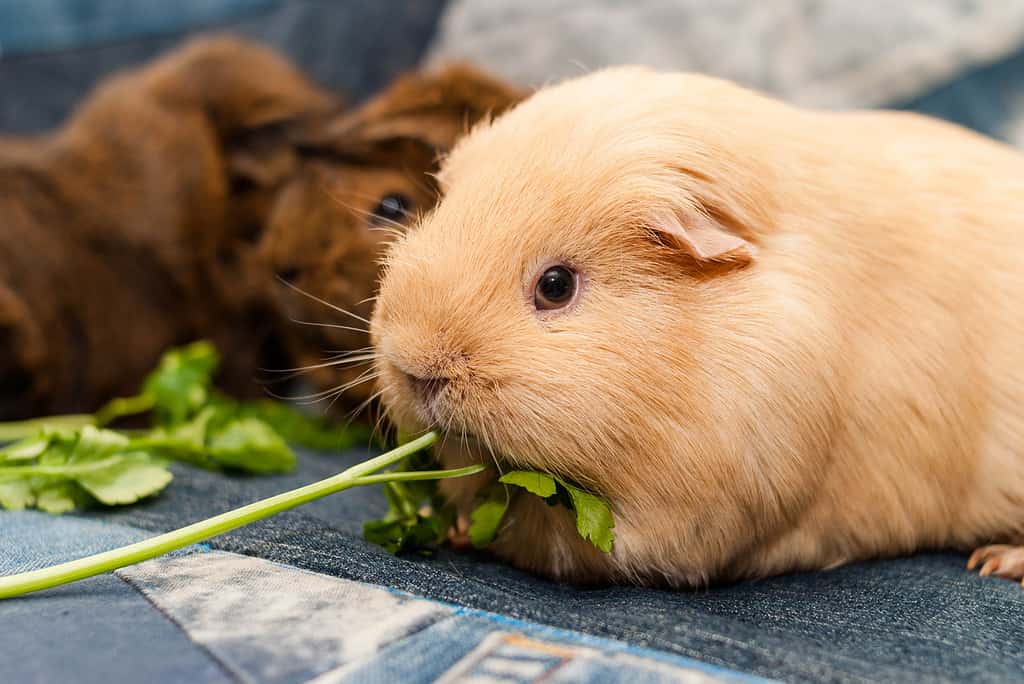
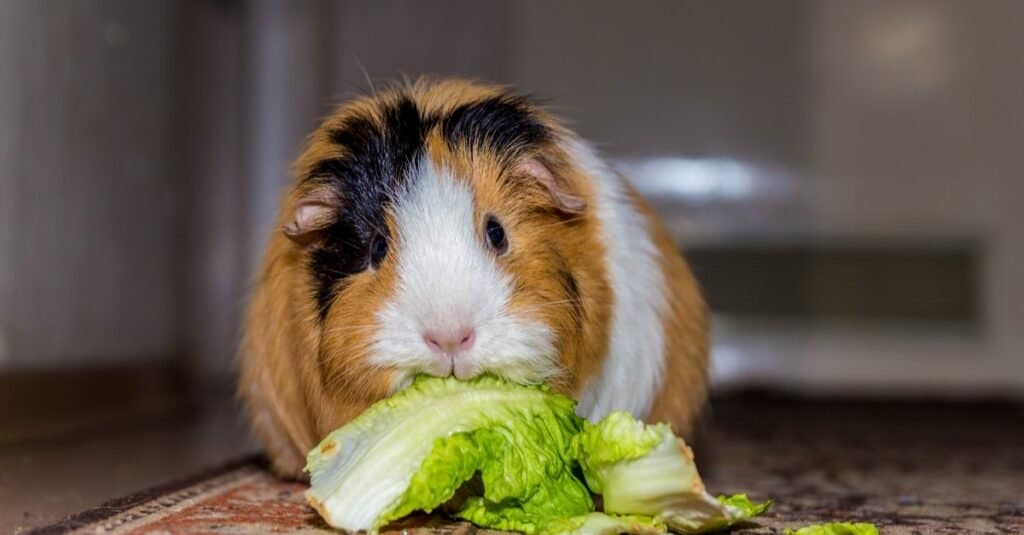
The timing of your guinea pig’s meals is less important than keeping a consistent schedule.
©Sofiia Petrova/iStock via Getty Images
Signs of a Dietary Deficiency
Just like humans, a poorly fed guinea pig is prone to dietary deficiencies. As noted above, vitamin C is the most common deficiency in guinea pigs. A consistent deficiency in vitamin C will put your pet at risk of scurvy. Signs and symptoms include weight loss, crusty eyes, lack of energy, rough coat or hair loss, a hesitant walk or a limp, and diarrhea.
Some animals may show signs of deficiency even when they have enough vitamin C in their diet. This could be a sign of another health problem, so it’s important to talk with your vet and ensure a full health evaluation is done.
Other Considerations
There are a few other important tips that owners should keep in mind. First, owners should buy a ceramic food bowl, preferably with a wide and shallow surface, instead of a plastic one. Ceramic is resistant to chewing and is more difficult to turn over. It should be placed in a corner where the guinea pig is unlikely to defecate. The bowl can be easily cleaned with soapy water.
Second, remember that the introduction of new fruits and vegetables into your guinea pig’s diet should be done gradually. Not only do guinea pigs dislike change, but new foods may also cause diarrhea. If this occurs, reduce the amount of the food and reintroduce it later in smaller quantities.
Third, homegrown foods picked from your garden are generally okay. Just make sure they are on the list of appropriate foods and haven’t been sprayed with pesticides or chemical treatments.
Finally, keep in mind that it is natural for guinea pigs to consume their feces. This is called coprophagy, and it allows them to re-digest their food to extract more nutrients. While it may seem weird and gross to us, this is a normal part of a guinea pig’s digestive process and helps to keep them healthy.